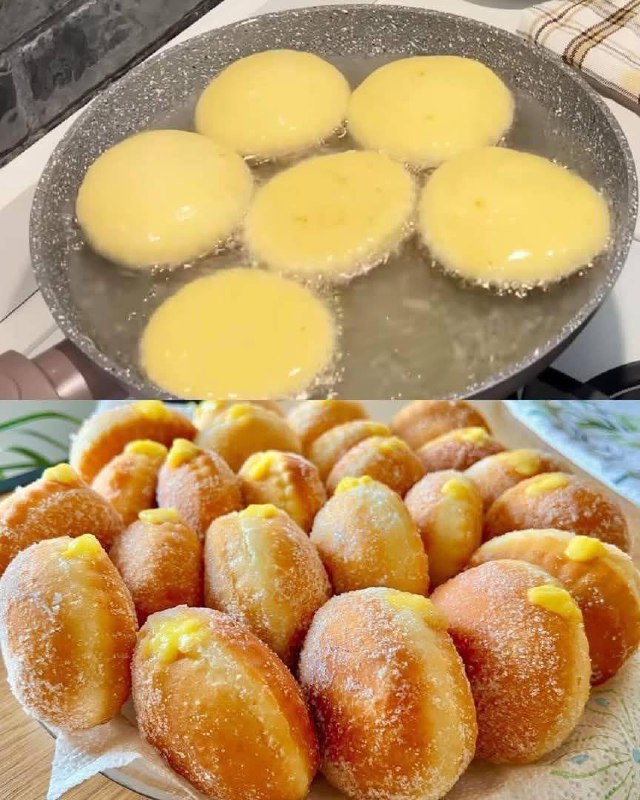
Introduction
There’s an undeniable magic in a freshly made doughnut, especially one generously bursting with creamy filling. Forget the store-bought versions; this recipe for Fluffy Cream-Filled Doughnuts invites you into the rewarding world of homemade sweet treats. Imagine sinking your teeth into a warm, golden-fried doughnut, its soft, airy interior giving way to a luscious, smooth custard cream. It’s a culinary experience that transcends a simple snack, offering a moment of pure bliss with every bite.
Making doughnuts from scratch might seem like a daunting task, but with our detailed step-by-step guide, you’ll discover it’s a wonderfully satisfying project. Perfect for a special weekend breakfast, a festive gathering, or simply to indulge your sweet tooth, these doughnuts are a testament to the joy of baking. The process, from activating the yeast to piping in the rich cream, is an enjoyable journey that culminates in an irresistible dessert that will impress everyone fortunate enough to try them.
Each doughnut is a masterpiece of texture and flavor: a lightly crisp exterior dusted with sparkling sugar, giving way to a tender, pillow-soft dough, all harmoniously complemented by the cool, velvety sweetness of the pastry cream. Get ready to transform your kitchen into a delightful bakery and treat yourself to these unforgettable, homemade cream-filled doughnuts.
Nutritional Information
Per serving (approximate values, based on one medium doughnut):
- Calories: 350-400 kcal
- Protein: 5-7g
- Carbohydrates: 40-50g
- Fat: 18-25g
- Fiber: 1-2g
- Sodium: 150-200mg
Ingredients
For the Doughnuts:
- 1 cup (240ml) warm milk (105-115°F / 40-46°C)
- 2 ¼ teaspoons (1 packet) active dry yeast
- ¼ cup (50g) granulated sugar, plus 1 teaspoon
- 1 large egg, at room temperature
- 2 large egg yolks, at room temperature
- ½ teaspoon salt
- 4 tablespoons (56g) unsalted butter, melted and cooled
- 3 ½ – 4 cups (420-480g) all-purpose flour, plus more for dusting
- 6-8 cups vegetable oil, for frying
For the Pastry Cream Filling:
- 2 cups (480ml) whole milk
- ½ cup (100g) granulated sugar
- ¼ cup (30g) cornstarch
- ¼ teaspoon salt
- 4 large egg yolks
- 2 tablespoons (28g) unsalted butter
- 1 teaspoon vanilla extract
For Finishing:
- 1 cup (200g) granulated sugar, for dusting
Instructions
Part 1: Preparing the Doughnuts
- In a large bowl or the bowl of a stand mixer, combine the warm milk and 1 teaspoon of granulated sugar. Sprinkle the active dry yeast over the top and let it sit for 5-10 minutes until foamy, indicating the yeast is active.
- Add the remaining ¼ cup granulated sugar, egg, egg yolks, salt, and melted butter to the yeast mixture. Whisk until well combined.
- Gradually add 3 ½ cups of flour, mixing with a wooden spoon or the dough hook attachment of a stand mixer on low speed. Once the dough comes together, increase the speed to medium and knead for 5-7 minutes, or until the dough is smooth, elastic, and pulls away from the sides of the bowl. If the dough is too sticky, add the remaining ½ cup flour, 1 tablespoon at a time, until the desired consistency is reached.
- Lightly grease a clean large bowl with vegetable oil. Transfer the dough to the bowl, turning it once to coat. Cover the bowl with plastic wrap or a clean kitchen towel and let it rise in a warm place for 1-1.5 hours, or until doubled in size.
- Once risen, gently punch down the dough to release the air. Turn the dough out onto a lightly floured surface. Roll the dough to about ½-inch thickness.
- Using a 2.5-3 inch round cookie cutter or glass, cut out doughnut rounds. Reroll any scraps and cut out more doughnuts until all dough is used.
- Place the cut doughnuts on parchment-lined baking sheets, leaving some space between them. Cover loosely with plastic wrap or a clean kitchen towel and let them rise again in a warm place for 30-45 minutes, or until visibly puffy and almost doubled in size. This second rise is crucial for light and airy doughnuts.
Part 2: Frying the Doughnuts
- While the doughnuts are proofing for the second time, prepare your frying station. In a large, heavy-bottomed pot or Dutch oven, pour enough vegetable oil to reach a depth of 2-3 inches. Heat the oil over medium heat to 350-375°F (175-190°C). Use a candy thermometer or deep-fry thermometer to monitor the temperature; it’s critical for perfectly cooked doughnuts.
- Carefully lower 3-4 doughnuts into the hot oil, ensuring not to overcrowd the pot. Fry for 1-2 minutes per side, or until golden brown.
- Using a slotted spoon or spider, transfer the fried doughnuts to a wire rack set over a baking sheet lined with paper towels to drain excess oil.
- Allow the doughnuts to cool slightly before handling. While still warm, but not piping hot, roll each doughnut in the granulated sugar prepared for dusting until evenly coated.
Part 3: Making the Pastry Cream Filling
- In a medium saucepan, combine the milk and half of the granulated sugar (¼ cup). Heat over medium heat until the mixture just begins to simmer around the edges. Do not boil.
- In a separate medium bowl, whisk together the remaining ¼ cup granulated sugar, cornstarch, salt, and egg yolks until smooth and pale.
- Once the milk mixture is hot, slowly temper the egg yolk mixture by gradually whisking about half of the hot milk into the egg yolks. This prevents the yolks from scrambling.
- Pour the tempered egg yolk mixture back into the saucepan with the remaining hot milk. Whisk continuously over medium heat until the mixture thickens considerably, resembling a thick pudding, about 2-4 minutes. Bring it to a gentle boil for 1 minute, whisking constantly, to ensure the cornstarch is fully cooked and activated.
- Remove the saucepan from the heat. Stir in the butter and vanilla extract until fully incorporated and smooth.
- Transfer the pastry cream to a clean bowl. Cover the surface directly with plastic wrap to prevent a skin from forming. Refrigerate for at least 2-3 hours, or until completely chilled and firm.
Part 4: Filling and Finishing
- Once the pastry cream is thoroughly chilled, transfer it to a piping bag fitted with a long, thin piping tip (a Bismark tip is ideal, but any small round tip will work).
- Using a small knife or skewer, carefully poke a hole into the side of each sugar-dusted doughnut, creating a cavity for the filling.
- Insert the piping tip into the hole and gently squeeze the piping bag, filling each doughnut with pastry cream until it feels pleasantly heavy and slightly bulges.
- Serve immediately and enjoy your homemade fluffy cream-filled doughnuts!
Cooking Tips and Variations
Oil Temperature is Paramount: The most crucial aspect of frying doughnuts is maintaining the correct oil temperature. If the oil is too cool, the doughnuts will absorb too much oil and become greasy. If it’s too hot, they’ll brown too quickly on the outside while remaining raw in the center. Invest in a good deep-fry thermometer and keep the temperature between 350-375°F (175-190°C) for optimal results.
Don’t Overcrowd the Pot: Fry doughnuts in small batches (3-4 at a time) to prevent the oil temperature from dropping too drastically. Overcrowding also makes it difficult to turn them evenly.
Proper Proofing for Fluffiness: Don’t rush the rising times. The first rise develops flavor, and the second rise (after shaping) is essential for achieving that light, airy, and fluffy texture. Doughnuts that haven’t proofed enough will be dense and heavy.
Cool the Cream Completely: Ensure your pastry cream is thoroughly chilled before filling the doughnuts. Warm cream can make the doughnuts soggy and won’t hold its shape as well.
Fill Just Before Serving: For the best texture and freshness, fill the doughnuts as close to serving time as possible. While they can be filled a few hours in advance, the dough can start to absorb moisture from the cream over time.
Vary the Fillings: While classic pastry cream is divine, feel free to experiment! Try a raspberry jam filling, lemon curd, chocolate ganache, or even a simple vanilla whipped cream for a lighter option. Just make sure the filling isn’t too runny.
Different Toppings: Instead of granulated sugar, you can dust your doughnuts with powdered sugar, cinnamon sugar, or even dip them in a simple glaze (powdered sugar + milk/water/vanilla extract). For a chocolate twist, drizzle with melted chocolate after dusting.
Zest it Up: Add a pinch of lemon or orange zest to your doughnut dough for a subtle citrus aroma that complements the sweetness. You can also add zest to the pastry cream for a brighter flavor.
Use a Stand Mixer for Ease: While the dough can be kneaded by hand, a stand mixer with a dough hook makes the process much easier and ensures consistent kneading for optimal gluten development.
Storage and Reheating
Storage: Cream-filled doughnuts are best enjoyed fresh on the day they are made. If you have leftovers, store them in an airtight container in the refrigerator for up to 1-2 days. The dough will inevitably lose some of its freshness and softness, and the sugar coating may dissolve slightly.
Reheating: Reheating cream-filled doughnuts is generally not recommended as the cream filling can become runny or separate, and the doughnut itself can become tough or greasy in the microwave. If you must, you can try gently warming them in a preheated oven at 250°F (120°C) for 5-10 minutes, but be aware that the texture will not be the same as freshly fried. It’s truly a treat best savored the day it’s made.
Frequently Asked Questions
Why are my doughnuts greasy?
Greasy doughnuts are almost always a result of the oil not being hot enough. If the oil temperature drops too low (below 350°F / 175°C), the doughnuts will act like sponges and absorb excess oil. Ensure your oil is at the correct temperature (350-375°F) before adding doughnuts and maintain it throughout frying. Also, avoid overcrowding the pot, as this can cause the temperature to drop significantly.
Can I make the dough or cream filling ahead of time?
Yes, you can prepare both components in advance! The doughnut dough can be made the day before. After the first rise, punch it down, cover it tightly with plastic wrap, and refrigerate overnight. On frying day, let it come to room temperature for about 30-60 minutes before rolling and cutting. The pastry cream can also be made 1-2 days in advance and stored in an airtight container in the refrigerator. Just give it a good whisk or beat it briefly with an electric mixer before piping to restore its smooth consistency.
What kind of oil is best for frying doughnuts?
Neutral-flavored oils with a high smoke point are best for frying doughnuts. Good options include vegetable oil, canola oil, sunflower oil, or peanut oil. Avoid olive oil or butter, as they have lower smoke points and can impart unwanted flavors.