Introduction
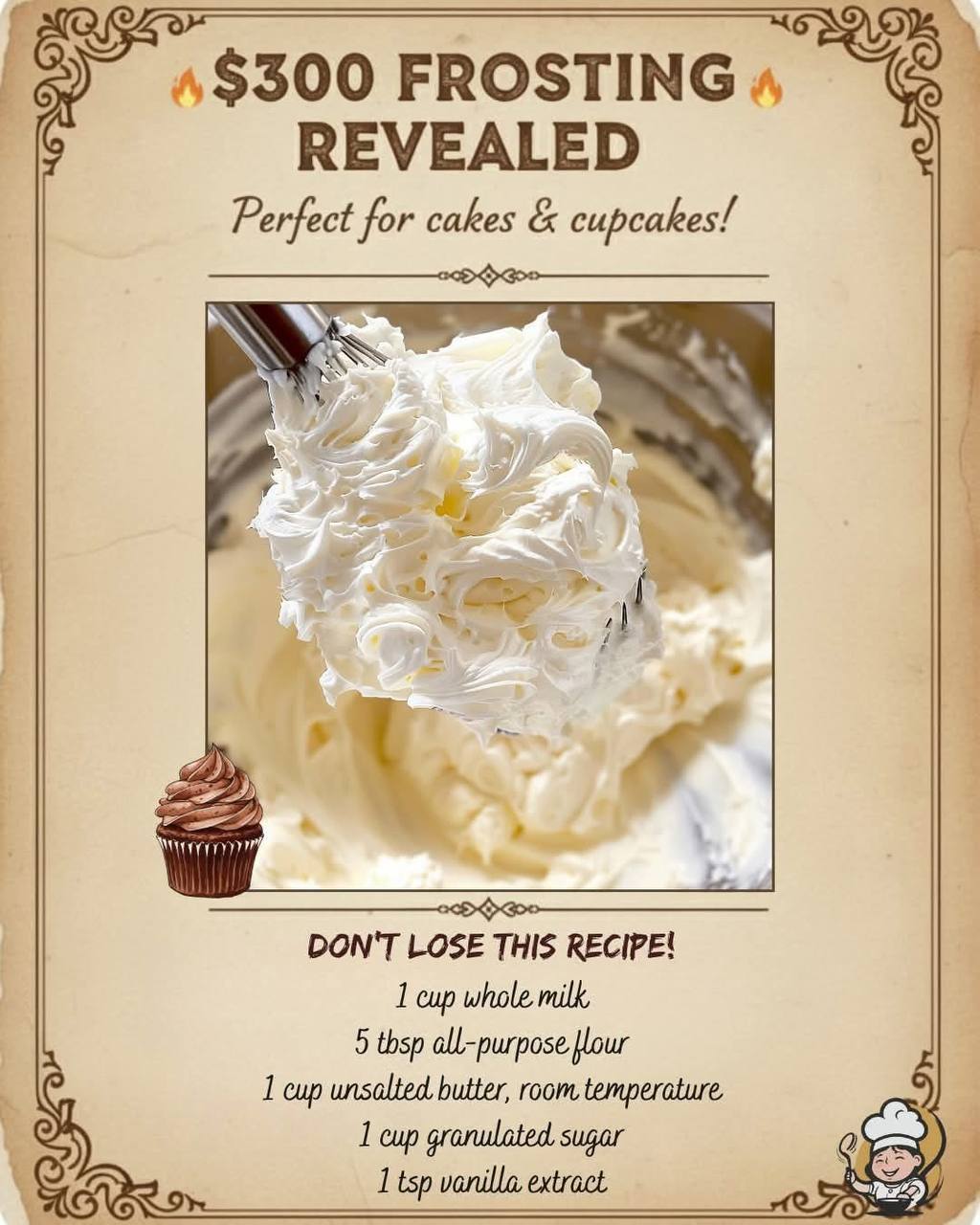
What if I told you there’s a frosting so luxurious, so silken, so utterly delightful that it’s earned the moniker “$300 Frosting”? Now, before you start calculating the cost of a single cupcake, let me assure you, the price tag isn’t about exorbitant ingredients. It’s about the unparalleled quality, the melt-in-your-mouth texture, and the sheer elegance that this classic, often overlooked, buttercream brings to any dessert. Forget grainy, overly sweet powdered sugar frostings; this is a revelation for home bakers who crave professional-grade results without the hefty price tag.
This isn’t some newfangled culinary trend; it’s a time-tested technique known by many names – Ermine Frosting, Boiled Milk Frosting, or even Flour Buttercream. It’s the secret weapon of many seasoned bakers, cherished for its incredibly smooth, stable, and less-sweet profile. Imagine a frosting that pipes like a dream, holds its shape beautifully, and delivers a delicate, buttery sweetness that perfectly complements your cakes and cupcakes, rather than overwhelming them. Once you experience the ethereal lightness and creamy consistency of “$300 Frosting,” you’ll understand why it’s considered the gold standard.
Today, we’re pulling back the curtain and revealing the simple genius behind this magnificent frosting. You’ll discover that achieving this level of culinary sophistication doesn’t require fancy equipment or obscure ingredients. With just a few pantry staples and a little patience, you can transform your baking from home-style to haute cuisine. Get ready to elevate your cakes and cupcakes to an entirely new level of deliciousness, impressing everyone with a frosting that tastes incredibly expensive, but costs mere pennies to make.
Nutritional Information
Per serving (approximate values, based on 1/12 of the recipe):
- Calories: 310 calories
- Protein: 2g
- Carbohydrates: 28g
- Fat: 22g
- Fiber: 0g
- Sodium: 15mg
Ingredients
- 1 cup (240ml) whole milk
- 5 tablespoons (40g) all-purpose flour
- 1 cup (226g) unsalted butter, softened to room temperature
- 1 cup (200g) granulated sugar
- 1 teaspoon (5ml) pure vanilla extract
- Pinch of salt (optional, but enhances flavor)
Instructions
- Prepare the Flour Paste: In a medium saucepan, whisk together the whole milk and all-purpose flour until thoroughly combined and no lumps remain. Place the saucepan over medium heat, stirring constantly with a whisk or rubber spatula. Continue to cook, stirring, until the mixture thickens considerably to a pudding-like consistency. It should be thick enough to leave a trail when stirred and coat the back of a spoon. This usually takes about 5-8 minutes.
- Cool the Paste: Once thickened, remove the saucepan from the heat. Transfer the flour paste to a shallow bowl or a plate to help it cool down faster. Cover the surface directly with plastic wrap to prevent a skin from forming. Allow the paste to cool completely to room temperature. This is a crucial step; if the paste is even slightly warm, it will melt the butter and ruin the frosting’s texture. You can place it in the refrigerator for about 30-60 minutes to speed up the cooling, but ensure it doesn’t get too cold or solidify too much. It should still be soft and pliable.
- Cream the Butter and Sugar: In the bowl of a stand mixer fitted with the whisk attachment (or using a hand mixer), beat the softened room temperature unsalted butter on medium-high speed for 3-5 minutes until it is very pale, light, and fluffy. Scrape down the sides of the bowl occasionally.
- Gradually add the granulated sugar to the creamed butter, about a quarter cup at a time, beating well after each addition. Continue to beat on medium-high speed for another 5-7 minutes until the mixture is very light in color, fluffy, and the sugar has mostly dissolved. It will still have a slightly granular texture at this point, but it should be much lighter.
- Combine the Paste and Butter Mixture: With the mixer on low speed, add the completely cooled flour paste to the butter and sugar mixture, one tablespoon at a time, allowing each addition to fully incorporate before adding the next. Once all the paste has been added, increase the mixer speed to medium-high.
- Whip to Perfection: Continue to beat the mixture on medium-high speed for a full 8-12 minutes. This extended whipping time is essential for incorporating air, dissolving any remaining sugar crystals, and achieving the signature light, fluffy, and silky-smooth texture of “$300 Frosting.” The frosting will initially look curdled or separated, but keep beating! It will come together beautifully, transforming into a smooth, voluminous, and glossy buttercream.
- Add Flavoring: Reduce the mixer speed to low and add the vanilla extract and an optional pinch of salt. Beat until just combined, then increase to high speed for a final 30 seconds to ensure everything is perfectly aerated.
- Serve or Store: Your “$300 Frosting” is now ready to use! It can be spread or piped onto cakes, cupcakes, or other desserts immediately.
Cooking Tips and Variations
The secret to “$300 Frosting” lies in precision and patience. Here are some tips to ensure your frosting is nothing short of magnificent, along with exciting variations to explore:
Tips for Best Results:
- Temperature is King: This cannot be stressed enough. Your butter MUST be at true room temperature (soft enough to indent easily but not melted). Your flour paste MUST be completely cooled to room temperature. Any deviation will result in a soupy or curdled mess. If your kitchen is cold, warm your butter gently; if it’s hot, cool the paste quickly in the fridge, but don’t let it get hard.
- Whisk, Whisk, Whisk the Paste: When cooking the flour paste, constant whisking prevents lumps and ensures even thickening. Don’t walk away from the stove!
- Patience with the Whip: The most common mistake is not whipping the final mixture long enough. It will look like a disaster at first – curdled, lumpy, or too soft. Resist the urge to stop! Keep whipping on medium-high speed for the full 8-12 minutes. Like magic, it will transform into a smooth, fluffy, and stable buttercream.
- Scrape the Bowl: Regularly scrape down the sides and bottom of your mixing bowl during the butter creaming and final whipping stages to ensure all ingredients are evenly incorporated.
- Quality Ingredients: Since this frosting has fewer ingredients, the quality of each shines through. Use good quality butter and pure vanilla extract for the best flavor.
- Don’t Over-thicken the Paste: While you want a thick pudding-like consistency, don’t cook the flour paste until it’s gluey. It should be easily spoonable once cooled.
Recipe Variations:
- Chocolate “$300 Frosting”: Melt 4-6 ounces of good quality semi-sweet or dark chocolate and let it cool to room temperature (it should still be liquid, but not warm). Once the frosting is fully whipped and smooth, add the cooled melted chocolate and beat on low speed until just combined, then whip on high for another minute until fluffy.
- Coffee “$300 Frosting”: Dissolve 1-2 tablespoons of instant espresso powder or instant coffee granules in 1 tablespoon of hot water. Let it cool completely. Add this mixture along with the vanilla extract in the final step.
- Citrus “$300 Frosting”: Add 1-2 tablespoons of fresh citrus zest (lemon, lime, or orange) and 1 tablespoon of fresh citrus juice along with the vanilla extract.
- Nut Butter “$300 Frosting”: Once the frosting is fully whipped, add ½ cup of smooth peanut butter, almond butter, or cashew butter. Mix on low until combined, then whip on high for a minute.
- Berry “$300 Frosting”: Reduce 1 cup of fresh or frozen berries (strawberries, raspberries, blueberries) with 1-2 tablespoons of sugar in a saucepan until thick. Strain through a fine-mesh sieve to remove seeds, then cool completely. Add 2-4 tablespoons of the cooled berry puree to the frosting in the final stages of whipping.
- Spiced “$300 Frosting”: Add ½ teaspoon of ground cinnamon, nutmeg, or pumpkin pie spice along with the vanilla extract for a warm, comforting flavor.
Storage and Reheating
One of the many advantages of “$300 Frosting” is its excellent stability and storage capabilities. Unlike some buttercreams that can be finicky, this one holds up beautifully.
Storage:
- Room Temperature: If your kitchen is cool (below 70°F/21°C), the frosting can be left covered at room temperature for up to 24 hours. However, for best quality and food safety, refrigeration is generally recommended.
- Refrigerator: Store the frosting in an airtight container in the refrigerator for up to 5-7 days. Because it contains milk, it’s best not to leave it out for extended periods at warmer temperatures.
- Freezer: For longer storage, “$300 Frosting” freezes exceptionally well. Place it in a freezer-safe, airtight container and store for up to 3 months.
Reheating (Bringing Back to Consistency):
After refrigeration or freezing, the frosting will become very firm and dense. It will need to be brought back to its original fluffy consistency before use. Do NOT try to microwave it directly to soften, as this can melt the butter and ruin the texture.
- From Refrigerator: Remove the frosting from the fridge and let it sit at room temperature for 1-2 hours until it has softened considerably. It should be pliable but still cool to the touch.
- From Freezer: Transfer the frozen frosting to the refrigerator the night before you plan to use it. Allow it to thaw completely overnight, then proceed as if it were refrigerated frosting.
- Rewhip: Once the frosting has softened to a cool room temperature, transfer it to the bowl of your stand mixer fitted with the whisk attachment (or use a hand mixer). Start beating on low speed until it begins to break up, then increase the speed to medium-high. Whip for 5-10 minutes, or until it returns to its original light, fluffy, and smooth consistency. If it seems too stiff, you can add a tablespoon of whole milk at a time while whipping until it reaches the desired texture. If it seems a little too soft (rare, but can happen in warm kitchens), you can try chilling it for 15-20 minutes and then re-whipping.
Always re-whip the frosting before using it after it has been stored. This re-incorporates air, smooths out any stiffness, and restores its glorious texture.
Frequently Asked Questions
What makes this “Ermine Frosting” different from traditional American buttercream?
The primary difference lies in the base. Traditional American buttercream relies on powdered sugar beaten directly into butter, often resulting in a very sweet and sometimes grainy texture. Ermine frosting, or “$300 Frosting,” starts with a cooked flour and milk paste. This paste acts as a stabilizer and thickener, allowing for less granulated sugar in the final product. The result is a significantly less sweet, incredibly silky-smooth, and much lighter frosting with a creamy, almost custard-like mouthfeel, and no grainy sensation whatsoever. It’s also generally more stable in warmer temperatures.
My frosting looks curdled after adding the flour paste. Did I do something wrong?
No, you didn’t! This is a very common and expected stage when making “$300 Frosting.” When you first combine the cooled flour paste with the creamed butter and sugar, the mixture often looks like a curdled mess, sometimes even resembling cottage cheese. The key is to keep whipping! Continue beating on medium-high speed for a full 8-12 minutes. The prolonged whipping time allows the butter, sugar, and flour paste to emulsify properly, incorporate air, and magically transform into that smooth, fluffy, and stable buttercream you’re aiming for. Patience is truly a virtue here.
Can I use unsalted butter if the recipe calls for salted, or vice versa?
It’s always best to use unsalted butter when a recipe specifies it, as it gives you complete control over the salt content. This recipe calls for unsalted butter. If you only have salted butter on hand, you can use it, but omit the optional pinch of salt from the recipe. Be aware that the flavor might be slightly different, as the salt content in salted butter varies between brands. For the most consistent and best-tasting results, stick with unsalted butter.
How much frosting does this recipe make, and what size cake will it cover?
This recipe yields approximately 4-5 cups of frosting, which is a generous amount. It’s typically enough to generously frost a two-layer 8 or 9-inch cake, or to frost and pipe decorations on about 24 standard-sized cupcakes. If you’re making a larger or taller cake, or if you plan on intricate piping, you might consider scaling the recipe up by 1.5 or even doubling it.