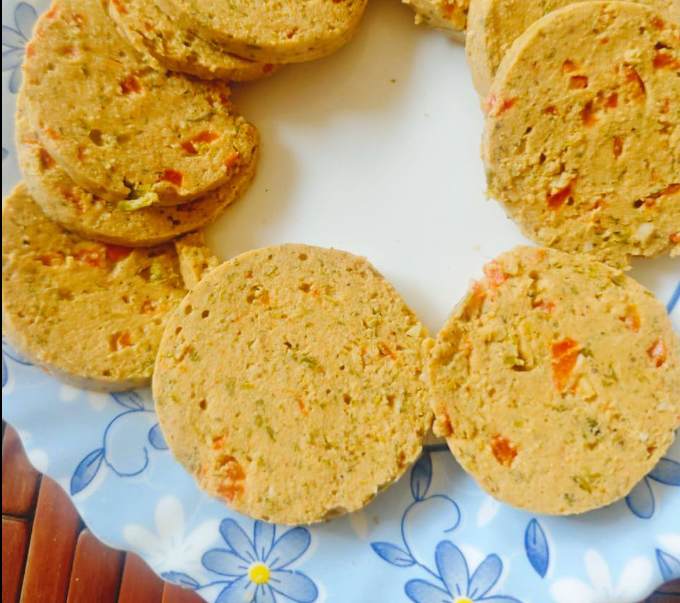
Homemade Chicken Salami 🐔🥖 — Lean, Flavorful & Additive‑Free
Salami traditionally hails from Europe — where families cured meats using natural salts, spices, and time‑honored techniques to preserve protein and enhance flavor. Over generations, the concept evolved worldwide, giving rise to variations including lighter, leaner options like chicken salami. Loved for its delicate flavor, tender texture, and lower fat content, chicken salami is perfect for sandwiches, charcuterie boards, snacks, and appetizers.
Unlike many commercial products loaded with chemical preservatives and artificial flavor enhancers, this homemade version draws inspiration from old‑fashioned methods, relying on natural seasoning, careful grinding, and gentle cooking to deliver authentic taste with clean ingredients — just as chefs like Chef Ina Garten and Chef Gordon Ramsay would insist: quality ingredients + respectful technique = remarkable results. 🧑🍳
If you’re curious about transforming other proteins at home, check out our article on The Ultimate Guide to Homemade Cured Meats for more techniques and inspiration!
Why You’ll Love Homemade Chicken Salami
Chicken salami offers a uniquely delicate flavor profile and versatile use that sets it apart from more common pork or beef salamis:
- 🍗 **Lean Protein:** Lower in fat without sacrificing texture.
- 🍃 **Clean Ingredients:** No artificial preservatives — just meat, spices, and simple binders.
- 🥪 **Versatile:** Great for sandwiches, salads, charcuterie boards, pizzas, and snacks.
- 🎯 **Customizable:** Spice it up or tone it down based on your preferences.
- 🍴 **Simple Technique:** Uses traditional slow simmering rather than complex curing or smoking.
This recipe bridges tradition and modern home cooking, giving you professional‑tasting salami with wholesome ingredients and a satisfying experience from start to finish.
📋 Ingredients & Quantities
Below is the foundational ingredient list to make approximately 1.2 kg (about 2.6 lbs) of homemade chicken salami — enough to slice for multiple meals.
| Ingredient | Quantity |
|---|---|
| Chicken leg meat (boneless, skinless) | 1.2 kg (about 2.6 lbs) |
| Table salt | 15 g (1 tbsp) |
| Cold cream (30% fat) | 70 g (about ¼ cup) |
| Dry garlic | 1 g (¼ tsp) |
| Ground black pepper | 1 g (¼ tsp) |
| Ground allspice | 1 g (¼ tsp) |
| Ground coriander | 1 g (¼ tsp) |
Optional Additions & Flavor Enhancers 🌶️
- Chili flakes or smoked paprika — for a spicy kick
- Fresh herbs (parsley, dill, or thyme) — for fragrance
- Mustard seeds — for texture and subtle tang
- Smoked paprika — for smoky depth without artificial smoke
Chef Tip: Fresh herbs bring aromatic brightness — ideal if you pair the salami with fresh cheeses or white wines.
🧑🍳 Tips for Success — Before You Start
Because salami is all about texture and seasoning balance, these preparation tips will make a dramatic difference:
- ❄️ Keep everything cold — meat, cream, and equipment — to aid emulsification and texture.
- 🔪 Grind finely — a smooth, even paste is essential for that classic salami feel.
- 🤲 Mix thoroughly — the mixture should be sticky and homogeneous before shaping.
- 🫧 Remove excess air — wrap tightly to ensure even cooking and prevent pockets.
- 🧊 Cool completely — chilling overnight improves slicing texture and flavor melding.
If you want to master more meat‑crafting techniques, our Guide to Meat Processing at Home offers essential tips on grinding, seasoning, and shaping proteins with confidence.
🍖 Step‑by‑Step Instructions
Step 1: Prepare the Meat
Cut the chicken leg meat into small cubes. Using a meat grinder or a food processor, mince the chicken until it reaches a smooth, fine paste — no large chunks remain.
Pro Tip: For consistent texture, freeze the chicken pieces for about 15 minutes before grinding or processing. Cold meat chops cleaner and emulsifies better.
Step 2: Season & Mix
In a large bowl, combine the ground chicken with table salt, dry garlic, ground black pepper, allspice, and ground coriander. Add the chilled cold cream. Using your hands or a stand mixer with a paddle attachment, mix the ingredients until the mixture becomes sticky and elastic. This texture helps the salami hold together like traditional methods.
Chef Insight: You’re aiming for a texture similar to traditional sausage — slightly tacky and uniformly smooth. Do not rush this step!
Step 3: Shape the Salami
Lay out a sheet of plastic wrap or food‑safe cling film. Place the seasoned chicken paste in the center and shape it into a log about 2–3 inches (5–7.5 cm) thick. Roll it up tightly, twisting the ends to seal. For best results, wrap the log again in aluminum foil to prevent any leaks.
Important: Remove as much air as possible during wrapping — this helps ensure even cooking without steam pockets.
Step 4: Cook the Salami
Place the wrapped salami in a large pot of hot water (not boiling) maintained around 80–85°C (175–185°F). Cover and simmer gently for approximately 1 hour. Slow cooking ensures an even, tender texture without drying or toughening the meat.
Safety Tip: Do not let the water reach a rolling boil — this can cause the salami to burst or lose moisture.
Step 5: Cool & Set
After cooking, remove the salami from the water and let it cool to room temperature. Then refrigerate it for at least 6 hours or overnight — cooling allows it to firm up and develop full flavor.
Chef’s Note: Overnight chilling greatly improves slicing texture and flavor infusion.
Step 6: Serve & Enjoy!
Unwrap the salami and slice it thinly. Serve chilled on a charcuterie board, in sandwiches, or lightly seared for an elevated snack experience!
This homemade chicken salami pairs beautifully with mustard greens, pickled vegetables, artisan breads, and your favorite cheeses.
🍽️ How to Serve & Pair Chicken Salami
Homemade chicken salami is incredibly versatile. Here are some delicious ways to enjoy it:
- 🥪 Sandwich centerpiece: Stack with arugula, tomato, and aioli on ciabatta.
- 🍕 Pizza topping: Add thin slices with roasted peppers and olives.
- 🧀 Charcuterie board: Pair with Manchego, olives, fruit preserves, and crackers.
- 🥗 Salad boost: Toss with greens, roasted nuts, and vinaigrette.
- 🔥 Pan seared: Lightly crisped for a warm appetizer.
If you enjoy pairing meats and cheeses, you might love our Charcuterie Pairings & Board Ideas for creative hosting inspiration!
📊 Nutrition & Health Benefits
Chicken salami is a leaner alternative to traditional pork or beef salami, with favorable nutrition benefits when made at home:
| Nutrient | Approx. Per 100g | Notes |
|---|---|---|
| Calories | 150–180 kcal | Lean protein with moderate fat |
| Total Fat | 7–10 g | Lower than pork salami |
| Saturated Fat | 2–3 g | From cream and chicken |
| Protein | 24–28 g | High‑quality lean protein |
| Sodium | 450–650 mg | Salt is essential for flavor and preservation |
| Iron | 1.4–2.1 mg | Contributes to daily iron intake |
Health Tip: Adjust sodium level based on dietary needs — start with slightly less salt and increase after tasting.
🧠 10 Frequently Asked Questions (FAQs)
1. Why use chicken leg meat instead of breast?
Leg meat contains a bit more fat and connective tissue, which results in a juicier, more flavorful salami. Chicken breast can be used but may produce drier results.
2. Can I add other spices?
Yes! Chili flakes, smoked paprika, or finely minced herbs can personalize the flavor.
3. Is the cream necessary?
The cold cream helps bind proteins and improve texture. You can replace part of it with olive oil, but texture will vary.
4. Do I need a meat grinder?
A meat grinder yields the best texture, but a food processor works fine if you pulse until very smooth.
5. Can I smoke this instead of simmering?
Yes — if you have a smoker, you can smoke at low temperature (~80–90°C/175–195°F) for a similar tender result.
6. How long does homemade salami last?
Stored in an airtight container in the refrigerator, it lasts ~5–7 days. Freeze for longer storage (up to 2 months).
7. Why is my salami crumbly?
Insufficient binder or under‑mixing can cause crumble — mix until the mixture becomes tacky and cohesive.
8. Can I use dark meat plus some breast?
Yes — a ratio of ~75% leg to ~25% breast can balance fat and flavor.
9. What’s the best way to slice?
Use a sharp knife or deli slicer, and slice thinly for best texture and mouthfeel.