Introduction
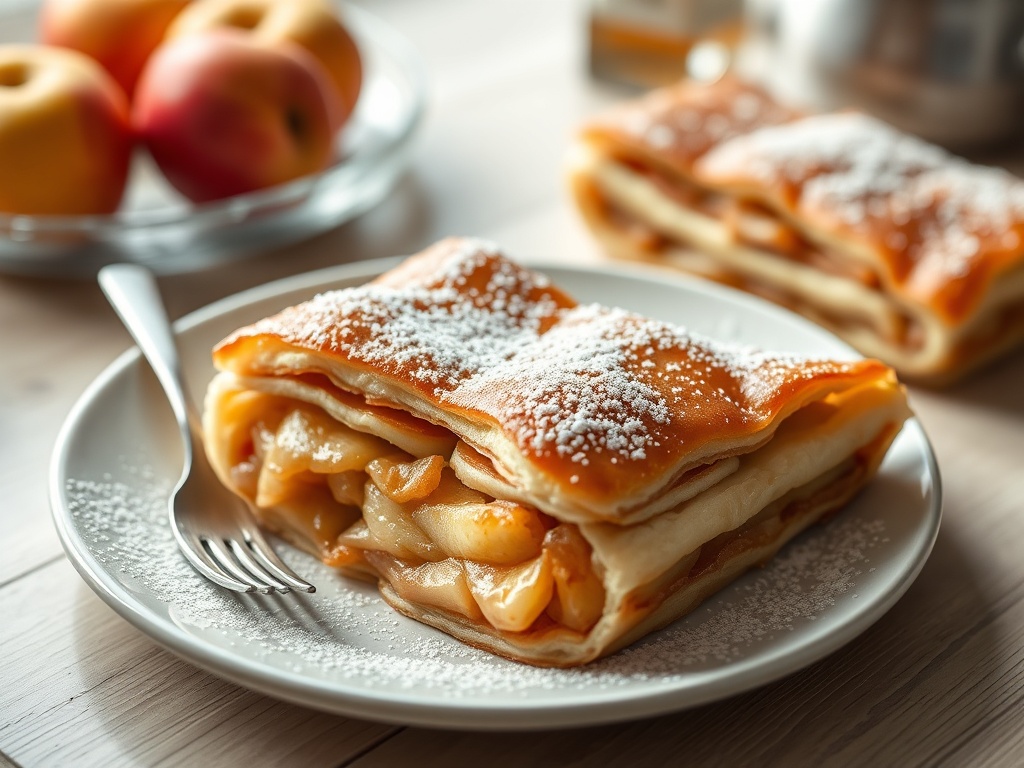
The aroma of warm apples, cinnamon, and buttery pastry wafting from the kitchen is a scent deeply etched into my memory. It’s the smell of my Grandma’s kitchen, a place filled with laughter, stories, and, most importantly, her legendary Apple Strudel. This isn’t just any strudel; it’s a culinary hug, a bite of history, and a testament to the simple magic that happens when love is the secret ingredient. While apple strudel, or Apfelstrudel, has its roots firmly planted in Austrian and German culinary traditions, it’s a beloved pastry that has traveled across borders, becoming a cherished comfort food in many homes, especially throughout Eastern Europe. Its popularity stems from its irresistible combination of a paper-thin, incredibly flaky crust encasing a generous, perfectly spiced apple filling.
What makes Grandma’s strudel stand out from the rest? It’s the delicate dance of textures and flavors. Unlike some strudels that can be overly sweet or have a thick, bready crust, Grandma’s version achieves a sublime balance. The dough is stretched so thin you could practically read a newspaper through it, resulting in layers upon layers of crisp, golden flakiness. The apple filling, made with a thoughtful blend of tart and sweet apples, is spiced just right, never overpowering the natural fruit flavor, and is carefully balanced with just enough sweetness to complement rather than dominate. Every bite is a harmonious blend of tender, spiced apples and shatteringly crisp pastry, a true masterpiece of home baking.
Today, I’m not just sharing a recipe; I’m inviting you into my Grandma’s kitchen, metaphorically speaking. This article is a guide to recreating that cherished taste of tradition in your own home. We’ll delve into the art of making the perfect strudel dough, selecting the best apples, and assembling this delightful pastry with care and a touch of that grandma-level love. Get ready to fill your kitchen with an aroma that promises warmth, comfort, and a slice of delicious history.
Nutritional Information
Per serving (approximate values):
- Calories: 320
- Protein: 4g
- Carbohydrates: 45g
- Fat: 15g
- Fiber: 3g
- Sodium: 120mg
Ingredients
For the Strudel Dough:
- 2 cups (240g) all-purpose flour, plus more for dusting
- 1/4 teaspoon salt
- 1/2 cup (120ml) warm water (about 100-110°F / 38-43°C)
- 2 tablespoons vegetable oil (or melted unsalted butter)
- 1 teaspoon apple cider vinegar (or white vinegar)
- 1 large egg yolk (optional, for richer dough)
- 2 tablespoons melted unsalted butter, for brushing dough
For the Apple Filling:
- 6-7 medium apples (about 2.5 lbs / 1.1 kg), a mix of Granny Smith and Honeycrisp recommended
- 1/2 cup (100g) granulated sugar (adjust to apple sweetness)
- 1 teaspoon ground cinnamon
- 1/4 teaspoon ground nutmeg
- Pinch of ground cloves (optional)
- 1/4 cup (40g) golden raisins (optional, plumped in warm water or rum)
- 1/4 cup (25g) unseasoned breadcrumbs (panko or fine)
- 2 tablespoons unsalted butter, melted
- 1/4 cup (25g) chopped walnuts or pecans (optional)
- Zest of 1/2 lemon (optional)
For Assembly and Baking:
- 1/4 cup (50g) unsalted butter, melted (for brushing during assembly)
- Powdered sugar, for dusting
Instructions
- Prepare the Dough: In a large mixing bowl, whisk together the flour and salt. In a separate bowl, combine the warm water, vegetable oil, vinegar, and egg yolk (if using). Pour the wet ingredients into the dry ingredients.
- Using a wooden spoon or your hands, mix until a shaggy dough forms. Turn the dough out onto a lightly floured surface and knead for 8-10 minutes until smooth, elastic, and no longer sticky. The dough should feel soft and pliable.
- Shape the dough into a ball, lightly brush with a little oil, and place it in a clean bowl. Cover tightly with plastic wrap and let it rest at room temperature for at least 60 minutes, or up to 2 hours. This resting period is crucial for gluten relaxation, making the dough easier to stretch.
- Prepare the Apple Filling: While the dough rests, peel, core, and thinly slice the apples. Aim for slices about 1/8-inch thick. Place the sliced apples in a large bowl.
- Add the granulated sugar, cinnamon, nutmeg, and cloves (if using) to the apples. Toss gently to coat evenly. If using, drain the plumped raisins and add them along with the chopped nuts and lemon zest. Set aside.
- In a small pan, melt the 2 tablespoons of butter. Add the breadcrumbs and toast over medium heat, stirring constantly, until golden brown and fragrant. This adds flavor and helps absorb excess moisture from the apples. Let cool.
- Preheat Oven and Prepare Workspace: Preheat your oven to 375°F (190°C). Line a large baking sheet with parchment paper. Clear a large workspace, ideally a kitchen table, and cover it with a clean cotton tablecloth or a large linen kitchen towel. Lightly flour the cloth generously.
- Stretch the Dough: Gently place the rested dough ball in the center of your floured cloth. Using a rolling pin, roll the dough into a rectangle, about 12×18 inches.
- Now comes the fun part: stretching! Carefully slide your hands, palms down, under the dough, with your knuckles facing up. Begin to gently pull and stretch the dough outwards from the center, working your way around the rectangle. The goal is to stretch it until it’s paper-thin and almost transparent, large enough to cover most of your table (roughly 24×36 inches or larger). Don’t worry if it tears a little; you can patch small holes. The edges will be thicker; you can trim these off later if desired.
- Brush the entire surface of the stretched dough evenly with 2 tablespoons of melted unsalted butter.
- Assemble the Strudel: Sprinkle the toasted breadcrumbs evenly over about two-thirds of the stretched dough, leaving a 3-4 inch border along the short end closer to you and a wider border (about 6-8 inches) on the opposite short end.
- Distribute the apple filling evenly over the breadcrumbs.
- Fold the 3-4 inch border of dough over the filling. Then, using the tablecloth to help you, carefully lift and roll the strudel tightly, starting from the side with the folded border. Gently pull the cloth upwards as you roll the dough away from you, creating a tight spiral.
- Once rolled, carefully transfer the strudel to the prepared baking sheet, seam-side down. You may need to gently curve it into a horseshoe shape to fit. Trim any excessively thick ends.
- Brush the entire top of the strudel generously with the remaining melted butter (about 1/4 cup).
- Bake the Strudel: Bake in the preheated oven for 40-50 minutes, or until the strudel is golden brown and the crust is crisp.
- Cool and Serve: Once baked, remove the strudel from the oven and let it cool on the baking sheet for at least 20-30 minutes before slicing. This allows the filling to set and prevents the strudel from falling apart.
- Dust generously with powdered sugar just before serving.
Cooking Tips and Variations
The secret to a truly exceptional strudel lies in a few key details. For the dough, don’t rush the kneading or the resting. Developing the gluten is essential for elasticity, and resting allows it to relax, making stretching much easier. If your kitchen is cool, a warm environment (like near a sunny window or a slightly warm oven) can help the dough become more pliable. When stretching, don’t be afraid! Tears are almost inevitable, but the layers of dough will mostly hide them. Think of it as a gentle coaxing rather than aggressive pulling. For the filling, the choice of apples is paramount. A mix of tart (like Granny Smith) and slightly sweeter, crisp apples (like Honeycrisp or Braeburn) provides the best flavor and texture, ensuring the apples hold their shape without becoming mushy. Always toast your breadcrumbs; it adds a depth of flavor and helps absorb moisture far better than raw breadcrumbs, preventing a soggy bottom.
Variations can personalize your strudel. For a richer flavor, you can soak the raisins in rum, brandy, or even warm apple juice for 30 minutes before adding them to the filling. A handful of dried cranberries or chopped dried apricots can also add a delightful chewiness and tartness. Toasted almonds or hazelnuts can be used instead of walnuts for a different nutty profile. For a citrusy twist, increase the lemon zest in the filling. If you’re feeling adventurous, a thin layer of poppy seed paste or sweetened farmer’s cheese can be spread over the dough before the apples for a traditional Eastern European variation. For an extra crisp crust, some bakers like to lightly brush the dough with a beaten egg white before brushing with butter during assembly.
Storage and Reheating
To store leftover apple strudel, allow it to cool completely. Wrap it tightly in plastic wrap or aluminum foil, or place it in an airtight container. It will keep well at room temperature for up to 2 days, or in the refrigerator for up to 4-5 days. While strudel is best enjoyed fresh and warm, leftovers are still delicious.
For reheating, the best method to revive its crispness is in the oven. Preheat your oven or a toaster oven to 300°F (150°C). Place individual slices or a portion of the strudel directly on a baking sheet. Heat for 10-15 minutes, or until warmed through and the crust has re-crisped. Avoid reheating in the microwave, as it tends to make the crust soggy. You can also freeze unbaked strudel for later. Assemble the strudel as directed, but do not bake. Wrap it tightly in several layers of plastic wrap, then foil. It can be frozen for up to 3 months. When ready to bake, thaw overnight in the refrigerator, then bake as instructed, possibly adding 5-10 minutes to the baking time.
Frequently Asked Questions
Why does my strudel dough keep tearing when I stretch it?
Tearing is a common issue and often results from not kneading the dough enough or not letting it rest long enough. Proper kneading develops the gluten, making the dough elastic, while resting allows the gluten to relax, making it pliable and less prone to snapping. Ensure your dough is smooth and elastic before resting, and give it at least an hour to relax. Small tears are okay and will often disappear into the layers.
Can I make the strudel dough ahead of time?
Yes, you can! The dough can be made a day in advance. After kneading, brush it lightly with oil, cover it tightly with plastic wrap, and refrigerate. When you’re ready to use it, remove it from the refrigerator about an hour before stretching to allow it to come to room temperature and become more pliable.
What if I don’t have a large enough surface or cloth for stretching?
While a large cloth on a table is ideal, you can adapt. You can stretch the dough in sections, or work on a large, lightly floured countertop. If you don’t have a cloth, you can try stretching directly on a well-floured surface, but it will be harder to roll the strudel. Alternatively, some recipes use a very thin phyllo dough or puff pastry as a shortcut, though it won’t replicate the authentic stretched strudel crust.