Introduction
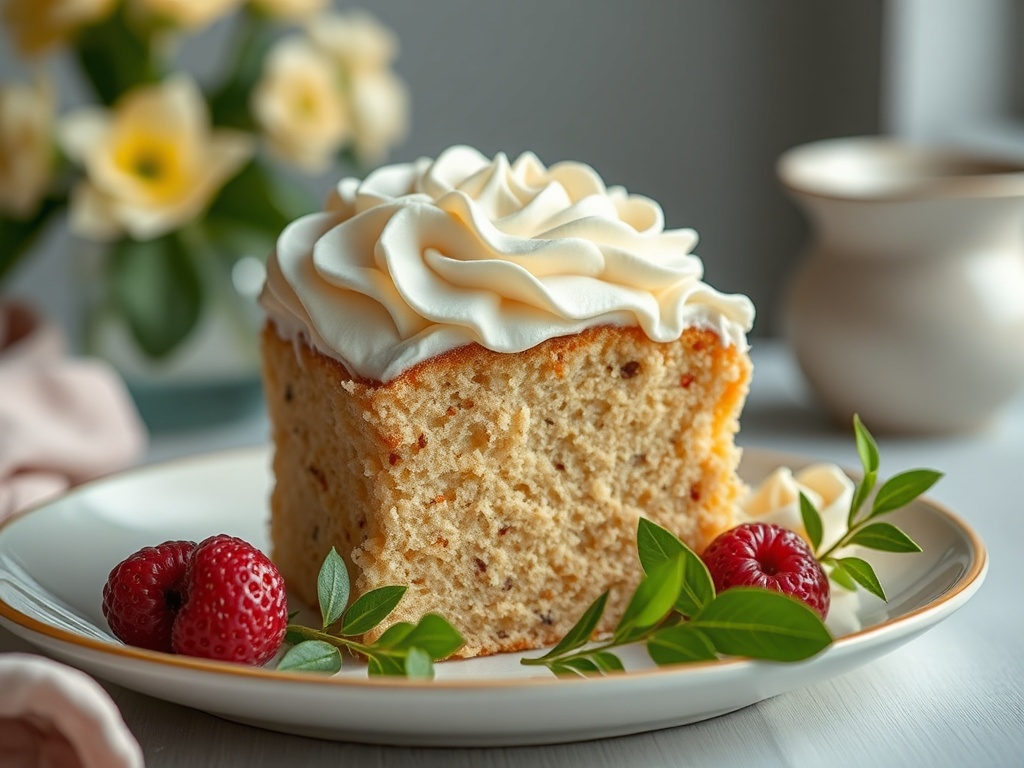
Prepare to be utterly captivated, for today we embark on a culinary journey to create a confection so enchanting, so utterly irresistible, it can only be described as pure magic. We’re talking about a cake, yes, but not just any cake. This is *the* cake, the one crowned with a frosting so ethereal, so light, so perfectly balanced in sweetness, that it transcends mere dessert and becomes an experience. Imagine a moist, tender crumb, yielding with every forkful, embraced by a cloud-like embrace of velvety frosting that melts delicately on your tongue, leaving behind a whisper of flavor and a lingering sense of bliss. This isn’t just baking; it’s crafting a dream.
What makes this cake so profoundly special, so undeniably magical? It’s the harmonious dance between a perfectly baked vanilla bean cake – rich, fragrant, and exquisitely tender – and a Swiss Meringue Buttercream that redefines what frosting can be. Unlike its overly sweet American counterparts, Swiss Meringue Buttercream is a silken marvel, stable yet delicate, with a subtle sweetness that allows the true flavors of vanilla and butter to shine. It pipes like a dream, spreads like silk, and creates a finish so elegant, you’ll feel like a master patissier. This combination isn’t just delicious; it’s a showstopper, a centerpiece, a moment of pure culinary delight.
Whether you’re celebrating a milestone, bringing joy to a gathering, or simply treating yourself to an extraordinary indulgence, this cake promises to deliver. Its visual appeal is undeniable – tall, pristine layers adorned with swirls of dreamy frosting – but it’s the first bite that truly seals its legend. The texture, the flavor, the sheer indulgence of it all makes this recipe an absolute must-try. Get ready to impress, to savor, and to fall head over heels for the magic that is this cake and its truly dreamy frosting.
Nutritional Information
Per serving (approximate values):
- Calories: 550
- Protein: 6g
- Carbohydrates: 70g
- Fat: 28g
- Fiber: 1g
- Sodium: 280mg
Ingredients
For the Vanilla Bean Cake:
- 2 ½ cups (300g) all-purpose flour, sifted
- 1 tablespoon baking powder
- ½ teaspoon salt
- 1 cup (226g) unsalted butter, softened
- 2 cups (400g) granulated sugar
- 4 large eggs, at room temperature
- 1 tablespoon vanilla bean paste (or 2 teaspoons pure vanilla extract)
- 1 ½ cups (360ml) whole milk, at room temperature
For the Swiss Meringue Buttercream:
- 5 large egg whites
- 1 ½ cups (300g) granulated sugar
- 1 ½ cups (340g) unsalted butter, softened but still cool, cut into 1-inch pieces
- 2 teaspoons vanilla bean paste (or 1 teaspoon pure vanilla extract)
- Pinch of salt
For Assembly and Decoration:
- Fresh berries (raspberries, blueberries, strawberries)
- Edible flowers (optional)
- Lemon zest (optional)
Instructions
For the Vanilla Bean Cake:
- Preheat your oven to 350°F (175°C). Grease and flour three 8-inch round cake pans, or line with parchment paper circles.
- In a medium bowl, whisk together the sifted flour, baking powder, and salt. Set aside.
- In the bowl of a stand mixer fitted with the paddle attachment, cream together the softened butter and granulated sugar on medium-high speed until light and fluffy, about 3-5 minutes. Scrape down the sides of the bowl as needed.
- Add the eggs one at a time, beating well after each addition until fully incorporated. Mix in the vanilla bean paste.
- With the mixer on low speed, gradually add the dry ingredients to the wet ingredients in three additions, alternating with the milk in two additions, beginning and ending with the dry ingredients. Mix until just combined, being careful not to overmix. Overmixing can lead to a tough cake.
- Divide the batter evenly among the prepared cake pans.
- Bake for 25-30 minutes, or until a wooden skewer inserted into the center of a cake comes out clean.
- Let the cake layers cool in the pans for 10-15 minutes before inverting them onto a wire rack to cool completely. Ensure they are completely cool before frosting, which can take several hours.
For the Swiss Meringue Buttercream:
- Combine the egg whites and granulated sugar in the heatproof bowl of your stand mixer (or a large heatproof bowl). Place the bowl over a saucepan of simmering water (make sure the bottom of the bowl does not touch the water).
- Whisk constantly until the sugar has completely dissolved and the mixture reaches 160°F (71°C) on an instant-read thermometer. The mixture should be hot to the touch and no longer grainy when rubbed between your fingers.
- Carefully remove the bowl from the heat and attach it to your stand mixer. Fit it with the whisk attachment.
- Whip the egg white mixture on high speed until stiff, glossy peaks form and the meringue is thick and has cooled completely to room temperature (this can take 10-15 minutes). The bowl should feel cool to the touch. This step is crucial; if the meringue is still warm, the butter will melt.
- Reduce the mixer speed to medium-low and begin adding the softened, cool butter one piece at a time, waiting until each piece is almost fully incorporated before adding the next.
- The mixture may look curdled or soupy at this stage – do not panic! This is normal. Continue beating on medium-high speed. After a few minutes, it will magically transform into a smooth, silky buttercream.
- Once the buttercream is smooth and fluffy, beat in the vanilla bean paste and a pinch of salt until fully combined.
- If the buttercream is too soft, refrigerate for 15-20 minutes, then re-whip. If it’s too stiff, warm the bowl slightly over a warm water bath for a few seconds, then re-whip.
Assembly and Decoration:
- Once the cake layers are completely cool, use a serrated knife to level the tops if necessary, creating flat surfaces for stacking.
- Place one cake layer on your serving plate or cake stand. Spread a generous layer of Swiss Meringue Buttercream over the top, spreading it evenly to the edges.
- Place the second cake layer on top and repeat with another layer of frosting.
- Place the third cake layer on top.
- Apply a thin layer of buttercream all over the cake (top and sides) to create a “crumb coat.” This traps any loose crumbs. Refrigerate the cake for 15-20 minutes to set the crumb coat.
- Once the crumb coat is firm, apply the remaining buttercream to the top and sides of the cake. Use an offset spatula or bench scraper to smooth the sides and create decorative swirls on top.
- Decorate the cake with fresh berries, edible flowers, or a sprinkle of lemon zest for an elegant finish.
- Slice and serve immediately, or store as directed below.
Cooking Tips and Variations
For the ultimate dreamy frosting, ensure your egg whites and sugar are heated to the precise 160°F (71°C) to dissolve the sugar completely and pasteurize the egg whites. Patience is key when whipping the meringue until it’s completely cool before adding the butter; a warm meringue will melt the butter, resulting in a soupy mess. Don’t be alarmed if the buttercream looks curdled after adding the butter; just keep whipping, and it will miraculously come together into a smooth, luscious consistency. For the cake, make sure all your dairy ingredients are at room temperature to ensure a smooth, emulsified batter and a tender crumb. Overmixing the cake batter will develop the gluten too much, leading to a tough cake, so mix until just combined.
To vary this magical cake, consider infusing the cake batter with different flavors. Lemon zest or orange zest can add a beautiful brightness, while almond extract can give it a sophisticated twist. For the frosting, try adding a tablespoon of fruit puree (like raspberry or passion fruit) for a fruity Swiss Meringue Buttercream, or a melted and cooled dark chocolate for a rich chocolate version. A touch of espresso powder can also create a wonderful coffee-flavored frosting. You can also add food coloring to the buttercream for a vibrant, celebratory cake. For a textured finish, try pressing toasted coconut flakes or finely chopped nuts onto the sides of the frosted cake.
Storage and Reheating
This magnificent cake, once assembled and frosted, is best enjoyed at room temperature, allowing the buttercream to soften slightly and the flavors to truly bloom. Store the cake, covered, at room temperature for up to 2 days. If you need to store it for longer, or if your kitchen is particularly warm, you can refrigerate it for up to 5 days. When refrigerating, place the cake in an airtight cake carrier or cover it loosely with plastic wrap to prevent it from drying out or absorbing refrigerator odors. To serve a refrigerated cake, remove it from the fridge at least 1-2 hours before serving to allow it to come to room temperature. This will ensure the cake layers are moist and the buttercream is soft and creamy, restoring its dreamy texture. We do not recommend freezing the fully assembled cake with Swiss Meringue Buttercream, as the texture of the buttercream can sometimes be compromised upon thawing, becoming slightly grainy or separating.
Frequently Asked Questions
What if my Swiss Meringue Buttercream looks soupy or curdled?
This is a very common occurrence and usually nothing to worry about! It means the butter might have been too warm, or the meringue wasn’t completely cooled. The key is to keep beating it. If it’s soupy, try chilling the bowl in the refrigerator for 15-20 minutes, then continue beating on high speed. If it looks curdled, just keep beating on medium-high speed; it will eventually emulsify and become smooth and fluffy. Patience is truly a virtue with this frosting!
Can I make the cake layers ahead of time?
Absolutely! You can bake the cake layers up to 2 days in advance. Once completely cooled, wrap each layer tightly in plastic wrap and store them at room temperature. For longer storage, you can freeze the wrapped cake layers for up to 2-3 weeks. Thaw them overnight in the refrigerator before unwrapping and frosting. This is a great way to break up the baking process.
Can I substitute pure vanilla extract for vanilla bean paste?
Yes, you can. Vanilla bean paste offers a more intense vanilla flavor and those beautiful flecks of vanilla bean, contributing to the “dreamy” aesthetic. However, pure vanilla extract is a perfectly acceptable substitute. Use 2 teaspoons of pure vanilla extract for the cake and 1 teaspoon for the buttercream if you don’t have vanilla bean paste on hand. Avoid imitation vanilla extract, as it will compromise the flavor of your magical cake.