Introduction
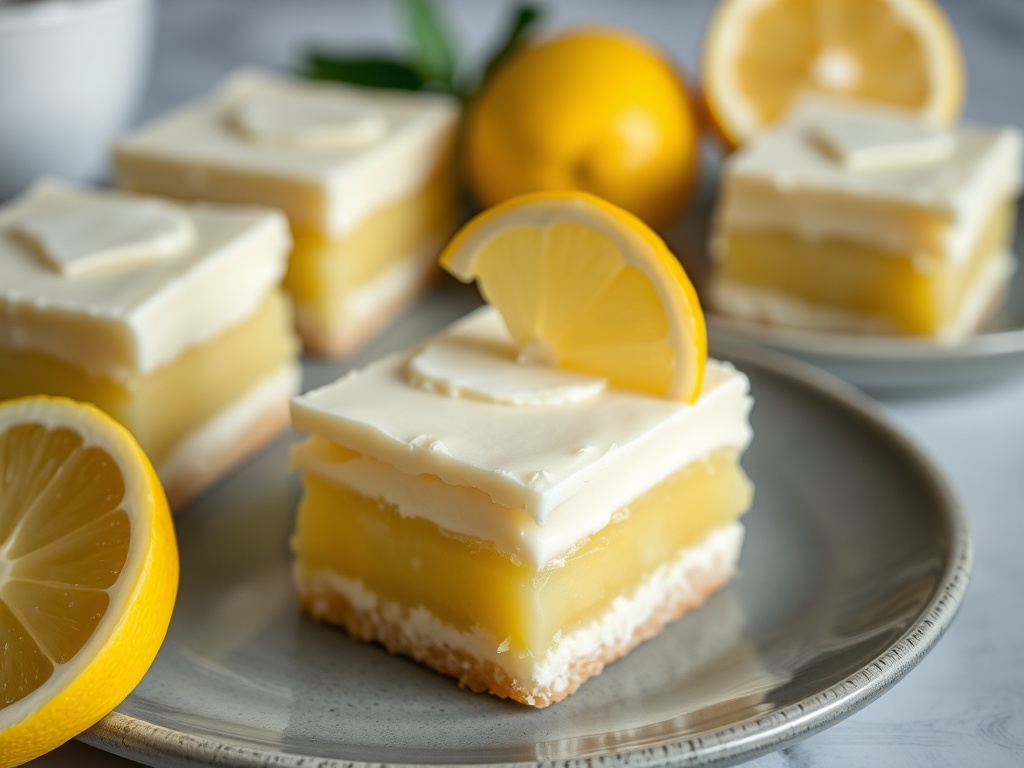
Imagine a burst of sunshine on your palate, a delicate balance of sweet and tart that awakens your senses with every bite. That, my friends, is the magic of Creamy Lemon Squares. These aren’t just any lemon bars; they’re an elevated experience, boasting a silken, luscious filling nestled atop a buttery, crumbly shortbread crust. Their vibrant yellow hue promises a refreshing escape, and their comforting nature makes them an instant classic, perfect for any occasion – from a casual afternoon tea to a festive potluck. If you’ve been searching for a dessert that’s both invigorating and deeply satisfying, look no further.
The enduring popularity of lemon squares stems from their irresistible blend of bright citrus and comforting sweetness, a timeless combination that has graced dessert tables for generations. But what sets *these* Creamy Lemon Squares apart? It’s all in the indulgent filling. While traditional lemon bars can sometimes lean towards a more gelatinous texture, our recipe incorporates heavy cream, transforming the filling into an unbelievably smooth, melt-in-your-mouth cloud of lemony goodness. This subtle yet significant addition creates a dessert that’s truly extraordinary, offering a richer, more luxurious mouthfeel without sacrificing that beloved tangy kick.
Preparing these squares is a remarkably straightforward process, making them accessible even for novice bakers. With clear steps and readily available ingredients, you’ll be whisking your way to dessert perfection in no time. Get ready to impress your friends and family (or simply treat yourself!) with this delightful creation that promises sunshine in every bite. It’s time to roll up your sleeves and dive into the deliciousness that awaits!
Nutritional Information
Per serving (approximate values):
- Calories: 320
- Protein: 4g
- Carbohydrates: 42g
- Fat: 16g
- Fiber: 1g
- Sodium: 110mg
Ingredients
- For the Shortbread Crust:
- 1 ½ cups (180g) all-purpose flour
- ½ cup (100g) granulated sugar
- ¼ teaspoon salt
- ½ cup (113g) unsalted butter, very cold and cubed
- For the Creamy Lemon Filling:
- 1 ½ cups (300g) granulated sugar
- 4 large eggs
- ½ cup (120ml) fresh lemon juice (from 3-4 medium lemons)
- 2 tablespoons finely grated lemon zest (from 2-3 medium lemons)
- ½ cup (120ml) heavy cream
- ¼ cup (30g) all-purpose flour
- For Dusting:
- 2 tablespoons powdered sugar, for dusting
Instructions
- Prepare the Shortbread Crust: Preheat your oven to 350°F (175°C). Line an 8×8 or 9×9 inch baking pan with parchment paper, leaving an overhang on two sides to easily lift the squares out later.
- In a medium bowl, whisk together the 1 ½ cups all-purpose flour, ½ cup granulated sugar, and ¼ teaspoon salt.
- Add the very cold, cubed unsalted butter to the dry ingredients. Using a pastry blender, your fingertips, or a food processor, cut the butter into the flour mixture until it resembles coarse crumbs with some pea-sized pieces of butter remaining.
- Press the mixture evenly and firmly into the bottom of the prepared baking pan.
- Pre-bake the crust for 20-22 minutes, or until the edges are lightly golden. Remove from the oven and set aside while you prepare the filling. Keep the oven on.
- Craft the Creamy Lemon Filling: In a large bowl, whisk together the 1 ½ cups granulated sugar and 4 large eggs until the mixture is pale yellow and slightly frothy, about 1-2 minutes.
- Gradually whisk in the ½ cup fresh lemon juice and 2 tablespoons lemon zest until well combined.
- Next, whisk in the ½ cup heavy cream until fully incorporated.
- Finally, whisk in the ¼ cup all-purpose flour until the mixture is smooth and lump-free. For an ultra-smooth filling, you can optionally strain the mixture through a fine-mesh sieve.
- Assemble and Bake: Carefully pour the lemon filling over the warm, pre-baked shortbread crust in the pan.
- Return the pan to the oven and bake for 25-30 minutes, or until the center is just set but still has a slight jiggle when gently shaken. The edges should be lightly golden.
- Remove the pan from the oven and place it on a wire rack to cool completely at room temperature. This is a crucial step; do not rush it.
- The Grand Finale: Once completely cooled, transfer the pan to the refrigerator and chill for at least 2-4 hours, or preferably overnight. Chilling is essential for the filling to firm up properly and for clean slicing.
- Once thoroughly chilled, use the parchment paper overhangs to carefully lift the entire slab of lemon squares out of the pan. Place it on a cutting board.
- Using a sharp knife, wipe the blade clean with a damp cloth after each cut for the cleanest slices. Trim the edges if desired, then slice into 16 or 25 even squares.
- Just before serving, dust the Creamy Lemon Squares generously with powdered sugar.
Cooking Tips and Variations
For the absolute best Creamy Lemon Squares, the quality of your ingredients truly matters. Always use freshly squeezed lemon juice; bottled juice will not deliver the vibrant, zesty flavor that makes this dessert so special. Similarly, using good quality unsalted butter for the crust will yield superior flavor and texture. When making the crust, ensure your butter is very cold and cubed. This helps create those pockets of butter that steam and lead to a flaky, tender shortbread. Avoid overmixing the crust ingredients, as this can develop the gluten too much and result in a tough crust. Press it firmly but gently into the pan.
The pre-baking of the crust is a non-negotiable step to prevent a soggy bottom. It creates a barrier that helps the crust maintain its crispness against the moist filling. When baking the filling, watch it carefully. You’re looking for a slight jiggle in the center, not a completely firm, solid texture. Overbaking can lead to a rubbery filling or cracking as it cools. The heavy cream is the secret to the “creamy” in these squares, so don’t substitute it with milk or half-and-half if you want that luxurious texture.
Variations:
- Lime Squares: For a more intense, slightly bitter citrus kick, swap out the lemon juice and zest for fresh lime juice and zest.
- Orange Squares: If you prefer a sweeter, milder citrus flavor, use fresh orange juice and zest.
- Coconut Crust: Add ½ cup of unsweetened shredded coconut to your shortbread dough for a tropical twist.
- Ginger-Spiced Crust: Incorporate ½ teaspoon of ground ginger into the shortbread flour mixture for a warm, subtly spicy note that pairs beautifully with lemon.
- Gluten-Free: These squares can be made gluten-free by substituting your favorite 1:1 gluten-free all-purpose flour blend for both the crust and the filling flour. Ensure the blend contains xanthan gum.
- Berry Topping: While delicious on their own, serving these squares with a handful of fresh raspberries or blueberries adds another layer of freshness and visual appeal.
Storage and Reheating
Creamy Lemon Squares are best stored in an airtight container in the refrigerator. They will keep well for 3-5 days. Be sure to place them in a single layer or separate layers with parchment paper to prevent them from sticking together or losing their powdered sugar coating. Storing them in an airtight container also prevents them from absorbing any odors from other foods in your refrigerator and helps maintain their freshness and texture.
These lemon squares can also be frozen, which is a great option for make-ahead desserts. To freeze, arrange the unsliced or sliced (but un-dusted) squares on a baking sheet and freeze until solid, about 1-2 hours. Once firm, transfer them to an airtight freezer-safe container or a heavy-duty freezer bag, separating layers with parchment paper. They can be frozen for up to 1 month. When you’re ready to enjoy them, thaw the frozen squares in the refrigerator overnight. Once thawed, dust them with powdered sugar just before serving. Do not attempt to reheat these squares, as the creamy filling is designed to be served chilled and will lose its desirable texture if warmed.
Frequently Asked Questions
Why did my lemon squares crack on top?
Cracking on the surface of your lemon squares is often a sign of overbaking or a drastic temperature change during cooling. Overbaking causes the filling to become too firm and lose moisture, leading to cracks as it cools and contracts. To prevent this, ensure you remove the squares from the oven when the center still has a slight jiggle. Rapid cooling, such as placing a hot pan directly into a cold refrigerator, can also contribute to cracking, so always allow them to cool completely at room temperature on a wire rack before chilling.
My crust turned out soggy. What went wrong?
A soggy crust is a common issue, usually resulting from the crust not being adequately pre-baked or the lemon filling being poured onto a crust that hasn’t cooled enough. Pre-baking the crust creates a barrier that prevents the moisture from the filling from seeping in. Ensure the crust is baked until lightly golden and firm before adding the filling. Also, while you can pour the filling onto a warm crust, if the crust is still very hot, it can start to cook the bottom of the filling prematurely and lead to a less distinct crust layer.
Can I use bottled lemon juice instead of fresh?
While you technically *can* use bottled lemon juice, it is strongly recommended to use freshly squeezed lemon juice for these Creamy Lemon Squares. Bottled lemon juice often contains preservatives and lacks the bright, vibrant, and complex flavor profile of fresh lemons. The fresh zest, which contains aromatic oils, is also crucial for the authentic lemon flavor, and this is not present in bottled juice. For the best possible taste and a truly outstanding dessert, always opt for fresh lemons.