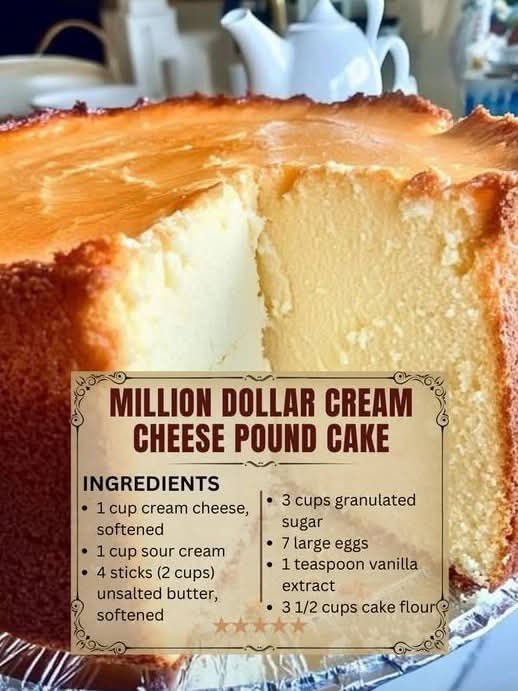
Introduction
Prepare to elevate your baking game with a dessert so rich, so moist, and so utterly divine, it’s earned the prestigious title of “Million Dollar Cream Cheese Pound Cake.” This isn’t just any pound cake; it’s a culinary masterpiece that takes a beloved classic and transforms it into an experience of pure indulgence. Imagine a cake with a perfectly golden-brown crust, giving way to an incredibly tender, dense, and velvety interior that melts in your mouth with every bite. The secret to its unparalleled richness and moisture lies in two star ingredients: cream cheese and sour cream, which work in harmony to create a texture and flavor profile that truly feels luxurious.
From the moment you take your first slice, you’ll understand why this recipe is a treasured gem. The subtle tang from the cream cheese perfectly balances the sweetness, while the sour cream ensures an unbeatably moist crumb that stays fresh for days. This cake is a testament to the idea that sometimes, a few simple additions can turn a good recipe into an extraordinary one. It’s comforting yet sophisticated, making it the perfect centerpiece for any occasion, from a casual family brunch to an elegant dinner party. Get ready to impress your guests and delight your taste buds with a pound cake that lives up to its million-dollar name.
Whether you’re a seasoned baker or just starting your culinary journey, this recipe is designed to guide you to pound cake perfection. We’ll walk you through every step, ensuring you achieve that coveted dense yet tender crumb, that irresistible golden exterior, and that unforgettable flavor that will have everyone asking for the recipe. So, tie on your apron, gather your ingredients, and prepare to bake a cake that’s truly worth its weight in gold.
Nutritional Information
Per serving (approximate values):
- Calories: 720
- Protein: 8g
- Carbohydrates: 65g
- Fat: 48g
- Fiber: 1g
- Sodium: 290mg
Ingredients
- 1 cup cream cheese, softened
- 1 cup sour cream
- 4 sticks (2 cups) unsalted butter, softened
- 3 cups granulated sugar
- 7 large eggs
- 1 teaspoon vanilla extract
- 3 1/2 cups cake flour
Instructions
- Preheat your oven to 325°F (160°C). Grease and flour a 10-12 cup Bundt pan thoroughly, ensuring every crevice is coated to prevent sticking. A baking spray with flour can also be used for convenience.
- In the bowl of a stand mixer fitted with the paddle attachment, cream together the softened cream cheese, softened unsalted butter, and granulated sugar on medium speed until light, fluffy, and pale in color, about 5-7 minutes. This step is crucial for incorporating air and creating a tender crumb.
- Add the eggs one at a time, beating well after each addition. Make sure each egg is fully incorporated before adding the next. Scrape down the sides of the bowl as needed to ensure everything is evenly mixed.
- Stir in the vanilla extract until just combined.
- Reduce the mixer speed to low. Gradually add the cake flour, about 1/2 cup at a time, alternating with the sour cream. Begin and end with cake flour. Mix only until just combined and no streaks of flour remain. Be careful not to overmix, as this can develop gluten and lead to a tough cake.
- Pour the batter evenly into the prepared Bundt pan. Gently tap the pan on the counter a few times to release any air bubbles and ensure the batter settles evenly.
- Bake for 1 hour and 15 minutes to 1 hour and 30 minutes, or until a wooden skewer or toothpick inserted into the center of the cake comes out clean. The top of the cake should be golden brown and spring back when lightly touched.
- Once baked, remove the cake from the oven and let it cool in the pan on a wire rack for 15-20 minutes. This allows the cake to firm up and prevents it from breaking when inverted.
- After cooling in the pan, carefully invert the cake onto the wire rack to cool completely. Allow the cake to cool for at least 1-2 hours before slicing and serving.
Cooking Tips and Variations
Achieving pound cake perfection starts with understanding a few key principles. First and foremost, ingredient temperature is paramount. Ensure your cream cheese, butter, and eggs are at room temperature. This isn’t just a suggestion; it’s critical. Room temperature ingredients emulsify much better, meaning they blend smoothly and evenly, incorporating air more effectively. This leads to a smoother batter and a finer, more tender crumb. Cold ingredients can cause the batter to curdle and result in a dense, uneven cake.
Another golden rule is do not overmix the batter, especially once the flour has been added. Overmixing develops gluten, which is what gives bread its chewiness. While great for bread, too much gluten in a cake will make it tough and dry. Mix only until the ingredients are just combined and no streaks of flour are visible. A few lumps are perfectly acceptable and often preferable to an overmixed batter.
Proper pan preparation is essential for a clean release. Even if your Bundt pan is non-stick, always grease and flour it thoroughly. Use solid shortening (like Crisco) to coat every nook and cranny, then dust with flour, tapping out the excess. For extra insurance, a baking spray that contains flour can be a lifesaver. This step prevents your beautiful cake from sticking and ensures it comes out of the pan in one glorious piece.
For consistent results, consider investing in an oven thermometer. Oven temperatures can vary significantly from what the dial indicates, and an accurate temperature is crucial for even baking. If your oven runs hot or cold, it can drastically affect the baking time and outcome of your cake.
When checking for doneness, rely on the classic toothpick test: insert a wooden skewer or toothpick into the center of the cake. If it comes out clean or with a few moist crumbs attached, your cake is ready. If it comes out with wet batter, continue baking for a few more minutes and test again. The cake should also be golden brown on top and spring back lightly when gently pressed.
Cooling correctly is just as important as baking. Allow the cake to cool in the pan for 15-20 minutes on a wire rack. This allows the cake to set and firm up, making it less likely to break when inverted. After this initial cooling, invert the cake onto the wire rack to cool completely. Rushing this step can lead to a crumbled cake.
Variations:
- Citrus Zest: For a bright, refreshing twist, add 2 tablespoons of lemon, orange, or lime zest to the batter along with the vanilla extract.
- Almond Extract: Substitute half of the vanilla extract with almond extract for a delicate, nutty flavor profile.
- Chocolate Marble: Reserve about 1 cup of batter and mix it with 1/4 cup of melted and cooled unsweetened chocolate. Swirl the chocolate batter into the plain batter in the pan using a knife or skewer.
- Glaze Options: While delicious plain, this cake also pairs beautifully with a simple glaze.
- Vanilla Glaze: Whisk together 1 1/2 cups powdered sugar, 2-3 tablespoons milk, and 1/2 teaspoon vanilla extract until smooth.
- Lemon Glaze: Whisk together 1 1/2 cups powdered sugar with 2-3 tablespoons fresh lemon juice and 1/2 teaspoon lemon zest.
- Serving Suggestions: This pound cake is fantastic on its own, but you can elevate it further with fresh berries, a dollop of homemade whipped cream, or even a scoop of vanilla bean ice cream. For a truly decadent treat, serve it with a warm fruit compote.
Storage and Reheating
Proper storage is key to keeping your Million Dollar Cream Cheese Pound Cake moist and delicious for days. At room temperature, the cake can be stored in an airtight container or tightly wrapped in plastic wrap for up to 3-4 days. This allows the flavors to meld beautifully and the cake to maintain its tender crumb. Avoid placing it directly in the refrigerator for everyday storage, as the cold air can dry it out and alter its texture, making it denser.
If you need to store the cake for a longer period, or if your kitchen is particularly warm, refrigeration is an option. Wrap the cake tightly in plastic wrap, then place it in an airtight container. It will keep well in the refrigerator for up to a week. When ready to serve, allow the cake to come to room temperature before slicing for the best texture and flavor. You can also gently warm individual slices in the microwave for 10-15 seconds for a delightful, just-baked feel.
This pound cake freezes exceptionally well, making it perfect for preparing ahead or saving for later enjoyment. To freeze, ensure the cake is completely cooled. Wrap the entire cake or individual slices tightly in plastic wrap, then wrap again in aluminum foil. Place the wrapped cake in a freezer-safe bag or container. It can be stored in the freezer for up to 3 months. To thaw, transfer the frozen cake to the refrigerator overnight, or place it on the counter at room temperature for several hours. Once thawed, you can enjoy it as is or gently warm it if desired.
Frequently Asked Questions
Why is my pound cake dry or tough?
A dry or tough pound cake is often the result of overmixing the batter, especially after adding the flour. Overmixing develops gluten, which leads to a dense, chewy texture. It can also happen if the cake is overbaked, causing too much moisture to evaporate. Ensure you mix only until the ingredients are just combined and the flour streaks disappear, and always test for doneness with a toothpick to avoid overbaking.
Can I use all-purpose flour instead of cake flour?
While you can substitute all-purpose flour for cake flour in a pinch, it will affect the final texture of your pound cake. Cake flour has a lower protein content, which results in a more tender, delicate, and softer crumb. If using all-purpose flour, you might notice the cake is slightly denser and less tender. To approximate cake flour, you can remove 2 tablespoons of all-purpose flour per cup and replace it with 2 tablespoons of cornstarch, then sift them together before using.
Why did my pound cake crack on top?
Cracking on the top of a pound cake is quite common and usually a sign of a well-baked cake, rather than a flaw. It often happens because the outside of the cake sets and bakes faster than the interior. As the inside continues to rise and expand, the already set crust on top cracks to accommodate the expansion. Using room temperature ingredients and not overfilling the pan can sometimes minimize cracking, but a small crack is often considered a desirable characteristic of homemade pound cake.
How can I prevent my pound cake from sticking to the Bundt pan?
Preventing your pound cake from sticking is crucial for a beautiful presentation. The most important step is thorough greasing and flouring. Use solid shortening (like Crisco) to coat every crevice of the pan, ensuring no spot is missed. Then, dust generously with all-purpose flour, tapping out the excess. For extra insurance, a baking spray that contains flour can be very effective. Make sure the pan is completely cooled before inverting the cake, and allow the cake to cool in the pan for 15-20 minutes before attempting to remove it.