Introduction
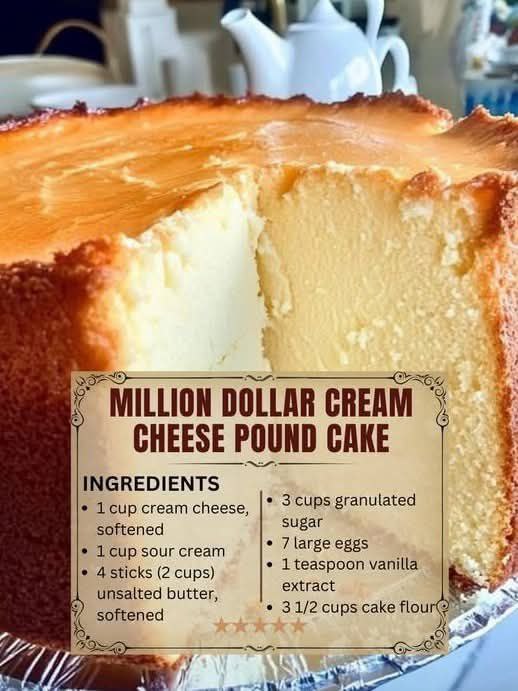
Prepare yourself for a dessert experience that lives up to its opulent name: the Million Dollar Cream Cheese Pound Cake. This isn’t just any pound cake; it’s a masterpiece of texture and flavor, designed to impress and delight with every single bite. Imagine a cake so incredibly moist, so profoundly rich, and yet so wonderfully tender that it practically melts in your mouth. That’s the promise of this recipe, and it delivers on every count, making it the ultimate indulgence for any occasion.
What sets this pound cake apart from its more traditional cousins? The secret lies in its luxurious blend of cream cheese and sour cream, combined with an generous amount of butter. These star ingredients work in harmony to create an unparalleled richness and an astonishingly moist crumb that you won’t find in an ordinary cake. The result is a dessert that’s dense and satisfying, yet surprisingly delicate, with a subtle tang that perfectly balances its sweetness. It’s truly a million-dollar taste experience that elevates the humble pound cake to an extraordinary level.
Whether you’re looking for the perfect centerpiece for a holiday gathering, a comforting treat for a Sunday brunch, or simply want to bake something truly special just because, this Million Dollar Cream Cheese Pound Cake is your answer. While its name suggests extravagance, the process of creating this decadent dessert is surprisingly straightforward, making it accessible for home bakers of all skill levels. Get ready to transform simple ingredients into a cake that tastes like a dream, proving that some of life’s greatest luxuries can be baked right in your own kitchen.
Nutritional Information
Per serving (approximate values, assuming 16 servings per cake):
- Calories: 580
- Protein: 7g
- Carbohydrates: 62g
- Fat: 35g
- Fiber: 1g
- Sodium: 250mg
Ingredients
- 1 cup (2 sticks) unsalted butter, softened
- 1 cup cream cheese, softened
- 3 cups granulated sugar
- 7 large eggs, at room temperature
- 1 teaspoon vanilla extract
- 1 cup sour cream, at room temperature
- 3 1/2 cups cake flour, sifted
Instructions
- Prepare Your Pan: Preheat your oven to 325°F (160°C). Grease and flour a 10-12 cup Bundt pan thoroughly. Make sure to get into all the crevices. For best results, use a baking spray with flour, or apply softened butter to every surface and then dust evenly with flour, tapping out any excess.
- Cream Butter and Cream Cheese: In a large mixing bowl, using an electric mixer on medium speed, cream together the softened butter and softened cream cheese until light and fluffy, about 3-5 minutes. This step is crucial for incorporating air and achieving a tender crumb.
- Add Sugar: Gradually add the granulated sugar to the butter and cream cheese mixture, beating on medium-high speed until the mixture is very light in color and fluffy, about 5-7 minutes. Scrape down the sides of the bowl occasionally to ensure everything is well combined.
- Incorporate Eggs: Add the eggs one at a time, beating well after each addition. Make sure each egg is fully incorporated before adding the next. This helps to emulsify the batter and prevent it from curdling.
- Stir in Vanilla and Sour Cream: Reduce mixer speed to low. Add the vanilla extract and sour cream, mixing until just combined. Do not overmix at this stage.
- Add Cake Flour: Gradually add the sifted cake flour to the wet ingredients, mixing on low speed until just combined and no streaks of flour remain. Be very careful not to overmix the batter. Overmixing can develop the gluten in the flour, leading to a tough cake.
- Fill the Pan: Pour the batter evenly into the prepared Bundt pan. Gently tap the pan on the counter a few times to release any air bubbles and ensure the batter settles evenly.
- Bake: Bake in the preheated oven for 1 hour and 15 minutes to 1 hour and 30 minutes, or until a wooden skewer or toothpick inserted into the center of the cake comes out clean. The top of the cake should be golden brown and spring back when lightly touched.
- Cool in Pan: Once baked, remove the cake from the oven and let it cool in the Bundt pan on a wire rack for 15-20 minutes. This allows the cake to firm up slightly, making it easier to invert.
- Invert and Cool Completely: After cooling in the pan, carefully invert the cake onto a wire rack to cool completely. Allowing the cake to cool fully before slicing is important for its structure and texture.
- Serve: Slice and serve plain, or with your favorite toppings like fresh berries, a dusting of powdered sugar, or a simple glaze.
Cooking Tips and Variations
Achieving the perfect Million Dollar Cream Cheese Pound Cake is all about precision and understanding the role of each ingredient. Here are some expert tips to ensure your cake turns out flawlessly every time, along with some delicious variations to keep things exciting.
Essential Tips for Pound Cake Perfection:
- Room Temperature Ingredients are Non-Negotiable: This is perhaps the most crucial tip for any pound cake. Softened butter, softened cream cheese, and room temperature eggs and sour cream emulsify much better, creating a smooth, homogenous batter. Cold ingredients will result in a lumpy batter and a denser, less tender cake. Take your butter and cream cheese out at least an hour or two before baking, and place eggs and sour cream in warm water for about 10-15 minutes if you forget.
- Sift Your Cake Flour: Cake flour is key to this cake’s tender crumb. Sifting it before measuring, and then again before adding to the batter, helps to aerate it and prevent lumps, ensuring a lighter texture. Cake flour has a lower protein content than all-purpose flour, which means less gluten development and a more delicate crumb. If you absolutely can’t find cake flour, you can make a substitute by removing 2 tablespoons of all-purpose flour from each cup and replacing it with 2 tablespoons of cornstarch, then sifting several times.
- Do Not Overmix the Batter: Once you add the flour, mix only until just combined. Overmixing develops the gluten in the flour, which will lead to a tough, chewy cake rather than the desired tender, melt-in-your-mouth texture. Use the lowest speed on your mixer and stop as soon as no dry streaks of flour are visible.
- Proper Pan Preparation: A well-greased and floured Bundt pan is vital for an easy release. Use a baking spray specifically designed for baking (containing flour), or generously coat the pan with softened butter, ensuring every crevice is covered, then dust with flour, tapping out any excess. This prevents the cake from sticking and breaking apart when inverted.
- Bake Low and Slow: Pound cakes benefit from a moderate oven temperature (325°F/160°C). This allows the cake to bake evenly all the way through without burning the exterior. If your oven tends to run hot or cold, consider using an oven thermometer for accuracy.
- Test for Doneness Accurately: Insert a long wooden skewer or toothpick into the very center of the cake. It should come out clean, with no wet batter attached. If it comes out with moist crumbs, that’s fine, but if it’s wet, continue baking for a few more minutes and test again.
- Cooling is Key: Resist the urge to immediately invert the cake. Allowing it to cool in the pan for 15-20 minutes lets the cake structure set, making it less likely to break when removed. Then, invert it onto a wire rack to cool completely. Trying to slice a warm pound cake can result in a gummy texture and crumbly slices.
Delicious Variations:
- Citrus Zest Infusion: For a brighter, more aromatic cake, add the zest of one large lemon, orange, or lime to the sugar when creaming with the butter and cream cheese. The oils from the zest will infuse beautifully into the cake. A matching citrus glaze would be a fantastic complement.
- Almond Delight: Substitute half of the vanilla extract with almond extract (e.g., 1/2 teaspoon vanilla, 1/2 teaspoon almond extract) for a sophisticated nutty flavor. You can also sprinkle sliced almonds on top before baking or add a few drops of almond extract to a simple powdered sugar glaze.
- Nutmeg Warmth: Add 1/2 teaspoon of freshly grated nutmeg to the dry ingredients for a subtle, comforting spice note, especially wonderful during cooler months.
- Chocolate Chip Surprise: Fold in 1 cup of mini chocolate chips (white, milk, or dark) into the batter just before pouring it into the pan. This adds pockets of melty chocolate goodness.
- Marble Swirl: Divide the batter in half. To one half, mix in 1/4 cup melted and cooled unsweetened chocolate or cocoa powder. Alternate spoonfuls of plain and chocolate batter into the Bundt pan, then swirl gently with a knife for a marbled effect.
- Cream Cheese Glaze: For an extra layer of decadence, whip up a simple cream cheese glaze. Combine 4 oz softened cream cheese, 1/4 cup softened unsalted butter, 2 cups powdered sugar, 1-2 tablespoons milk or cream, and 1/2 teaspoon vanilla extract. Beat until smooth and pour over the cooled cake.
- Berry Burst: Serve slices of this pound cake with a generous spoonful of fresh mixed berries (strawberries, blueberries, raspberries) or a homemade berry compote. The tartness of the berries beautifully cuts through the richness of the cake.
Storage and Reheating
Proper storage is essential to keep your Million Dollar Cream Cheese Pound Cake tasting fresh and moist for as long as possible. This cake, thanks to its high fat content from butter and cream cheese, tends to stay moist for several days.
Storage:
- At Room Temperature: This pound cake can be stored at room temperature for up to 3-4 days. Ensure it is tightly wrapped in plastic wrap or placed in an airtight container to prevent it from drying out. If your kitchen is very warm, or if you’ve added a fresh cream cheese glaze, refrigeration might be a better option.
- In the Refrigerator: For longer storage, or if your cake has a perishable glaze (like a cream cheese glaze), store it in an airtight container in the refrigerator for up to a week. The cold air can cause the cake to become a bit firmer, but it will still be delicious.
- Freezing: This pound cake freezes exceptionally well.
- Whole Cake: Allow the cake to cool completely. Wrap it tightly in several layers of plastic wrap, then an additional layer of aluminum foil. Place it in a freezer-safe bag or container. It can be frozen for up to 2-3 months.
- Individual Slices: For convenience, slice the cooled cake and wrap individual slices tightly in plastic wrap, then place them in a freezer-safe bag. This allows you to thaw only what you need.
Reheating:
- From Room Temperature/Refrigerated: If stored at room temperature or refrigerated, the cake is usually best enjoyed at room temperature. Simply let refrigerated slices sit out for 20-30 minutes before serving. You can also warm individual slices slightly in the microwave for 15-30 seconds for a “just baked” feel, but be careful not to overheat, as this can dry it out.
- From Frozen:
- Whole Cake: To thaw a whole frozen cake, transfer it to the refrigerator overnight (8-12 hours) while still wrapped. Once thawed, unwrap and let it come to room temperature on the counter before serving.
- Individual Slices: Thaw individual slices at room temperature for about 30-60 minutes, or warm gently in the microwave for 30-60 seconds (or until just warm in the center).
Always ensure the cake is completely thawed before serving for the best texture and flavor.
Frequently Asked Questions
What is the difference between pound cake and regular cake?
The primary difference lies in the ingredients and proportions, which in turn affect the texture. Traditionally, pound cake was made with a pound each of butter, sugar, eggs, and flour, hence the name. This creates a much denser, richer, and moister cake compared to a “regular” cake (like a layer cake), which often uses leavening agents like baking powder or soda, and a higher proportion of liquid, resulting in a lighter, airier crumb. Our Million Dollar Cream Cheese Pound Cake enhances this classic density with cream cheese and sour cream for an even more luxurious texture.
Can I use all-purpose flour instead of cake flour?
While you can, it’s highly recommended to use cake flour for this recipe. Cake flour has a lower protein content than all-purpose flour, which means less gluten development. This results in the incredibly tender, delicate, and fine crumb that is characteristic of a truly exceptional pound cake. If you use all-purpose flour, your cake will likely be denser and not as tender. If you must use all-purpose flour, you can create a substitute by removing 2 tablespoons of all-purpose flour from each cup and replacing it with 2 tablespoons of cornstarch, then sifting the mixture several times.
Why did my pound cake crack on top?
A crack on top of a pound cake is actually quite common and often a sign of a well-baked cake, rather than a flaw! It typically happens because the outside of the cake sets and bakes faster than the interior. As the inside continues to rise, the already-set crust cracks to accommodate the expansion. It also allows steam to escape. While it can sometimes be minimized by ensuring your oven temperature is accurate and not too high, it’s generally nothing to worry about and adds to the rustic charm of a homemade pound cake.
My pound cake is dry. What went wrong?
Several factors can contribute to a dry pound cake. The most common culprits include overbaking (which causes too much moisture to evaporate), not using enough fat (butter, cream cheese, sour cream), or overmixing the batter after adding the flour (which develops gluten and can make the cake tough and dry). Using cold ingredients can also lead to a poor emulsion and a less moist cake. Always ensure your ingredients are at room temperature, measure accurately, and bake until just done, testing with a skewer.