Introduction
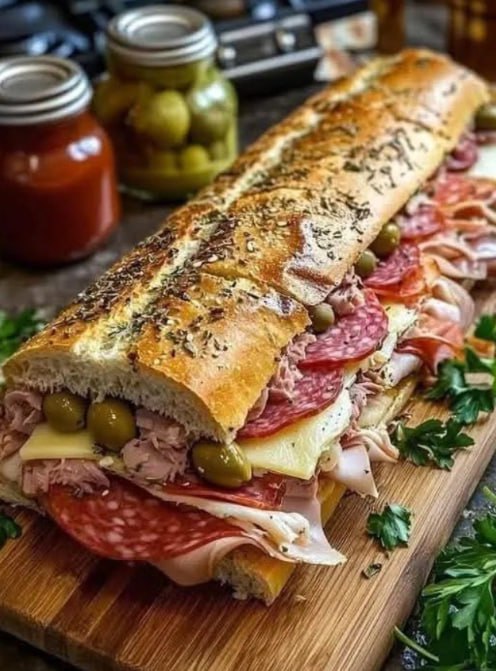
Prepare yourself for a culinary adventure that’s as grand in scale as it is in flavor: the Giant Muffaletta Italian Sandwich. This isn’t just a sandwich; it’s an architectural marvel of deli meats, cheeses, and the star of the show – a tangy, briny olive salad, all nestled within a robust, crusty loaf. Originating from the vibrant Italian-American delis of New Orleans, the Muffaletta is a testament to hearty, flavorful eating. Its impressive size and layers of deliciousness make it a showstopper, perfect for feeding a crowd, a hungry family, or simply satisfying an epic craving. The visual appeal alone is enough to make mouths water, with its vibrant colors and towering layers promising an explosion of taste in every bite.
What sets the Muffaletta apart is its unique combination of textures and flavors. The firm, round bread, traditionally a sesame-seeded loaf, provides the perfect sturdy foundation. Then comes the magic: the olive salad, a zesty concoction of green olives, olive oil, garlic, and often pickled vegetables, which not only adds a burst of briny freshness but also moistens the bread, allowing the flavors to meld beautifully. Stacked generously above are thin slices of Italian deli meats – salami, mortadella, ham – and creamy cheeses like provolone and Swiss. This “Giant Italian Sandwich” moniker isn’t an exaggeration; it’s a promise of a substantial, satisfying meal that embodies the spirit of Italian-American culinary tradition, designed for sharing and savoring.
Recreating this impressive sandwich at home is a rewarding experience, transforming simple ingredients into a masterpiece. The key lies in quality components and a little patience, as the sandwich truly shines after its flavors have had time to meld and develop. Whether you’re planning a picnic, a party, or just a truly epic lunch, this step-by-step guide will walk you through crafting your own Giant Muffaletta, ensuring every bite is packed with the authentic taste and satisfying heft that this iconic sandwich is known for. Get ready to embark on a journey of robust flavors, delightful textures, and the sheer joy of creating something truly magnificent in your own kitchen.
Nutritional Information
Per serving (approximate values, based on 8 large servings from a 2-foot sandwich):
- Calories: 780 kcal
- Protein: 45g
- Carbohydrates: 55g
- Fat: 42g
- Fiber: 4g
- Sodium: 2500mg
Ingredients
- 1 large (2-foot) crusty Italian loaf or baguette, approximately 1.5-2 pounds
- 1 cup green olives, pitted and roughly chopped
- 1/2 cup black olives, pitted and roughly chopped
- 1/4 cup capers, drained and roughly chopped
- 1/4 cup giardiniera (Italian pickled vegetables), drained and finely chopped
- 3 cloves garlic, minced
- 1/4 cup fresh parsley, finely chopped
- 1/4 cup extra virgin olive oil
- 2 tablespoons red wine vinegar
- 1 teaspoon dried oregano
- 1/2 teaspoon red pepper flakes (optional, for a little heat)
- Salt and freshly ground black pepper to taste
- 1/2 pound thinly sliced Genoa salami
- 1/2 pound thinly sliced mortadella
- 1/2 pound thinly sliced smoked ham
- 1/4 pound thinly sliced capicola (optional)
- 1/2 pound thinly sliced provolone cheese
- 1/2 pound thinly sliced Muenster cheese (or Swiss cheese)
- Fresh parsley sprigs for garnish (optional)
Instructions
- Prepare the Olive Salad: In a medium bowl, combine the chopped green olives, black olives, capers, giardiniera, minced garlic, finely chopped fresh parsley, extra virgin olive oil, red wine vinegar, dried oregano, and red pepper flakes (if using). Stir well to combine. Taste and season with salt and freshly ground black pepper as needed. The olive salad is the heart of the muffaletta, so don’t be shy about adjusting seasonings to your preference. Allow the mixture to sit for at least 30 minutes at room temperature, or ideally for a few hours in the refrigerator, to allow the flavors to meld.
- Prepare the Bread: Carefully slice the Italian loaf horizontally through the middle, creating a top and bottom half. Be gentle to keep the loaf intact. If the bread has a very dense crumb, you can scoop out a small amount of the interior from both halves to create more space for the fillings, but this is optional, especially with an airy baguette. Lightly brush the cut sides of both bread halves with a little extra virgin olive oil, or even some of the oil from the olive salad mixture, to add moisture and flavor.
- Assemble the Bottom Layer: Spread about half of the prepared olive salad generously and evenly over the cut side of the bottom half of the bread. Ensure it covers from edge to edge, as this layer provides crucial flavor and moisture throughout the sandwich.
- Layer the Meats: Begin layering the meats over the olive salad. Start with the salami, arranging the slices so they slightly overlap and cover the entire surface. Continue with the mortadella, then the smoked ham, and finally the capicola if you are using it. For a truly “giant” and impressive sandwich, fold the deli meats artfully or scrunch them slightly to create more height and texture. Aim for generous, even layers of each meat.
- Layer the Cheeses: Next, place the slices of provolone cheese over the meats. Follow with the Muenster or Swiss cheese. Ensure the cheese layers are also spread evenly over the entire surface, providing a creamy counterpoint to the salty meats and tangy olive salad.
- Apply Top Olive Salad Layer: Spread the remaining half of the olive salad generously over the cut side of the top half of the bread. This ensures a burst of flavor with every bite and helps to moisten the top layer of bread.
- Close the Sandwich: Carefully place the top half of the bread onto the layered bottom half, pressing down gently but firmly to compact the sandwich.
- Press the Sandwich: This is a crucial step for a traditional muffaletta. Wrap the entire sandwich tightly in plastic wrap, ensuring it’s completely sealed. Place the wrapped sandwich on a flat surface, such as a cutting board. Place another cutting board or a heavy baking sheet on top of the sandwich. Weigh it down with heavy objects like cans of food, books, or a cast-iron skillet. Refrigerate the pressed sandwich for at least 2 hours, or ideally overnight. Pressing helps to meld the flavors, compact the ingredients, and make the sandwich easier to slice and eat.
- Serve: When ready to serve, unwrap the muffaletta. For easier cutting and serving, use a large serrated knife to slice the giant sandwich crosswise into individual portions, typically 2-3 inch thick slices. Garnish with fresh parsley sprigs if desired. For the best flavor, allow the sandwich to come to room temperature for about 30 minutes before serving.
Cooking Tips and Variations
The success of your Giant Muffaletta hinges on a few key elements and a willingness to explore variations. Firstly, the bread is paramount. A truly great muffaletta requires a sturdy, crusty Italian loaf that can withstand the weight of the fillings and the pressing process without becoming soggy. Look for a bread with a relatively dense crumb but a good, chewy crust. While a traditional round muffaletta loaf is ideal, a robust Italian baguette or a similar rustic loaf works wonderfully for a “giant” version. If your chosen bread is very soft, you might want to toast the cut sides lightly before assembling to create a barrier against moisture, although this is not traditional.
The olive salad is the soul of the muffaletta, so don’t compromise on its quality. While store-bought olive salad can be convenient, making your own allows for customization and superior freshness. Experiment with different types of olives – Kalamata or Castelvetrano can add new dimensions. Adding finely diced celery or carrots to the olive salad can introduce extra crunch and texture. A pinch of dried basil or a bay leaf steeped in the oil and vinegar can also enhance the aroma. Always let the olive salad sit for a while, preferably overnight, for the flavors to fully meld. This step is non-negotiable for the best taste.
When it comes to the meats and cheeses, quality truly shines through. Opt for freshly sliced, high-quality Italian deli meats from a reputable deli. The combination of Genoa salami, mortadella, and ham is classic, but feel free to add capicola, soppressata, or even thinly sliced prosciutto for an extra layer of flavor. For cheeses, provolone is essential for its sharp, tangy notes, while Muenster or Swiss offer a milder, creamier contrast. You could also try a bit of fontina for a nuttier flavor. The key is to layer generously and evenly, ensuring that each bite contains a harmonious blend of all components.
The pressing step is critical. It’s not just about making the sandwich easier to eat; it’s about forcing the flavors to marry and the olive oil to permeate the bread and fillings. If you don’t have heavy objects, simply wrapping it tightly and letting it sit on a flat surface for a longer period will still yield good results. Some enthusiasts even use a dedicated sandwich press. For a spicier kick, you can add more red pepper flakes to the olive salad or even a layer of thinly sliced pepperoncini. For a vegetarian variation, you could omit the meats and double up on cheeses, adding roasted red peppers, marinated artichoke hearts, or grilled eggplant slices, ensuring the olive salad remains the star.
Storage and Reheating
One of the best qualities of a Giant Muffaletta is that it’s often even better the day after it’s made, once all the flavors have had ample time to meld and the olive oil has fully permeated the bread. Proper storage is key to preserving its deliciousness and ensuring food safety.
To store a whole, un-cut muffaletta, wrap it very tightly in several layers of plastic wrap, then an additional layer of aluminum foil. This prevents air exposure, which can dry out the bread and fillings. Place the well-wrapped sandwich in the refrigerator. It will stay fresh and delicious for up to 3-4 days. The pressing process inherently helps with storage, as it compacts the ingredients, reducing air pockets.
If you have already sliced the muffaletta, it’s best to wrap individual slices tightly in plastic wrap, then place them in an airtight container or a large resealable bag before refrigerating. This prevents the cut edges from drying out and keeps the olive salad from leaking. Sliced portions should also be consumed within 3-4 days.
Reheating a muffaletta is generally not recommended, as it’s traditionally served at room temperature. Heating it in a microwave will likely make the bread soggy and the meats tough. If you prefer a warm sandwich, you could try warming individual slices gently in a panini press or a dry skillet over low heat, just until the cheese starts to melt and the bread is lightly toasted. However, this deviates from the classic muffaletta experience. The optimal way to enjoy leftover muffaletta is to simply remove it from the refrigerator about 30-60 minutes before serving, allowing it to come to room temperature. This allows the flavors to awaken and the textures to soften slightly, bringing it back to its prime. Do not leave the sandwich out at room temperature for more than 2 hours in total, including the time it takes to serve and eat, due to the perishable nature of the meats and cheeses.
Frequently Asked Questions
What kind of bread is best for a muffaletta?
The best bread for a muffaletta is a sturdy, crusty Italian loaf or baguette that can hold up to the generous fillings and the pressing process. Traditionally, a round, sesame-seeded muffaletta loaf is used, but for a “giant” version, a long, robust Italian loaf with a chewy crust and a relatively dense but not overly soft crumb is ideal. Avoid very soft or airy breads that might become soggy or fall apart under the weight of the ingredients.
Can I make the olive salad ahead of time?
Absolutely, and it’s highly recommended! The olive salad is the heart and soul of the muffaletta, and its flavors significantly improve when given time to meld. You can prepare the olive salad up to 2-3 days in advance and store it in an airtight container in the refrigerator. This allows the garlic, herbs, and vinegars to fully infuse the olives, resulting in a more complex and delicious flavor profile for your sandwich.
Why is pressing the muffaletta so important?
Pressing the muffaletta is a crucial step for several reasons. Firstly, it compacts all the layers of meat, cheese, and olive salad, making the sandwich much easier to slice and eat without everything falling out. More importantly, pressing forces the flavors to meld together, allowing the olive oil and vinegars from the olive salad to permeate the bread and the other fillings. This creates a cohesive, integrated flavor experience where every bite is rich and harmonious, which is a hallmark of a truly great muffaletta.