Introduction
There are some desserts that instantly transport you back to childhood, to family gatherings, or to the comforting embrace of a home-cooked meal. The Pineapple Upside-Down Cake is undoubtedly one of them. This classic, with its vibrant pineapple rings and sticky-sweet caramel topping, has graced countless dinner tables for decades, earning its place as a beloved American staple. It’s a dessert that’s as much a feast for the eyes as it is for the palate, promising a delightful surprise with every slice as the golden-brown fruit is revealed.
What makes this particular Pineapple Upside-Down Cake stand out from the rest? We’ve taken that cherished classic and elevated it to new heights, focusing on a cake that is exceptionally moist, almost impossibly tender, and bursting with tropical flavor. The star of the show, of course, remains the beautifully caramelized pineapple, but we’ve added an extra touch of indulgence with a rich, buttery caramel glaze that drizzles down every crevice, intensifying the sweetness and ensuring every bite is utterly divine. This isn’t just a cake; it’s a celebration of simple, wholesome ingredients transformed into something truly spectacular.
Despite its elegant appearance and impressive presentation, this Pineapple Upside-Down Cake is surprisingly straightforward to prepare. Whether you’re a seasoned baker or just starting your culinary journey, our step-by-step guide will ensure your success. It’s the perfect dessert for any occasion, from a casual weeknight treat to a show-stopping centerpiece for your next special event. Get ready to experience the sweet and tangy perfection of a dessert that truly has it all!
Nutritional Information
Per serving (approximate values):
- Calories: 420
- Protein: 4g
- Carbohydrates: 65g
- Fat: 17g
- Fiber: 1g
- Sodium: 280mg
Ingredients
For the Caramel Topping:
- 1/2 cup (1 stick) unsalted butter
- 1 cup packed light brown sugar
- 1 (20-ounce) can pineapple rings, drained well (reserve 1/4 cup juice for glaze)
- 10-12 maraschino cherries, drained
For the Cake Batter:
- 1 1/2 cups all-purpose flour
- 1 1/2 teaspoons baking powder
- 1/4 teaspoon salt
- 1/2 cup (1 stick) unsalted butter, softened
- 1 cup granulated sugar
- 2 large eggs
- 1 teaspoon vanilla extract
- 1/2 cup milk (whole milk recommended)
For the Caramel Glaze:
- 1/4 cup reserved pineapple juice
- 1/4 cup packed light brown sugar
- 2 tablespoons unsalted butter
- 1/2 teaspoon vanilla extract
- 1 cup powdered sugar, sifted
Instructions
- Prepare Your Bundt Pan: Preheat your oven to 350°F (175°C). Thoroughly grease a 10-12 cup Bundt pan with butter or baking spray. Ensure every crevice is coated to prevent sticking.
- Make the Caramel Topping: In a small saucepan, melt 1/2 cup (1 stick) unsalted butter over medium heat. Once melted, stir in 1 cup packed light brown sugar until fully combined and bubbly. Pour this caramel mixture evenly into the bottom of the prepared Bundt pan.
- Arrange the Pineapple and Cherries: Arrange the drained pineapple rings over the caramel layer in the bottom of the pan. You can place them flat or slightly overlapping if needed. Place a maraschino cherry in the center of each pineapple ring, and scatter additional cherries in any gaps between the rings for extra color.
- Whisk Dry Ingredients: In a medium bowl, whisk together the all-purpose flour, baking powder, and salt. Set aside.
- Cream Butter and Sugar: In a large bowl, using an electric mixer, cream together the 1/2 cup (1 stick) softened unsalted butter and 1 cup granulated sugar on medium speed until light and fluffy, about 2-3 minutes.
- Add Eggs and Vanilla: Beat in the eggs one at a time, mixing well after each addition. Stir in the vanilla extract. Scrape down the sides of the bowl as needed to ensure everything is incorporated.
- Alternate Wet and Dry Ingredients: With the mixer on low speed, gradually add the dry ingredients to the wet ingredients, alternating with the milk. Begin and end with the flour mixture (e.g., add 1/3 of the flour, then 1/2 of the milk, then 1/3 of the flour, then the remaining 1/2 of the milk, and finally the last 1/3 of the flour). Mix until just combined, being careful not to overmix. Overmixing can lead to a tough cake.
- Pour Batter into Pan: Carefully spoon the cake batter over the pineapple and caramel layer in the Bundt pan. Gently spread the batter evenly with a spatula, ensuring not to disturb the fruit arrangement too much.
- Bake the Cake: Place the Bundt pan on a baking sheet (to catch any potential drips) and bake for 45-55 minutes, or until a wooden skewer or toothpick inserted into the center of the cake comes out clean.
- Cool and Invert: Once baked, remove the cake from the oven and let it cool in the pan on a wire rack for exactly 15 minutes. This cooling time is crucial for the caramel to set slightly but not harden too much, allowing for a clean release.
- The “Flip”: After 15 minutes, place a serving plate or cake stand over the Bundt pan. Carefully but confidently, invert the cake onto the plate. Lift the pan slowly. If any pineapple or caramel sticks, gently coax it out with a small spatula and place it back onto the cake.
- Prepare the Caramel Glaze: While the cake is cooling, in a small saucepan, combine the reserved 1/4 cup pineapple juice, 1/4 cup light brown sugar, and 2 tablespoons unsalted butter. Bring to a simmer over medium heat, stirring until the sugar is dissolved and the butter is melted. Remove from heat and stir in 1/2 teaspoon vanilla extract.
- Whisk in Powdered Sugar: Gradually whisk the sifted powdered sugar into the warm glaze mixture until smooth and free of lumps. If the glaze is too thick, add a tiny bit more pineapple juice or milk; if too thin, add a bit more powdered sugar.
- Glaze the Cake: Once the cake has cooled for at least 30 minutes on the serving plate (it can still be slightly warm), generously drizzle the warm caramel glaze over the entire cake, allowing it to drip down the sides and into the center.
- Serve and Enjoy: Allow the glaze to set for a few minutes before slicing and serving.
Cooking Tips and Variations
To ensure your Pineapple Upside-Down Cake is nothing short of perfection, here are some invaluable tips and exciting variations:
Pro Tips for Success:
- Thoroughly Drain Pineapple: This is crucial! Excess moisture from the pineapple can make your caramel topping too thin and prevent proper caramelization. Pat the pineapple rings dry with paper towels after draining for the best results.
- Don’t Skimp on Greasing: When using a Bundt pan, especially with sticky toppings, a generous coating of butter or baking spray (the kind with flour) is non-negotiable. Get into every nook and cranny to prevent sticking. You can even dust lightly with flour after greasing for extra insurance.
- The Right Cooling Time is Key: The 15-minute cooling period before inverting is precise for a reason. Too short, and the cake might fall apart. Too long, and the caramel can harden and stick to the pan. Set a timer!
- Gentle Batter Spreading: When spooning the batter over the pineapple, do it gently. Use the back of a spoon or an offset spatula to carefully spread it out without disturbing the fruit arrangement underneath.
- Check for Doneness Properly: A wooden skewer or toothpick inserted into the thickest part of the cake should come out clean, with no wet batter clinging to it. If it’s still gooey, bake for a few more minutes.
- Sift Powdered Sugar for Glaze: Sifting your powdered sugar ensures a super smooth, lump-free glaze. It’s a small step that makes a big difference in presentation.
- Don’t Be Afraid of the Flip: The inversion can be daunting, but approach it with confidence. Place your serving plate firmly over the pan, hold both tightly, and flip in one swift, steady motion.
Troubleshooting Common Issues:
- Cake Sticks to the Pan: This usually means insufficient greasing or cooling for too long. If it happens, let the cake cool completely, then try gently running a thin, flexible spatula around the edges. You can also place the pan in a warm water bath for a few minutes to soften the caramel before attempting to invert again.
- Caramel Topping is Too Runny: This could be due to too much moisture from the pineapple (ensure it’s well-drained) or an imbalance in the butter-sugar ratio. Make sure your measurements are accurate.
- Cake is Dry: Overmixing the batter develops the gluten too much, leading to a tough, dry cake. Mix until just combined. Also, ensure you don’t overbake.
Exciting Variations to Try:
- Nutty Crunch: Before arranging the pineapple, sprinkle 1/2 cup of chopped pecans or walnuts over the caramel layer. The nuts will toast beautifully and add a delightful crunch.
- Tropical Twist: Replace some of the pineapple with mango slices or even a combination of pineapple and coconut flakes for an even more exotic flavor profile.
- Spice It Up: Add 1/2 teaspoon of ground ginger or a pinch of nutmeg to the cake batter for a subtle warmth that complements the pineapple.
- Rum or Bourbon Infusion: For an adult twist, substitute 2 tablespoons of the milk with dark rum or bourbon in the cake batter, or add a teaspoon to the caramel glaze for a boozy kick.
- Citrus Zest: Add 1 teaspoon of orange or lime zest to the cake batter to brighten the flavors and add an aromatic note.
- Different Fruits: Don’t limit yourself to pineapple! This recipe works wonderfully with other fruits like sliced peaches, thinly sliced apples, or even pear halves. Adjust the cooking time slightly if using softer fruits.
- Individual Servings: Bake in individual ramekins or muffin tins for charming single-serve upside-down cakes. Adjust baking time accordingly (likely 20-30 minutes).
Storage and Reheating
Proper storage and reheating ensure your delicious Pineapple Upside-Down Cake remains fresh and flavorful for as long as possible.
Storage:
- Room Temperature: If you plan to serve the cake within 1-2 days, it can be stored at room temperature. Cover the cake loosely with plastic wrap or a cake dome to prevent it from drying out. Keep it in a cool, dry place away from direct sunlight. The caramel topping and glaze will remain soft and delicious.
- Refrigerator: For longer storage, or if your kitchen is particularly warm, store the cake in an airtight container in the refrigerator for up to 4-5 days. The cold temperature will firm up the caramel and glaze, but this doesn’t affect the flavor.
- Freezing: Pineapple Upside-Down Cake freezes surprisingly well! To freeze, ensure the cake is completely cooled. You can freeze it whole or in individual slices. Wrap the cake tightly in plastic wrap, then an additional layer of aluminum foil. Place it in a freezer-safe bag or container. It can be stored in the freezer for up to 2-3 months.
Reheating:
- From Room Temperature: If stored at room temperature, the cake is ready to serve as is.
- From Refrigerator: For a warm, gooey experience, you can gently reheat individual slices in the microwave for 20-30 seconds, or until just warmed through. Be careful not to overheat, as this can dry out the cake. Alternatively, you can place slices on a baking sheet and warm them in a preheated oven at 300°F (150°C) for about 5-10 minutes.
- From Freezer: If reheating a whole cake, thaw it overnight in the refrigerator. Once thawed, you can warm it in a preheated oven at 300°F (150°C) for 15-20 minutes, or until warmed through. For individual slices, you can microwave them directly from frozen for 1-2 minutes, or until soft and warm.
Serving Suggestions:
While this cake is absolutely divine on its own, here are a few ideas to elevate your serving experience:
- Warm with Ice Cream: A classic pairing! A scoop of vanilla bean ice cream melting into the warm caramel and cake is pure bliss.
- Dollop of Whipped Cream: Freshly whipped cream adds a light, airy contrast to the rich cake.
- Crème Fraîche or Greek Yogurt: For a slightly less sweet and tangy counterpoint, a dollop of crème fraîche or plain Greek yogurt can be a delightful addition.
- A Sprinkle of Toasted Coconut: Adds extra tropical flavor and texture.
- Coffee or Tea: Delicious with a hot cup of coffee or your favorite tea.
Frequently Asked Questions
What kind of pan is best for Pineapple Upside-Down Cake?
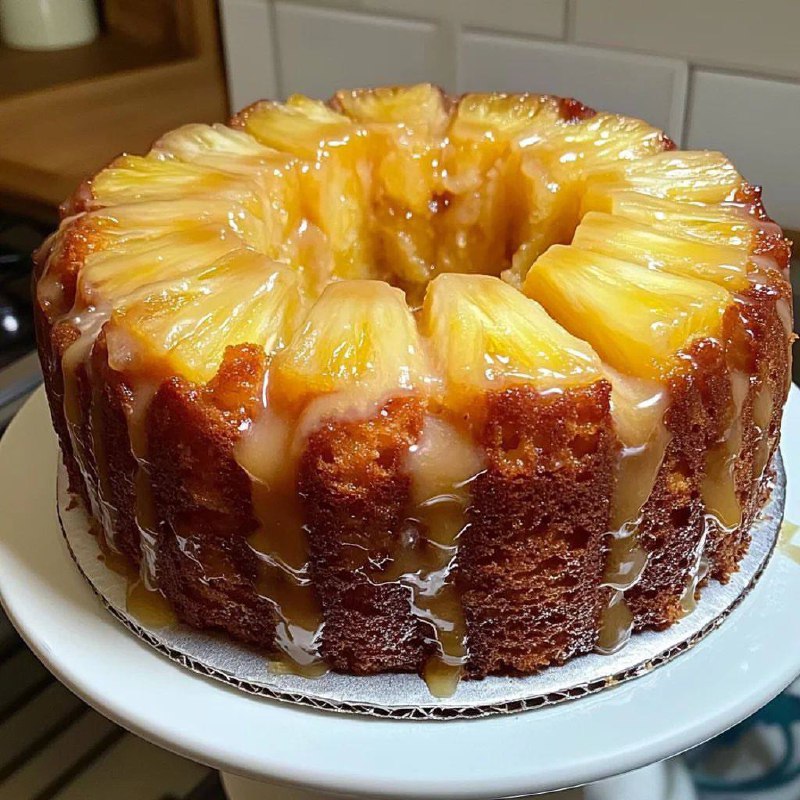
A 10-12 cup Bundt pan is ideal for this recipe, as shown in the image, giving the cake its beautiful fluted shape and allowing for a generous topping. However, a 9-inch round cake pan (at least 2 inches deep) can also be used. If using a round pan, you might need to adjust the number of pineapple rings and cherries slightly to fit your arrangement, and the baking time might be a little shorter, so keep an eye on it.
Can I use fresh pineapple instead of canned?
Absolutely! Using fresh pineapple can provide a more vibrant flavor and firmer texture. If using fresh, you’ll need to peel, core, and slice it into rings or half-moon shapes about 1/4 to 1/2 inch thick. The key is to ensure the fresh pineapple is very well-drained and patted dry before placing it in the pan, as fresh pineapple tends to release more moisture during baking than canned, which could thin out your caramel topping. Keep in mind that fresh pineapple contains an enzyme that can sometimes interact with dairy in the batter, but in a baked cake, this is usually not an issue.
Why did my cake stick to the pan when I tried to invert it?
Cake sticking to the pan is a common frustration, especially with upside-down cakes. The most frequent culprits are not greasing the pan thoroughly enough (especially with Bundt pans that have intricate designs), or letting the cake cool in the pan for too long. If the cake cools for too long, the caramel topping can harden and act like glue, making it difficult to release. Ensure you grease every crevice generously with butter or baking spray, and strictly adhere to the 15-minute cooling time before inverting. If it still sticks, try gently running a thin, flexible knife or spatula around the edges, or placing the bottom of the pan in a warm water bath for a few minutes to soften the caramel before attempting to flip again.