Introduction
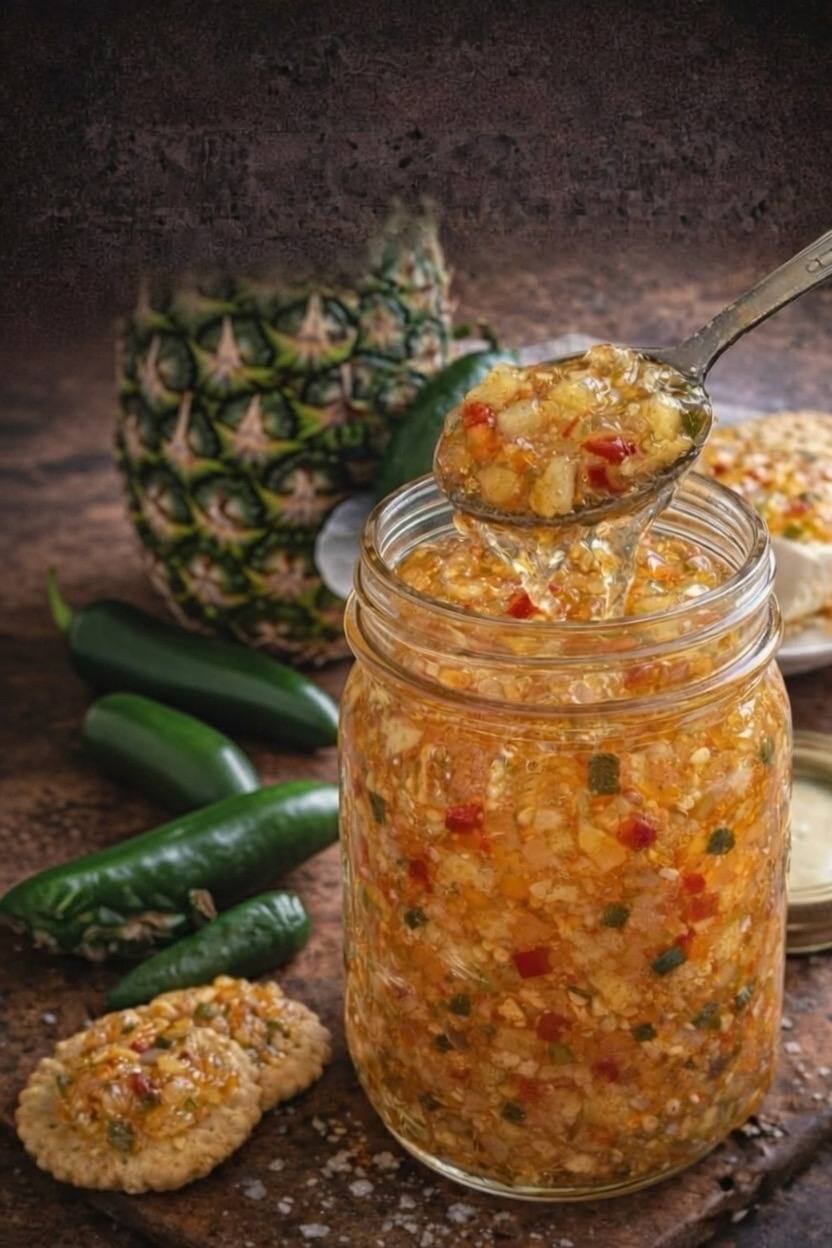
Prepare your taste buds for an explosion of flavor with our Pineapple Jalapeno Pepper Jelly! This vibrant, jewel-toned concoction is a delightful dance between sweet, spicy, and tangy, creating a truly unforgettable condiment. Imagine the tropical brightness of ripe pineapple mingling with the subtle kick of fresh jalapenos, all encapsulated in a shimmering, gel-like spread. It’s a culinary masterpiece that’s as beautiful to look at as it is to devour, instantly elevating any dish it graces.
What makes this jelly so special? Beyond its irresistible flavor profile, it’s incredibly versatile and surprisingly easy to make. Forget bland, store-bought options; crafting your own Pineapple Jalapeno Pepper Jelly allows you to control the exact balance of sweetness and heat, tailoring it perfectly to your preference. Whether you’re a seasoned canner or a kitchen novice, our step-by-step guide will help you create a batch that will impress friends and family alike. It’s perfect for adding a gourmet touch to everyday meals or making a show-stopping appetizer for your next gathering.
This recipe isn’t just about making jelly; it’s about creating an experience. From the intoxicating aroma that fills your kitchen as the ingredients simmer to the satisfying pop of a freshly sealed jar, every step is a joy. The result is a homemade treasure that can transform a simple cracker into an elegant bite, a plain chicken breast into a tropical delight, or a cheese board into an exotic spread. Get ready to dive into the world of homemade pepper jelly and discover your new favorite sweet and spicy obsession!
Nutritional Information
Per serving (approximate values):
- Calories: 55
- Protein: 0.1g
- Carbohydrates: 14g
- Fat: 0g
- Fiber: 0.2g
- Sodium: 2mg
Ingredients
- 4 cups fresh pineapple, finely diced (from about 1 medium pineapple)
- 1 cup fresh jalapeno peppers, finely diced (about 8-10 medium peppers, seeds and membranes removed for less heat, or partially left for more)
- 1/2 cup red bell pepper, finely diced (for color and mild sweetness)
- 1/2 cup apple cider vinegar
- 6 cups granulated sugar
- 1 pouch (3 ounces) liquid fruit pectin
Instructions
- Prepare Your Jars: Start by sterilizing your canning jars and lids. Wash jars, lids, and bands in hot, soapy water. Rinse well. Place jars in a large pot with a rack on the bottom. Cover with water by at least one inch. Bring to a boil and boil for 10 minutes. Keep jars hot in the simmering water until ready to fill. Place lids in a separate small saucepan with simmering (not boiling) water to soften the sealing compound.
- Chop the Produce: Carefully dice the fresh pineapple into very small pieces, about 1/4-inch to 1/2-inch. For the jalapenos, wear gloves to protect your hands. Slice the jalapenos in half lengthwise, remove stems, and then scrape out the seeds and white membranes for a milder jelly. For more heat, leave some seeds and membranes in. Finely dice the jalapenos and the red bell pepper to a similar size as the pineapple.
- Combine Ingredients (Initial Cook): In a large, heavy-bottomed pot or Dutch oven, combine the diced pineapple, diced jalapenos, diced red bell pepper, and apple cider vinegar. Bring the mixture to a rolling boil over medium-high heat, stirring frequently. Reduce heat to a simmer and cook for 10 minutes, allowing the flavors to meld and the fruit to soften slightly.
- Add Sugar: Gradually add the granulated sugar to the simmering fruit mixture, stirring constantly until the sugar is completely dissolved. Continue to stir until the mixture returns to a full rolling boil that cannot be stirred down. This is crucial for proper pectin activation.
- Add Pectin: Once the mixture reaches a full rolling boil, immediately pour in the liquid fruit pectin, stirring vigorously for 1 minute. Ensure the pectin is thoroughly incorporated.
- Boil for Set: Return the mixture to a full rolling boil and boil hard for exactly 1 minute, stirring constantly. Do not overcook, as this can affect the jelly’s set.
- Test for Set (Optional but Recommended): To check if the jelly will set, place a small plate in the freezer before you start cooking. After the 1-minute boil, spoon a small amount of hot jelly onto the cold plate. Wait 30 seconds, then push the jelly with your finger. If it wrinkles, it’s ready. If not, boil for another 30 seconds and retest.
- Skim Foam: Remove the pot from the heat. Skim off any foam that rises to the surface using a metal spoon. This improves the clarity and appearance of your jelly.
- Fill Jars: Carefully ladle the hot jelly into the sterilized, hot canning jars, leaving 1/4-inch headspace (the space between the jelly and the rim of the jar). Wipe the rims of the jars clean with a damp cloth to ensure a good seal.
- Seal Jars: Place the prepared lids on top of the jars, then screw on the bands until fingertip tight (not too tight).
- Process Jars (Water Bath Canning): Carefully place the filled jars onto the rack in your large canning pot, ensuring they are not touching each other. The water should cover the jars by at least one inch. Bring the water to a rolling boil and process pint jars for 10 minutes (adjust for altitude if necessary).
- Cool and Check Seals: After processing, turn off the heat and carefully remove the jars from the canner using a jar lifter. Place them on a wire rack or a clean towel, separated by an inch or two, to cool completely for 12-24 hours. Do not disturb them during this time.
- Store: Once cooled, check the seals. The center of the lid should be concave and not flex when pressed. If any jar did not seal, refrigerate it and consume within 3 weeks. Store properly sealed jars in a cool, dark place for up to 1 year.
Cooking Tips and Variations
Gloves are Your Friend: Always wear gloves when handling and dicing jalapeno peppers, especially when removing seeds and membranes. The capsaicin can cause severe skin irritation and burning if it gets into your eyes or on sensitive skin. Wash your hands thoroughly, even after wearing gloves.
Adjusting the Heat: For a milder jelly, remove all seeds and white membranes from the jalapenos. For medium heat, leave a quarter to half of the seeds. For a spicier kick, leave all seeds and membranes, or consider adding a few serrano peppers or even a habanero for an extra fiery kick (adjusting the total pepper quantity accordingly).
Pectin Power: This recipe calls for liquid pectin, which is added at the end of the cooking process. If you prefer to use powdered pectin, make sure to follow the instructions on the pectin package, as powdered pectin is usually added before the sugar. Using the correct type and amount of pectin is crucial for the jelly to set properly.
Chopping Consistency: Aim for uniformly small dices for both the pineapple and peppers. This ensures even cooking, a pleasing texture, and easy spreading. Larger chunks might make the jelly difficult to spread and could affect the set.
Don’t Skimp on Sugar: While it might seem like a lot, sugar is essential for both flavor, preservation, and the proper setting of the jelly when using pectin. Reducing the sugar significantly can result in a runny jelly.
The Cold Plate Test: This is the most reliable way to check for a proper set. Keep that plate in the freezer! If your test batch doesn’t wrinkle, don’t panic. Boil for another 30 seconds to 1 minute and retest. Sometimes, a little extra cooking time is all it needs.
Flavor Variations: Experiment with different vinegars for subtle flavor shifts. White wine vinegar or rice vinegar could offer a slightly different tang. You could also add a pinch of ginger for an extra layer of tropical warmth or a tiny amount of lime juice for a brighter finish.
Adding Herbs: A sprig of fresh cilantro or basil added during the last few minutes of simmering (then removed before jarring) can infuse a lovely aromatic note. Be careful not to overpower the pineapple and jalapeno flavors.
Creative Uses: Beyond the classic cream cheese and crackers, try this jelly as a glaze for grilled pork chops, baked chicken, or pan-seared salmon. It’s fantastic in turkey sandwiches, as a topping for goat cheese tarts, or even swirled into plain yogurt for a unique breakfast treat.
Storage and Reheating
Proper storage is key to enjoying your homemade Pineapple Jalapeno Pepper Jelly for months to come. If you have successfully water-bath canned your jelly, the sealed jars are shelf-stable and can be stored in a cool, dark pantry for up to 1 year. Once a jar is opened, it must be refrigerated and consumed within 3-4 weeks for best quality and safety. For any jelly that was not canned or did not seal properly, it should be stored in an airtight container in the refrigerator and will keep for up to 3 weeks.
Reheating jelly is generally not necessary, as it is a condiment typically served at room temperature or chilled. However, if you are using it as a glaze for meats, you would apply it to the hot meat during the last few minutes of cooking or after it has rested. If the jelly has become too firm in the refrigerator and you want a slightly softer consistency for spreading, you can let it sit at room temperature for 15-30 minutes before serving. Avoid microwaving large quantities of jelly, as it can alter the texture and make it too runny. For glazes, gently warm a small amount in a saucepan over low heat until it reaches a pourable consistency.
Frequently Asked Questions
Why didn’t my jelly set?
There are several common reasons why jelly might not set. The most frequent culprits are incorrect pectin usage (too much, too little, or the wrong type for the recipe), not boiling the mixture hard enough or long enough after adding pectin, or altering the sugar-to-fruit ratio. Ensure you follow the recipe precisely, especially regarding the boiling times and ingredient quantities. High humidity can also sometimes affect setting. If your jelly is too runny, you can try to re-process it with more pectin, following the pectin manufacturer’s instructions for re-cooking.
Can I use frozen pineapple?
Yes, you can use frozen pineapple, but ensure it is thawed completely and drained of any excess liquid before dicing. Excess water can dilute the mixture and impact the jelly’s set. Fresh pineapple typically yields the best flavor and texture, but frozen is a convenient alternative.
How do I know if my jars are sealed properly?
After your jars have cooled for 12-24 hours, check the seals by pressing down on the center of each lid. A properly sealed lid will be concave (curved inwards) and will not flex or pop when pressed. If a lid yields to pressure, it means the jar did not seal properly. Any unsealed jars should be refrigerated immediately and consumed within 3 weeks.
What if I don’t want to can the jelly?
If you prefer not to go through the water bath canning process, you can simply pour the hot jelly into clean jars or airtight containers, let it cool to room temperature, and then store it in the refrigerator. This “refrigerator jelly” will last for about 3 weeks. While it won’t be shelf-stable, it’s a great option for enjoying fresh batches without the full canning commitment.