Introduction
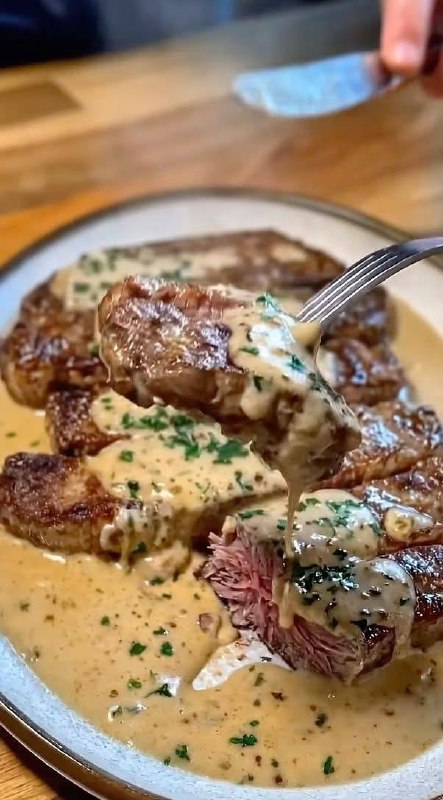
Prepare to elevate your dinner experience with a dish that tantalizes the taste buds and satisfies the soul: Juicy Steak with Creamy Garlic Sauce. This isn’t just any steak dinner; it’s a symphony of flavors and textures, where a perfectly seared, tender cut of beef meets a luxuriously rich, garlicky cream sauce. Imagine sinking your teeth into a succulent slice of steak, its interior a beautiful pink, followed by the velvety embrace of a sauce so flavorful it transforms every bite into a culinary revelation. This recipe is designed to deliver that restaurant-quality experience right in your own kitchen, proving that indulgence can indeed be achieved with a few key techniques and quality ingredients.
What makes this particular rendition so special is the meticulous attention to detail that ensures both the “juicy” aspect of the steak and the “creamy” and “garlicky” essence of the sauce shine through. We’ll guide you through the secrets to achieving that coveted golden-brown crust on your steak while maintaining a tender, flavorful interior, whether you prefer it medium-rare or a touch more done. Then, we’ll dive into crafting a sauce that’s not just an accompaniment but a star in its own right, built on layers of aromatic garlic, rich dairy, and the savory essence of the pan drippings. It’s a combination that’s both comforting and sophisticated, making it ideal for celebrating special occasions, impressing guests, or simply treating yourself to an extraordinary weeknight meal.
This dish masterfully balances richness with freshness, thanks to the bright notes of fresh herbs that cut through the creamy sauce, creating a harmonious and utterly addictive flavor profile. Forget dry, overcooked steak or bland, watery sauces; this recipe promises a steak that’s bursting with natural juices and a sauce that’s so irresistible you’ll want to spoon up every last drop. Get ready to transform simple ingredients into an unforgettable meal that will have everyone asking for seconds and raving about your culinary prowess.
Nutritional Information
Per serving (approximate values):
- Calories: 720
- Protein: 55g
- Carbohydrates: 8g
- Fat: 52g
- Fiber: 1g
- Sodium: 850mg
Ingredients
- 2 (12-14 oz each) New York strip, ribeye, or sirloin steaks, 1 to 1.5 inches thick
- 1 tablespoon olive oil
- 2 tablespoons unsalted butter, divided
- 4-6 cloves garlic, minced
- 1/2 cup beef broth (low sodium recommended)
- 1 cup heavy cream
- 1/4 cup grated Parmesan cheese (optional, for extra richness)
- 1 tablespoon fresh parsley, chopped, plus more for garnish
- Salt and freshly ground black pepper, to taste
Instructions
- Prepare the Steaks: Remove the steaks from the refrigerator at least 30-60 minutes before cooking to bring them to room temperature. This helps them cook more evenly. Pat the steaks thoroughly dry with paper towels. Season generously on all sides with salt and freshly ground black pepper.
- Sear the Steaks: Heat a heavy-bottomed skillet (cast iron works best) over high heat until it’s smoking lightly. Add 1 tablespoon of olive oil to the hot pan. Carefully place the seasoned steaks in the skillet, ensuring not to overcrowd the pan (cook in batches if necessary). Sear for 3-4 minutes per side for medium-rare, or longer for your desired doneness. A beautiful, dark brown crust should form.
- Add Butter and Aromatics: During the last minute or two of searing, add 1 tablespoon of unsalted butter to the pan. As the butter melts, tilt the pan slightly and spoon the melted butter over the steaks (basting). This adds flavor and helps create an even crust.
- Rest the Steaks: Once cooked to your desired doneness (use a meat thermometer for accuracy: 130-135°F for medium-rare, 135-140°F for medium), transfer the steaks to a cutting board. Tent loosely with foil and let them rest for at least 5-10 minutes. This crucial step allows the juices to redistribute, resulting in a more tender and juicy steak. Do not clean the skillet; you’ll use the pan drippings for the sauce.
- Start the Creamy Garlic Sauce: Reduce the heat to medium-low. Add the remaining 1 tablespoon of unsalted butter to the same skillet. Add the minced garlic and sauté for about 30 seconds to 1 minute, until fragrant. Be careful not to burn the garlic.
- Deglaze the Pan: Pour in the beef broth, scraping up any browned bits (fond) from the bottom of the pan with a wooden spoon. This adds immense flavor to the sauce. Let the broth simmer for 1-2 minutes to reduce slightly.
- Create the Creamy Base: Stir in the heavy cream. Bring the sauce to a gentle simmer and cook, stirring occasionally, for 3-5 minutes, or until the sauce has thickened to your desired consistency. If using, stir in the grated Parmesan cheese until melted and smooth.
- Season and Finish the Sauce: Taste the sauce and season with salt and pepper as needed. Stir in the chopped fresh parsley.
- Slice and Serve: Slice the rested steaks against the grain into thick pieces. Arrange the sliced steak on plates and generously spoon the creamy garlic sauce over the top. Garnish with additional fresh parsley, if desired. Serve immediately.
Cooking Tips and Variations
Choosing Your Steak: While the recipe suggests New York strip, ribeye, or sirloin, other cuts like flank steak or skirt steak can also be used, though cooking times will vary due to thickness. For best results, always aim for a steak that is at least 1 inch thick to allow for a good sear without overcooking the interior.
Room Temperature is Key: Don’t skip bringing your steak to room temperature. A cold steak hitting a hot pan will cook unevenly, resulting in an overcooked exterior and a raw interior. Allowing it to warm up slightly ensures a more consistent cook throughout.
Pat Dry, Season Well: Moisture is the enemy of a good sear. Thoroughly patting your steak dry with paper towels before seasoning is crucial for achieving that beautiful, crispy crust. Don’t be shy with the salt and pepper; a thick cut of steak can handle a generous seasoning.
Hot Pan, Good Sear: A screaming hot pan is essential for the Maillard reaction, which creates those delicious browned flavors and a crust. Wait until you see wisps of smoke from your oil before placing the steak. Avoid overcrowding the pan, as this lowers the temperature and steams the steak instead of searing it.
Know Your Doneness: The best way to ensure your steak is cooked to perfection is by using an instant-read meat thermometer. For medium-rare, aim for 130-135°F; for medium, 135-140°F; for medium-well, 140-145°F. Remember, the internal temperature will rise a few degrees while the steak rests.
The Importance of Resting: This is arguably the most critical step for a juicy steak. As steak cooks, the muscle fibers contract, pushing juices to the center. Resting allows these fibers to relax and the juices to redistribute throughout the meat, preventing them from spilling out when you slice it. Always rest your steak, tented with foil, for at least 5-10 minutes.
Building Sauce Flavor: The “fond” (the browned bits at the bottom of the pan) left after searing the steak is packed with flavor. Deglazing the pan with broth helps release these flavorful bits, integrating them into your sauce and adding incredible depth.
Sauce Consistency: If your sauce is too thin, you can continue to simmer it gently to reduce and thicken. If it becomes too thick, a splash of additional broth or cream can help loosen it up. Always taste and adjust seasoning at the end.
Flavor Variations for the Sauce:
- Mushroom Magic: Sauté sliced mushrooms (cremini or button) with the garlic for an earthy addition to the sauce.
- Herbaceous Twist: Experiment with other fresh herbs like thyme, rosemary, or chives, adding them in with the parsley for different aromatic profiles.
- A Touch of Spice: A pinch of red pepper flakes added with the garlic can introduce a subtle warmth and kick.
- Wine Reduction: For an even richer sauce, deglaze the pan with 1/4 cup of dry white wine (like Chardonnay or Pinot Grigio) after the garlic, letting it reduce by half before adding the beef broth and cream.
- Cheese Please: Beyond Parmesan, a touch of cream cheese or even a mild blue cheese can be stirred into the sauce for different creamy textures and flavor notes.
Accompaniments: This rich dish pairs wonderfully with simple sides that can soak up the delicious sauce. Think creamy mashed potatoes, roasted asparagus, sautéed green beans, or a crusty baguette. A light, fresh salad can also provide a welcome contrast.
Storage and Reheating
Storage: Leftover steak and sauce should be stored separately if possible, in airtight containers in the refrigerator. The steak will last for 3-4 days, and the sauce will keep for 3-5 days.
Reheating Steak: Reheating steak can be tricky to maintain its tenderness and juiciness.
- Oven Method: Preheat your oven to 250°F (120°C). Place the sliced steak on a baking sheet, cover loosely with foil, and warm for 10-15 minutes, or until just heated through. Do not overcook.
- Skillet Method: Gently warm the steak in a lightly oiled skillet over low heat, flipping once, until warmed through. This method requires careful monitoring to prevent drying out.
- Microwave (Use with Caution): If using a microwave, heat in short bursts (30 seconds) on a lower power setting, checking frequently. This is the least ideal method for steak, as it can easily become tough.
Reheating Sauce: The creamy garlic sauce can be reheated gently on the stovetop over low heat, stirring frequently. If it has thickened too much, you can add a splash of beef broth or cream to bring it back to your desired consistency. Avoid boiling the sauce, as this can cause the cream to separate.
Combining for Reheating: For best results, reheat the steak and sauce separately, then combine just before serving. This helps maintain the quality of both components.
Frequently Asked Questions
Can I use a different cut of steak for this recipe?
Absolutely! While New York strip, ribeye, or sirloin are excellent choices for their marbling and tenderness, you can certainly adapt this recipe for other cuts. Thicker cuts like a T-bone or porterhouse will work beautifully but may require slightly longer cooking times. Thinner cuts such as flank steak or skirt steak will cook much faster and are best served medium-rare. Always adjust your cooking times based on the thickness of the steak and your desired doneness, using a meat thermometer for accuracy.
How can I make the creamy garlic sauce less rich?
If you’re looking to lighten up the sauce slightly without sacrificing too much flavor, you have a few options. You can substitute half of the heavy cream with half-and-half or even whole milk, though this will result in a thinner sauce that may require a bit more reduction time to thicken. Another approach is to use less cream overall and increase the beef broth slightly, allowing the sauce to reduce more to concentrate its flavors. Adding more fresh herbs can also help brighten the sauce and make it feel less heavy.
What if my sauce separates or becomes grainy when reheating?
Cream-based sauces can sometimes separate if reheated too quickly or at too high a temperature. To prevent this, always reheat the creamy garlic sauce gently over low heat, stirring constantly. If it does separate, try whisking in a tablespoon or two of cold heavy cream or milk while gently warming it. This can sometimes help emulsify the sauce again. Ensuring you don’t bring the sauce to a rolling boil during reheating is also key.
Can I prepare the sauce in advance?
Yes, you can prepare the creamy garlic sauce a day in advance. Cook the sauce as directed, let it cool completely, and then store it in an airtight container in the refrigerator. When ready to serve, gently reheat it on the stovetop over low heat, stirring frequently. You may need to add a splash of broth or cream to adjust the consistency as it might thicken during refrigeration. Preparing the sauce ahead of time makes this dish even quicker to assemble on a busy weeknight.