Introduction
There are few simple pleasures quite as satisfying as a perfectly crafted shortbread cookie. These buttery, crumbly, melt-in-your-mouth delights have long been a beloved classic, cherished for their delicate texture and rich, comforting flavor. Our Almond Shortbread Cookies take this timeless treat to an entirely new level, infusing it with the irresistible nutty aroma and delightful crunch of almonds. Imagine biting into a tender cookie that dissolves on your tongue, leaving behind the sweet, earthy notes of almond, enhanced by the golden crispness of flaked almonds baked right on top. It’s a symphony of textures and flavors that will captivate your senses.
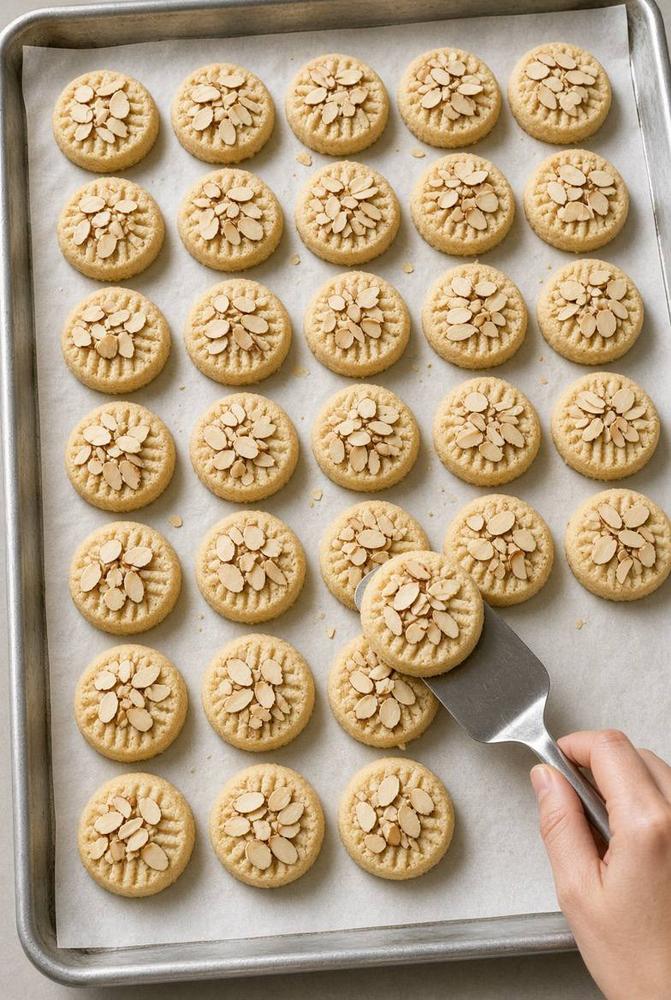
What makes these Almond Shortbread Cookies truly special is their elegant simplicity combined with a touch of sophisticated charm. The base recipe relies on just a few high-quality ingredients, allowing the pure flavors to shine through. The addition of finely ground almonds into the dough itself creates a subtle depth of flavor and an even more tender crumb, while the decorative flaked almond topping provides a beautiful visual appeal and a satisfying textural contrast. Each cookie is a little work of art, perfectly round with distinctive ridged edges, making them as pleasing to the eye as they are to the palate. They’re the kind of cookie that feels special, whether you’re serving them at a holiday gathering, wrapping them up as a thoughtful gift, or simply enjoying one with your afternoon tea.
These cookies are incredibly versatile, making them a fantastic addition to any occasion. They are robust enough to travel well for gifting, yet delicate enough to feel luxurious on a dessert platter. Their relatively straightforward preparation belies their impressive results, making them an accessible baking project for home cooks of all skill levels. With a little attention to detail, you’ll be turning out batches of these golden, nutty shortbreads that will have everyone asking for the recipe. So, let’s dive into creating these irresistible Almond Shortbread Cookies and bring a touch of buttery, almond-infused bliss into your kitchen!
Nutritional Information
Per serving (approximate values, based on 30 small cookies):
- Calories: 150-180
- Protein: 2-3g
- Carbohydrates: 15-20g
- Fat: 9-12g
- Fiber: 1g
- Sodium: 50-70mg
Ingredients
- 1 cup (2 sticks or 226g) unsalted butter, softened
- 1/2 cup (100g) granulated sugar, plus 2 tablespoons for dusting (optional)
- 1/2 teaspoon almond extract
- 1/4 teaspoon salt
- 2 cups (240g) all-purpose flour
- 1/2 cup (50g) blanched almond flour (or finely ground blanched almonds)
- 1/2 cup (50g) flaked or sliced almonds, for topping
Instructions
- Prepare Your Workspace: Begin by taking your unsalted butter out of the refrigerator about 30-60 minutes before you plan to start baking, allowing it to soften to room temperature. This is crucial for achieving a smooth, well-combined dough. Line two large baking sheets with parchment paper. This will prevent sticking and make for easy cleanup.
- Cream Butter and Sugar: In a large mixing bowl, using an electric mixer (either a stand mixer with a paddle attachment or a hand mixer), cream together the softened unsalted butter and 1/2 cup of granulated sugar on medium speed. Beat until the mixture is light in color, fluffy, and well combined, which usually takes about 2-3 minutes. Scrape down the sides of the bowl as needed to ensure everything is incorporated.
- Add Flavorings: To the creamed butter and sugar, add the almond extract and salt. Continue to beat on medium speed for another 30 seconds until these are fully incorporated and the mixture smells wonderfully fragrant with almond.
- Combine Dry Ingredients: In a separate medium bowl, whisk together the all-purpose flour and blanched almond flour. Whisking them together first helps to evenly distribute the almond flour throughout the mixture, preventing clumps and ensuring a consistent texture in your cookies.
- Gradually Add Dry to Wet: With the mixer on low speed, gradually add the dry flour mixture to the wet butter mixture, a third at a time. Mix only until just combined and a soft, crumbly dough forms. Be careful not to overmix, as overworking the dough can lead to tough cookies. The dough should come together easily when pressed with your hands.
- Chill the Dough (Crucial Step): Gather the dough into a ball and flatten it slightly into a disc. Wrap the disc tightly in plastic wrap and refrigerate for at least 30 minutes, or up to 2 hours. Chilling the dough is essential for shortbread as it helps to firm up the butter, which prevents the cookies from spreading too much during baking and ensures they hold their decorative shape.
- Preheat Oven and Prepare for Shaping: While the dough is chilling, preheat your oven to 325°F (160°C). If you are using a cookie press or a patterned rolling pin, now is a good time to get it ready.
- Shape the Cookies: Remove the chilled dough from the refrigerator. If using a cookie press, follow the manufacturer’s instructions for pressing out uniform shapes onto the prepared baking sheets. If using a patterned rolling pin, roll the dough out on a lightly floured surface to about 1/4-inch thickness, then roll with the patterned pin to imprint the design, and cut with a round or fluted cookie cutter. Alternatively, you can roll the dough into a log (about 1.5 inches in diameter), chill again for 15 minutes, then slice into 1/4-inch thick rounds. For a simple hand-pressed look, roll small portions of dough into balls, place them on the baking sheet, and gently flatten them with the palm of your hand or the bottom of a glass until they are about 1/4-inch thick. You can use a fork to create crosshatch marks if desired.
- Add Almond Topping: Carefully arrange the flaked or sliced almonds on top of each cookie in a decorative pattern. Press them gently into the dough so they adhere well during baking.
- Bake the Cookies: Place the baking sheets in the preheated oven. Bake for 18-22 minutes, or until the edges are lightly golden and the centers appear set. Shortbread should not be deeply browned; it should remain pale to preserve its tender texture. Baking time may vary depending on your oven and the thickness of your cookies. Rotate the baking sheets halfway through baking for even browning.
- Cool Completely: Once baked, remove the baking sheets from the oven. Let the cookies cool on the baking sheets for about 5-10 minutes. Shortbread cookies are quite delicate when warm, so allowing them to cool slightly on the sheet helps them firm up and prevents breakage. After this initial cooling, carefully transfer the cookies to a wire rack to cool completely.
- Serve and Enjoy: Once fully cooled, your Almond Shortbread Cookies are ready to be enjoyed! They are perfect with a cup of tea, coffee, or as a delightful treat on their own. If desired, you can lightly dust them with the remaining 2 tablespoons of granulated sugar once cooled for an extra touch of sweetness and sparkle.
Cooking Tips and Variations
Achieving perfect shortbread is all about understanding the role of butter and avoiding overworking the dough. Here are some detailed tips to ensure your Almond Shortbread Cookies are always a success, along with ideas for exciting variations.
Tips for Best Results:
- Quality Ingredients Matter: Since shortbread has so few ingredients, the quality of each one really shines through. Use a good quality unsalted butter for the best flavor. European-style butters with a higher fat content can yield an even more tender crumb.
- Room Temperature Butter is Key: Ensure your butter is truly at room temperature – soft enough to easily indent with your finger, but not melted or oily. This allows it to cream properly with the sugar, creating a light, airy base for your dough. If your butter is too cold, it won’t cream well; if it’s too warm, your cookies may spread excessively.
- Don’t Overmix the Dough: After adding the flour, mix only until the ingredients are just combined and a dough forms. Overmixing develops the gluten in the flour, which can lead to tough, chewy cookies instead of the desired tender, crumbly shortbread texture.
- Chill the Dough Thoroughly: This is a non-negotiable step for shortbread. Chilling firms up the butter in the dough, which prevents the cookies from spreading too much during baking. It also makes the dough easier to handle and ensures your decorative patterns stay crisp and defined. Aim for at least 30 minutes, but up to 2 hours is ideal. If the dough gets too firm, let it sit at room temperature for a few minutes to soften slightly before rolling or pressing.
- Even Thickness for Even Baking: Whether you’re rolling and cutting or pressing, aim for uniform thickness for all your cookies. This ensures they bake evenly and prevents some from being overdone while others are underbaked.
- Parchment Paper is Your Friend: Always line your baking sheets with parchment paper. It prevents sticking, promotes even baking, and makes cleanup a breeze.
- Watch for Doneness, Not Just Time: Shortbread should be lightly golden brown around the edges, but still pale in the center. Overbaking will make them dry and hard. Keep a close eye on them, especially towards the end of the baking time, as oven temperatures can vary.
- Cool Completely on the Baking Sheet: Shortbread is very fragile when warm. Let the cookies cool on the baking sheets for 5-10 minutes before carefully transferring them to a wire rack to cool completely. Handling them too soon can cause them to break.
- Using a Cookie Press or Mold: If using a cookie press, ensure your dough is at the right consistency – not too cold or too warm – for easy pressing. If using a patterned rolling pin, lightly flour your work surface and the rolling pin to prevent sticking and ensure a clean impression.
Recipe Variations:
- Citrus Zest: Add 1-2 teaspoons of finely grated orange or lemon zest to the butter and sugar mixture. Citrus pairs beautifully with almond and adds a bright, refreshing note.
- Spiced Almond Shortbread: Incorporate 1/2 teaspoon of ground cardamom or 1/4 teaspoon of cinnamon into the dry ingredients for a warm, aromatic twist.
- Chocolate Drizzle: Once the cookies are completely cooled, melt some dark or white chocolate and drizzle it over the shortbread for an extra layer of indulgence and visual appeal.
- Toasted Almonds: For an even deeper nutty flavor, lightly toast the flaked almonds in a dry pan over medium-low heat for a few minutes before topping the cookies. Watch them carefully to prevent burning.
- Extract Swap: While almond extract is classic, you could experiment with vanilla bean paste for a richer vanilla flavor, or a hint of rosewater for a more exotic touch (use sparingly, about 1/4 teaspoon).
- Different Flours: For a slightly different texture, you could replace a small portion of the all-purpose flour (e.g., 1/4 cup) with rice flour, which contributes to a very tender, almost sandy shortbread.
- Jam-Filled Shortbread: Cut out a small hole in the center of half of your cookies before baking. After baking and cooling, spread a thin layer of your favorite fruit jam (raspberry or apricot works well) on the solid cookies, then top with the ones with holes, creating a Linzer-style shortbread.
- Decorative Sugar: Instead of regular granulated sugar for dusting, consider using coarse sanding sugar before baking for an extra sparkle and subtle crunch.
Storage and Reheating
Proper storage is essential to keep your Almond Shortbread Cookies fresh, crisp, and delicious for as long as possible. Fortunately, shortbread stores exceptionally well.
Storage:
- At Room Temperature: Once completely cooled, store the Almond Shortbread Cookies in an airtight container at room temperature. A cookie tin or a plastic container with a tight-fitting lid works perfectly. They will stay fresh and crisp for up to 1-2 weeks. To prevent them from absorbing moisture and becoming soft, you can place a piece of parchment paper or wax paper between layers of cookies if stacking them.
- In the Refrigerator: While not strictly necessary for shortbread, you can store them in an airtight container in the refrigerator for up to 2-3 weeks. However, the cold environment can sometimes make them a bit firmer initially, and they might absorb ambient moisture more easily, potentially affecting crispness. It’s generally best to keep them at room temperature for optimal texture.
- Freezing Dough: Shortbread dough freezes beautifully. Wrap the disc or log of unbaked dough tightly in plastic wrap, then place it in a freezer-safe bag or container. It can be frozen for up to 3 months. Thaw the dough in the refrigerator overnight before rolling, cutting, and baking as usual.
- Freezing Baked Cookies: Fully baked and cooled Almond Shortbread Cookies can also be frozen. Arrange them in a single layer on a baking sheet and freeze until solid (about 1-2 hours). Once frozen, transfer them to a freezer-safe airtight container or heavy-duty freezer bag, separating layers with parchment paper to prevent sticking. They can be frozen for up to 2-3 months.
Reheating:
- From Room Temperature: Shortbread cookies are typically enjoyed at room temperature, so no reheating is usually necessary.
- From Frozen (Baked): If you’ve frozen baked cookies, simply remove them from the freezer and let them thaw at room temperature for about 30-60 minutes before serving. For a slightly “fresher from the oven” feel, you can warm them briefly in a preheated oven at 250°F (120°C) for 5-7 minutes. Be careful not to overbake, as this can dry them out.
Frequently Asked Questions
What makes shortbread different from other cookies?
Shortbread cookies are distinct due to their high butter content, absence of leavening agents (like baking soda or baking powder), and typically low sugar content compared to other cookies. This unique composition gives them their signature crumbly, tender, “melt-in-your-mouth” texture and rich, buttery flavor. Unlike many cookies that are designed to be chewy or soft, shortbread’s appeal lies in its delicate crispness and sandy, almost fragile consistency.
Why did my shortbread spread too much during baking?
Excessive spreading is a common issue and usually points to one of a few factors. The most likely culprit is butter that was too warm or soft when you mixed the dough, or insufficient chilling time for the dough before baking. If the butter is too warm, it melts too quickly in the oven, causing the cookies to lose their shape. Another reason could be too much butter in the recipe or not enough flour, altering the dough’s balance. Ensure your butter is firm but pliable, and always chill the dough for at least 30 minutes, or even longer if your kitchen is warm.
Can I make these cookies without almond flour?
Yes, you can make these cookies without almond flour, though the texture and almond flavor will be slightly different. If you omit the almond flour, you can simply replace it with an equal amount of additional all-purpose flour (so, 2.5 cups total all-purpose flour). This will result in a more classic shortbread texture that is still delicious. To maintain a strong almond flavor, you might want to increase the almond extract slightly, perhaps to 3/4 teaspoon, and ensure you still use the flaked almonds for topping.
How do I get the decorative ridged pattern on the sides of the cookies?
The distinct ridged pattern visible on the sides of these cookies is typically achieved using one of a few methods. The most common is a cookie press, which allows you to press out uniformly shaped dough pieces with various patterns. Another method is using a patterned rolling pin, which imprints a design onto the rolled-out dough before you cut out individual cookies. Lastly, some fluted cookie cutters can create a similar effect on the edges. If you don’t have these tools, you can simply roll the dough into a log, chill it, and then slice it, or use a regular round cookie cutter for a smooth edge, which will still yield delicious results.