Introduction
Get ready to indulge in a slice of pure comfort, Southern style! Today, we’re diving headfirst into the irresistible world of Trisha Yearwood’s Butterscotch Bars. If you know Trisha, you know her recipes are synonymous with warmth, hospitality, and that unmistakable taste of home. These aren’t just any dessert bars; they’re a testament to simple ingredients coming together to create something truly magical, a sweet treat that feels like a hug from your favorite country star.
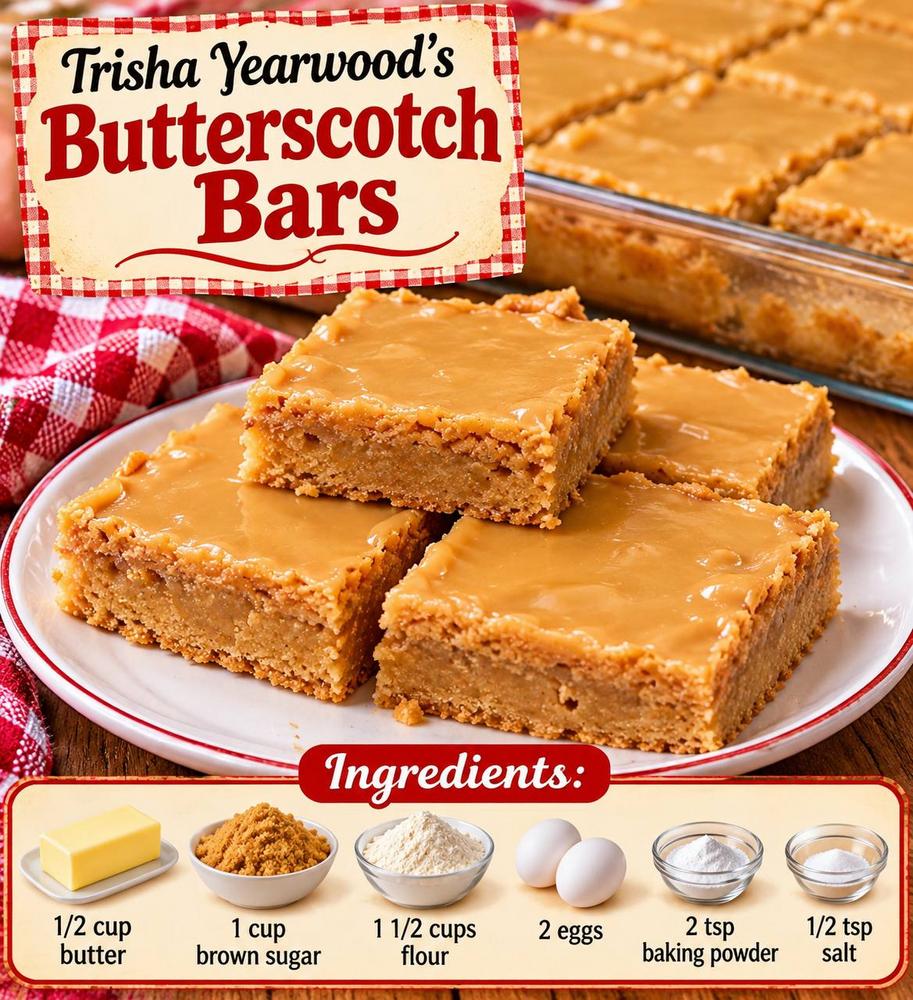
Imagine a perfectly chewy, golden-brown bar base, rich with the comforting notes of brown sugar, providing the ideal foundation for what’s to come. Then, picture it generously crowned with a smooth, glossy, and utterly decadent butterscotch frosting that melts in your mouth with every bite. The contrast in textures – the dense, satisfying chew of the bar against the creamy, luxurious frosting – creates a symphony of flavor that’s both nostalgic and incredibly satisfying. These bars are a crowd-pleaser, an instant hit at potlucks, bake sales, or simply as a delightful treat to brighten any family dinner.
What makes Trisha’s Butterscotch Bars a must-try? Beyond their incredible taste, they embody the spirit of easy, approachable baking. You don’t need a culinary degree to whip up a batch of these beauties. With straightforward steps and readily available ingredients, you’ll be able to create a dessert that looks impressive and tastes even better. They’re perfect for celebrating big moments or simply elevating an ordinary Tuesday evening into something special. So, tie on your apron, preheat your oven, and prepare to fall in love with these quintessential Southern sweets!
Nutritional Information
Per serving (approximate values for 1 of 16 bars):
- Calories: 295 kcal
- Protein: 3g
- Carbohydrates: 45g
- Fat: 12g
- Fiber: 1g
- Sodium: 250mg
Ingredients
- For the Bars:
- 1/2 cup (1 stick) unsalted butter, softened
- 1 cup packed light brown sugar
- 2 large eggs
- 1 1/2 cups all-purpose flour
- 2 teaspoons baking powder
- 1/2 teaspoon salt
- 1 teaspoon vanilla extract
- For the Butterscotch Frosting:
- 1/2 cup (1 stick) unsalted butter
- 1/2 cup packed light brown sugar
- 1/4 cup whole milk or heavy cream
- 1 teaspoon vanilla extract
- 2-3 cups powdered sugar, sifted
- Pinch of salt
Instructions
- Prepare the Baking Pan: Preheat your oven to 350°F (175°C). Grease and flour a 9×13 inch baking pan, or line it with parchment paper, leaving an overhang on the sides for easy lifting later.
- Cream Butter and Sugar: In a large mixing bowl, using an electric mixer, cream together the softened 1/2 cup butter and 1 cup brown sugar until light and fluffy, about 2-3 minutes.
- Add Eggs and Vanilla: Beat in the two large eggs one at a time, mixing well after each addition. Stir in the 1 teaspoon vanilla extract until just combined.
- Combine Dry Ingredients: In a separate medium bowl, whisk together the 1 1/2 cups all-purpose flour, 2 teaspoons baking powder, and 1/2 teaspoon salt.
- Combine Wet and Dry: Gradually add the dry ingredients to the wet ingredients, mixing on low speed until just combined. Be careful not to overmix; a few streaks of flour are fine. The batter will be thick.
- Spread in Pan: Press the batter evenly into the prepared 9×13 inch baking pan. You might find it easiest to lightly flour your hands or use an offset spatula to spread the thick batter.
- Bake the Bars: Bake for 25-30 minutes, or until the edges are golden brown and a wooden skewer or toothpick inserted into the center comes out with moist crumbs attached (not completely clean, which would indicate overbaking).
- Cool the Bars: Remove the pan from the oven and place it on a wire rack to cool completely. The bars must be completely cool before frosting, otherwise the frosting will melt.
- Make the Butterscotch Frosting: While the bars are cooling, prepare the frosting. In a medium saucepan, melt the 1/2 cup butter over medium heat. Add the 1/2 cup brown sugar and 1/4 cup milk or cream. Bring the mixture to a gentle boil, stirring constantly, and boil for 1 minute.
- Remove from Heat and Add Vanilla: Remove the saucepan from the heat and stir in the 1 teaspoon vanilla extract and a pinch of salt.
- Whisk in Powdered Sugar: Gradually add the sifted powdered sugar, 1 cup at a time, whisking vigorously until the frosting is smooth and reaches a spreadable consistency. You may not need all 3 cups of powdered sugar, or you might need a little more, depending on your desired thickness. If it’s too thick, add a tiny splash more milk; if too thin, add more powdered sugar.
- Frost the Cooled Bars: Once the bars are completely cool, pour or spread the warm butterscotch frosting evenly over the top.
- Allow Frosting to Set: Let the frosted bars sit at room temperature for at least 30 minutes to an hour, or until the frosting has set. For quicker setting, you can place them in the refrigerator for about 15-20 minutes.
- Cut and Serve: Once the frosting is set, use the parchment paper overhang to lift the entire slab of bars out of the pan. Place on a cutting board and cut into 12-16 squares. Serve and enjoy!
Cooking Tips and Variations
Achieving bakery-quality butterscotch bars at home is entirely possible with a few key tips and a dash of creativity. First and foremost, ensure your butter for the bar base is truly softened, not melted. Room temperature butter creams beautifully with sugar, incorporating air that leads to a lighter, chewier texture. Similarly, room temperature eggs emulsify better with the butter mixture, creating a smoother batter. When mixing the dry and wet ingredients for the base, stop as soon as the flour streaks disappear. Overmixing develops the gluten in the flour, which can lead to tough, dry bars instead of delightfully chewy ones.
For the frosting, precision is your friend. When boiling the butter, brown sugar, and milk mixture, make sure it comes to a full, gentle boil for exactly one minute, stirring constantly to prevent scorching. This crucial step helps dissolve the sugar and creates the characteristic smooth, glossy texture of the butterscotch. If your frosting seems too thick after adding the powdered sugar, add a tiny bit more milk or cream, a teaspoon at a time, until it’s just right. If it’s too thin, sift in a little more powdered sugar. Remember to apply the frosting to completely cooled bars. Patience here is paramount; warm bars will cause the frosting to melt and run, preventing it from setting properly and giving you a messy result.
Proper cooling is also essential for clean cuts. If you try to cut the bars while they’re still warm, they will likely crumble and the frosting will smear. Let them cool completely at room temperature, or even pop them in the fridge for 15-20 minutes after frosting to help the topping firm up. This will allow for perfectly neat squares that hold their shape beautifully.
Now, let’s talk variations to make these bars uniquely yours! For an extra layer of texture and flavor, consider adding 1/2 to 1 cup of chopped pecans or walnuts to the bar batter before baking. The nutty crunch pairs wonderfully with the sweet butterscotch. If you’re a chocolate lover, a handful of chocolate chips (milk, semi-sweet, or even white chocolate) folded into the batter would be a delicious addition. For a touch of gourmet sophistication, sprinkle a pinch of flaky sea salt over the wet frosting just before it sets. This subtle salinity beautifully enhances the butterscotch flavor and adds a delightful pop of contrast. You could also experiment with a hint of cinnamon or nutmeg in the bar base for a warm, spiced twist, perfect for autumn baking. Another fun idea is to swirl in some melted peanut butter into the frosting for a peanut butter butterscotch dream. The possibilities are endless, so don’t hesitate to get creative and personalize this already fantastic recipe!
Storage and Reheating
Proper storage is key to keeping Trisha Yearwood’s Butterscotch Bars fresh, chewy, and delicious for as long as possible. Once the bars are completely cooled and the frosting has set, cut them into individual squares. Store the bars in an airtight container at room temperature for up to 3-4 days. Placing a piece of parchment paper or wax paper between layers of bars can help prevent them from sticking together, especially if your frosting is particularly soft or gooey. Make sure the container is truly airtight to prevent the bars from drying out and becoming stale.
If you live in a very warm or humid climate, or if you prefer to extend their shelf life, you can store the bars in the refrigerator for up to a week. Again, an airtight container is crucial. Chilled bars might have a slightly firmer texture, both in the base and the frosting. If you prefer them softer, simply let them sit at room temperature for about 15-30 minutes before serving to allow them to come back to their ideal consistency.
These butterscotch bars also freeze beautifully, making them an excellent candidate for meal prepping desserts or having a sweet treat on hand whenever a craving strikes. To freeze, place the cut bars in a single layer on a baking sheet and freeze for about 1-2 hours, or until solid. This “flash freezing” step prevents them from sticking together. Once frozen solid, transfer the bars to a freezer-safe airtight container or a heavy-duty freezer bag. They can be stored in the freezer for up to 2-3 months. When you’re ready to enjoy them, simply take out the desired number of bars and let them thaw at room temperature for a few hours, or overnight in the refrigerator. There’s no need for reheating; these bars are best enjoyed at room temperature or slightly chilled, allowing their chewy texture and rich butterscotch flavor to shine through.
Frequently Asked Questions
Can I use salted butter instead of unsalted butter?
While you can use salted butter in a pinch, it’s generally recommended to use unsalted butter for baking. This allows you to control the amount of salt in the recipe. If you do use salted butter, omit the 1/2 teaspoon of salt from the bar base and reduce the pinch of salt in the frosting by half, then taste and adjust if necessary. Keep in mind that the salt content in salted butter can vary between brands.
My frosting is too thin/thick. How can I fix it?
If your butterscotch frosting is too thin, gradually whisk in more sifted powdered sugar, a tablespoon at a time, until it reaches your desired spreadable consistency. If it’s too thick and difficult to spread, add a very small amount of milk or cream, about a teaspoon at a time, whisking well after each addition until it loosens up. Be patient and add liquids very slowly to avoid making it too thin.
How do I know when the bars are perfectly baked?
The bars are perfectly baked when the edges are golden brown and a wooden skewer or toothpick inserted into the center comes out with moist crumbs attached. You don’t want it to come out completely clean, as that would indicate overbaking, which can lead to dry bars. The center should still look slightly soft but set. Keep an eye on them, as oven temperatures can vary.
Can I add butterscotch chips to the bars?
Absolutely! Adding butterscotch chips is a fantastic idea to enhance the butterscotch flavor and add another layer of texture. You can fold 1/2 to 1 cup of butterscotch chips into the bar batter along with the dry ingredients just before spreading it into the pan. This will create pockets of melted butterscotch goodness throughout the chewy base.