Introduction
There are few sounds as universally comforting and mouth-watering as the sizzle of potatoes hitting a hot pan, promising a golden, crispy delight. Crispy potato pancakes, often known as latkes, are more than just a side dish; they are a celebration of simple ingredients transformed into something truly extraordinary. With their irresistible crunch on the outside and tender, flavorful interior, these humble patties have graced tables for centuries, offering warmth and satisfaction across cultures and generations. Whether you grew up enjoying them as a holiday staple, a hearty breakfast, or a delightful accompaniment to a savory meal, the allure of a perfectly pan-fried potato pancake is undeniable. They evoke a sense of nostalgia, a taste of home, and an immediate craving for that perfect bite.
What makes a potato pancake truly exceptional? It all comes down to that glorious crispiness. Achieving that coveted golden-brown crust requires a bit of technique, but the results are always worth the effort. Imagine biting into a pancake that shatters slightly, revealing the soft, seasoned potato goodness within. This recipe is your definitive guide to unlocking that very magic. We’ll walk you through every step, from selecting the right potatoes to mastering the pan-frying process, ensuring that each pancake you make is a testament to golden perfection. Forget soggy, bland versions; prepare to create potato pancakes that are so incredibly crispy and flavorful, they might just become your new culinary obsession.
Beyond their incredible texture, potato pancakes are incredibly versatile. They can be enjoyed simply with a dollop of sour cream or a spoonful of applesauce for a classic experience, or elevated with more gourmet toppings like smoked salmon and crème fraîche. They make a fantastic brunch item, a comforting side dish for roasted meats, or even a satisfying light meal on their own. This article will not only provide you with a foolproof recipe but also equip you with the knowledge to troubleshoot common issues, explore delicious variations, and confidently share your homemade crispy potato pancakes with friends and family. Get ready to embark on a delicious journey that culminates in the most satisfying, crunchy, and utterly delicious potato pancakes you’ve ever tasted.
Nutritional Information
Per serving (approximate values, based on one medium pancake):
- Calories: 180-220
- Protein: 4-6g
- Carbohydrates: 20-25g
- Fat: 10-15g
- Fiber: 2-3g
- Sodium: 250-350mg
Ingredients
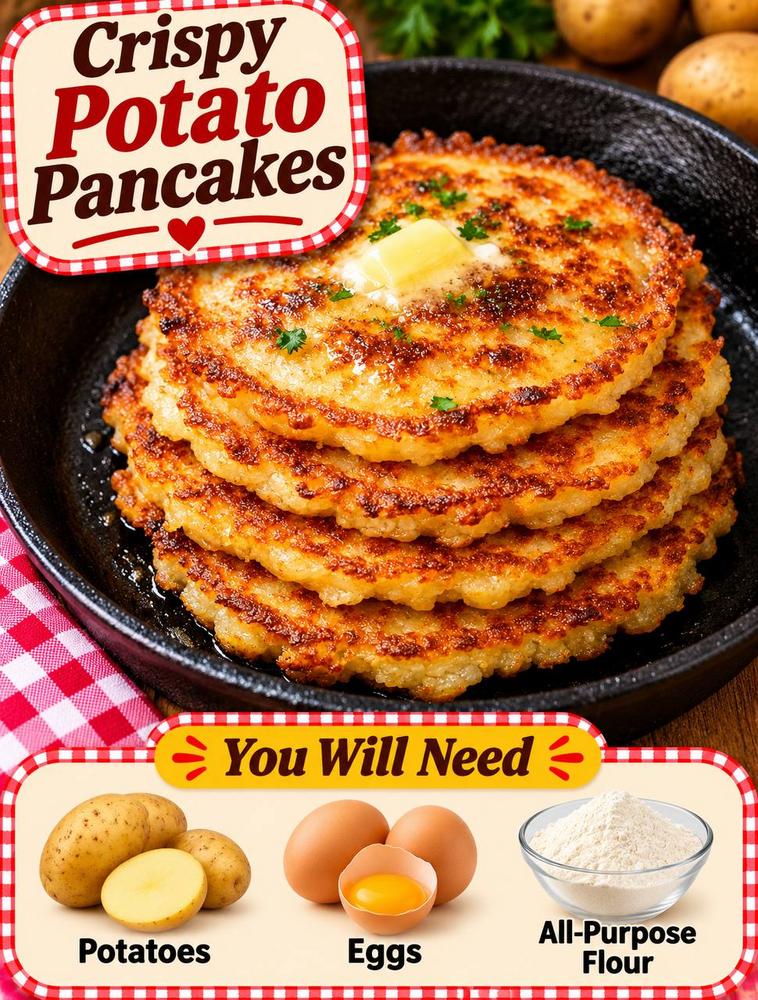
- 4 large Russet potatoes (about 2.5-3 pounds total), peeled
- 1 medium yellow onion, peeled
- 2 large eggs, lightly beaten
- 1/4 cup all-purpose flour (or gluten-free all-purpose flour blend)
- 1 teaspoon salt, or more to taste
- 1/2 teaspoon black pepper, freshly ground
- 1/4 teaspoon garlic powder (optional)
- 1/4 teaspoon paprika (optional)
- 1/2 cup vegetable oil, canola oil, or grapeseed oil, for frying (plus more if needed)
- For garnish: fresh parsley, finely chopped, and a pat of butter (optional)
- For serving: sour cream, applesauce, or other desired toppings
Instructions
- Prepare the Potatoes and Onion: Using the large holes of a box grater or a food processor with a grating disc, grate the peeled potatoes and onion.
- Remove Excess Moisture (Crucial for Crispiness): Transfer the grated potato and onion mixture to a fine-mesh sieve or a colander. Press down firmly with the back of a spoon to squeeze out as much liquid as possible. For even better results, transfer the mixture to a clean kitchen towel or several layers of cheesecloth and wring out the liquid over the sink until no more moisture can be extracted. This step is absolutely essential for achieving truly crispy pancakes.
- Prepare the Batter: In a large mixing bowl, combine the squeezed potato and onion mixture. Add the lightly beaten eggs, all-purpose flour, salt, black pepper, and optional garlic powder and paprika. Mix thoroughly until all ingredients are well combined. The mixture should hold together when gently pressed.
- Heat the Oil: Pour about 1/2 inch of oil into a large, heavy-bottomed skillet (cast iron works wonderfully for even heat distribution). Heat the oil over medium-high heat until it shimmers and a small drop of water sizzles immediately upon contact. The oil should be hot enough to sizzle the pancakes but not so hot that it smokes excessively.
- Form and Fry the Pancakes: Using a 1/4 cup measure or a large spoon, scoop a portion of the potato mixture. Gently flatten it into a patty about 3-4 inches in diameter and about 1/2 inch thick. Carefully place the patties into the hot oil, being careful not to overcrowd the pan. Leave enough space between each pancake for even cooking and easy flipping.
- Cook Until Golden and Crispy: Fry the potato pancakes for 4-6 minutes per side, or until they are deeply golden brown and very crispy. The exact cooking time will depend on your stove and the thickness of your pancakes. Adjust the heat as needed to prevent burning while ensuring they cook through.
- Drain Excess Oil: Once cooked, use a slotted spatula to transfer the crispy potato pancakes to a wire rack set over a baking sheet lined with paper towels. This allows any excess oil to drain off, keeping them perfectly crisp.
- Maintain Warmth (Optional): If cooking in batches, you can keep the cooked pancakes warm in a single layer on a baking sheet in an oven preheated to 200°F (95°C) while you finish frying the remaining batter.
- Serve Immediately: Serve the crispy potato pancakes hot, garnished with fresh chopped parsley and a pat of butter if desired. Offer classic toppings like sour cream and applesauce, or explore other savory or sweet pairings.
Cooking Tips and Variations
Achieving Maximum Crispiness: The single most important tip for crispy potato pancakes is to remove as much moisture as possible from the grated potatoes and onions. Don’t underestimate this step; it’s the difference between crispy and soggy. Use a clean kitchen towel and wring it out with all your might. Also, ensure your oil is hot enough before adding the pancakes, and don’t overcrowd the pan, as this lowers the oil temperature and steams the pancakes instead of frying them.
Preventing Discoloration: Potatoes oxidize quickly when exposed to air, turning an unappetizing brown. If you’re not mixing and cooking immediately after grating, submerge the grated potatoes in a bowl of cold water (after grating, before squeezing) for a few minutes. Then, drain and squeeze thoroughly. This helps prevent browning, though working quickly is always best.
Using the Right Oil: A neutral-flavored oil with a high smoke point, like vegetable, canola, or grapeseed oil, is ideal for frying. You need enough oil to cover about half the thickness of the pancake. Don’t be shy with the oil; it’s key to that golden crust.
Consistent Heat: Maintaining a consistent medium-high heat is crucial. If the oil gets too hot, the outside will burn before the inside cooks. If it’s too cool, the pancakes will absorb too much oil and become greasy. Adjust your burner as needed throughout the cooking process.
Flavor Variations:
- Garlic & Herb: Increase the garlic powder, or add 1-2 cloves of minced fresh garlic. Incorporate fresh herbs like chives, dill, or thyme into the batter.
- Spicy Kick: Add a pinch of cayenne pepper or a dash of hot sauce to the batter for a subtle heat.
- Cheesy Delight: Mix in 1/4 cup of grated Parmesan or cheddar cheese to the batter for a savory, cheesy twist.
- Vegetable Boost: Finely grate other vegetables like carrots or zucchini (squeezing out moisture is still key!) and add a small amount to the potato mixture for added nutrients and flavor.
- Sweet Touch (for Applesauce pairing): A pinch of cinnamon and a tiny bit of sugar in the batter can enhance the sweet pairings.
Gluten-Free Option: Simply substitute the all-purpose flour with a 1:1 gluten-free all-purpose flour blend. The texture will remain very similar.
Thickness Matters: Aim for patties about 1/2 inch thick. Thicker pancakes will take longer to cook through and may not get as crispy; thinner ones might burn easily.
Storage and Reheating
Storing Leftovers: Cooked potato pancakes are best enjoyed fresh, but leftovers can be stored. Allow them to cool completely before transferring them to an airtight container. Place parchment paper between layers of pancakes to prevent sticking. Store in the refrigerator for up to 3-4 days.
Freezing: Potato pancakes freeze remarkably well. After frying and cooling completely, arrange them in a single layer on a baking sheet and freeze until solid (about 1-2 hours). Once frozen, transfer them to a freezer-safe bag or container, again using parchment paper between layers. They can be stored in the freezer for up to 2-3 months.
Reheating for Crispiness: The key to reheating potato pancakes is to bring back that crisp exterior. Avoid the microwave, as it will make them soggy.
- Oven/Toaster Oven: Preheat your oven or toaster oven to 375°F (190°C). Arrange the pancakes in a single layer on a baking sheet. Heat for 10-15 minutes, or until heated through and crispy. If reheating from frozen, it might take 20-25 minutes.
- Air Fryer: Preheat your air fryer to 350°F (175°C). Place pancakes in a single layer in the air fryer basket (do not overcrowd). Cook for 5-8 minutes, flipping halfway, or until hot and crispy. From frozen, increase time to 10-15 minutes.
- Skillet: For a stovetop reheat, heat a small amount of oil in a non-stick skillet over medium heat. Place the pancakes in the hot oil and cook for 2-3 minutes per side, or until heated through and re-crisped.
Frequently Asked Questions
What kind of potatoes are best for potato pancakes?
Russet potatoes are generally considered the best choice for crispy potato pancakes. Their high starch content helps them bind together well and contributes to that desirable crispy texture. Other starchy varieties like Idaho potatoes also work well. Waxy potatoes, like Yukon Gold or red potatoes, have less starch and more moisture, which can make it harder to achieve maximum crispiness, though they can still be used if that’s all you have on hand.
Why are my potato pancakes soggy?
Sogginess is almost always due to excess moisture in the potato mixture or not enough heat in the oil. Ensure you thoroughly squeeze out as much liquid as possible from the grated potatoes and onions before mixing the batter. Also, make sure your oil is adequately hot (but not smoking) when you add the pancakes, and avoid overcrowding the pan, which can drop the oil temperature and cause steaming rather than frying. Draining them on a wire rack after frying also helps prevent them from becoming soggy.
Can I make the batter ahead of time?
It’s best to prepare and cook the potato pancake batter immediately after mixing. Grated potatoes oxidize quickly, turning brown and releasing more moisture over time, which can lead to discolored and soggy pancakes. If you absolutely must prepare ahead, you can grate the potatoes and onion and store them submerged in cold water in the refrigerator for a few hours. However, you’ll still need to drain and squeeze them very thoroughly just before mixing with the other ingredients and frying.
What are some classic toppings for potato pancakes?
The most classic and beloved toppings for potato pancakes are sour cream and applesauce. The tangy creaminess of sour cream perfectly complements the savory crispiness of the pancakes, while applesauce offers a delightful sweet and tart contrast. Other popular options include crème fraîche, plain Greek yogurt, smoked salmon, caviar, chives, a sprinkle of sugar, or even a dollop of fruit compote.