Introduction
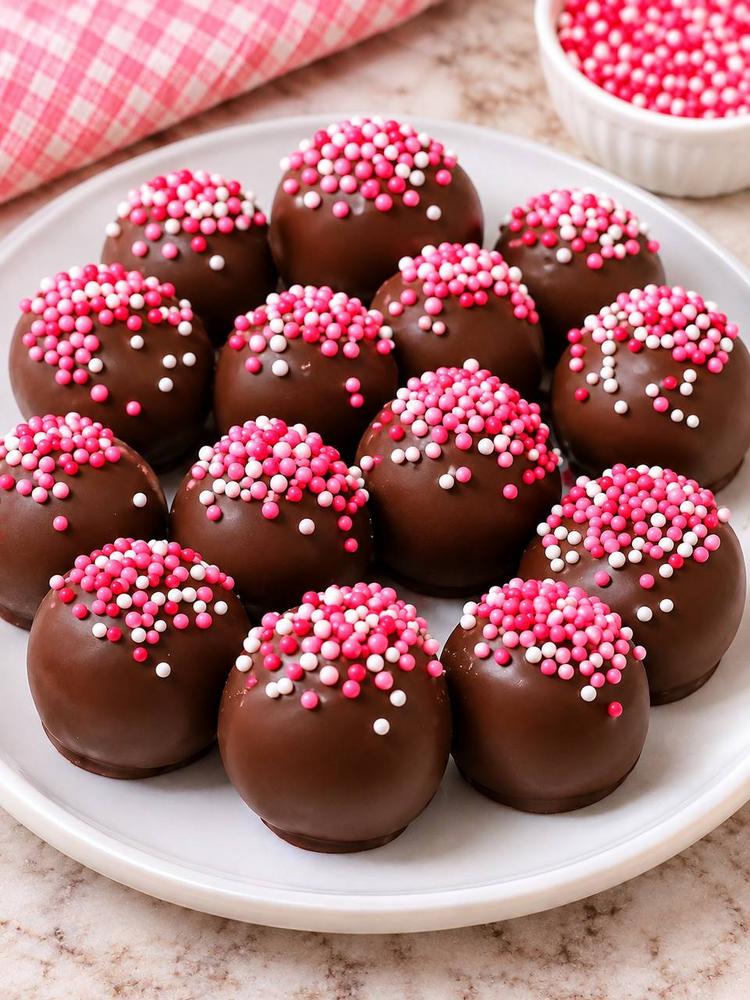
Prepare to be enchanted by the delightful world of Chocolate Sprinkle Truffles! These aren’t just any ordinary sweet treat; they are miniature spheres of pure joy, boasting a rich, decadent chocolate ganache interior, enrobed in a smooth, glossy dark chocolate shell, and generously adorned with vibrant pink and white nonpareil sprinkles. Each bite is a symphony of textures and flavors, from the satisfying snap of the chocolate coating to the melt-in-your-mouth creaminess of the ganache, all punctuated by the playful crunch of the sprinkles. They are an absolute showstopper, perfect for elevating any occasion, whether it’s a festive holiday gathering, a thoughtful homemade gift, or simply a well-deserved indulgence.
What makes these Chocolate Sprinkle Truffles truly special is their universal appeal and surprising ease of preparation. Despite their elegant appearance, you don’t need to be a pastry chef to create these beauties in your own kitchen. The process is straightforward, requiring minimal baking skills and mostly just a bit of patience for chilling. They are incredibly versatile, allowing for endless customization to suit your taste or match any celebration. Imagine a plate of these dazzling truffles gracing your dessert table, instantly adding a touch of whimsy and sophistication. They make for exquisite party favors, heartfelt hostess gifts, or simply a delightful way to brighten an ordinary day. Get ready to impress yourself and everyone around you with these irresistible, homemade confections!
Nutritional Information
Per serving (approximate values, based on 20 truffles from the recipe):
- Calories: 180-200
- Protein: 2-3g
- Carbohydrates: 18-22g
- Fat: 12-15g
- Fiber: 1-2g
- Sodium: 5-10mg
Ingredients
For the Truffle Base:
- 10 ounces (about 280g) high-quality dark chocolate (60-70% cacao), finely chopped
- 1/2 cup (120ml) heavy cream
- 2 tablespoons unsalted butter, cut into small pieces
- 1 teaspoon vanilla extract (optional, but recommended)
- Pinch of salt (optional, to enhance chocolate flavor)
For the Chocolate Coating:
- 8 ounces (about 225g) dark or semi-sweet chocolate, finely chopped (chocolate melting wafers or couverture chocolate work best for dipping)
- 1 tablespoon coconut oil or shortening (optional, for smoother coating)
For Decoration:
- 1/2 cup pink and white nonpareil sprinkles (or color of your choice)
Instructions
-
Prepare the Truffle Base (Ganache):
- Place the finely chopped 10 ounces of dark chocolate in a medium heatproof bowl.
- In a small saucepan, heat the heavy cream and butter over medium heat until the mixture just begins to simmer around the edges. Do not boil.
- Pour the hot cream mixture over the chopped chocolate in the bowl. Let it sit undisturbed for 5 minutes to allow the chocolate to melt.
- After 5 minutes, gently whisk the mixture starting from the center and working your way outwards until it is completely smooth and glossy. If using, stir in the vanilla extract and pinch of salt.
- Cover the bowl with plastic wrap, pressing it directly onto the surface of the ganache to prevent a skin from forming.
- Refrigerate the ganache for at least 2-3 hours, or until it is firm enough to scoop and roll. For best results, chill overnight.
-
Shape the Truffles:
- Line a baking sheet with parchment paper or wax paper.
- Once the ganache is firm, use a small cookie scoop (about 1 tablespoon in size) or a melon baller to portion out the ganache.
- Lightly dust your hands with cocoa powder (optional, to prevent sticking) or work quickly. Roll each portion into a smooth, uniform ball.
- Place the rolled truffles on the prepared baking sheet.
- Return the baking sheet with the shaped truffles to the refrigerator for another 30-60 minutes to firm up again. This step is crucial for easy dipping.
-
Prepare for Dipping and Decorating:
- Set up your dipping station: Have your chilled truffles ready, a bowl of sprinkles, and another baking sheet lined with parchment paper for the finished truffles.
- Melt the 8 ounces of coating chocolate. You can do this using a double boiler or in the microwave.
- Double Boiler Method: Place the chopped coating chocolate in a heatproof bowl set over a saucepan of simmering water (ensure the bottom of the bowl does not touch the water). Stir occasionally until the chocolate is completely melted and smooth. If using, stir in the coconut oil or shortening for a smoother consistency.
- Microwave Method: Place the chopped coating chocolate in a microwave-safe bowl. Microwave on high in 20-30 second intervals, stirring well after each interval, until the chocolate is mostly melted. Remove from the microwave and stir continuously until completely smooth. Be careful not to overheat. If using, stir in the coconut oil or shortening.
-
Dip and Decorate the Truffles:
- Working with one truffle at a time, drop a chilled truffle into the melted chocolate coating.
- Using a dipping fork or two regular forks, roll the truffle in the chocolate until it is completely coated.
- Gently lift the truffle out, tapping the fork against the side of the bowl to allow any excess chocolate to drip off. This creates a smooth, even coating.
- Immediately transfer the coated truffle to the bowl of sprinkles. Gently roll or sprinkle the top half of the truffle with the nonpareils, ensuring good coverage. You can also gently press the truffle into the sprinkles.
- Carefully place the decorated truffle back onto the parchment-lined baking sheet.
- Repeat with the remaining truffles, melting more coating chocolate if necessary as it cools and thickens.
-
Final Chill:
- Once all truffles are dipped and decorated, return the baking sheet to the refrigerator for at least 30 minutes, or until the chocolate coating is completely set and firm.
- Once set, the truffles are ready to be enjoyed or stored.
Cooking Tips and Variations
Achieving truffle perfection is easier than you think with a few key tips and a dash of creativity. For the truffle base, always opt for high-quality chocolate. The better the chocolate, the richer and more delicious your truffles will be. When making the ganache, be patient and allow the hot cream to sit over the chocolate for the full 5 minutes before whisking; this ensures even melting and a silky-smooth consistency. Over-whisking can incorporate too much air, which can make the ganache less dense. Most importantly, ensure your ganache is thoroughly chilled before attempting to roll. A firm ganache is much easier to work with and less prone to melting in your hands.
When it comes to shaping, consistency is key for a professional look. A small cookie scoop or melon baller is your best friend for portioning out uniform sizes. Work quickly when rolling the ganache between your palms to prevent it from melting, and if your hands get too warm, give them a quick rinse under cold water or take a short break. For the chocolate coating, gentle melting is paramount. Whether using a double boiler or microwave, avoid high heat to prevent scorching the chocolate, which can make it seize or become grainy. The addition of a tablespoon of coconut oil or shortening to your coating chocolate isn’t strictly necessary, but it significantly helps in achieving a thinner, smoother, and more fluid coating, making dipping much easier and resulting in a beautiful, glossy finish. If you’re feeling adventurous, tempering your chocolate for the coating will give you a snappier texture and prevent bloom (the whitish streaks that can appear on untempered chocolate).
Applying sprinkles is where the fun truly begins! Make sure to apply them immediately after dipping, while the chocolate coating is still wet. This ensures maximum adhesion. You can either gently roll the top half of the truffle in a shallow bowl of sprinkles or use your fingers to press them onto the still-wet chocolate. Don’t be shy with the sprinkles – a generous coating makes these truffles visually stunning. As for variations, the possibilities are endless! Beyond pink and white, consider using different sprinkle colors to match various holidays or themes: red and green for Christmas, orange and black for Halloween, or rainbow sprinkles for a birthday celebration. You can also experiment with different types of sprinkles, such as jimmies, sanding sugar, or even chopped nuts for a different texture. For flavor variations, infuse your ganache with extracts like peppermint, almond, or orange zest. A splash of your favorite liqueur, such as rum, Kahlua, or Grand Marnier, can also add an adult twist. For a truly decadent experience, try rolling some truffles in cocoa powder or finely chopped toasted nuts instead of sprinkles.
Storage and Reheating
These Chocolate Sprinkle Truffles are best enjoyed fresh, but they also store beautifully, making them an excellent make-ahead dessert or gift. To maintain their freshness, texture, and prevent the chocolate from melting, always store your truffles in an airtight container in the refrigerator. Layer them between sheets of parchment paper to prevent them from sticking together or damaging their delicate coating and sprinkles. Stored this way, they will remain fresh and delicious for up to 1-2 weeks.
While truffles don’t typically require “reheating” in the traditional sense, for the best flavor and texture, it’s highly recommended to let them come to room temperature for about 15-20 minutes before serving. This allows the ganache interior to soften slightly, becoming more creamy and allowing the full depth of the chocolate flavor to shine through. Serving them directly from the refrigerator will result in a firmer, chewier texture, which some people prefer, but the nuanced flavors are most pronounced when slightly softened. Never attempt to microwave or heat truffles, as this will melt the coating and ruin their structure and appearance.
Frequently Asked Questions
Why is my ganache too soft or too hard?
If your ganache is too soft, it likely didn’t chill long enough or had too much cream in relation to the chocolate. Return it to the refrigerator for more chilling time, or if it’s excessively soft, you can gently re-melt it over a double boiler and stir in a small amount of additional finely chopped chocolate (an ounce or two) to help it firm up. If your ganache is too hard, it might have been over-chilled or had too much chocolate. Let it sit at room temperature for a bit to soften, or if it’s very stiff, you can gently warm it in the microwave in very short bursts (5-10 seconds) until it becomes pliable enough to scoop and roll, stirring between each burst.
Why won’t my chocolate coat smoothly?
Several factors can cause a lumpy or thick coating. The chocolate might be too cool and has started to seize, or it might have been overheated, causing it to burn or become grainy. Ensure your melted chocolate is at the right temperature – warm enough to be fluid but not hot. Adding a tablespoon of coconut oil or shortening can significantly help thin out the chocolate for a smoother consistency. Also, make sure your truffles are well-chilled; a cold truffle helps the chocolate set quickly and smoothly, preventing it from melting the ganache and creating a messy coating.
How do I prevent sprinkles from falling off?
The key to securely adhering sprinkles is to apply them immediately after dipping the truffle in the melted chocolate, while the chocolate coating is still wet and tacky. If you wait too long, the chocolate will begin to set, and the sprinkles won’t stick. Ensure you have your sprinkles ready in a shallow bowl right next to your dipping station. You can gently roll the top of the truffle in the sprinkles or press them on to ensure good contact. If the chocolate is setting too quickly, you might need to work faster or re-warm your coating chocolate slightly.
Can I use milk chocolate for these truffles?
While dark chocolate provides the rich, deep flavor typically associated with truffles, you can certainly use milk chocolate for a sweeter, milder flavor profile. Keep in mind that milk chocolate has a higher sugar and milk solid content, which can affect its consistency. You might need to adjust the cream-to-chocolate ratio slightly for the ganache base (potentially using a little less cream) to achieve the desired firmness. For the coating, milk chocolate can be more prone to seizing or burning, so melt it even more gently than dark chocolate.