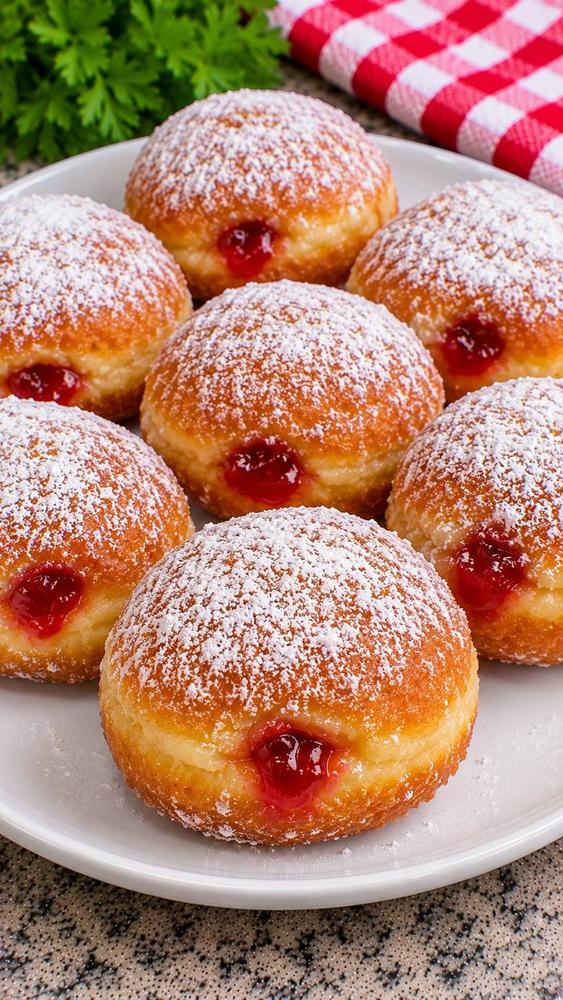
Homemade Jelly-Filled Donuts (Berliner Doughnuts)
Introduction
There’s something uniquely comforting and irresistibly joyful about a freshly made doughnut, especially when it’s warm, fluffy, and bursting with sweet, fruity jam. Today, we’re diving into the delightful world of Berliner Doughnuts, also known as Krapfen or Pfannkuchen in various German-speaking regions. These aren’t your average ring-shaped doughnuts; Berliners are plump, round, yeast-leavened pastries, deep-fried to golden perfection and generously filled with a vibrant jelly or jam. Imagine biting through a delicate, sugary crust into a cloud-like interior, only to discover a sweet explosion of raspberry or strawberry jam – it’s pure bliss, a taste of tradition, and a perfect treat for any occasion.
The charm of the Berliner Doughnut lies not just in its incredible taste but also in its rich history and cultural significance. Traditionally enjoyed during festive periods like Carnival or New Year’s Eve, these jelly-filled delights have transcended seasonal boundaries to become a beloved pastry year-round. While you might find them in bakeries, making them at home elevates the experience entirely. Homemade Berliners offer an unparalleled freshness, a superior texture that store-bought versions often lack, and the wonderful ability to customize your fillings to your heart’s content. It’s a fun, rewarding baking project that fills your kitchen with an intoxicating aroma and your family with happy smiles.
Prepare to create golden, fluffy, jam-filled masterpieces, each one proudly displaying that characteristic “white ring” – a tell-tale sign of a perfectly proofed and fried Berliner. Dusted generously with a snowy blanket of powdered sugar, these doughnuts are not just a dessert; they’re an experience, a journey into the heart of European pastry tradition, and a testament to the simple joy of baking from scratch. Get ready to impress yourself and your loved ones with these utterly delectable Homemade Jelly-Filled Donuts!
Nutritional Information
Per serving (approximate values):
- Calories: 350-400 kcal
- Protein: 6-8g
- Carbohydrates: 50-60g
- Fat: 15-20g
- Fiber: 1-2g
- Sodium: 200-250mg
Ingredients
For the Dough:
- 3 ½ cups (420g) all-purpose flour, plus more for dusting
- ¼ ounce (7g) active dry yeast (2 ¼ teaspoons)
- ¼ cup (50g) granulated sugar
- ½ cup (120ml) warm milk (105-115°F / 40-46°C)
- 2 large eggs, at room temperature
- 4 tablespoons (56g) unsalted butter, softened
- ½ teaspoon salt
- 1 teaspoon vanilla extract (optional)
For the Filling and Finishing:
- 1 cup (240g) raspberry or strawberry jelly/jam, seedless preferred
- 4-6 cups (1-1.5 liters) vegetable, canola, or peanut oil, for frying
- ½ cup (60g) powdered sugar, for dusting
Instructions
- Activate the Yeast: In a large bowl or the bowl of a stand mixer, combine the warm milk, 1 tablespoon of the granulated sugar, and the active dry yeast. Stir gently and let it sit for 5-10 minutes, until foamy. This indicates the yeast is active.
- Prepare the Dough: To the yeast mixture, add the remaining granulated sugar, eggs, softened butter, salt, and vanilla extract (if using). Mix well. Gradually add the flour, one cup at a time, mixing on low speed with a dough hook attachment (or by hand with a wooden spoon) until a shaggy dough forms.
- Knead the Dough: Increase the speed to medium-low and knead for 8-10 minutes (or knead by hand on a lightly floured surface for 10-12 minutes) until the dough is smooth, elastic, and no longer sticky. It should pass the “windowpane test” (you can stretch a small piece thin enough to see light through it without tearing).
- First Rise (Bulk Fermentation): Lightly grease a clean bowl. Place the dough in the bowl, turning once to coat. Cover the bowl with plastic wrap or a clean kitchen towel and let it rise in a warm, draft-free place for 1-1.5 hours, or until doubled in size.
- Shape the Doughnuts: Gently punch down the risen dough to release the air. Turn it out onto a lightly floured surface. Using a rolling pin, roll the dough to about ½ inch (1.25 cm) thickness. Using a 2.5-3 inch (6-7.5 cm) round cutter (or a glass rim), cut out as many circles as possible. Gather the scraps, gently re-knead, re-roll, and cut more doughnuts until all dough is used.
- Second Rise (Proofing): Place the cut doughnut rounds on baking sheets lined with parchment paper, leaving about 2 inches between each. Cover loosely with plastic wrap or a clean kitchen towel and let them rise in a warm place for another 30-45 minutes, or until visibly puffy and about 1.5 times their original size. This crucial step helps achieve the desired fluffy texture and the “white ring” when fried.
- Heat the Frying Oil: In a large, heavy-bottomed pot or Dutch oven, pour enough frying oil to reach a depth of 2-3 inches. Heat the oil over medium heat to 350°F (175°C). Use a candy/deep-fry thermometer to monitor the temperature; maintaining a consistent temperature is key to perfect doughnuts.
- Fry the Doughnuts: Carefully lower 2-3 doughnuts into the hot oil at a time, being careful not to overcrowd the pot. Fry for 2-3 minutes per side, or until golden brown. The doughnuts should puff up and develop a lighter band around their middle (the “white ring”).
- Drain the Doughnuts: Using a slotted spoon or spider, carefully remove the fried doughnuts from the oil. Place them on a wire rack set over a baking sheet lined with paper towels to drain any excess oil. Repeat with the remaining doughnuts, ensuring the oil temperature returns to 350°F (175°C) between batches.
- Cool and Prepare Filling: Allow the doughnuts to cool completely on the wire rack before filling. While they cool, transfer the jelly/jam to a piping bag fitted with a long, thin nozzle (a Bismark tip is ideal, but a small round tip or even a zip-top bag with a corner snipped off will work).
- Fill the Doughnuts: Once cool, carefully insert the tip of the piping bag into the side of each doughnut, wiggling it slightly to create a cavity. Gently squeeze the bag to fill the doughnut with about 1-2 tablespoons of jam. You’ll feel the doughnut become heavier and see a slight expansion.
- Dust with Powdered Sugar: Arrange the filled doughnuts on a plate or serving platter. Using a fine-mesh sieve, generously dust the doughnuts with powdered sugar. Serve immediately and enjoy!
Cooking Tips and Variations
Achieving the perfect Berliner Doughnut is a rewarding process, and a few key tips can make all the difference. For the dough, ensure your ingredients are at room temperature, especially the eggs and butter, as this helps them incorporate smoothly and allows the yeast to work more efficiently. Don’t rush the kneading process; a well-kneaded dough will be smooth, elastic, and yield a much lighter, airier doughnut. The “windowpane test” is your best friend here – if you can stretch a small piece of dough thin enough to see light through it without it tearing, your gluten has developed beautifully. Proper proofing is equally crucial; the first rise develops flavor, and the second rise, after shaping, is essential for that signature light texture and the coveted “white ring” during frying. If your doughnuts don’t have this lighter band, it often means they were under-proofed before frying.
When it comes to frying, temperature control is paramount. Invest in a good deep-fry thermometer and keep a close eye on it. If the oil is too hot, the doughnuts will brown too quickly on the outside and remain raw inside. If it’s too cool, they’ll absorb too much oil and become greasy. Aim for a consistent 350°F (175°C). Avoid overcrowding the pot, as this will drop the oil temperature and lead to uneven cooking. Fry in small batches, allowing the oil to recover its temperature between additions. Once fried, drain them on a wire rack lined with paper towels to shed excess oil, which keeps them from becoming soggy. For filling, a piping bag with a long, thin Bismark tip works best for a clean injection of jam. If you don’t have one, a regular small round tip or even a zip-top bag with a small corner snipped off will do the trick. Just be gentle to avoid tearing the delicate doughnut.
The beauty of homemade Berliners also lies in their versatility. While classic raspberry or strawberry jam is a perennial favorite, don’t hesitate to experiment with other fillings. Apricot jam, plum butter (Pflaumenmus), or even a homemade lemon curd or pastry cream can create delightful variations. For a richer treat, consider a chocolate hazelnut spread or a simple vanilla bean custard. Beyond the filling, you can also play with the exterior coating. Instead of just powdered sugar, try rolling warm doughnuts in granulated sugar for a slightly crispier texture, or a cinnamon-sugar mixture for an aromatic twist. Some traditional versions even use a simple sugar glaze. For an extra touch of flavor, you can add a hint of lemon zest to your dough or a pinch of nutmeg for a warm spice note. The possibilities are endless, allowing you to tailor these delightful pastries to your personal taste and occasion.
Storage and Reheating
Homemade Berliner Doughnuts are truly at their best when enjoyed fresh, ideally within a few hours of being made. The fluffy texture and crisp exterior begin to soften over time. However, if you do have leftovers, they can be stored to enjoy later. Place the filled and sugared doughnuts in an airtight container at room temperature for up to 1-2 days. While they will still be delicious, the powdered sugar may absorb some moisture and disappear, and the dough will be less airy than when freshly fried.
For longer storage, you can refrigerate them in an airtight container for up to 3-4 days. Bear in mind that refrigeration tends to dry out yeast-based pastries, so their texture might be a bit denser. Freezing is also an option, particularly if you want to make a large batch. You can freeze the fried (but unfilled and unsugared) doughnuts. Wrap each doughnut individually in plastic wrap, then place them in a freezer-safe bag or container for up to 1 month. When you’re ready to enjoy them, thaw the doughnuts at room temperature for a few hours. Once thawed, you can gently warm them in a microwave for 10-15 seconds (be careful not to overheat, or the jam will be scorching hot) or in a preheated oven at 300°F (150°C) for about 5-7 minutes. After warming, fill them with your desired jam and dust with fresh powdered sugar before serving. This method helps to revive some of their fresh-baked appeal.
When serving, these jelly-filled delights are a fantastic accompaniment to a warm cup of coffee, a soothing pot of tea, or even a glass of cold milk. They’re perfect for breakfast, brunch, an afternoon treat, or as a dessert. The rich, sweet flavors pair wonderfully with the slight bitterness of coffee or the comforting warmth of tea. Whether you’re sharing them with friends and family or savoring one all to yourself, the homemade Berliner Doughnut is a treat that promises pure satisfaction.
Frequently Asked Questions
What is the “white ring” on a Berliner Doughnut, and how do I achieve it?
The “white ring” is the lighter, un-browned band that encircles the middle of a perfectly fried Berliner Doughnut. It’s a hallmark of proper proofing and frying technique. It indicates that the dough has risen sufficiently (second rise), causing the doughnut to float high enough in the oil that its middle section doesn’t make contact with the hot oil, thus remaining lighter in color. To achieve it, ensure your dough is well-proofed before frying (visibly puffy and about 1.5 times its original size) and maintain a consistent oil temperature of around 350°F (175°C) while frying.
Can I bake these doughnuts instead of frying them?
While you can bake some types of doughnuts, traditional Berliner Doughnuts are meant to be deep-fried. Frying gives them their characteristic golden-brown exterior, fluffy texture, and unique flavor that baking simply cannot replicate. Baking would result in a texture closer to a sweet bun rather than the light, airy, and slightly crispy exterior of a classic Berliner. For an authentic experience, deep-frying is highly recommended.
What if my jam is too thick or too thin for piping?
If your jam is too thick, you can gently warm it in a small saucepan over low heat or in the microwave for a few seconds, stirring until it loosens slightly. You can also add a tiny bit of water or lemon juice (½ teaspoon at a time) to thin it to a pipeable consistency. If your jam is too thin and runny, it might be difficult to keep it inside the doughnut. In this case, you can try chilling it in the refrigerator for a bit to thicken it, or you might consider a different jam that has a naturally thicker consistency.
How can I tell if the oil temperature is right without a thermometer?
While a thermometer is highly recommended for best results, if you don’t have one, you can do a simple test. Drop a small piece of dough (about ½ inch) into the hot oil. If it immediately sizzles and turns golden brown in about 1 minute, the oil is likely at the correct temperature. If it browns too quickly, the oil is too hot; if it just sits there or slowly sizzles, it’s not hot enough. Adjust the heat accordingly and re-test before frying your doughnuts.