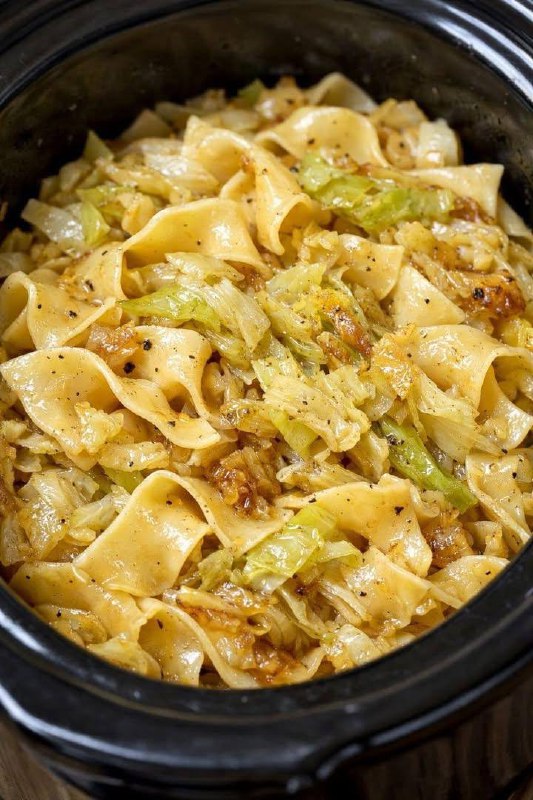
Instructions
- Bring a large pot of salted water to a rolling boil. Add the egg noodles and cook according to package directions until al dente. Drain well and set aside. Do not rinse the noodles; the starch helps the butter and cabbage adhere.
- While the noodles are cooking, prepare the cabbage and onions. If using bacon, cook the diced bacon in a large skillet or Dutch oven over medium heat until crispy. Remove the bacon with a slotted spoon and set aside, reserving 2 tablespoons of bacon grease in the pan. If not using bacon, proceed with butter.
- Add 4 tablespoons of butter to the large skillet or Dutch oven (or use the reserved bacon grease). Melt the butter over medium heat. Add the thinly sliced onions and cook, stirring occasionally, for 8-10 minutes, or until softened and translucent. For extra flavor, allow the onions to caramelize slightly, cooking for up to 15-20 minutes over medium-low heat until golden brown.
- Add the shredded cabbage to the skillet with the onions. Stir well to combine. Add 1 teaspoon of salt and ½ teaspoon of black pepper. Cook, stirring frequently, for 15-25 minutes, or until the cabbage has softened significantly and is tender. For a richer flavor, allow some of the cabbage to brown slightly, developing a sweet, caramelized edge. If using caraway seeds or minced garlic, add them during the last 5 minutes of cooking the cabbage and onions.
- Once the cabbage is tender and the onions are caramelized to your liking, add the cooked and drained egg noodles to the skillet. Add the remaining 2 tablespoons of butter.
- Toss everything together gently but thoroughly, ensuring the noodles, cabbage, and onions are well combined and coated in the melted butter. Continue to cook for another 2-3 minutes, stirring, to allow the flavors to meld and the noodles to absorb some of the buttery goodness.
- Taste and adjust seasoning as needed, adding more salt and pepper if desired. If you cooked bacon, stir the crispy bacon bits back into the mixture at this stage.
- Serve hot, garnished with fresh chopped parsley if using, as a comforting main dish or a hearty side.
Cooking Tips and Variations
Cabbage Prep: For best results, use a sharp chef’s knife to thinly slice the cabbage, or use a mandoline for uniform shreds. A food processor with a slicing disc can also make quick work of it. Remove the tough core before slicing. Don’t be afraid of the large volume of cabbage at first; it cooks down significantly.
Browning for Flavor: The secret to truly delicious Cabbage and Noodles lies in allowing the onions and cabbage to brown slightly. This caramelization process develops deep, sweet, and savory flavors that are essential to the dish. Don’t rush this step; patience will be rewarded.
Noodle Choice: While wide egg noodles are traditional, feel free to experiment with other pasta shapes like penne, rotini, or even spaetzle for a different texture. Cook the noodles just until al dente, as they will continue to cook slightly when tossed with the hot cabbage and butter. Overcooked noodles can become mushy.
Brown Butter Magic: For an extra layer of nutty flavor, you can brown the butter before adding the onions. Simply melt the butter in the skillet and continue cooking it over medium heat, swirling occasionally, until it turns a golden-brown color and smells nutty. Be careful not to burn it.
Seasoning is Key: Taste and adjust your seasoning throughout the cooking process. Cabbage can be a bit bland on its own, so don’t be shy with the salt and pepper. A pinch of nutmeg can also enhance the sweetness of the cabbage.
Adding Protein: For a more substantial main course, stir in cooked, shredded chicken, sliced kielbasa, or the crispy bacon bits as mentioned in the recipe. Vegetarian protein options include sautéed mushrooms or smoked tofu.
Spice It Up: A pinch of red pepper flakes can add a subtle kick if you enjoy a bit of heat. Smoked paprika can also add depth and a smoky aroma.
Herbs and Aromatics: Beyond caraway seeds (which pair wonderfully with cabbage), consider adding fresh dill, marjoram, or thyme for different flavor profiles. Minced garlic cooked with the onions adds a lovely aromatic touch.
Creamy Variation: For a richer, creamier version, stir in a splash of heavy cream or a dollop of sour cream at the very end, just before serving. This adds a delightful tang and luscious texture.
Serving Suggestions: This dish is fantastic on its own as a vegetarian main course. It also makes an excellent side dish for roasted chicken, pork loin, grilled sausages, or pot roast. A dollop of sour cream or a sprinkle of fresh chives can be a lovely finishing touch.
Storage and Reheating
Storage: Leftover Buttery Cabbage and Noodles can be stored in an airtight container in the refrigerator for up to 3-4 days. It actually tastes even better the next day as the flavors have more time to meld.
Reheating: To reheat, place the desired portion in a microwave-safe dish and heat on high for 1-2 minutes, stirring halfway through, until heated through. Alternatively, reheat in a skillet over medium-low heat, stirring occasionally, until warm. If the noodles seem a bit dry, you can add a splash of water or chicken broth, or a small pat of butter, to help moisten them during reheating.
Frequently Asked Questions
What kind of cabbage is best for Cabbage and Noodles?
Green cabbage is the most traditional and commonly used type for this dish. Its firm texture holds up well to cooking and it develops a lovely sweetness when sautéed. You can also use savoy cabbage for a slightly different texture, but avoid red cabbage as it can bleed color and alter the dish’s appearance.
Can I make this dish ahead of time?
Yes, Cabbage and Noodles is an excellent make-ahead dish. In fact, many people find that the flavors deepen and improve after a day or two in the refrigerator. You can prepare the entire dish, store it, and then reheat it when you’re ready to serve. If making very far ahead, you could cook the cabbage and onions, and then cook the noodles fresh right before serving to ensure they don’t get too soft.
Is this dish vegetarian or vegan?
As written, this recipe is vegetarian, as it contains butter and egg noodles. To make it vegan, you would need to use a plant-based butter alternative and ensure your egg noodles are replaced with a vegan pasta (most dried pasta is naturally vegan, but always check the ingredients). If using bacon in the variation, omit it for both vegetarian and vegan diets.
Why are my noodles sticking together after cooking?
Noodles can stick together if they are overcooked, if the pot isn’t large enough with enough water, or if they aren’t tossed immediately with some fat after draining. To prevent sticking, ensure you use a very large pot with plenty of salted water, cook only until al dente, and drain them thoroughly. Do not rinse them, as the starch helps the sauce adhere. Once drained, immediately add them to the skillet with the cooked cabbage and butter and toss well to coat.