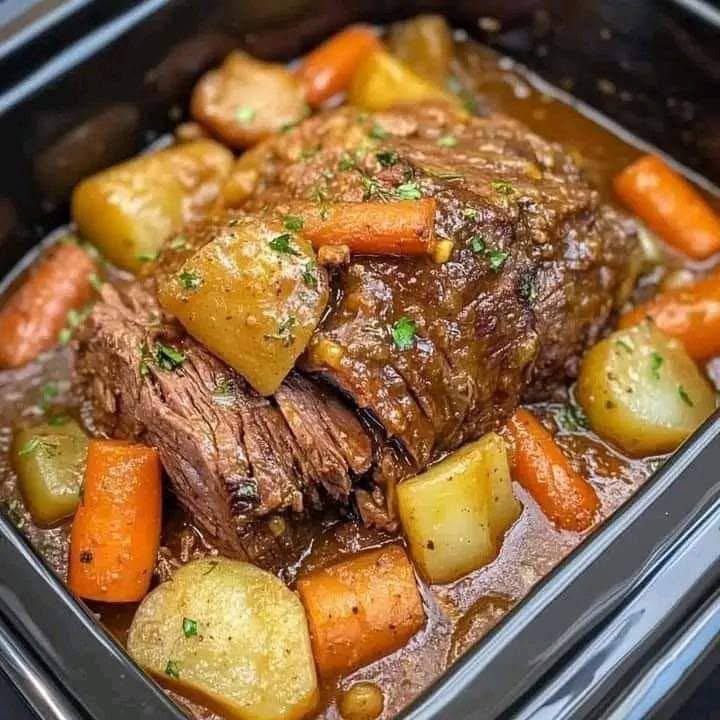
Instructions
- Pat the beef chuck roast completely dry with paper towels. Season generously all over with salt and freshly ground black pepper. This step is crucial for developing a flavorful crust.
- Heat the olive oil in a large Dutch oven or oven-safe pot with a tight-fitting lid over medium-high heat until shimmering.
- Carefully place the seasoned roast into the hot pot. Sear on all sides until deeply browned and caramelized, about 3-5 minutes per side. This browning creates a rich flavor base for your pot roast. Remove the seared roast from the pot and set aside on a plate.
- Reduce the heat to medium. Add the chopped onion to the pot and cook, stirring occasionally, until softened and translucent, about 5-7 minutes.
- Add the minced garlic to the pot and cook for another minute until fragrant, being careful not to burn it.
- Stir in the dried thyme, bay leaf, and tomato paste. Cook for 1-2 minutes, stirring constantly, to toast the spices and deepen the flavor of the tomato paste.
- If using, pour in the dry red wine. Bring to a simmer and scrape up any browned bits from the bottom of the pot with a wooden spoon. Allow the wine to reduce by about half, which should take 3-5 minutes. This deglazing step adds incredible flavor.
- Pour in the beef broth and Worcestershire sauce. Bring the liquid to a gentle simmer.
- Return the seared beef roast to the pot, ensuring it is mostly submerged in the liquid. If the liquid doesn’t quite cover the roast halfway, add a little more beef broth or water.
- Cover the pot tightly with the lid and transfer it to a preheated oven at 300°F (150°C). Braise for 2 hours.
- After 2 hours, carefully remove the pot from the oven. Add the carrots and potatoes around the roast in the pot. Stir gently to ensure they are somewhat submerged in the braising liquid.
- Return the pot to the oven and continue to braise for another 1 to 2 hours, or until the beef is fork-tender and the vegetables are cooked through. The total cooking time will vary depending on the size and thickness of your roast, but it should easily shred with a fork when done.
- Once cooked, carefully remove the pot from the oven. Transfer the pot roast and vegetables to a large serving platter. Cover loosely with foil to keep warm while you prepare the gravy.
- To make the gravy (optional, but highly recommended): Place the Dutch oven back on the stovetop over medium heat. Skim off any excess fat from the surface of the braising liquid.
- In a small bowl, whisk together the cornstarch and cold water to create a smooth slurry.
- Gradually whisk the cornstarch slurry into the simmering braising liquid in the pot. Continue to whisk and simmer until the gravy thickens to your desired consistency, about 2-5 minutes. Taste and adjust seasoning with salt and pepper if needed.
- Remove the bay leaf from the gravy.
- Shred the pot roast into large chunks or slices, as desired. Serve hot with the cooked vegetables and spoon plenty of the rich gravy over everything.
- Garnish with fresh chopped parsley just before serving.
Cooking Tips and Variations
To achieve the most tender and flavorful pot roast, the secret lies in low and slow cooking. Don’t rush the process; the longer it braises at a gentle temperature, the more the tough collagen in the beef breaks down, resulting in that melt-in-your-mouth texture. For best results, always pat your roast completely dry before searing. This ensures a beautiful, deep brown crust, which translates to a richer, more complex flavor profile in your final dish. Don’t underestimate the power of a good sear!
When it comes to selecting your beef, a boneless beef chuck roast is the champion for pot roast. Its marbling and connective tissue are perfect for braising, yielding incredible tenderness and flavor. Other suitable cuts include beef brisket or round roast, though they might require slightly longer cooking times to achieve the same tenderness.
For even more flavor, consider adding a sprig of fresh rosemary and a few sprigs of fresh thyme along with the dried thyme and bay leaf. These fresh herbs infuse the braising liquid with an aromatic depth that is truly delightful. If you prefer a slightly sweeter note, a splash of balsamic vinegar (about 1-2 tablespoons) added with the beef broth can enhance the overall richness. For a spicier kick, a pinch of red pepper flakes can be added with the garlic.
The “EZ” vegetables in this recipe are designed for simplicity, but feel free to vary them based on your preference or what you have on hand. Other root vegetables like parsnips or sweet potatoes can be excellent additions, cut into similar-sized chunks as the carrots and potatoes. Pearl onions can also add a lovely sweetness. If you want to include mushrooms, add them during the last 30-45 minutes of cooking to prevent them from becoming too mushy. Remember, the key is to add hardier vegetables partway through the cooking process so they don’t turn to mush while the beef finishes tenderizing.
Adjusting cooking time is crucial, especially if you’re using a slow cooker or Crockpot. For a slow cooker, sear the roast and sauté the aromatics on the stovetop first, then transfer everything to the slow cooker. Cook on low for 6-8 hours or on high for 3-4 hours, adding the vegetables during the last 2-3 hours on low or 1-1.5 hours on high. Always check for fork-tenderness of the beef and vegetables to ensure they are perfectly cooked. The pot roast is done when it shreds easily with minimal effort.
To achieve the perfect gravy, ensuring it’s smooth and lump-free, always mix your cornstarch with cold water before adding it to the hot liquid. This prevents clumping. If your gravy isn’t thickening enough, you can add a little more cornstarch slurry, whisking constantly. If it becomes too thick, simply whisk in a splash of hot beef broth or water until it reaches your desired consistency. For an even richer gravy, you can strain the braising liquid through a fine-mesh sieve before thickening, removing any bits of vegetables or herbs, though many prefer the rustic appeal of a gravy with some vegetable pieces.
Storage and Reheating
Proper storage and reheating are key to enjoying your delicious pot roast for days to come. Once the pot roast has cooled to room temperature, transfer it, along with the vegetables and gravy, to an airtight container. It can be safely stored in the refrigerator for up to 3-4 days. For longer storage, pot roast freezes exceptionally well. Place cooled pot roast, vegetables, and gravy in freezer-safe containers or heavy-duty freezer bags, removing as much air as possible to prevent freezer burn. It can be stored in the freezer for up to 3 months. Thaw frozen pot roast overnight in the refrigerator before reheating.
When reheating, it’s important to do so gently to maintain the tenderness of the beef and prevent the vegetables from becoming overly soft. For best results, reheat individual portions on the stovetop over medium-low heat, stirring occasionally, until heated through. Add a splash of beef broth or water if the gravy seems too thick. You can also reheat larger portions in the oven. Transfer the pot roast and gravy to an oven-safe dish, cover it tightly with foil, and bake at 300°F (150°C) for 20-30 minutes, or until thoroughly warmed. Microwaving is an option for quick individual servings, but be sure to use short intervals and stir frequently to ensure even heating and prevent drying out the meat.
Frequently Asked Questions
What’s the best cut of beef for pot roast?
The best cut for pot roast is typically a boneless beef chuck roast. It has excellent marbling and connective tissue that breaks down beautifully during slow cooking, resulting in incredibly tender and flavorful meat. Brisket or round roast can also be used, but chuck roast is generally preferred for its consistent tenderness.
Can I make this pot roast in a slow cooker?
Absolutely! To adapt this recipe for a slow cooker, sear the roast and sauté the onions and garlic on the stovetop as instructed. Then, transfer the seared roast, cooked aromatics, and all liquids to your slow cooker. Cook on low for 6-8 hours or on high for 3-4 hours. Add the carrots and potatoes during the last 2-3 hours on low or 1-1.5 hours on high to ensure they are tender but not mushy. Proceed with making the gravy on the stovetop after the roast is done.
How do I prevent my vegetables from getting mushy?
To prevent mushy vegetables, the key is timing. Add hardier vegetables like carrots and potatoes partway through the cooking process, typically during the last 1.5 to 2 hours of braising. This allows them to cook until tender without becoming overcooked and falling apart by the time the beef is perfectly done.
What can I do if my gravy is too thin or too thick?
If your gravy is too thin, you can thicken it by making a cornstarch slurry (1 tablespoon cornstarch mixed with 1 tablespoon cold water) and whisking it gradually into the simmering gravy until it reaches your desired consistency. If your gravy is too thick, simply whisk in a little more hot beef broth, water, or even a splash of red wine until it thins to your liking.