Introduction
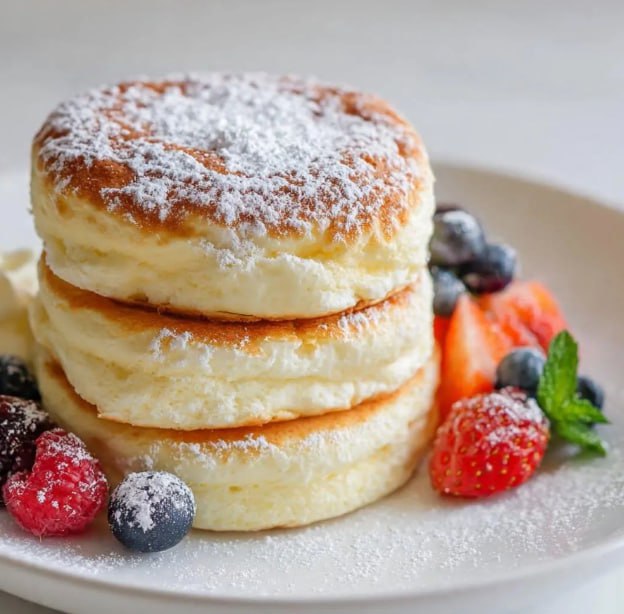
Imagine biting into a cloud – not a literal one, of course, but a culinary creation so impossibly soft, airy, and delicate that it melts in your mouth with every bite. That, my friends, is the magic of Japanese Soufflé Pancakes. Far removed from their denser American cousins, these ethereal stacks are a testament to culinary artistry and a true breakfast indulgence. Known for their incredible height, wobble, and feather-light texture, they’ve captivated food lovers around the globe, becoming a viral sensation and a must-try for anyone seeking a truly extraordinary morning treat. The moment you see them, often stacked high and dusted with a snowy blanket of powdered sugar, you know you’re in for something special.
What gives these pancakes their signature “cloud-like” quality? It all comes down to a clever technique borrowed from classic French soufflés: the meticulous incorporation of whipped egg whites, or meringue, into a light pancake batter. This meringue acts as a natural leavening agent, trapping air and expanding as it cooks, resulting in a pancake that’s not just fluffy, but almost weightless. Each bite offers a delightful contrast – a slightly golden exterior yielding to an interior that’s akin to a sweet, warm marshmallow. They’re visually stunning, undeniably delicious, and transform a simple breakfast into an elegant, memorable experience that feels both luxurious and comforting.
Perfect for a leisurely weekend brunch, a special occasion breakfast, or simply when you want to treat yourself to something truly extraordinary, Japanese Soufflé Pancakes are more than just a meal; they’re an experience. Their delicate nature means they’re best enjoyed fresh off the griddle, allowing you to savor their unique texture at its peak. While they might seem intimidating to make at first glance, with a few key techniques and a little patience, you can absolutely recreate this culinary marvel in your own kitchen. Prepare to impress your taste buds and loved ones with these unbelievably fluffy, melt-in-your-mouth masterpieces that redefine what a pancake can be.
Nutritional Information
Per serving (approximate values for 2 pancakes, without toppings):
- Calories: 280
- Protein: 10g
- Carbohydrates: 38g
- Fat: 10g
- Fiber: 1g
- Sodium: 250mg
Ingredients
- 1 large egg yolk
- 1/4 cup whole milk
- 1/2 teaspoon vanilla extract
- 1/2 cup all-purpose flour (or cake flour for extra tenderness)
- 1 teaspoon baking powder
- 1/4 teaspoon salt
- 3 large egg whites, at room temperature
- 1/4 cup granulated sugar
- 1 teaspoon vegetable oil (for greasing the pan)
- Powdered sugar, fresh berries (blueberries, raspberries, strawberries), and whipped cream for serving
Instructions
- Prepare the Wet Ingredients: In a medium bowl, whisk together the egg yolk, milk, and vanilla extract until well combined and smooth.
- Combine Dry Ingredients: In a separate small bowl, whisk together the flour, baking powder, and salt.
- Form the Batter Base: Gradually add the dry ingredients to the wet ingredients, whisking gently until just combined. Be careful not to overmix; a few small lumps are perfectly fine. Overmixing will develop the gluten in the flour, resulting in tougher pancakes. Set aside.
- Whip the Egg Whites: In a clean, large bowl (preferably a metal or glass bowl), using an electric mixer with a whisk attachment, begin whipping the room temperature egg whites on medium speed.
- Add Sugar Gradually: Once the egg whites become foamy, gradually add the granulated sugar, one tablespoon at a time, while continuing to whip on medium-high speed.
- Achieve Stiff Peaks: Continue whipping until the egg whites form glossy, firm, stiff peaks. When you lift the whisk, the peaks should stand upright without drooping. Do not overbeat, as this can make them dry and difficult to fold.
- Lighten the Batter: Add about one-third of the whipped egg whites to the egg yolk batter. Gently fold them in using a spatula to lighten the batter. This step helps to equalize the densities, making it easier to incorporate the remaining meringue without deflating it.
- Fold in Remaining Meringue: Add the remaining whipped egg whites to the lightened batter. Using a gentle folding motion with your spatula, carefully incorporate the meringue until no streaks of white remain. Work quickly and gently to retain as much air as possible. The batter should be incredibly light and airy.
- Preheat and Prepare Pan: Heat a large non-stick pan or griddle over very low heat. It’s crucial for the heat to be low and consistent. Lightly grease the pan with a small amount of vegetable oil, wiping away any excess with a paper towel.
- Form the Pancakes: If using pancake rings, lightly grease the insides of the rings and place them on the preheated pan. Spoon a generous amount of batter into each ring, filling them about three-quarters full. If not using rings, spoon large dollops of batter onto the pan, trying to make them as thick as possible. You may need to stack a second smaller dollop on top of the first to build height.
- Cook First Side: Place a lid over the pan to create a steaming effect, which helps the pancakes cook through and puff up. Cook for 4-6 minutes, or until the bottoms are golden brown and the tops appear slightly set and bubbly.
- Flip and Finish Cooking: Carefully remove the rings if using. Using a wide, thin spatula, gently flip the pancakes. Replace the lid and cook for another 3-5 minutes, or until the second side is golden brown and the pancakes are cooked through. They should feel light and springy to the touch.
- Serve Immediately: Transfer the finished soufflé pancakes to a plate. Dust generously with powdered sugar, arrange fresh berries around and on top, and add a dollop of whipped cream. Serve warm and enjoy the cloud-like texture!
Cooking Tips and Variations
Achieving the perfect cloud-like Japanese Soufflé Pancakes requires a bit of finesse, but with these tips, you’ll be a pro in no time. First and foremost, the quality of your meringue is paramount. Ensure your egg whites are at room temperature before whipping; this allows them to incorporate more air and achieve greater volume and stability. Also, make sure your bowl and whisk are completely free of any grease or egg yolk, as even a tiny amount of fat can prevent the egg whites from whipping properly. When adding the sugar to the egg whites, do so gradually. This helps stabilize the meringue, making it glossy and firm, crucial for the pancakes’ structure. Don’t overbeat the egg whites to the point of dryness; they should be stiff but still have a slight sheen.
Another critical aspect is the folding technique. Once the meringue is ready, it’s essential to incorporate it into the batter very gently. Use a cutting and folding motion with a spatula rather than stirring, which would deflate all that precious air. The goal is to combine everything just until no streaks of egg white remain; a few small lumps in the batter are preferable to an overmixed, deflated batter. The cooking temperature is equally vital: these pancakes demand low heat. Cooking them too fast will burn the outside before the inside has a chance to cook through and puff up. A low and slow approach, combined with covering the pan, creates a steamy environment that helps them rise beautifully and cook evenly. If you don’t have a lid, you can use a heat-safe plate or aluminum foil. Using greased pancake rings is highly recommended for achieving uniform height and a perfectly round shape, making the process much easier for beginners.
For variations, the possibilities are endless. Beyond the classic powdered sugar and berries, consider infusing your pancakes with different flavors. Add a teaspoon of matcha powder to the dry ingredients for a subtle earthy note, or a pinch of cinnamon or nutmeg for a warmer spice profile. For a chocolate twist, fold in a tablespoon of unsweetened cocoa powder. The toppings can be just as creative: a drizzle of maple syrup, honey, or chocolate sauce is always a hit. Try a dollop of crème fraîche or mascarpone for a richer creaminess. Fresh fruit compotes, caramelized bananas, toasted nuts, or even a sprinkle of edible flowers can elevate the presentation and flavor. For a more adventurous palate, a savory version could be explored, though the sweet rendition is the traditional and most beloved form.
Storage and Reheating
Japanese Soufflé Pancakes are truly at their best when enjoyed fresh, straight off the griddle. Their delicate, airy texture is most pronounced immediately after cooking. However, if you find yourself with leftovers, they can be stored, though they will lose some of their signature height and fluffiness upon cooling. To store, allow the pancakes to cool completely to room temperature. This prevents condensation from forming and making them soggy. Once cool, place them in an airtight container, separating layers with parchment paper to prevent sticking. Store them in the refrigerator for up to 1-2 days. Freezing is generally not recommended as it significantly alters their texture, making them dense and rubbery upon thawing.
When it comes to reheating, the goal is to gently warm them through without drying them out or making them rubbery. Avoid the microwave if possible, as it tends to make them chewy and dense. The best method for reheating is in a toaster oven or a conventional oven. Preheat your oven or toaster oven to a low temperature, around 250°F (120°C). Place the pancakes on a baking sheet, ideally in a single layer, and heat for about 5-10 minutes, or until just warmed through. Keep a close eye on them to prevent over-drying. Alternatively, you can gently reheat them in a non-stick pan over very low heat for a couple of minutes per side, again, being careful not to overcook. While reheated soufflé pancakes won’t quite have the same cloud-like magic as freshly made ones, these methods will help them retain some softness and make for a perfectly acceptable second-day breakfast.
Remember that the toppings should always be added fresh after reheating. Powdery sugar, fresh berries, and whipped cream are best applied right before serving to maintain their freshness and visual appeal. Preparing your toppings while the pancakes are gently reheating ensures that every component is at its peak when you sit down to enjoy your meal. While the initial delicate fluff might diminish slightly, the delicious flavor will certainly remain, making leftovers a pleasant, albeit slightly different, experience.
Frequently Asked Questions
What makes Japanese Soufflé Pancakes different from regular pancakes?
The primary difference lies in their unique texture and preparation method. Unlike regular pancakes that rely solely on baking powder for lift, Japanese Soufflé Pancakes incorporate a significant amount of whipped egg whites (meringue) into the batter. This meringue creates countless air pockets, resulting in an incredibly light, airy, and wobbly texture that’s often described as cloud-like or soufflé-like. They are also typically much thicker and taller than traditional pancakes, often cooked slowly under a lid to help them puff up and cook through.
Why did my soufflé pancakes deflate?
There are several common reasons for deflation. The most frequent culprit is improperly whipped egg whites – if they weren’t whipped to stiff peaks, they won’t hold enough air. Overmixing the batter after the meringue has been folded in is another major cause, as it deflates the air from the egg whites. Lastly, cooking at too high a heat or not covering the pan can cause them to cook too quickly on the outside before the internal structure sets, leading to a collapse once removed from the heat. Patience with low heat and gentle folding are key!
Do I need special equipment to make these pancakes?
While not strictly necessary, some equipment can greatly help achieve the best results. An electric mixer (handheld or stand mixer) is highly recommended for whipping the egg whites to stiff peaks efficiently. A good quality non-stick pan is crucial for preventing sticking and allowing for easy flipping. Pancake rings or metal cooking rings are very helpful for maintaining the pancakes’ height and uniform round shape, especially for beginners. A spatula and a lid for your pan are also essential.
Can I prepare the batter ahead of time?
Unfortunately, the batter for Japanese Soufflé Pancakes should be used immediately after preparation. The whipped egg whites are delicate and will start to deflate over time, even within minutes. If the batter sits for too long, the air pockets will collapse, and your pancakes will lose their signature height and fluffiness. For the best results, have all your ingredients prepped and ready, then mix the batter and cook the pancakes without delay.