Instructions
- Pat the chicken thighs dry thoroughly with paper towels. This step is crucial for the flour to adhere properly and for any potential browning.
- In a shallow dish or a large resealable plastic bag, combine the all-purpose flour, salt, black pepper, garlic powder, onion powder, paprika, and Italian seasoning. Mix well to ensure all spices are evenly distributed throughout the flour.
- Add the dried chicken thighs to the flour mixture, one or two at a time, and toss or shake to evenly coat each piece. Ensure every surface of the chicken is covered with a thin, even layer of the seasoned flour. Gently shake off any excess flour.
- If you choose to brown the chicken for extra flavor and a slightly crisper skin (highly recommended but not strictly necessary for slow cooking), heat 1 tablespoon of olive oil in a large skillet over medium-high heat. Once hot, carefully place the flour-coated chicken pieces, skin-side down, in the skillet. Sear for 3-5 minutes per side, until golden brown. Do not overcrowd the pan; work in batches if necessary.
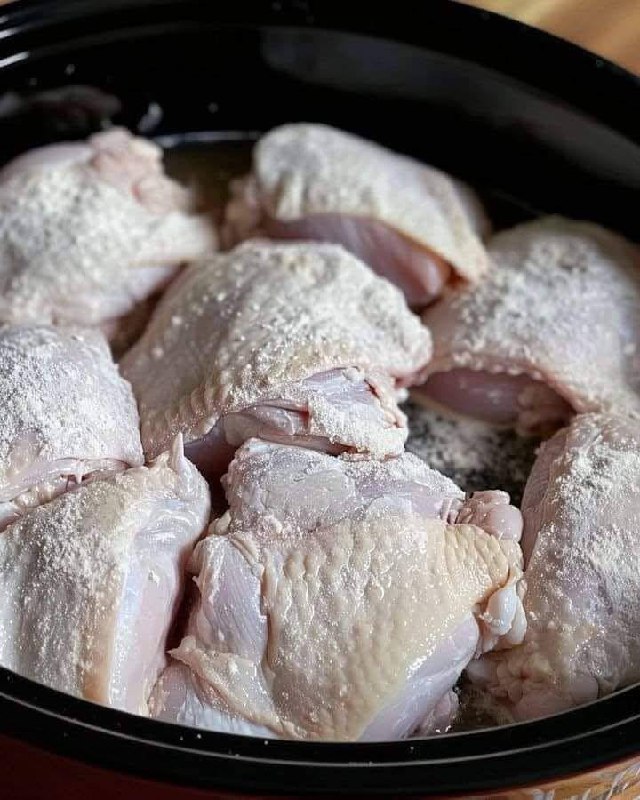
- If you are not browning the chicken, or once browned, carefully arrange the flour-coated chicken thighs in a single layer at the bottom of your slow cooker insert. Try not to overlap them too much to ensure even cooking.
- If using, scatter the chopped onion, carrots, and celery around and on top of the chicken pieces in the slow cooker.
- Pour the chicken broth over the chicken and vegetables. The liquid should cover the bottom of the slow cooker but doesn’t need to completely submerge the chicken. The flour will help thicken this liquid into a sauce.
- Cover the slow cooker with its lid.
- Cook on LOW for 6-8 hours or on HIGH for 3-4 hours, or until the chicken is fall-off-the-bone tender and an internal temperature of 165°F (74°C) is reached when checked with a meat thermometer at the thickest part of the thigh, avoiding the bone.
- Once cooked, carefully remove the chicken from the slow cooker. The sauce in the slow cooker will have thickened beautifully thanks to the flour coating.
- Taste the sauce and adjust seasonings if necessary. If you prefer a thicker sauce, you can remove some liquid and reduce it on the stovetop, or mash some of the tender vegetables into the sauce.
- Garnish with fresh chopped parsley or chives, if desired, before serving.
Cooking Tips and Variations
For the most tender and flavorful results, bone-in, skin-on chicken thighs are highly recommended as they retain moisture and flavor much better than boneless, skinless breasts in the slow cooker’s moist environment. If you prefer white meat, consider boneless, skinless chicken thighs or even chicken drumsticks, but adjust cooking times accordingly as they may cook faster. Patting the chicken completely dry before dredging in flour is a critical step; moisture on the surface will prevent the flour from adhering properly, leading to a less effective coating and sauce thickening. Don’t be shy with seasoning the flour mixture. This is where a significant portion of your dish’s flavor will come from. Feel free to add a pinch of cayenne pepper for a subtle kick or dried herbs like rosemary and thyme for a more aromatic profile. Browning the chicken before adding it to the slow cooker, while optional, is a game-changer for flavor and color. It creates a rich depth of flavor through the Maillard reaction and helps render some of the fat from the skin, resulting in a more appealing texture. If you skip this step, the chicken will still be delicious, but the skin won’t be crispy. When adding liquid, chicken broth is ideal, but you can also use white wine for a more sophisticated flavor profile, or even a can of diced tomatoes for a heartier, Italian-inspired twist. Ensure you don’t overfill the slow cooker with liquid; the chicken will release its own juices, and the flour will thicken the existing liquid into a rich sauce. Overcrowding the slow cooker can lead to uneven cooking, so arrange the chicken pieces in a single layer if possible. If your slow cooker is too small, cook in batches or use a larger appliance. For a creamier sauce, stir in a splash of heavy cream or a dollop of cream cheese during the last 30 minutes of cooking. To create a full meal in one pot, add hearty vegetables like potatoes (cut into 1-inch chunks), sweet potatoes, or butternut squash during the last 2-3 hours of cooking, ensuring they are submerged in the liquid to cook through. You can also add frozen peas or green beans during the last 30 minutes for a pop of color and freshness. For an Italian twist, add a can of crushed tomatoes, a tablespoon of dried oregano, and a sprinkle of red pepper flakes to the broth. For a more rustic, herby flavor, add a few sprigs of fresh rosemary and thyme to the slow cooker along with the liquid. To make a lemon-garlic variation, add the zest of one lemon and a few extra cloves of minced garlic to the broth. Finally, always check the internal temperature of the chicken to ensure it’s cooked safely to 165°F (74°C) before serving.
Storage and Reheating
Leftover slow cooker flour-coated chicken is excellent and often tastes even better the next day as the flavors have more time to meld. To store, allow the chicken and sauce to cool completely at room temperature for no more than 2 hours. Transfer the chicken and any remaining sauce to an airtight container. Refrigerate promptly for up to 3-4 days. For longer storage, this dish freezes beautifully. Place the cooled chicken and sauce in a freezer-safe container or heavy-duty freezer bags, removing as much air as possible. It can be frozen for up to 3 months. Thaw frozen chicken overnight in the refrigerator before reheating. To reheat, the best method is usually gentle warming. For individual portions, microwave the chicken and sauce in a microwave-safe dish, covered, on medium power, stirring occasionally, until heated through. For larger quantities, transfer the chicken and sauce to a saucepan or oven-safe dish. Reheat on the stovetop over low heat, stirring frequently, until simmering, or in a preheated oven at 300°F (150°C) for 20-30 minutes, or until thoroughly hot. If the sauce appears too thick upon reheating, you can add a splash of chicken broth or water to achieve your desired consistency. Be careful not to overheat, as this can dry out the chicken.
Frequently Asked Questions
Why do I need to coat the chicken in flour?
Coating the chicken in flour serves two main purposes in this slow cooker recipe. Firstly, it helps to create a slightly textured exterior on the chicken, which contributes to a more appealing mouthfeel and can help lock in moisture. Secondly, and very importantly, the flour acts as a natural thickening agent for the liquid in the slow cooker. As the chicken cooks, the flour dissolves into the broth, creating a rich, flavorful, and perfectly thickened sauce or gravy that coats the chicken beautifully.
Can I use boneless, skinless chicken breasts instead of thighs?
While you can use boneless, skinless chicken breasts, they are more prone to drying out in the slow cooker due to their lower fat content. If you choose to use them, we recommend reducing the cooking time on high to 2-3 hours and on low to 4-5 hours, or until an internal temperature of 165°F (74°C) is reached. Chicken thighs, with their higher fat content and bone-in nature, tend to stay much juicier and more tender in the slow cooker over longer cooking periods.
My sauce is too thin/thick. How can I fix it?
If your sauce is too thin, you can remove some of the liquid from the slow cooker after the chicken is cooked and simmer it in a small saucepan on the stovetop over medium-high heat until it reduces and thickens to your desired consistency. Alternatively, you can mix 1 tablespoon of cornstarch with 2 tablespoons of cold water to create a slurry, then stir it into the hot sauce in the slow cooker and cook for another 15-30 minutes on high until thickened. If your sauce is too thick, simply stir in a splash of additional chicken broth or water until it reaches your preferred consistency before serving.
Do I have to brown the chicken before putting it in the slow cooker?
No, browning the chicken is an optional step. The recipe works perfectly well without it, especially if you’re looking for a true “dump-and-go” slow cooker meal. However, browning the chicken beforehand does add a significant depth of flavor through the Maillard reaction, creates a more appealing color, and can help render some of the fat from the skin, resulting in a richer final dish. If you have the extra 10-15 minutes, it’s a worthwhile step for an enhanced flavor profile.