Introduction
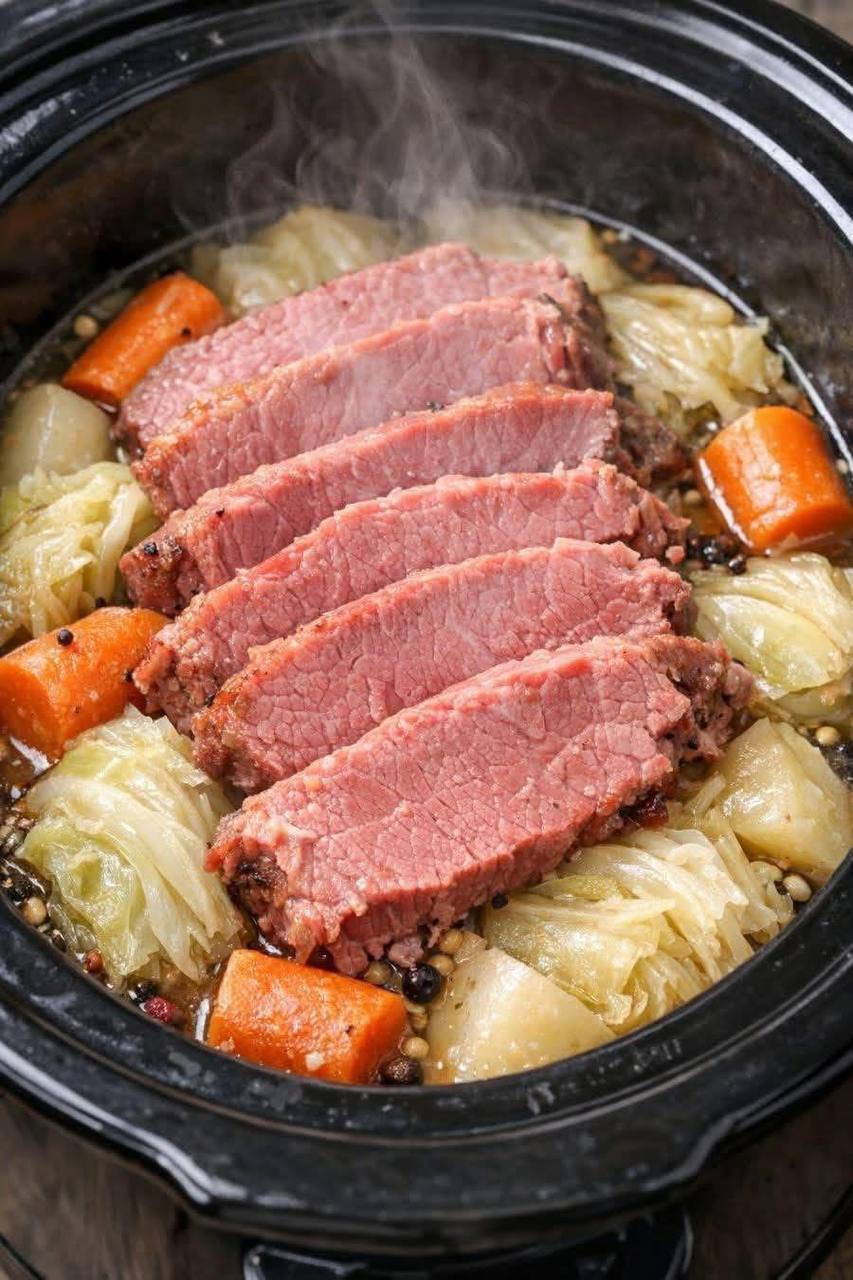
There are some dishes that just speak to your soul, wrapping you in a warm, savory embrace with every bite. Corned Beef and Cabbage is undeniably one of them. This classic, hearty meal, often synonymous with St. Patrick’s Day celebrations, is a testament to simple ingredients coming together to create something truly extraordinary. Imagine incredibly tender, flavorful corned beef, slow-cooked to perfection, alongside perfectly cooked, vibrant vegetables like sweet carrots, earthy potatoes, and gently wilted cabbage. It’s a dish that evokes comfort, tradition, and a sense of gathering, making it ideal for a chilly evening or any time you crave a meal that feels like a hug from the inside out.
While its origins are deeply rooted in Irish-American culture, the universal appeal of this dish lies in its robust flavors and satisfying textures. What makes this particular recipe stand out is the magic of the slow cooker. Forget endless stirring or worrying about overcooking; the slow cooker transforms a humble cut of brisket into melt-in-your-mouth tenderness with minimal effort. It allows the pickling spices to deeply infuse the meat, creating a complex, aromatic profile that is both familiar and utterly delicious. This “set it and forget it” approach ensures that even novice cooks can achieve restaurant-quality results, freeing you up to enjoy the rich aromas filling your kitchen.
This recipe isn’t just about cooking; it’s about creating an experience. We’ll guide you through each step to ensure your corned beef is succulent, your vegetables are tender but not mushy, and the overall dish is a symphony of flavors. From selecting the right cut of beef to perfectly timing the addition of your vegetables, we’ll unlock the secrets to a truly unforgettable Corned Beef and Cabbage. Get ready to dive into a bowl of pure comfort that will have everyone asking for seconds!
Nutritional Information
Per serving (approximate values):
- Calories: 650-750
- Protein: 45-55g
- Carbohydrates: 35-45g
- Fat: 35-45g
- Fiber: 8-12g
- Sodium: 1500-2000mg
Ingredients
- 3-4 pounds corned beef brisket with spice packet (flat cut or point cut)
- 6-8 cups water or low-sodium beef broth (or a combination)
- 1 bottle (12 ounces) dark beer, such as Guinness (optional, but highly recommended for flavor)
- 1 large onion, peeled and quartered
- 4-5 medium carrots, peeled and cut into 2-inch chunks
- 6-8 small red potatoes or Yukon Gold potatoes, scrubbed and halved or quartered depending on size
- 1 small head of green cabbage (about 1.5-2 pounds), cored and cut into 6-8 wedges
- 1-2 bay leaves (if not included in spice packet)
- 1 teaspoon whole black peppercorns (if not included in spice packet)
- 1 tablespoon apple cider vinegar (optional, for brightness)
- Fresh parsley, chopped, for garnish (optional)
- Dijon mustard or horseradish cream, for serving (optional)
Instructions
- Prepare the Corned Beef: Remove the corned beef brisket from its packaging. Rinse the brisket thoroughly under cold water to remove any excess brine. This helps to reduce the sodium content and improve the flavor.
- Place in Slow Cooker: Place the rinsed corned beef brisket into the bottom of a large 6-quart (or larger) slow cooker. If your brisket came with a spice packet, sprinkle the contents of the packet over the beef. If not, add the bay leaves and whole black peppercorns now.
- Add Liquids: Pour the water or beef broth over the corned beef until it is mostly submerged. If using, pour the dark beer over the beef as well. The liquid should cover at least three-quarters of the brisket.
- Add Aromatics (Initial Phase): Add the quartered onion to the slow cooker around the beef.
- Slow Cook the Beef (Initial Phase): Cover the slow cooker and cook on low for 6-8 hours or on high for 3-4 hours, or until the corned beef is fork-tender. The exact cooking time will depend on your slow cooker and the size of your brisket.
- Prepare Vegetables: About 2-3 hours before the end of the cooking time (if cooking on low) or 1-1.5 hours (if cooking on high), prepare your vegetables. Peel and chop the carrots into 2-inch chunks. Scrub and halve or quarter the potatoes. Core the cabbage and cut it into 6-8 wedges.
- Add Root Vegetables: Once the corned beef has cooked for most of its duration and is becoming tender, carefully add the carrots and potatoes to the slow cooker, submerging them in the liquid as much as possible. Continue cooking for another 1.5-2 hours on low or 45-60 minutes on high.
- Add Cabbage: During the last 30-45 minutes of cooking (on low) or 15-20 minutes (on high), gently nestle the cabbage wedges into the slow cooker around the beef and other vegetables. Ensure they are somewhat submerged in the cooking liquid so they can steam and soften.
- Check for Tenderness: The corned beef is done when it shreds easily with a fork. The vegetables should be tender but still hold their shape. If using, stir in the apple cider vinegar for a touch of brightness.
- Rest and Slice the Beef: Carefully remove the corned beef from the slow cooker and place it on a cutting board. Tent loosely with foil and let it rest for 10-15 minutes. This resting period allows the juices to redistribute, resulting in a more tender and flavorful slice.
- Slice Against the Grain: Once rested, slice the corned beef against the grain into 1/4 to 1/2-inch thick slices. Slicing against the grain is crucial for tender bites.
- Serve: Arrange the sliced corned beef on a large platter with the cooked cabbage, carrots, and potatoes. Ladle some of the flavorful cooking liquid over the top. Garnish with fresh chopped parsley if desired. Serve immediately with Dijon mustard or horseradish cream on the side.
Cooking Tips and Variations
Choosing Your Corned Beef: You’ll typically find two cuts: flat cut and point cut. The flat cut is leaner and slices more uniformly, ideal for sandwiches. The point cut is fattier, richer, and falls apart more easily, making it incredibly tender for a stew-like presentation. Both work wonderfully in the slow cooker, so choose based on your preference for leanness and texture.
Rinsing is Key: Don’t skip rinsing the corned beef brisket. It removes excess curing salts, preventing your final dish from being overly salty and allowing the other flavors to shine through.
The Magic of Beer: Adding a dark beer, like Guinness, to your cooking liquid isn’t just for St. Patrick’s Day authenticity. The malty notes of the beer add incredible depth and richness to the broth, tenderizing the meat and enhancing the overall savory profile. If you prefer not to use beer, simply replace it with more beef broth or water.
Don’t Overcrowd the Slow Cooker: Ensure your slow cooker is adequately sized for your brisket and vegetables. Overcrowding can lead to uneven cooking and less tender results. A 6-quart slow cooker is usually sufficient for a 3-4 pound brisket and accompanying vegetables.
Timing the Vegetables: This is crucial for perfectly cooked vegetables. Adding them too early will result in mushy, disintegrating veggies. Root vegetables like carrots and potatoes need more time than cabbage, so add them first, allowing them to cook to tender perfection without becoming waterlogged. Cabbage is a quick-cooking vegetable and should only be added for the last 30-45 minutes to ensure it’s tender-crisp, not mushy.
Slicing Against the Grain: After resting, always slice your corned beef against the grain. This shortens the muscle fibers, making each slice incredibly tender and easy to chew. If you slice with the grain, the meat will be chewy and tough, regardless of how long it cooked.
Enhance the Broth: For an even richer broth, consider adding a splash of Worcestershire sauce or a teaspoon of Dijon mustard to the cooking liquid along with the vegetables. A tablespoon of apple cider vinegar at the very end can also brighten the flavors.
Spice It Up: If your corned beef didn’t come with a spice packet, you can create your own. A good blend includes whole black peppercorns, mustard seeds, coriander seeds, bay leaves, and a few allspice berries. Toasting these whole spices lightly in a dry pan before adding them to the slow cooker can deepen their aroma.
Serving Suggestions: While delicious on its own, corned beef and cabbage pairs wonderfully with a dollop of spicy brown mustard, creamy horseradish sauce, or a slice of warm Irish soda bread to soak up the flavorful broth.
Leftover Transformation: Don’t let leftovers go to waste! Shred the leftover corned beef for delicious reuben sandwiches, corned beef hash for breakfast, or even a hearty soup. The cooked vegetables can be mashed or added to other dishes.
Storage and Reheating
Storage: Allow the cooked corned beef and cabbage to cool completely before storing. Once cool, transfer the beef, vegetables, and some of the cooking liquid to airtight containers. Store in the refrigerator for up to 3-4 days. For longer storage, you can freeze individual portions in freezer-safe containers for up to 2-3 months. Ensure there’s enough liquid to cover the meat and vegetables to prevent freezer burn.
Reheating (Refrigerator):
- Stovetop: Place the desired amount of corned beef and cabbage (with liquid) in a saucepan over medium-low heat. Cover and simmer gently, stirring occasionally, until heated through. This method helps retain moisture.
- Microwave: For individual servings, place the corned beef, vegetables, and a spoonful of liquid in a microwave-safe dish. Cover loosely and heat on medium power for 2-4 minutes, stirring halfway through, until hot.
- Oven: If reheating a larger portion, place it in an oven-safe dish with a little extra broth, cover with foil, and bake at 300°F (150°C) for 20-30 minutes, or until heated through.
Reheating (Frozen):
- Thaw frozen portions in the refrigerator overnight before reheating.
- Reheat thawed portions using any of the methods described above for refrigerated leftovers. If reheating directly from frozen, it will take significantly longer, especially in the oven or on the stovetop. Add a little extra liquid if needed.
Frequently Asked Questions
What is the difference between flat cut and point cut corned beef?
The flat cut (or “first cut”) is leaner, has a more uniform shape, and is ideal for slicing neatly. The point cut (or “second cut”) is fattier, has more connective tissue, and tends to fall apart more easily, making it incredibly tender and flavorful. Both are excellent for slow cooking, but the flat cut is often preferred for presentation, while the point cut is prized for its rich texture.
Can I cook corned beef without a slow cooker?
Absolutely! You can cook corned beef in a large pot on the stovetop or in the oven. For the stovetop, bring the liquid and beef to a simmer, then reduce heat to low, cover, and cook for 3-4 hours or until very tender. For the oven, place the beef and liquid in a Dutch oven, cover, and bake at 300°F (150°C) for 3-4 hours. The cooking times for vegetables will remain similar, added towards the end.
Why is my corned beef tough?
If your corned beef is tough, it’s likely due to one of two reasons: either it wasn’t cooked long enough, or it wasn’t sliced against the grain. Corned beef brisket requires a long, slow cooking time to break down its connective tissues and become tender. Additionally, always remember to slice the cooked meat against the grain to ensure each bite is easy to chew and succulent.
Can I make this dish ahead of time?
Yes, corned beef and cabbage is an excellent dish to make ahead! The flavors often deepen and meld even further after a day in the refrigerator. Simply follow the storage and reheating instructions. It’s perfect for meal prep or for entertaining, as you can do most of the work in advance.