Introduction
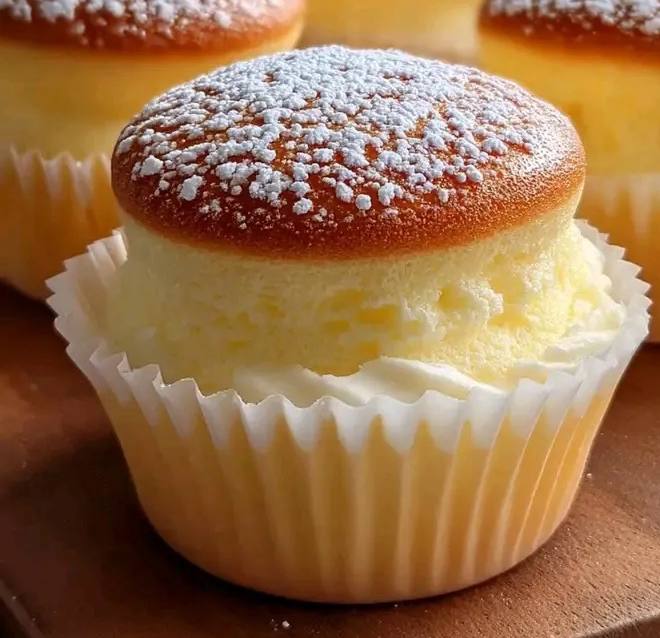
Prepare to be enchanted by the delicate magic of Japanese Cotton Cheesecake Cupcakes, affectionately known as “Cupcakes Japoneses de Cheesecake Algodón.” This isn’t your average dense, New York-style cheesecake; instead, it’s a culinary marvel that has captivated hearts worldwide with its impossibly light, airy, and jiggly texture, so soft it practically melts on your tongue. Imagine a cloud-like dessert, infused with the subtle tang of cream cheese and a hint of vanilla, all presented in a perfectly portioned, elegant cupcake form. The moment you take a bite, you’ll understand why this confection has earned its “cotton” moniker – it’s an experience of pure, ethereal softness.
What sets Japanese Cotton Cheesecake apart is its unique preparation, which masterfully combines the richness of cheesecake with the delicate fluffiness of a soufflé. Unlike its heavier counterparts, this cheesecake relies on a carefully crafted meringue, gently folded into a creamy base, then baked in a water bath to ensure a moist, even cook and prevent any cracks. Translating this intricate technique into individual cupcakes not only makes for a stunning presentation but also offers the convenience of single servings, perfect for parties, gifts, or simply indulging in a personal moment of dessert bliss. Each cupcake is a testament to culinary artistry, promising a delightful blend of creamy flavor and an unparalleled texture that will leave you craving more.
This recipe invites you to embark on a delightful baking adventure, guiding you through the steps to create these exquisite treats in your own kitchen. While they may seem intimidating at first glance, with a bit of patience and attention to detail, you’ll soon be pulling perfectly golden-brown, jiggly cupcakes from your oven. The reward is a dessert that is both sophisticated and comforting, a true showstopper that will impress your guests and satisfy your sweet tooth with its unique charm. Get ready to discover the secret to “algodón” softness and elevate your dessert game with these irresistible Japanese Cotton Cheesecake Cupcakes.
Nutritional Information
Per serving (approximate values):
- Calories: 220
- Protein: 6g
- Carbohydrates: 25g
- Fat: 11g
- Fiber: 0g
- Sodium: 150mg
Ingredients
- 200g cream cheese, full-fat, softened at room temperature
- 60g unsalted butter
- 100ml whole milk
- 6 large eggs, separated, at room temperature
- 80g granulated sugar, divided (40g for batter, 40g for meringue)
- 60g all-purpose flour, sifted
- 20g cornstarch, sifted
- 1 teaspoon vanilla extract
- 1/2 teaspoon lemon juice or cream of tartar (for meringue)
- Pinch of salt
- Powdered sugar, for dusting
- Cupcake liners
Instructions
- Preheat your oven to 160°C (325°F). Line a 12-cup muffin tin with cupcake liners. Prepare a large roasting pan or baking dish that can hold your muffin tin, as you will be baking these in a water bath.
- In a heatproof bowl set over a saucepan of simmering water (bain-marie), combine the softened cream cheese, unsalted butter, and whole milk. Stir frequently until the mixture is smooth and completely melted, with no lumps. Remove from heat and let it cool slightly.
- Separate the egg whites and yolks into two separate clean, dry bowls. Ensure there is no trace of yolk in the egg whites, as this will prevent them from whipping properly.
- Add the egg yolks, 40g of granulated sugar, and vanilla extract to the cooled cream cheese mixture. Whisk well until thoroughly combined and smooth.
- Gradually sift the all-purpose flour and cornstarch into the cream cheese-egg yolk mixture, whisking gently until just combined. Be careful not to overmix, as this can develop the gluten and make the cupcakes tough. Set aside.
- In the separate bowl with the egg whites, add a pinch of salt and the lemon juice or cream of tartar. Using an electric mixer, begin whipping the egg whites on medium speed. Once they start to become foamy, gradually add the remaining 40g of granulated sugar, a tablespoon at a time, while continuing to whip.
- Whip the egg whites until they reach soft to medium peaks. The meringue should be glossy and hold its shape, but the tip should still curl slightly. Do not whip to stiff peaks, as this can make the cheesecake less jiggly.
- Gently fold about one-third of the meringue into the cream cheese batter using a spatula. Use a cutting and folding motion to lighten the batter. Once partially incorporated, add the remaining meringue and continue to fold gently until no streaks of white remain. Be very careful not to deflate the meringue, as this is crucial for the cottony texture.
- Divide the batter evenly among the prepared cupcake liners, filling each about 2/3 to 3/4 full.
- Place the muffin tin into the larger roasting pan. Carefully pour hot water into the roasting pan, reaching about halfway up the sides of the muffin tin. This creates the essential water bath.
- Carefully transfer the roasting pan with the muffin tin to the preheated oven. Bake for 25-35 minutes, or until the tops are golden brown and the cupcakes are set but still slightly jiggly in the center when gently shaken. The baking time may vary depending on your oven.
- Once baked, turn off the oven and leave the oven door slightly ajar (you can use a wooden spoon to prop it open). Let the cupcakes cool gradually inside the oven for at least 30 minutes to an hour. This slow cooling helps prevent them from shrinking and cracking.
- Remove the muffin tin from the oven and the water bath. Let the cupcakes cool completely at room temperature on a wire rack.
- Once completely cooled, carefully remove the cupcakes from the muffin tin. Just before serving, dust generously with powdered sugar for a beautiful finish.
Cooking Tips and Variations
To achieve the signature ethereal texture of Japanese Cotton Cheesecake Cupcakes, meticulous attention to detail is paramount. One of the most crucial tips is to ensure all your ingredients, especially the cream cheese, butter, and eggs, are at perfect room temperature. This allows for seamless emulsification and prevents a lumpy batter, which can compromise the final texture. When melting the cream cheese, butter, and milk over a bain-marie, make sure the water in the saucepan is simmering gently, not boiling vigorously, to avoid scalding the mixture. Stir continuously until it’s smooth and glossy, then remove it from the heat promptly to cool slightly before adding the egg yolks. Overheating the cream cheese mixture can affect its stability and lead to a less desirable texture.
The meringue is the heart of the “cotton” texture, so getting it right is vital. Always use a scrupulously clean, dry bowl for whipping egg whites, as any grease or moisture can prevent them from reaching their full volume. Adding a pinch of salt and a touch of lemon juice or cream of tartar helps to stabilize the egg whites, allowing them to whip up more effectively and create a stronger, more resilient meringue. When whipping, aim for soft to medium peaks – the meringue should hold its shape when you lift the whisk, but the tip should gently curl over. Stiff peaks can make the cake dry and lead to cracks, while under-whipped whites won’t provide enough lift. The gradual addition of sugar during whipping also contributes to a stable and glossy meringue, so don’t rush this step.
The folding process is another critical juncture. After incorporating the first third of the meringue into the cream cheese batter, use a gentle cutting and folding motion with a spatula. This step is designed to lighten the base batter and make it easier to incorporate the remaining, more delicate meringue without deflating it. When adding the rest of the meringue, continue with the same gentle technique, ensuring no streaks of white remain but stopping as soon as everything is just combined. Overmixing at this stage is the quickest way to lose the precious air you’ve worked so hard to incorporate, resulting in a denser cupcake. Think of it as carefully combining clouds, not stirring a thick batter.
The water bath is non-negotiable for these cupcakes. It provides a moist, humid environment in the oven, which prevents the surface from drying out and cracking, and ensures a slow, even bake that results in that incredibly tender, melt-in-your-mouth consistency. Make sure the water you pour into the roasting pan is hot, not cold, as this helps maintain a consistent oven temperature. When it comes to baking, resist the urge to open the oven door frequently, as sudden temperature changes can cause the cupcakes to collapse or crack. Once baked, the slow cooling process inside the oven with the door ajar is equally important. This gradual reduction in temperature allows the delicate structure of the cheesecake to set without undergoing a sudden shock, which can lead to shrinking and more cracks.
For troubleshooting, if your cupcakes sink in the middle, it’s often a sign of either underbaking or over-whipped meringue. If they crack excessively, it could be due to overbaking, too high an oven temperature, or insufficient moisture from the water bath. Practice makes perfect with this delicate dessert, so don’t be discouraged if your first batch isn’t absolutely flawless. Each attempt will refine your technique and understanding of the subtle nuances required.
Regarding variations, these Japanese Cotton Cheesecake Cupcakes offer a wonderful canvas for customization. For a citrusy twist, you can add the zest of one lemon or orange to the cream cheese mixture along with the vanilla extract. The bright notes of citrus beautifully complement the creamy tang of the cheesecake. Another popular variation is Matcha Cotton Cheesecake Cupcakes. To achieve this, sift 1-2 tablespoons of high-quality matcha powder along with the flour and cornstarch into the batter. This will impart a beautiful green hue and a distinct earthy flavor that pairs wonderfully with the sweetness. For an extra layer of indulgence, consider adding a few drops of almond extract alongside the vanilla, which offers a subtle nutty aroma. You can also experiment with different toppings beyond powdered sugar. A light fruit compote, a dollop of unsweetened whipped cream, or fresh berries can add a burst of freshness and color, making your cupcakes even more appealing. Just remember to add any wet additions just before serving to maintain the integrity of the delicate cake.
Finally, always use good quality ingredients. Full-fat cream cheese provides the best flavor and texture, and fresh eggs are essential for a stable meringue. Sifting your dry ingredients (flour and cornstarch) is a small but important step that prevents lumps and ensures an even, smooth batter, contributing to the overall lightness. Pay attention to the size of your cupcake liners as well; standard liners are perfect for portion control. By following these tips and embracing the subtle art of Japanese baking, you’ll be able to consistently create these delightful, cotton-soft cheesecake cupcakes that are sure to impress and satisfy.
Storage and Reheating
Japanese Cotton Cheesecake Cupcakes are best enjoyed fresh, but they can be stored to maintain their delicate texture and flavor for a few days. Once completely cooled, store the cupcakes in an airtight container in the refrigerator. This will prevent them from drying out and absorbing any odors from other foods in the fridge. Properly stored, they will remain delicious for up to 3-4 days. It is not recommended to store them at room temperature for extended periods due to the dairy content.
Freezing these cupcakes is also an option if you wish to extend their shelf life. To freeze, place the fully cooled cupcakes (without powdered sugar dusting) on a baking sheet and freeze until solid, about 1-2 hours. Once frozen, transfer them to a freezer-safe airtight container or heavy-duty freezer bag, ensuring they are well-sealed to prevent freezer burn. They can be stored in the freezer for up to 1 month. When you’re ready to enjoy them, thaw the frozen cupcakes in the refrigerator overnight. Once thawed, you can dust them with powdered sugar before serving.
Reheating is generally not recommended for these delicate cupcakes, as their signature light and jiggly texture can be compromised by heat. They are best served chilled or at cool room temperature. If you prefer them slightly warmer, you can let them sit out at room temperature for about 15-20 minutes after taking them out of the refrigerator. Avoid microwaving or oven reheating, as this can dry them out, change their texture, and potentially cause them to become rubbery or dense, losing their “cotton” quality.
Frequently Asked Questions
Why did my Japanese Cotton Cheesecake Cupcakes crack on top?
Cracking is a common issue with delicate cheesecakes and is usually due to one of a few factors: overbaking, too high an oven temperature, or rapid temperature changes during cooling. Overbaking dries out the cake’s surface, causing it to pull apart. Ensure your oven temperature is accurate and don’t bake longer than necessary; the cupcakes should still be slightly jiggly in the center. Also, allowing the cupcakes to cool gradually inside the oven with the door ajar after baking helps prevent sudden temperature drops that can lead to cracking and shrinking.
My cupcakes are dense and not jiggly. What went wrong?
A dense texture usually indicates that the meringue was either not whipped enough or was deflated during the folding process. The meringue is crucial for incorporating air and creating the light, airy structure. Ensure your egg whites are whipped to soft or medium peaks – glossy and holding shape but still slightly curled at the tip. Also, be extremely gentle when folding the meringue into the cream cheese batter; overmixing will knock out the air and lead to a heavy, dense result.
Can I make these cupcakes without a water bath?
While technically possible, baking these cupcakes without a water bath is strongly discouraged. The water bath provides a moist, humid environment that ensures even, gentle cooking, prevents the surface from drying out and cracking, and is essential for achieving the signature smooth, creamy, and jiggly texture. Without it, the cupcakes are much more likely to be dry, cracked, and have a tougher, less delicate consistency.
How can I tell when the cupcakes are perfectly baked?
The cupcakes are perfectly baked when their tops are golden brown, and the edges are set. The center should still have a slight jiggle when you gently shake the muffin tin. If a toothpick inserted into the center comes out clean, it’s likely overbaked. Trust the visual cues and the slight jiggle; they will continue to set as they cool.