Instructions
- In a blender or food processor, combine the cottage cheese, eggs, granulated sugar (or preferred sweetener), vanilla extract, baking powder, and salt.
- Blend on high speed until the mixture is completely smooth and no lumps of cottage cheese remain. This usually takes about 30-60 seconds, depending on your blender. The batter should be thick but pourable.
- Heat a large non-stick skillet or griddle over medium-low heat. Add about half a tablespoon of butter or coconut oil and swirl to coat the pan evenly.
- Once the pan is hot and the butter is melted, pour 1/4 cup of batter per pancake onto the pan. You should be able to cook 2-3 pancakes at a time, depending on the size of your pan. Do not overcrowd the pan.
- Cook for 3-4 minutes on the first side, or until the edges are set and small bubbles begin to form on the surface. The bottom should be golden brown.
- Carefully flip the pancakes using a thin spatula and cook for another 2-3 minutes on the second side, or until golden brown and cooked through.
- Transfer the cooked pancakes to a plate and repeat with the remaining batter, adding more butter or oil to the pan as needed for each batch.
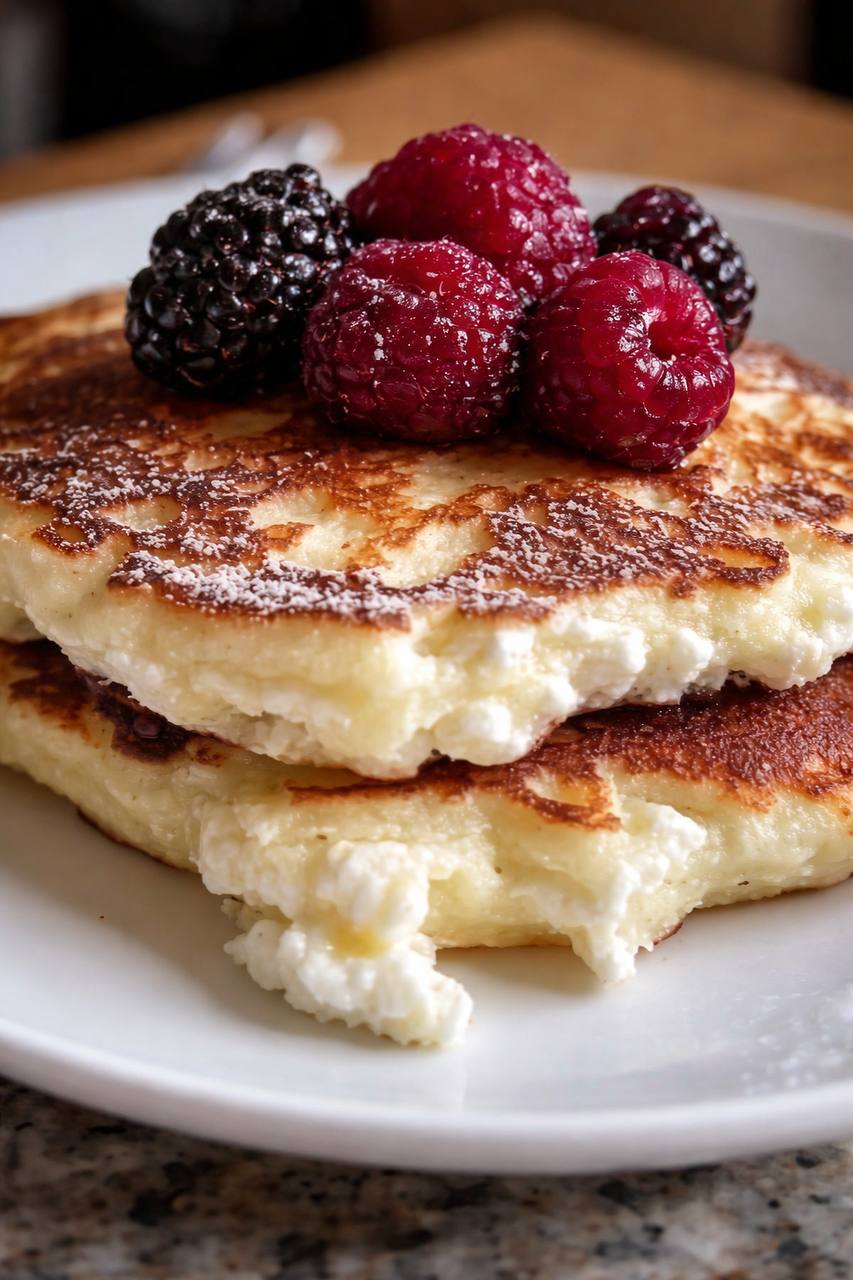
- Stack the warm pancakes and top generously with fresh raspberries and blackberries.
- Dust with powdered sugar just before serving. Serve immediately with extra maple syrup or your favorite toppings, if desired.
Cooking Tips and Variations
Achieving the perfect Flourless Cottage Cheese Pancake is surprisingly simple, but a few key tips can elevate your breakfast experience. First and foremost, the blending process is crucial. Ensure your cottage cheese, eggs, and other wet ingredients are thoroughly pureed until completely smooth. Any remaining lumps of cottage cheese will result in a less uniform texture in your final pancake. A high-speed blender works best for this, creating a silky-smooth batter that cooks beautifully. Don’t be tempted to overmix once the dry ingredients (baking powder and salt) are added, as this can lead to tougher pancakes. Just blend until combined and then stop.
The heat of your pan is another critical factor. These pancakes, being flourless, can be a little more delicate than traditional ones. Cook them over medium-low heat. This allows the interior to cook through completely without the exterior burning. If the heat is too high, the outside will brown quickly while the inside remains raw. Look for those tell-tale bubbles on the surface and set edges before attempting to flip. A good quality non-stick pan or a well-seasoned cast iron skillet is your best friend here, ensuring easy flipping and preventing sticking.
For variations, the possibilities are endless. To add a touch of spice, a pinch of cinnamon or nutmeg can be incorporated into the batter. Lemon zest offers a bright, refreshing note that pairs wonderfully with berries. If you’re looking for a chocolatey twist, a tablespoon of unsweetened cocoa powder can be added, along with a few chocolate chips folded in before cooking. For a heartier texture, consider adding a tablespoon or two of finely ground almond flour or oat flour to the batter, which will make them a bit more robust without adding significant gluten. Sweetener options are also flexible: maple syrup, honey, agave nectar, or even stevia can be used in place of granulated sugar, adjusting to your taste. For savory cottage cheese pancakes, omit the sugar and vanilla, and instead, fold in some chopped chives, dill, or a sprinkle of black pepper. Serve these savory versions with smoked salmon or a fried egg for a unique brunch.
Storage and Reheating
These Flourless Cottage Cheese Pancakes are best enjoyed fresh off the griddle, but they can certainly be stored and reheated for a quick and easy meal on another day. Once cooked and cooled completely, stack the pancakes with small pieces of parchment paper or wax paper between each one to prevent them from sticking together. This makes it much easier to grab just one or two at a time for reheating. Place the stacked pancakes in an airtight container or a freezer-safe bag.
They will keep well in the refrigerator for up to 3-4 days. For longer storage, these pancakes freeze beautifully. When properly stored in an airtight freezer bag or container, they can last for up to 2-3 months. Just make sure they are completely cool before freezing to prevent ice crystals from forming.
When it comes to reheating, you have a few excellent options to bring them back to their fluffy glory. For a quick reheat, the microwave is your friend. Place 1-2 pancakes on a microwave-safe plate and heat for 30-60 seconds, or until warmed through. Be careful not to overheat, as this can make them rubbery. For a crispier exterior, which is often preferred, use a toaster oven or a regular oven. Preheat your toaster oven to 350°F (175°C) and toast for 5-7 minutes, or until heated through and slightly crispy. If using a conventional oven, preheat to 350°F (175°C), place pancakes on a baking sheet, and bake for 8-10 minutes. You can also reheat them in a dry skillet over medium-low heat for 1-2 minutes per side, which helps restore some of that fresh-off-the-griddle crispness. Avoid reheating them in oil or butter, as they can absorb too much and become greasy. Always check that they are heated through to your desired temperature before serving.
Frequently Asked Questions
What kind of cottage cheese should I use?
For the best texture and flavor, we recommend using full-fat cottage cheese. The higher fat content contributes to a richer taste and helps create a wonderfully moist and tender pancake. While low-fat or fat-free cottage cheese can be used, the pancakes might be slightly less rich and a bit drier. Make sure to use small-curd cottage cheese, as it blends more easily into a smooth batter.
Can I make these pancakes ahead of time?
Yes, you can absolutely make these pancakes ahead of time! The cooked pancakes can be stored in the refrigerator for up to 3-4 days or frozen for up to 2-3 months. Reheat them using a microwave, toaster oven, conventional oven, or a dry skillet as described in the “Storage and Reheating” section. You can also prepare the batter a day in advance and store it in an airtight container in the refrigerator. Just give it a quick whisk before cooking, as it might thicken slightly overnight.
Why are my cottage cheese pancakes not fluffy?
There are a few reasons your pancakes might not be as fluffy as desired. Firstly, ensure your baking powder is fresh and active, as it’s the primary leavening agent. Secondly, avoid overmixing the batter after the initial blending; overmixing can deflate the air incorporated during blending and lead to a denser pancake. Lastly, ensure your pan isn’t too hot. Cooking on medium-low heat allows the pancakes to rise properly and cook through evenly, resulting in a lighter, fluffier texture. If the heat is too high, the outside cooks too fast, preventing the inside from rising.
Are these pancakes suitable for a low-carb diet?
These pancakes are naturally flourless, which makes them lower in carbohydrates than traditional flour-based pancakes. To make them even more suitable for a low-carb or ketogenic diet, ensure you use an appropriate sugar substitute like erythritol, stevia, or monk fruit instead of granulated sugar. Also, be mindful of your toppings; opt for berries in moderation and sugar-free syrups or unsweetened whipped cream to keep the carb count low. Always check the nutritional information of your specific ingredients to ensure they align with your dietary goals.