Instructions
- Pat the pork chops dry with paper towels. Season generously on both sides with salt and black pepper.
- Heat the olive oil in a large skillet over medium-high heat. Once hot, carefully add the pork chops to the skillet. Sear for 2-3 minutes per side, until deeply golden brown and a crust has formed. This step is crucial for developing rich flavor.
- While the pork chops are searing, prepare the glaze. In a medium bowl, whisk together the soy sauce, apple cider vinegar, brown sugar, honey, Worcestershire sauce, garlic powder, ground black pepper, and ground ginger until well combined and the sugar has dissolved.
- Carefully transfer the seared pork chops to the slow cooker insert.
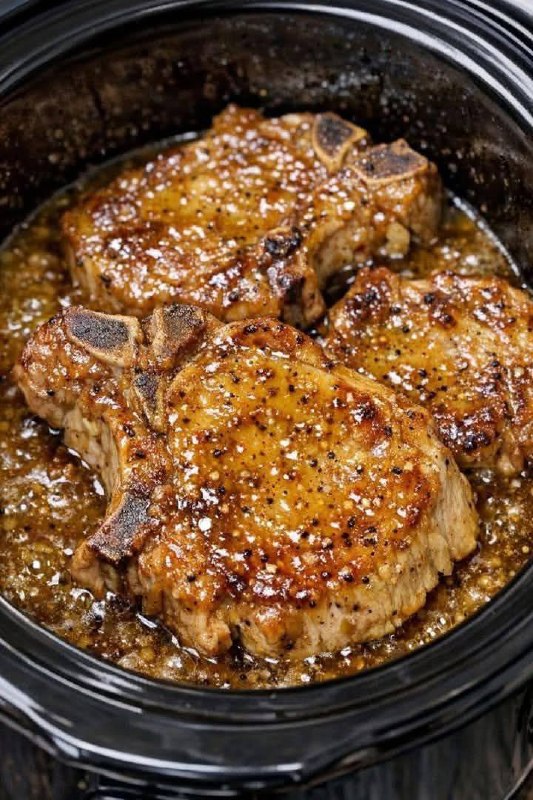
- Pour the prepared glaze evenly over the pork chops in the slow cooker.
- Cover the slow cooker and cook on low for 3-4 hours, or on high for 2-2.5 hours, or until the pork chops are very tender and reach an internal temperature of 145°F (63°C). Avoid overcooking to prevent dryness.
- Once the pork chops are cooked, carefully remove them from the slow cooker and transfer them to a plate. Tent loosely with foil to keep warm.
- To thicken the glaze: In a small bowl, whisk together the cornstarch and cold water until a smooth slurry forms.
- Pour the remaining liquid from the slow cooker into a small saucepan. Bring to a simmer over medium heat on the stovetop.
- Gradually whisk in the cornstarch slurry into the simmering liquid. Continue to whisk and simmer for 2-3 minutes, or until the glaze has thickened to your desired consistency. It should be thick enough to coat the back of a spoon.
- Return the pork chops to the slow cooker with the thickened glaze, or arrange them on a serving platter and spoon the glaze generously over them.
- Serve immediately with your favorite side dishes.
Cooking Tips and Variations
For the most tender pork chops, ensure you don’t overcook them. While the slow cooker is forgiving, prolonged cooking can still lead to dry meat. Use a meat thermometer to check for an internal temperature of 145°F (63°C) for perfect doneness, then let them rest for a few minutes before serving. Resting allows the juices to redistribute, resulting in a more succulent chop.
If you want an extra caramelized finish on your glazed pork chops, after removing them from the slow cooker and while the glaze is thickening, you can place the chops on a baking sheet. Brush them with some of the thickened glaze and broil for 2-3 minutes, watching carefully, until the glaze is bubbly and slightly browned. This adds another layer of texture and visual appeal.
Feel free to play with the flavor profile of the glaze. For a spicier kick, add a pinch of red pepper flakes or a dash of sriracha to the glaze mixture. If you prefer a more pronounced garlic or ginger flavor, increase the amounts or use fresh minced garlic and grated ginger instead of the powdered versions. A squeeze of fresh orange juice can also add a bright, citrusy note that complements the savory glaze beautifully.
To adjust the sweetness of the glaze, you can slightly reduce the brown sugar or honey, or add a little more vinegar for a tangier profile. Conversely, if you prefer a sweeter glaze, a touch more brown sugar or honey can be incorporated. Always taste the glaze before adding the pork to ensure it meets your preference.
Consider adding vegetables directly to the slow cooker during the last hour of cooking for a complete meal. Hearty vegetables like carrots, potatoes cut into chunks, or even bell peppers can absorb the glaze’s flavors and cook alongside the pork chops. Just be mindful not to overcrowd the slow cooker, which can affect cooking time and temperature.
For a different twist, try substituting the apple cider vinegar with balsamic vinegar for a deeper, richer flavor, or use rice vinegar for a milder, slightly sweeter tang. Similarly, while honey and brown sugar provide a classic sweetness, maple syrup can offer a distinct, earthy sweetness that pairs wonderfully with pork.
Don’t be afraid to experiment with herbs and spices. A sprig of fresh rosemary or thyme added to the slow cooker with the pork chops can infuse an aromatic layer. A touch of smoked paprika can add depth and a subtle smokiness to the glaze, enhancing its overall complexity.
When serving, these glazed pork chops are incredibly versatile. They pair beautifully with creamy mashed potatoes, fluffy white or brown rice, quinoa, or even a simple side salad. Steamed green beans, roasted asparagus, or broccoli also make excellent companions, providing a fresh contrast to the rich glaze.
Finally, if you find your glaze hasn’t thickened enough after simmering with the cornstarch slurry, you can always make another small slurry with a teaspoon of cornstarch and a tablespoon of cold water and add it to the simmering sauce, whisking constantly, until it reaches your desired consistency. If it becomes too thick, a splash of water or broth can thin it out.
Storage and Reheating
To store leftover glazed pork chops, first allow them to cool completely to room temperature. Once cooled, transfer the pork chops and any remaining glaze to an airtight container. They can be stored in the refrigerator for up to 3-4 days. For longer storage, you can freeze them in a freezer-safe airtight container or heavy-duty freezer bag for up to 2-3 months. If freezing, make sure there is enough glaze to cover the pork chops, as this helps protect them from freezer burn and maintains moisture.
When reheating from the refrigerator, the best method is to gently warm the pork chops and glaze on the stovetop over low to medium-low heat. Place the chops and glaze in a skillet or saucepan, add a tablespoon or two of water or chicken broth to prevent drying, and cover. Heat until warmed through, turning the chops occasionally. Alternatively, you can reheat them in the oven. Place the pork chops and glaze in an oven-safe dish, cover with foil, and bake at 300°F (150°C) for 15-20 minutes, or until hot. Microwaving is also an option for individual servings; heat in 30-second intervals until warmed through, but be careful not to overcook, as this can dry out the pork.
If reheating from frozen, it’s best to thaw the pork chops and glaze overnight in the refrigerator before reheating using one of the methods described above. If you’re in a hurry, you can reheat directly from frozen in the oven by placing them in a covered oven-safe dish at 325°F (160°C) for 30-45 minutes, or until thoroughly heated, adding a little extra liquid if needed. The goal is to warm them gently to retain their tenderness and flavor without drying them out.
Frequently Asked Questions
Can I use boneless pork chops instead of bone-in?
Yes, you can absolutely use boneless pork chops for this recipe. However, keep in mind that boneless chops tend to cook faster and can dry out more easily. If using boneless, reduce the slow cooker cooking time by about 30-60 minutes on low, or 15-30 minutes on high, and always check for doneness with a meat thermometer, aiming for 145°F (63°C).
Do I have to sear the pork chops before slow cooking?
While searing is an optional step, it is highly recommended. Searing the pork chops before placing them in the slow cooker creates a beautiful golden-brown crust and develops a deeper, richer flavor through the Maillard reaction. This step contributes significantly to the overall taste and appearance of the final dish, adding complex savory notes that you wouldn’t get from simply slow cooking.
What if my glaze is too thin or too thick?
If your glaze is too thin after simmering with the cornstarch slurry, you can create another small slurry with 1 teaspoon of cornstarch mixed with 1 tablespoon of cold water. Gradually whisk this into the simmering glaze and cook for another minute or two until it thickens. If your glaze becomes too thick, simply whisk in a tablespoon or two of water or chicken broth at a time until it reaches your desired consistency.
Can I make this recipe ahead of time?
Yes, this recipe is excellent for meal prepping. You can cook the glazed pork chops entirely and store them in an airtight container in the refrigerator for up to 3-4 days. The flavors often deepen overnight. When ready to serve, simply reheat gently using the stovetop or oven method. You can also prepare the glaze mixture a day or two in advance and store it in the refrigerator, then proceed with the searing and slow cooking steps when you’re ready.