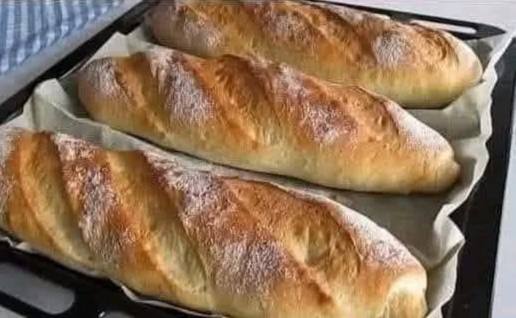
Homemade Bread Recipe
There’s nothing quite like the intoxicating aroma of freshly baked bread wafting through your home, and with this homemade baguette recipe, that dream becomes a delicious reality. Imagine biting into a baguette with a shatteringly crisp, golden crust that crackles under pressure, yielding to a soft, airy interior riddled with irregular pockets – the very hallmark of artisan bread. This isn’t just bread; it’s an experience, a simple pleasure that elevates any meal, from a casual sandwich to a sophisticated cheese board.
These baguettes, inspired by the rustic charm of traditional French boulangeries, are designed to bring that authentic taste and texture right to your kitchen. While the idea of baking bread from scratch might seem daunting to some, this recipe breaks down the process into manageable steps, making it accessible even for novice bakers. We’ll guide you through each stage, from mixing the simple dough to achieving those beautiful, characteristic slashes on top and that perfect, golden-brown finish. Get ready to impress yourself and your loved ones with these irresistible homemade baguettes!
The beauty of homemade baguettes lies in their simplicity and the incredible reward for your efforts. Using just a few basic ingredients, you’ll create a bread that far surpasses anything you can buy at the store. The satisfaction of pulling these golden beauties from your oven, still warm and fragrant, is unparalleled. So, tie on your apron, gather your ingredients, and prepare to embark on a delightful baking adventure. Your kitchen is about to become your very own French bakery!
Nutritional Information
Per serving (approximate values):
- Calories: 250
- Protein: 9g
- Carbohydrates: 50g
- Fat: 2g
- Fiber: 2g
- Sodium: 400mg
Ingredients
- 3 cups (360g) All-Purpose Flour or Bread Flour, plus more for dusting
- 1 ½ teaspoons (9g) Fine Sea Salt
- 1 teaspoon (3g) Instant Yeast
- 1 ½ cups (360ml) Lukewarm Water (around 95-105°F / 35-40°C)
- Olive oil (for greasing the bowl)
Instructions
- Prepare the Dough: In a large mixing bowl, combine the flour, salt, and instant yeast. Whisk them together thoroughly to ensure even distribution. Gradually add the lukewarm water to the dry ingredients, mixing with a wooden spoon or your hands until a shaggy, sticky dough forms.
- Knead the Dough: Turn the dough out onto a lightly floured surface. Knead the dough for 8-10 minutes if kneading by hand, or 5-7 minutes using a stand mixer with a dough hook attachment on medium-low speed. The dough should become smooth, elastic, and pass the windowpane test (you should be able to stretch a small piece of dough thin enough to see light through it without it tearing).
- First Rise (Bulk Fermentation): Lightly grease a clean large bowl with a tiny bit of olive oil. Place the dough in the bowl, turning it once to coat the top. Cover the bowl tightly with plastic wrap or a damp kitchen towel. Let the dough rise in a warm, draft-free place for 1 to 1.5 hours, or until it has doubled in size. The ideal temperature for rising is around 75-80°F (24-27°C).
- Gentle Fold (Optional but Recommended): After about 45 minutes into the first rise, gently degas the dough by performing a few stretch and folds. Lightly flour your hands, gently pull one edge of the dough up and fold it over to the center. Rotate the bowl a quarter turn and repeat this process 3-4 times. This helps develop gluten and even out the temperature of the dough. Recover and continue rising.
- Pre-shape the Dough: Once the dough has doubled, gently turn it out onto a lightly floured surface. Divide the dough into three equal pieces. Gently shape each piece into a loose, oblong rectangle. Cover the pieces loosely with plastic wrap or a damp towel and let them rest for 15-20 minutes. This resting period (bench rest) allows the gluten to relax, making the dough easier to shape.
- Shape the Baguettes: Lightly flour your work surface. Take one rested dough piece. Flatten it gently into a rectangle. Fold the top third of the rectangle down to the center, press firmly to seal. Then fold the bottom third up to the center, pressing firmly to seal. Now, fold the dough in half lengthwise, pressing the seam firmly along the entire length. Roll the dough back and forth gently with the palms of your hands, applying even pressure, to elongate it into a 14-16 inch long cylinder with tapered ends. Repeat with the remaining two dough pieces.
- Second Rise (Proofing): Prepare a baking sheet by lining it with parchment paper. If you have a baguette pan or a couche (linen proofing cloth), use that for the best results. If using parchment paper on a baking sheet, create “flutes” or dividers by pleating the parchment paper between the loaves to help them maintain their shape during the rise. Carefully transfer the shaped baguettes to the prepared sheet. Lightly dust the tops of the baguettes with flour. Cover them loosely with plastic wrap or a light kitchen towel. Let them proof in a warm, draft-free place for 45-60 minutes, or until they are visibly puffy and have increased in size by about 50%. To test if they are ready, gently poke a baguette with a floured finger; if the indentation springs back slowly, they are ready to bake.
- Preheat Oven & Prepare for Baking: About 20 minutes before the end of the second rise, preheat your oven to 475°F (245°C). If you have a baking stone or steel, place it in the oven during preheating. To create steam (crucial for a crispy crust), place an empty oven-safe pan (like a cast iron skillet or a metal baking pan) on the bottom rack of your oven while it preheats.
- Score & Bake: Once the oven is fully preheated and the baguettes are proofed, carefully remove the plastic wrap. Using a very sharp knife, a razor blade (lame), or serrated knife, make 3-5 quick, diagonal slashes (about ½ inch deep) along the top of each baguette. The slashes should overlap slightly. Immediately after scoring, carefully open the oven, pour about ½ cup of hot water into the preheated empty pan on the bottom rack (be careful of the steam!), and quickly close the oven door. This creates a burst of steam.
- Bake the Baguettes: Carefully transfer the baking sheet with the baguettes to the preheated oven. If using a baking stone/steel, gently slide the parchment paper with baguettes onto the hot stone/steel. Bake for 20-25 minutes, or until the baguettes are deep golden brown and sound hollow when tapped on the bottom. If they are browning too quickly, you can reduce the oven temperature slightly after 15 minutes.
- Cooling: Once baked, carefully remove the baguettes from the oven and transfer them to a wire rack to cool completely. This is a crucial step for achieving the best texture and preventing a soggy bottom. Resist the urge to cut into them immediately; allow them to cool for at least 30-60 minutes for the crumb to set properly.
Cooking Tips and Variations
Achieving bakery-quality baguettes at home is incredibly rewarding, and a few key tips can make all the difference. Firstly, the quality of your flour matters. While all-purpose flour works well, using bread flour with its higher protein content will result in a chewier crumb and better structure. Don’t rush the kneading process; proper gluten development is essential for that signature airy interior. If kneading by hand, remember that consistency and patience are your best friends. For those using a stand mixer, make sure your dough passes the “windowpane test” before moving on to the first rise.
Creating steam in your oven is perhaps the most critical factor for a truly crispy crust. As detailed in the instructions, pouring hot water into a preheated pan on the bottom rack during the first few minutes of baking helps create a steamy environment that keeps the crust soft, allowing the bread to fully expand before it hardens. You can also spray the oven walls with water a few times during the initial baking. Another important tip is to use a very sharp blade for scoring your baguettes. A proper “lame” (a razor blade on a stick) or a very sharp utility knife will give you clean, deep cuts, which are vital for controlled oven spring and the beautiful ear on your baguettes.
For variations, you can easily adapt this basic baguette recipe. For a more rustic, whole-grain baguette, substitute up to 25% of the all-purpose flour with whole wheat flour, keeping in mind that you might need a tiny bit more water as whole wheat absorbs more liquid. For a flavorful twist, try incorporating herbs like dried rosemary or thyme into the dough during the mixing stage. About 1-2 tablespoons per batch would add a lovely aromatic touch. You could also add a tablespoon of finely grated Parmesan cheese for a cheesy baguette, perfect for serving with pasta or soup. For a slightly sweeter, richer dough, a teaspoon of honey or malt syrup can be added to the water, which also aids in browning. Remember that these variations might slightly alter the texture and rise time, so keep an eye on your dough.
Finally, don’t over-proof your dough. While it’s important for the baguettes to be visibly puffed before baking, over-proofed dough can collapse in the oven and result in a dense crumb. A gentle poke test should show the dough slowly springing back. Conversely, under-proofed dough won’t expand properly and will result in a tight, heavy crumb. Practice makes perfect when it comes to judging proofing times, so don’t be discouraged if your first batch isn’t absolutely perfect. Each bake is a learning experience, and the joy of homemade bread is in the journey as much as the delicious destination.
Storage and Reheating
Homemade baguettes are best enjoyed on the day they are baked, ideally within a few hours of cooling, when their crust is at its crispiest and the interior is perfectly soft. However, if you have leftovers, proper storage can help extend their freshness for a short period.
To store, allow the baguettes to cool completely on a wire rack. Once cool, the best way to keep the crust relatively crisp is to store them in a paper bag at room temperature. This allows some air circulation, preventing the crust from becoming soggy. Avoid storing them in airtight plastic bags or containers, as this traps moisture and will quickly turn the crust soft and chewy. Stored in a paper bag, your baguettes will stay good for about 1-2 days, though the crust will soften over time.
For longer storage, baguettes can be frozen. Once completely cooled, wrap each baguette tightly in plastic wrap, then an additional layer of aluminum foil. Place them in a freezer-safe bag. They can be stored in the freezer for up to 1-2 months. When you’re ready to enjoy them, remove the frozen baguette from the freezer, unwrap it, and allow it to thaw at room temperature for an hour or two. To restore its crispy crust and warm interior, preheat your oven to 375°F (190°C). Lightly spray the thawed baguette with water (or quickly run it under the tap) and bake directly on the oven rack for 8-12 minutes, or until the crust is crisp and the interior is heated through. This reheating method works wonderfully to bring a frozen baguette back to life, almost like it was freshly baked.
You can also refresh a day-old baguette that has gone a bit soft. Simply preheat your oven to 350°F (175°C), lightly spray the baguette with water, and bake for 5-7 minutes. This will revive the crust and warm the interior, making it much more enjoyable than eating it cold and stale.
Frequently Asked Questions
What is the difference between all-purpose flour and bread flour for baguettes?
Bread flour has a higher protein content (typically 12-14%) compared to all-purpose flour (10-12%). The higher protein in bread flour forms more gluten, which gives baguettes a chewier texture and a more open, airy crumb with larger holes, often desired in artisan breads. All-purpose flour will still produce a delicious baguette, but it might have a slightly less chewy texture and a tighter crumb.
Why is steam important when baking baguettes?
Steam plays a crucial role in developing the signature crispy, thin crust of a baguette. During the initial phase of baking, the steam keeps the surface of the dough moist and pliable, allowing the bread to expand fully (oven spring) before the crust sets. Without steam, the crust would harden too quickly, restricting expansion and resulting in a denser loaf with a thicker, chewier crust.
My baguettes are dense and don’t have many holes. What went wrong?
Several factors can lead to dense baguettes. It could be due to under-kneading, which means the gluten wasn’t sufficiently developed to trap gases. It might also be under-proofing, where the dough didn’t have enough time to rise and create sufficient air pockets. Overworking the dough during shaping can also degas it too much, leading to a denser crumb. Ensure your yeast is active and your water temperature is correct for optimal yeast activity.
How can I get those beautiful slashes (scoring) on top of my baguettes?
To get clean, professional-looking slashes, you need a very sharp blade. A baker’s lame (a razor blade on a handle) is ideal, but a very sharp utility knife or even a clean, sharp single-edge razor blade can work. Make quick, confident, diagonal cuts about 1/2 inch deep along the length of the baguette. The key is to make these cuts just before the baguettes go into the oven, as they facilitate oven spring and create the characteristic “ear” on the crust.