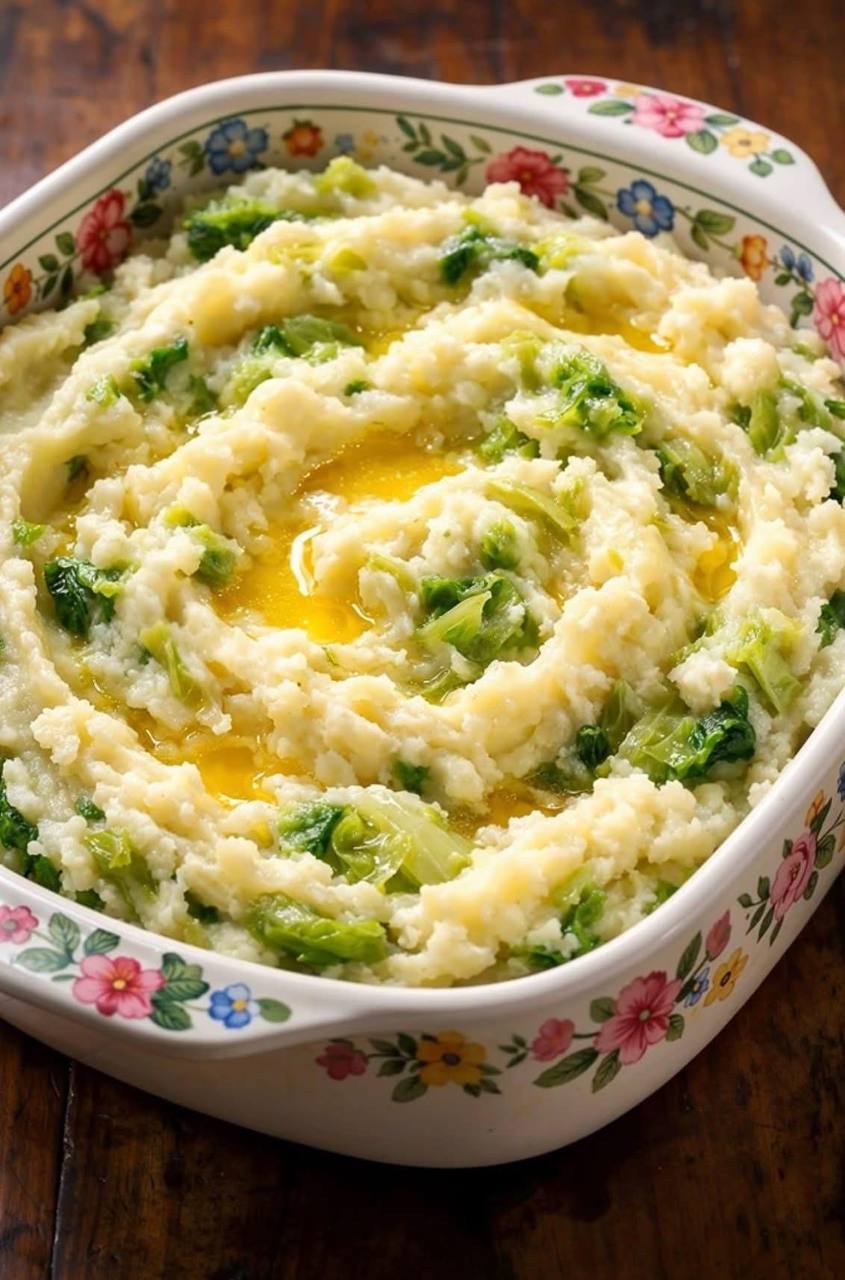
Instructions
- Prepare the Potatoes: Wash, peel, and quarter the potatoes. Place them in a large pot and cover with cold water. Add a generous pinch of salt to the water. Bring to a boil over high heat, then reduce the heat to medium-low and simmer until the potatoes are fork-tender, about 15-20 minutes. Be careful not to overcook them to the point of being mushy.
- Cook the Cabbage/Greens: While the potatoes are cooking, prepare your greens. If using cabbage, remove the tough outer leaves, halve it, remove the core, and finely shred it. If using kale, remove the tough stems and finely chop the leaves.
- Sauté Onion/Leek (Optional): In a large skillet or frying pan, melt 1 tablespoon of butter over medium heat. Add the finely diced onion or leek (if using) and sauté gently until softened and translucent, about 5-7 minutes. Do not brown. This step builds a lovely aromatic base for your colcannon.
- Cook the Cabbage/Greens: Add the shredded cabbage or chopped kale to the skillet with the sautéed onion/leek. Add a splash of water (about 2-3 tablespoons) to help it steam. Cover the skillet and cook for 5-8 minutes, stirring occasionally, until the greens are tender but still have a slight bite. If using kale, it might take a minute or two longer. Drain any excess liquid from the greens. Season the greens lightly with salt and pepper.
- Mash the Potatoes: Once the potatoes are cooked, drain them thoroughly in a colander. Return the drained potatoes to the hot, empty pot. Place the pot back on very low heat for a minute or two to allow any remaining moisture to evaporate, which helps create a fluffier mash. Take the pot off the heat.
- Combine and Mash: Add the remaining 3 tablespoons of butter, the warmed milk or cream, salt, pepper, and a pinch of nutmeg (if using) to the potatoes. Using a potato masher or a ricer, mash the potatoes until smooth and creamy. Be careful not to over-mash, as this can make the potatoes gluey.
- Fold in the Greens: Gently fold the cooked cabbage or kale mixture into the mashed potatoes. Mix just until combined; you want to see flecks of green throughout the mash. Taste the colcannon and adjust seasoning (salt, pepper, or a little more butter) as needed.
- Serve: Transfer the colcannon to a serving dish. Make a small well in the center and place a generous pat of butter in it, allowing it to slowly melt into the warm colcannon. Garnish with fresh chives or parsley if desired. Serve immediately and enjoy!
Cooking Tips and Variations
Achieving the perfect colcannon is all about balance and technique. Here are some tips to ensure your dish is incredibly delicious every time. First, choose the right potatoes. Floury varieties like Russets or Yukon Golds are ideal because they break down easily and absorb butter and milk beautifully, resulting in a light and fluffy mash. Waxy potatoes, on the other hand, can lead to a gluey texture. When cooking the potatoes, start them in cold, salted water. This allows them to cook more evenly from the outside in, preventing the exterior from overcooking while the interior is still hard. Don’t overcook your cabbage or kale! You want it tender, not mushy. Aim for a vibrant green color and a slight bite, which adds wonderful texture to the colcannon. Overcooked greens can become watery and lose their flavor. Another crucial tip is to warm your milk or cream before adding it to the mashed potatoes. Cold dairy can cool down the potatoes, making them harder to mash smoothly and potentially resulting in a lumpy texture. Warm milk also gets absorbed more readily, leading to a creamier consistency. Finally, don’t be shy with the butter and seasoning. Butter is a cornerstone of colcannon’s rich flavor, and liberal seasoning with salt and freshly ground black pepper is essential to bring out all the delicious notes. Always taste and adjust before serving.
Colcannon is also wonderfully adaptable, allowing for many delicious variations. For a richer, more indulgent version, consider adding a sprinkle of grated aged cheddar cheese or Parmesan cheese when folding in the greens. The cheese melts into the warm potatoes, adding a tangy, savory depth. If you’re a fan of a smoky, savory kick, crispy bacon bits or diced pancetta can be fried and folded into the colcannon along with the greens. This not only adds flavor but also a delightful textural contrast. For an even more aromatic base, you can sauté a clove or two of minced garlic along with the onion or leek. Garlic adds a pungent warmth that complements the potatoes and greens beautifully. While traditional colcannon uses cabbage or kale, feel free to experiment with other greens. Spinach, collard greens, or even Swiss chard can be used, though they might require slightly different cooking times to achieve tenderness. If you prefer a lighter consistency, you can use chicken or vegetable broth instead of milk for part of the liquid. For a truly decadent finish, a dollop of crème fraîche or sour cream stirred in at the very end adds a lovely tang and extra creaminess. These variations allow you to customize your colcannon to suit your personal preferences or what you have on hand, ensuring it remains a versatile and beloved dish in your culinary repertoire.
Storage and Reheating
Colcannon is excellent as leftovers, and with proper storage, you can enjoy it for a few days after cooking. To store homemade colcannon, allow it to cool completely to room temperature first. Then, transfer it to an airtight container. It can be stored in the refrigerator for up to 3-4 days. For longer storage, colcannon also freezes quite well. Place cooled colcannon in a freezer-safe bag or container, removing as much air as possible, and freeze for up to 2-3 months. Thaw frozen colcannon in the refrigerator overnight before reheating.
Reheating colcannon properly helps maintain its creamy texture and rich flavor. The best way to reheat colcannon is gently on the stovetop. Transfer the desired amount of colcannon to a saucepan over medium-low heat. Add a splash of milk, cream, or even a knob of butter to help moisten it and prevent it from drying out. Stir frequently, breaking up any clumps, until it’s heated through and creamy again. You may need to add a little more liquid as it heats. Alternatively, you can reheat colcannon in the microwave. Place it in a microwave-safe dish, add a tablespoon or two of milk or water, cover, and microwave on medium power in 1-minute intervals, stirring between each, until hot. Be careful not to overheat, as this can make the potatoes tough. For a crisper exterior, you can also reheat colcannon in a lightly oiled oven-safe dish in a preheated oven at 350°F (175°C) for about 15-20 minutes, or until warmed through and slightly golden on top.
Frequently Asked Questions
What kind of potatoes are best for colcannon?
For the best colcannon, you’ll want to use floury or starchy potatoes such as Russet (also known as Idaho) or Yukon Gold. These varieties break down easily when boiled, creating a light, fluffy, and creamy mash that readily absorbs butter and milk without becoming gluey. Waxy potatoes, like new potatoes or red potatoes, tend to hold their shape more and can result in a stickier, heavier texture when mashed, which isn’t ideal for colcannon.
Can I make colcannon ahead of time?
Yes, colcannon can be made ahead of time, which makes it a great option for meal prep or entertaining. You can prepare the entire dish, let it cool, and then store it in an airtight container in the refrigerator for up to 3-4 days. When you’re ready to serve, reheat it gently on the stovetop with a little extra milk or butter to restore its creamy consistency. You can also prepare the mashed potatoes and cooked greens separately and then combine them just before serving for the freshest taste.
What can I serve with colcannon?
Colcannon is an incredibly versatile side dish that pairs well with a wide variety of main courses. Traditionally, it’s often served alongside roasted meats like ham, corned beef, or lamb. It’s also fantastic with sausages (like Irish bangers), pan-fried pork chops, or even a simple steak. For a hearty vegetarian meal, colcannon can be served on its own with a fried or poached egg on top, allowing the runny yolk to mix into the creamy potatoes and greens. It also complements stews and hearty casseroles beautifully, soaking up all the delicious juices.
Why is my colcannon gluey or watery?
A gluey colcannon is usually the result of over-mashing the potatoes. When potatoes are over-processed, their starch molecules break down too much and release a sticky substance, leading to a gummy texture. To avoid this, use a potato masher or a ricer instead of a food processor or electric mixer, and mash just until smooth. If your colcannon is watery, it’s likely due to the greens not being properly drained. Ensure you squeeze out any excess moisture from the cooked cabbage or kale before folding it into the mashed potatoes. Also, make sure to dry the cooked potatoes by returning them to the hot pot for a minute or two after draining to evaporate any residual water.