Instructions
- In a large bowl, combine the warm milk, active dry yeast, and granulated sugar. Stir gently and let it sit for 5-10 minutes, or until the yeast is foamy and active. This indicates the yeast is alive and ready to work.
- Once the yeast mixture is foamy, add the room temperature egg, the 4 tablespoons of melted and cooled butter, and the salt. Whisk everything together until well combined.
- Gradually add the all-purpose flour, starting with 3 ½ cups, mixing with a wooden spoon or a stand mixer with a dough hook attachment. Continue to mix until a shaggy dough forms.
- Turn the dough out onto a lightly floured surface. Knead the dough for 5-7 minutes, adding more flour a tablespoon at a time if the dough is too sticky, until it is smooth, elastic, and no longer sticky. The dough should spring back when lightly poked.
- Form the dough into a ball and place it in a lightly oiled bowl, turning it once to coat. Cover the bowl with plastic wrap or a clean kitchen towel and let it rise in a warm place for 1 to 1 ½ hours, or until doubled in size.
- While the dough is rising, prepare the cold butter for laminating. Cut the 12 tablespoons of cold butter into thin, even slices or small cubes. Place them between two sheets of parchment paper and use a rolling pin to flatten the butter into an approximate 8×8 inch square. Place the flattened butter in the refrigerator to keep it very cold.
- Once the dough has doubled, gently punch it down to release the air. Turn the dough out onto a lightly floured surface. Roll the dough into a large rectangle, approximately 16×10 inches.
- Place the cold butter square on one half of the dough rectangle, leaving a small border around the edges. Fold the other half of the dough over the butter, sealing the edges firmly to enclose the butter completely.
- Rotate the dough 90 degrees. Gently roll the dough out again into a 16×10 inch rectangle. This is the first “turn.” Fold the dough into thirds, like a business letter (bring one short end to the center, then fold the other short end over it). Wrap the dough tightly in plastic wrap and refrigerate for 30 minutes.
- Repeat the rolling and folding process two more times, refrigerating for 30 minutes after each turn. This means you will have a total of three turns and three chilling periods. This lamination process creates the flaky layers.
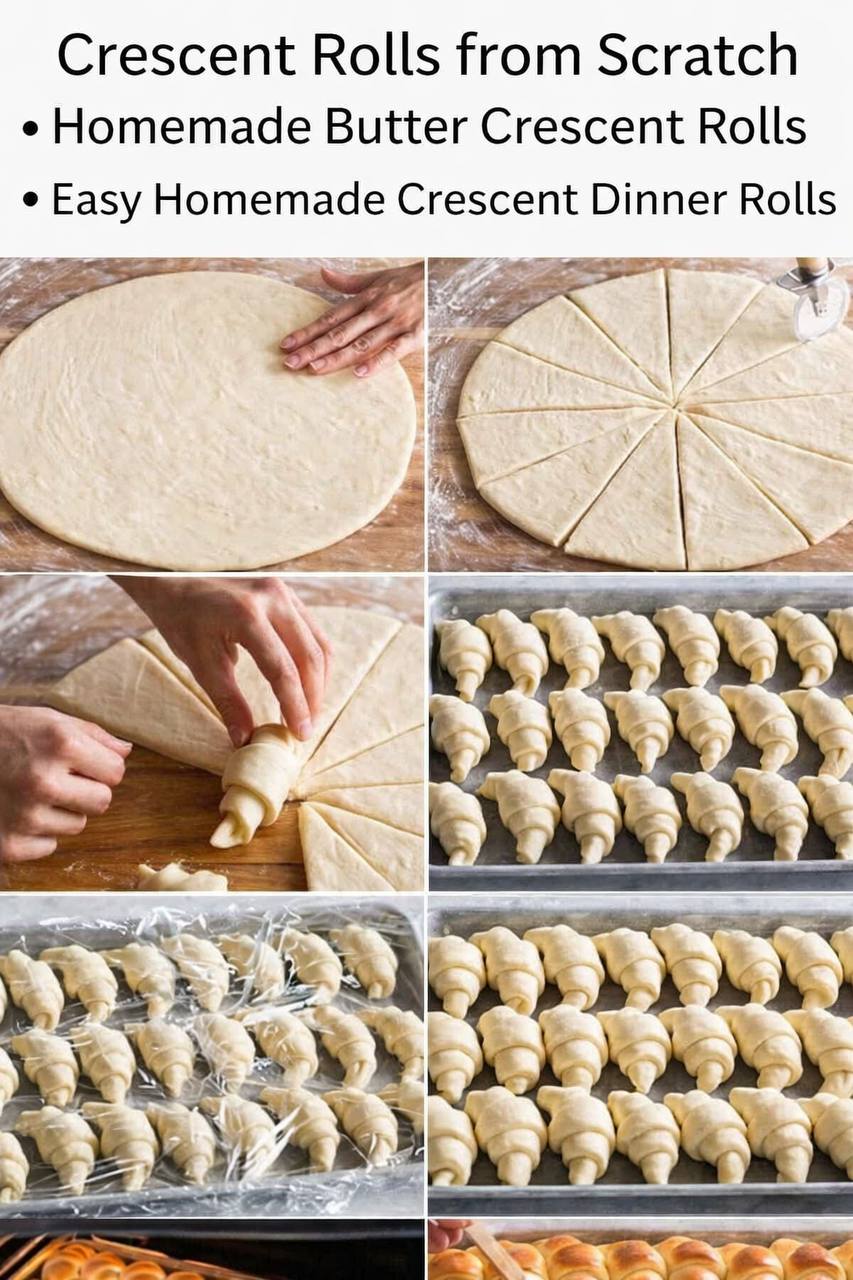
- After the third turn and chilling, unwrap the dough and place it on a lightly floured surface. Roll the dough into a large circle, approximately 18-20 inches in diameter and about ¼ inch thick.
- Using a pizza cutter or a sharp knife, cut the dough circle into 12-16 equal triangles. To do this, first cut the circle in half, then into quarters, then into eighths, and so on, until you have the desired number of triangles.
- Starting from the wide base of each triangle, gently roll the dough tightly towards the point. Curve the ends slightly to form the classic crescent shape.
- Place the shaped crescent rolls on a baking sheet lined with parchment paper, leaving about 2 inches of space between each roll.
- Cover the baking sheet loosely with plastic wrap or a clean kitchen towel and let the rolls rise in a warm place for another 30-45 minutes, or until they look visibly puffy. They won’t double in size like the first rise but should look lighter and airier.
- Preheat your oven to 375°F (190°C) during the last 15 minutes of the second rise.
- In a small bowl, whisk together the remaining large egg with 1 tablespoon of water to create an egg wash. Gently brush the tops of the risen crescent rolls with the egg wash.
- Bake for 12-18 minutes, or until the rolls are golden brown and cooked through. Keep an eye on them, as oven temperatures can vary.
- Remove the crescent rolls from the oven and transfer them to a wire rack to cool slightly before serving.
Cooking Tips and Variations
Achieving perfect homemade crescent rolls is all about technique and a little patience. Here are some invaluable tips to ensure your rolls turn out beautifully flaky and delicious every time.
- Keep Your Butter Cold: This is arguably the most crucial tip for flaky crescent rolls. Cold butter creates steam in the oven, which separates the layers of dough, resulting in that signature flakiness. If your butter gets too warm during the lamination process, pop it back in the fridge for a few minutes. You can even chill your rolling pin for extra coldness!
- Don’t Over-Flour: While you need flour to prevent sticking, too much flour can make your dough tough. Use just enough to keep the dough manageable on your work surface.
- Gentle Kneading: Kneading develops the gluten, which gives the rolls structure. However, over-kneading can make them dense. Knead until the dough is smooth and elastic, but not overly stiff.
- Proper Proofing: A warm, draft-free environment is ideal for rising dough. If your kitchen is cool, you can turn your oven on to its lowest setting for a few minutes, then turn it off and let the dough rise inside with the door ajar. Alternatively, a microwave with a cup of hot water can create a good proofing environment. Don’t rush the proofing process; sufficient rise leads to lighter rolls.
- Even Rolling: When rolling out the dough, aim for an even thickness. This ensures consistent baking and uniform layers. Uneven thickness can lead to some parts being undercooked or overcooked.
- Tight Rolling for Shaping: When shaping the triangles into crescents, roll them tightly from the wide end to the point. This helps create those beautiful, distinct layers and prevents gaps in the finished roll.
- Egg Wash for Golden Shine: The egg wash not only gives the rolls a beautiful golden-brown color but also adds a subtle sheen and helps create a slightly crisp crust.
- Don’t Overbake: Overbaking can dry out your rolls. Look for a deep golden-brown color on top and bottom. If they’re browning too quickly, you can loosely tent them with foil.
Want to get creative? Here are some delicious variations:
- Garlic Herb Rolls: Before the final roll and cut, mix 2 tablespoons of finely minced fresh garlic with 1 tablespoon of chopped fresh parsley or chives into a softened tablespoon of butter. Spread this mixture thinly over the rolled-out dough before cutting into triangles.
- Cheese Rolls: Sprinkle 1/2 cup of shredded sharp cheddar or Parmesan cheese over the dough after spreading the garlic herb butter (or just on its own) before cutting and rolling.
- Sweet Rolls: For a delightful breakfast treat, spread a thin layer of cinnamon sugar (2 tablespoons sugar mixed with 1 teaspoon cinnamon) or a light layer of jam or fruit preserves over the dough before cutting and rolling. You can even drizzle with a simple glaze (powdered sugar and milk) after baking.
- Everything Bagel Rolls: After the egg wash, sprinkle a generous amount of everything bagel seasoning over the rolls before baking for a savory, crunchy topping.
- Whole Wheat Option: You can substitute up to 1 cup of the all-purpose flour with whole wheat flour for a slightly nuttier flavor and added fiber. Adjust liquid as needed, as whole wheat flour absorbs more moisture.
Storage and Reheating
Homemade crescent rolls are best enjoyed fresh from the oven, but luckily, they store and reheat quite well, allowing you to savor their deliciousness for a few days.
For short-term storage:
- Once the rolls have cooled completely, place them in an airtight container or a large resealable plastic bag.
- Store them at room temperature for up to 2-3 days. Beyond that, they tend to dry out and lose their fresh texture.
For longer-term storage:
- Crescent rolls freeze beautifully! Once completely cooled, arrange them in a single layer on a baking sheet and flash freeze for about 1-2 hours until solid. This prevents them from sticking together.
- Transfer the frozen rolls to a freezer-safe bag or airtight container. They can be stored in the freezer for up to 2-3 months.
Reheating instructions:
- From Room Temperature: To reheat, preheat your oven to 300°F (150°C). Place the rolls on a baking sheet and warm for 5-10 minutes, or until heated through and soft. You can also microwave them for 15-30 seconds, but this can sometimes make them a bit chewy.
- From Frozen: Do not thaw. Preheat your oven to 325°F (160°C). Place the frozen rolls on a baking sheet and bake for 10-15 minutes, or until heated through and golden. If you prefer a softer roll, you can lightly tent them with foil during reheating.
A quick tip: to revive slightly stale rolls, you can lightly brush them with water before reheating in the oven. This helps to create steam and soften the crust, making them taste almost fresh again!
Frequently Asked Questions
My dough isn’t rising. What went wrong?
The most common reasons for dough not rising are inactive yeast or the liquid being too hot or too cold. Ensure your milk is between 105-115°F (40-46°C) – too hot will kill the yeast, too cold won’t activate it. Also, check the expiration date on your yeast. If it’s old, it might not be potent enough. Make sure your proofing environment is warm and draft-free.
Can I make the dough ahead of time?
Absolutely! You can prepare the dough up to the end of the final lamination step (after the third turn and chilling). Wrap it tightly in plastic wrap and store it in the refrigerator for up to 24 hours. When you’re ready to bake, take the dough out of the fridge, let it sit at room temperature for about 15-20 minutes to make it easier to roll, then proceed with rolling, cutting, shaping, and the second rise.
Why are my crescent rolls not flaky?
Lack of flakiness usually points to the butter getting too warm during the lamination process. When the butter melts into the dough, it prevents the distinct layers from forming. Ensure your butter is very cold and firm, and that you chill the dough sufficiently between each turn. Don’t overwork the dough during rolling, as this can also warm the butter.
Can I use different types of flour?
While all-purpose flour provides the best balance of structure and tenderness for crescent rolls, you can experiment. For a chewier roll, you could try bread flour, but be aware it might absorb more liquid. For a slightly denser, nuttier roll, you can substitute up to 1 cup of all-purpose flour with whole wheat flour. Always adjust the liquid content slightly if you change flours, as absorption rates vary.