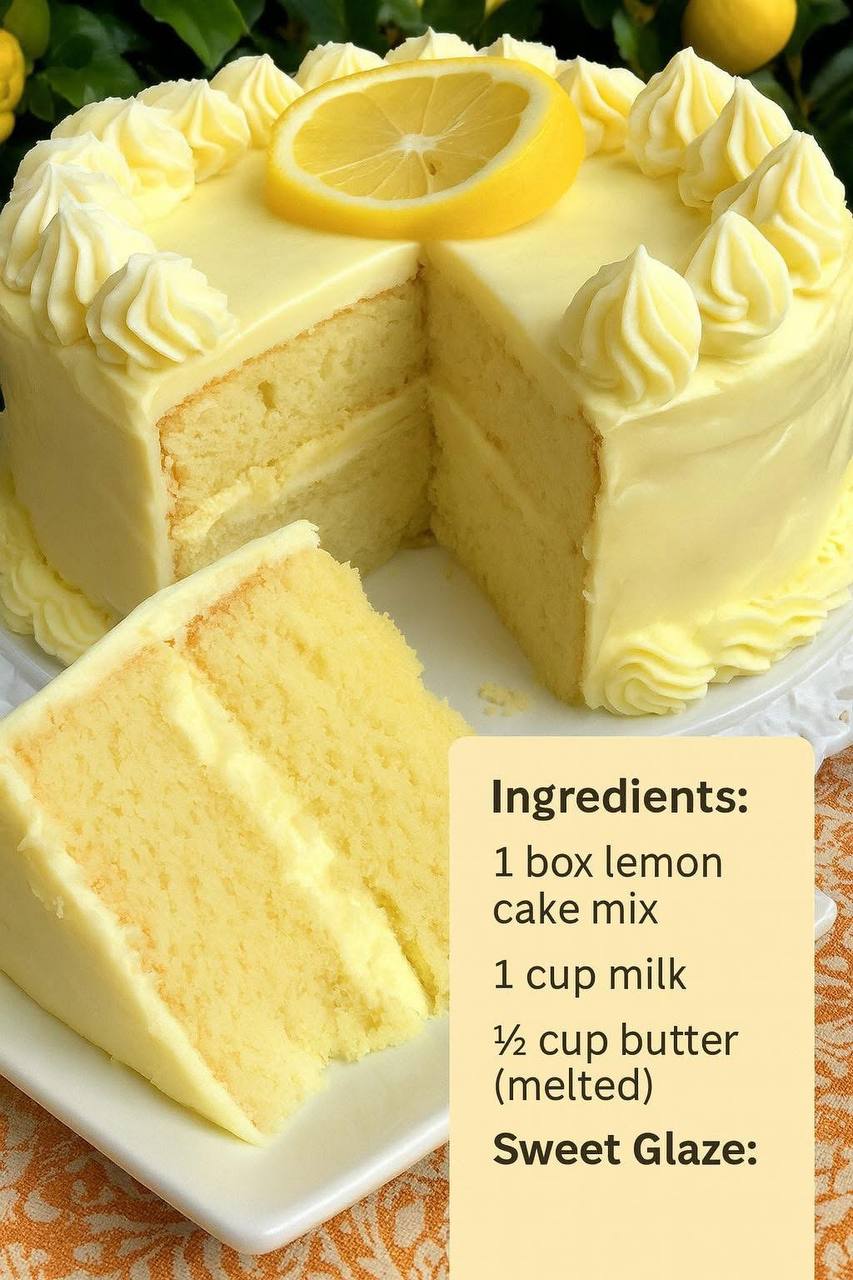
Instructions
- Preheat your oven to 325°F (160°C). Grease and flour two 8-inch round cake pans or line with parchment paper.
- Prepare the Cake Layers: In a large mixing bowl, combine the lemon cake mix, 1 cup whole milk, 1/2 cup melted butter, and 3 large eggs. Beat with an electric mixer on medium speed for 2-3 minutes until well combined and smooth.
- Divide the batter evenly between the two prepared cake pans.
- Bake for 25-30 minutes, or until a wooden skewer or toothpick inserted into the center of the cakes comes out clean.
- Remove cakes from the oven and let them cool in the pans for 10-15 minutes before inverting them onto a wire rack to cool completely.
- Prepare the Cheesecake Filling: While the cakes are cooling, in a medium mixing bowl, beat the softened cream cheese with an electric mixer until smooth and creamy, about 2-3 minutes.
- Add 1/2 cup granulated sugar, 1 tablespoon fresh lemon juice, and 1 large egg to the cream cheese mixture. Beat on low speed until just combined, being careful not to overmix, which can incorporate too much air.
- Pour the cheesecake filling into a lightly greased 8-inch round cake pan (the same size as your cake layers, or slightly smaller if you prefer a thinner filling).
- Bake the cheesecake filling in the preheated 325°F (160°C) oven for 20-25 minutes, or until the edges are set but the center still has a slight jiggle.
- Remove the cheesecake from the oven and let it cool completely on a wire rack. Once cooled, cover and refrigerate for at least 2 hours, or until firm.
- Assemble the Cake: Once both cake layers and the cheesecake filling are completely cool and the cheesecake is firm, it’s time to assemble. If your cake layers have domed tops, use a serrated knife to carefully level them for a flat surface.
- Place one cake layer on your serving plate or cake stand.
- Carefully remove the chilled cheesecake filling from its pan. If it’s stuck, run a thin knife around the edge. Gently slide the cheesecake layer onto the first cake layer.
- Place the second cake layer on top of the cheesecake filling.
- Prepare the Lemon Glaze: In a small bowl, whisk together the powdered sugar, 3-4 tablespoons fresh lemon juice, and 1-2 tablespoons milk or water until smooth and pourable. Adjust the consistency by adding more powdered sugar for a thicker glaze or more liquid for a thinner glaze.
- Pour the lemon glaze over the top of the assembled cake, allowing it to drip attractively down the sides.
- For decoration, optionally pipe swirls of frosting (if using additional frosting, not included in this glaze-focused recipe) around the edges and garnish with fresh lemon slices and mint leaves.
- Refrigerate the cake for at least 30 minutes to allow the glaze to set and the flavors to meld before serving.
Cooking Tips and Variations
For perfectly flat cake layers, you can use baking strips around your cake pans. These help the cakes bake more evenly and prevent doming. Alternatively, after baking and cooling, use a long serrated knife to carefully level any domed tops.
To prevent your cake from sticking, always grease and flour your pans thoroughly, or line the bottom with parchment paper. A light spray with non-stick baking spray containing flour also works wonders.
For an even more intense lemon flavor, add 1-2 tablespoons of fresh lemon zest to the cake batter along with the wet ingredients. You can also add a teaspoon of lemon zest to the cheesecake filling for an extra citrusy kick. If you want to experiment with other flavors, consider adding a teaspoon of almond extract to the cake batter or a touch of vanilla extract to the cheesecake filling.
Room temperature ingredients are key for smooth batters and fillings. For the cake, ensure your eggs are at room temperature. For the cheesecake, make sure your cream cheese is very soft, and the egg is at room temperature to prevent lumps and ensure proper emulsification.
Do not overbake the cake layers. Overbaking can lead to dry cake. Start checking for doneness at the lower end of the baking time with the toothpick test.
For easier handling and assembly, ensure both your cake layers and especially your cheesecake filling are completely cooled and chilled. A firm cheesecake layer will be much easier to transfer and stack without breaking.
When making the glaze, start with less liquid and add more gradually until you reach your desired consistency. You want it pourable but not too thin that it runs off completely.
If you wish to add a more traditional frosting in addition to the glaze, a simple cream cheese frosting would be delicious. For a smooth frosting application, chilling the cake after the glaze has set can make it easier to handle.
Storage and Reheating
Store leftover Lemon Cheesecake Cake in an airtight container in the refrigerator for up to 3-4 days. Because it contains cream cheese, it must be kept chilled to maintain freshness and food safety.
To serve, remove the cake from the refrigerator about 15-20 minutes before slicing to allow it to come slightly closer to room temperature. This will enhance the flavors and soften the cake and filling to their optimal texture. This cake is typically served chilled or at cool room temperature and does not require reheating.
For longer storage, you can freeze individual slices of the cake. Wrap each slice tightly in plastic wrap, then place them in an airtight freezer-safe container or freezer bag. It can be frozen for up to 1 month. Thaw frozen slices in the refrigerator overnight before serving.
Frequently Asked Questions
What kind of cake mix should I use?
For this recipe, a standard 15.25 ounce box of lemon cake mix is ideal. Brands like Betty Crocker, Duncan Hines, or Pillsbury all work well. Ensure it’s a lemon-flavored mix to complement the cheesecake filling and glaze.
Can I make this cake without a cake mix?
Yes, you can! If you prefer to bake from scratch, you would need to use your favorite homemade lemon cake recipe for two 8-inch layers. The rest of the recipe for the cheesecake filling and glaze would remain the same. This would increase the overall prep and baking time.
How can I prevent the cheesecake filling from cracking?
The key to preventing cheesecake cracks is to avoid overmixing the batter and overbaking. Beat the cream cheese until smooth, then add the remaining ingredients and mix only until just combined. Baking at a lower temperature (325°F) also helps. If a small crack still appears, don’t worry, the top cake layer and glaze will cover it!
Can I prepare parts of this cake in advance?
Absolutely! The cake layers can be baked a day in advance, cooled completely, wrapped tightly in plastic wrap, and stored at room temperature. The cheesecake filling can also be made a day ahead, cooled, and chilled in the refrigerator until firm. This makes assembly on the day of serving much quicker and easier.