Introduction
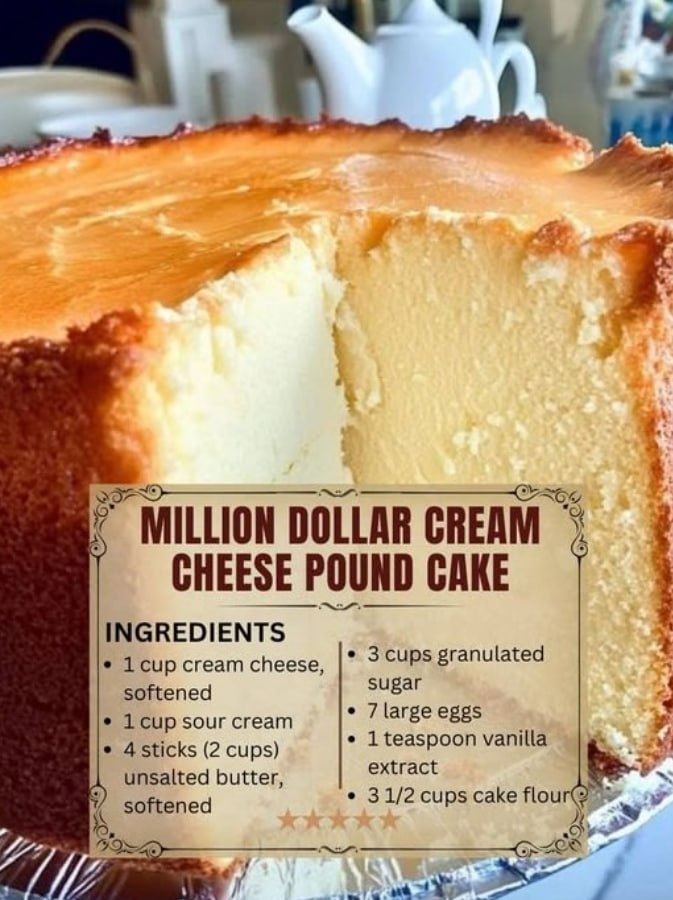
Prepare to elevate your dessert game with a cake so unbelievably rich, moist, and utterly delicious, it’s earned the moniker “Million Dollar Cream Cheese Pound Cake.” This isn’t just any pound cake; it’s a culinary masterpiece that marries the classic, dense, and buttery texture of a traditional pound cake with the irresistible tang and incredible moisture only cream cheese can provide. Each bite is a symphony of flavors and textures, promising a luxurious experience that will have everyone asking for the recipe.
What makes this particular pound cake so special? It’s the harmonious fusion of key ingredients working in perfect concert. The generous amount of softened butter and cream cheese creates an unparalleled richness and a melt-in-your-mouth crumb that is dense without being heavy. The addition of sour cream further enhances its moisture, while a hint of vanilla extract adds a comforting warmth. This cake isn’t just for special occasions; while it certainly shines as the centerpiece of a holiday gathering or celebratory meal, its comforting familiarity also makes it perfect for a decadent breakfast slice with your morning coffee or an afternoon treat.
The “million dollar” reputation isn’t just hype; it refers to the exceptional quality and indulgent nature of this dessert. It’s a cake that feels expensive to eat, yet is surprisingly approachable to bake at home. The golden-brown crust gives way to a tender, tightly-structured interior that holds its shape beautifully, making it ideal for slicing and serving. Get ready to impress your family and friends with this timeless classic that proves some things are truly worth their weight in gold.
Nutritional Information
Per serving (approximate values):
- Calories: 550
- Protein: 8g
- Carbohydrates: 65g
- Fat: 30g
- Fiber: 1g
- Sodium: 250mg
Ingredients
- 1 cup cream cheese, softened
- 1 cup sour cream
- 4 sticks (2 cups) unsalted butter, softened
- 3 cups granulated sugar
- 7 large eggs, at room temperature
- 1 teaspoon vanilla extract
- 3 1/2 cups cake flour, sifted
Instructions
- Preheat your oven to 325°F (160°C). Grease and flour a 10-inch Bundt pan or a 10-inch tube pan thoroughly. Ensure all crevices are coated to prevent sticking.
- In a large mixing bowl, using an electric mixer on medium speed, cream together the softened butter, softened cream cheese, and granulated sugar until light, fluffy, and pale in color. This process should take about 5-7 minutes. Scrape down the sides of the bowl occasionally to ensure even mixing.
- Add the eggs one at a time, beating well after each addition. Make sure each egg is fully incorporated before adding the next. This helps create a stable emulsion and prevents the batter from separating.
- Stir in the vanilla extract until just combined.
- In a separate bowl, whisk together the sifted cake flour.
- With the mixer on low speed, gradually add the cake flour to the wet ingredients, alternating with the sour cream. Begin and end with the flour. Add about one-third of the flour, mix until just combined, then add half of the sour cream, mix, then another third of the flour, the remaining sour cream, and finally the last third of the flour. Mix until just combined after each addition, being careful not to overmix the batter. Overmixing can develop the gluten in the flour, leading to a tough cake.
- Pour the batter evenly into the prepared Bundt or tube pan. Gently tap the pan on the counter a few times to release any air bubbles.
- Bake for 1 hour and 30 minutes to 1 hour and 45 minutes, or until a wooden skewer or toothpick inserted into the center of the cake comes out clean. The top should be golden brown and the cake should spring back when lightly touched.
- Once baked, remove the pan from the oven and let the cake cool in the pan on a wire rack for 15-20 minutes. This allows the cake to set and makes it easier to unmold.
- After 15-20 minutes, carefully invert the cake onto the wire rack to cool completely. Do not attempt to slice the cake until it is fully cooled, as it will be too delicate and could crumble.
Cooking Tips and Variations
For a truly “million dollar” result, ingredient temperature is paramount. Ensure your butter, cream cheese, and eggs are at room temperature. This allows them to emulsify properly, creating a smooth, homogenous batter that traps air efficiently, resulting in a lighter, more tender crumb. Cold ingredients will lead to a lumpy batter and a denser cake. When creaming the butter, cream cheese, and sugar, don’t rush the process; allow it to become truly light and fluffy to incorporate sufficient air. This aeration is key to the cake’s volume and texture. When adding the flour and sour cream, mix on low speed and stop as soon as the ingredients are just combined. Overmixing develops gluten, which can lead to a tough, dry pound cake.
To ensure your cake releases perfectly from the pan, especially with intricate Bundt designs, grease and flour your pan meticulously. You can use a baking spray with flour, or the traditional method of spreading softened butter into every crevice and then dusting with flour, tapping out the excess. For an even more tender crumb, consider sifting your cake flour twice. If you don’t have cake flour, you can make a substitute: for every cup of all-purpose flour, remove two tablespoons and replace with two tablespoons of cornstarch, then sift together. Pound cakes often benefit from a slower, longer bake at a moderate temperature. Resist the urge to open the oven door frequently during the first hour of baking, as this can cause the cake to sink.
For serving, a simple dusting of powdered sugar is always elegant and lets the cake’s flavor shine. Fresh berries, such as raspberries or strawberries, add a pop of color and a touch of tartness that beautifully complements the cake’s richness. A dollop of freshly whipped cream can also elevate the experience. If you prefer a glaze, a simple lemon glaze (powdered sugar, lemon juice, and a touch of milk) adds a bright, citrusy note. A vanilla bean glaze or a cream cheese glaze can also be delightful. For flavor variations, consider adding a teaspoon of almond extract along with the vanilla for a nutty depth, or incorporate the zest of one lemon or orange into the batter for a subtle citrusy lift. Chocolate chip pound cake is another popular variation; gently fold in 1 to 1 1/2 cups of mini chocolate chips during the final stages of mixing.
Storage and Reheating
This Million Dollar Cream Cheese Pound Cake stores beautifully, making it an excellent make-ahead dessert. Once completely cooled, the cake can be stored at room temperature, tightly wrapped in plastic wrap or placed in an airtight container, for up to 3-4 days. The cream cheese and sour cream help keep it incredibly moist. For longer storage, you can refrigerate the cake for up to one week. Again, ensure it is well-wrapped to prevent it from drying out or absorbing odors from the refrigerator. If refrigerating, allow slices to come to room temperature for about 30 minutes before serving for the best flavor and texture.
This pound cake also freezes exceptionally well. For freezing, wrap the cooled cake tightly in several layers of plastic wrap, then an additional layer of aluminum foil. It can be frozen whole or in individual slices. Frozen, it will maintain its quality for up to 2-3 months. To thaw, simply unwrap the cake and let it sit at room temperature for several hours (if whole) or about 30-60 minutes (if sliced). There’s no need to reheat this cake; it’s best enjoyed at room temperature, where its rich flavors and moist texture truly shine. Reheating in a microwave can alter its texture, making it rubbery or dry.
Frequently Asked Questions
Why did my pound cake crack on top?
Cracking on top is very common for pound cakes, especially Bundt cakes, and is usually a sign of a well-baked cake! It happens because the outside of the cake sets and bakes faster than the interior. As the interior continues to rise, the crust cracks to accommodate the expansion. It can also be influenced by oven temperature being a little too high or too much flour. Don’t worry, it doesn’t affect the taste or texture.
Can I use all-purpose flour instead of cake flour?
While cake flour is recommended for its lower protein content, which results in a more tender crumb, you can substitute all-purpose flour. To do so, for every cup of all-purpose flour, remove two tablespoons and replace it with two tablespoons of cornstarch. Sift this mixture together thoroughly before using. This substitution helps reduce the gluten development, mimicking the effect of cake flour.
My pound cake is dense and dry. What went wrong?
A dense and dry pound cake is often the result of overmixing the batter, especially after adding the flour. Overmixing develops the gluten in the flour, leading to a tough texture. Another common culprit is incorrect ingredient temperatures (cold butter/cream cheese) or not creaming the butter and sugar thoroughly enough. Ensure all ingredients are at room temperature and mix only until just combined after adding the dry ingredients.
How can I tell if my pound cake is fully baked?
The best way to test for doneness is to insert a long wooden skewer or toothpick into the deepest part of the cake. If it comes out clean with no wet batter attached, the cake is done. The top should also be golden brown and spring back when lightly touched. An instant-read thermometer inserted into the center should read around 200-210°F (93-99°C).