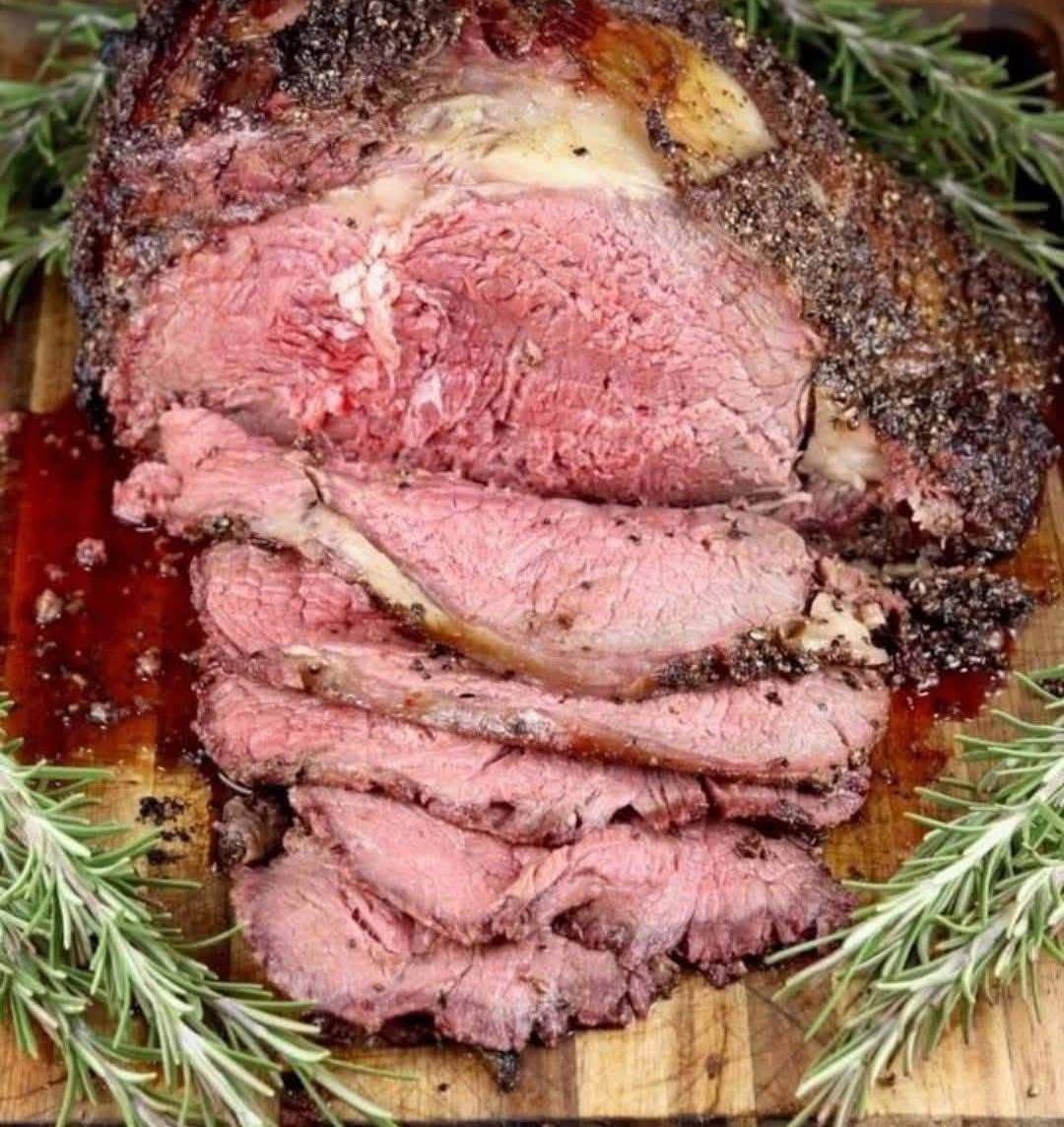
Instructions
- Prepare the Roast: Remove the prime rib roast from its packaging and pat it thoroughly dry with paper towels. This step is crucial for achieving a crispy crust. Let the roast sit at room temperature for at least 2-3 hours before cooking. This allows for more even cooking.
- Preheat Oven and Prepare Rack: Preheat your oven to 450°F (232°C). Place an oven-safe wire rack inside a large roasting pan. This elevates the roast, allowing air to circulate and promoting even browning.
- Create the Pepper-Parmesan Crust: In a small bowl, combine the coarsely cracked black peppercorns, finely grated Parmesan cheese, kosher salt, garlic powder, onion powder, crushed dried rosemary, and dried thyme. Mix thoroughly to ensure all ingredients are well distributed.
- Apply the Crust: Drizzle the olive oil evenly over all surfaces of the prime rib roast. Using your hands, firmly press the pepper-Parmesan mixture onto every side of the roast, including the ends. Ensure a thick, even coating. Don’t be shy – the more crust, the more flavor!
- Initial High-Heat Sear: Place the crusted prime rib roast, fat-side up, on the wire rack in the prepared roasting pan. Place the roasting pan into the preheated 450°F (232°C) oven and roast for 15 minutes. This high heat will create a beautiful, flavorful crust.
- Reduce Heat and Continue Roasting: After 15 minutes, reduce the oven temperature to 325°F (163°C) without opening the oven door. Continue roasting for approximately 1.5 to 2.5 hours, or until a meat thermometer inserted into the thickest part of the roast (without touching bone) reaches your desired internal temperature.
- Monitor Internal Temperature: For rare, aim for 120-125°F (49-52°C). For medium-rare, aim for 130-135°F (54-57°C). For medium, aim for 140-145°F (60-63°C). Remember that the temperature will rise another 5-10°F (3-6°C) during the resting period.
- Rest the Roast: Once the desired internal temperature is reached, carefully remove the roasting pan from the oven. Transfer the prime rib to a cutting board and immediately tent it loosely with aluminum foil. Let the roast rest for at least 20-30 minutes, or even up to 45 minutes for larger roasts. This resting period is critical as it allows the juices to redistribute throughout the meat, ensuring a tender and moist roast.
- Prepare Au Jus (Optional): While the roast is resting, you can make a simple au jus. Pour off any excess fat from the roasting pan, leaving behind the flavorful drippings. Place the pan over medium heat on the stovetop. Deglaze the pan with 1-2 cups of beef broth or red wine, scraping up any browned bits from the bottom. Bring to a simmer and cook for 5-10 minutes, or until slightly reduced. Season with salt and pepper to taste. Strain if desired for a smoother consistency.
- Slice and Serve: After resting, carefully remove the foil. Using a sharp carving knife, slice the prime rib against the grain into desired thickness. Arrange the slices on a warm platter, garnish with fresh rosemary sprigs and extra cracked black pepper and Parmesan cheese if desired, and serve immediately with the au jus on the side.
Cooking Tips and Variations
Achieving Perfect Doneness: A high-quality meat thermometer is your best friend when cooking prime rib. Insert it into the thickest part of the roast, avoiding the bone, for the most accurate reading. Remember that the internal temperature will continue to rise by 5-10 degrees Fahrenheit (3-6 degrees Celsius) even after you remove the roast from the oven, so pull it out a few degrees before your target doneness.
The Importance of Resting: Do not skip the resting period! This is perhaps the most crucial step for a juicy prime rib. As the meat cooks, the muscle fibers contract and push juices to the center. Resting allows these juices to redistribute throughout the roast, resulting in a uniformly tender and moist texture. If you slice it too soon, all those delicious juices will run out onto your cutting board.
Reverse Sear Method: For an even more consistently cooked interior and a crisper crust, consider a reverse sear. Instead of starting with high heat, roast the prime rib at a lower temperature (around 250°F / 120°C) until it’s about 10-15 degrees below your target internal temperature. Then, remove it from the oven, increase the oven temperature to 450-500°F (232-260°C), and return the roast for 10-15 minutes, or until a deep, caramelized crust forms. This method is excellent for precision.
Generous Seasoning: Don’t be timid with the pepper and Parmesan mixture. This crust is what makes the Pepper Parm Prime Rib so special. A thick, even coating ensures maximum flavor and a beautiful texture. You want to see a distinct layer of the crust on the roast.
Bone-In vs. Boneless: While this recipe specifies bone-in prime rib for maximum flavor and insulation during cooking, you can use a boneless roast. Adjust cooking times accordingly; boneless roasts typically cook faster. For bone-in, you can ask your butcher to “french” the bones (trim the meat from the ends of the bones) or even remove the bones and tie them back on for easier carving later.
Herb Variations: While rosemary and thyme are classic companions to beef, feel free to experiment. You could add dried oregano, marjoram, or even a touch of smoked paprika to the crust mixture for different flavor profiles. Fresh herbs can also be tucked into the roasting pan during the last hour of cooking for aromatic steam.
Cheese Alternatives: If Parmesan isn’t your favorite, or you’re looking for a different flavor, consider using Pecorino Romano for a sharper, saltier kick, or even a blend of Parmesan and Asiago for a milder, nuttier note. Ensure the cheese is finely grated so it melts and forms a crust effectively.
Serving Suggestions: This prime rib pairs beautifully with classic accompaniments. Think creamy mashed potatoes, roasted asparagus, sautéed green beans, or a vibrant mixed green salad. Yorkshire pudding is also a traditional and delicious pairing that uses the beef drippings.
Storage and Reheating
Storage: Allow any leftover Pepper Parm Prime Rib to cool completely before storing. Once cool, slice the remaining roast into individual servings if desired for easier reheating, or keep it as a larger piece. Place the prime rib in an airtight container or wrap it tightly in plastic wrap and then aluminum foil. Store in the refrigerator for up to 3-4 days. For longer storage, you can freeze slices in a freezer-safe bag or container for up to 2-3 months. Thaw frozen prime rib in the refrigerator overnight before reheating.
Reheating: Reheating prime rib can be tricky, as you want to warm it through without drying it out or overcooking it. The goal is to retain its tenderness and flavor.
- Oven Method (Recommended for Slices or Larger Pieces): Preheat your oven to a low temperature, around 250-300°F (120-150°C). Place the prime rib slices or larger pieces in an oven-safe dish. Add a splash of beef broth or water to the bottom of the dish to create some steam and prevent drying. Cover the dish tightly with aluminum foil. Heat for 20-30 minutes for slices, or 30-45 minutes for larger pieces, or until warmed through. Check the internal temperature with a meat thermometer to ensure it reaches at least 130°F (54°C) for safe consumption, but avoid going much higher to maintain tenderness.
- Stovetop Method (Best for Slices): For individual slices, you can gently reheat them in a skillet over low to medium-low heat. Add a small amount of beef broth or water to the pan. Cover the skillet and heat for 5-10 minutes, flipping once, until warmed through. Be careful not to let the pan get too hot, as this can quickly dry out the meat.
- Microwave (Least Recommended): While possible, the microwave is generally not recommended for reheating prime rib as it can easily dry out the meat and make it tough. If you must use it, heat in short bursts (30-60 seconds) on a lower power setting, checking frequently, and add a splash of broth or water.
Serve reheated prime rib with any leftover au jus or gravy.
Frequently Asked Questions
What kind of prime rib should I buy?
For the best results, look for a bone-in prime rib roast from the rib section, specifically ribs 6 through 12. This cut is known for its excellent marbling, which contributes significantly to its flavor and tenderness. A 2-3 rib roast (4-5 pounds) is a good size for most gatherings. Don’t be afraid to ask your butcher for advice or to special-order a specific cut.
How do I prevent the Parmesan cheese from burning?
The initial high-heat sear helps to crisp the cheese, but the subsequent lower temperature roast prevents it from burning. Finely grating the Parmesan helps it melt and form a crust more evenly. If you notice the crust getting too dark too quickly during the low-temperature roast, you can loosely tent the roast with aluminum foil for the remainder of the cooking time, though this is rarely necessary if you stick to the recommended temperatures.
Can I make this recipe for a smaller or larger roast?
Yes, you can absolutely adjust the recipe for different-sized roasts. The general rule of thumb for roasting prime rib is about 15-20 minutes per pound at the lower temperature (after the initial high-heat sear), but always rely on a meat thermometer for accuracy. For larger roasts, you may need to increase the amount of the pepper-Parmesan crust ingredients proportionally. For smaller roasts, decrease them. Ensure the roast is still brought to room temperature before cooking for even results.
What if I don’t have a roasting pan with a rack?
While a roasting pan with a rack is ideal for promoting air circulation and even cooking, you can improvise. If you have a sturdy oven-safe wire rack, you can place it directly on a regular baking sheet. Alternatively, you can create a “rack” by forming a bed of chopped root vegetables (like carrots, celery, and onions) on the bottom of your roasting pan. This will elevate the roast and add flavor to any drippings for an au jus or gravy.