Introduction
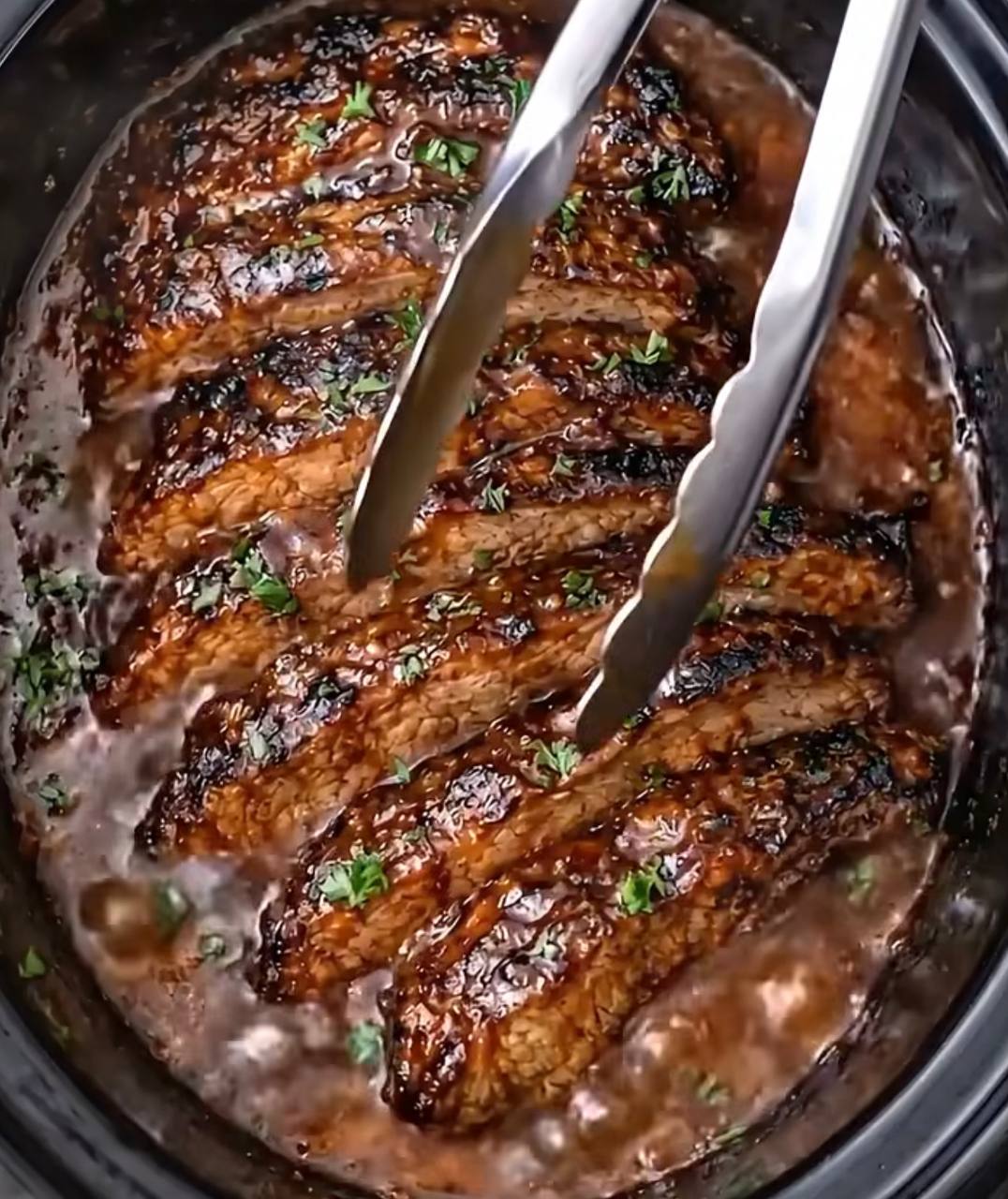
Imagine sinking your teeth into incredibly tender, melt-in-your-mouth beef brisket, rich with savory flavors and coated in a glossy, slightly sweet glaze. Now, imagine achieving all of this with minimal effort, thanks to the magic of your slow cooker! Slow Cooker Beef Brisket isn’t just a meal; it’s a culinary experience that brings comfort, flavor, and ease together in one magnificent dish. This recipe transforms a typically tough cut of meat into a fork-tender masterpiece, perfect for Sunday dinner, a casual get-together, or simply a delicious weeknight meal.
The beauty of slow cooking lies in its hands-off approach and remarkable ability to develop deep, complex flavors. By simmering slowly over several hours, the brisket breaks down, absorbing all the aromatic goodness of the sauce, resulting in an irresistibly tender texture that practically falls apart. The low and slow heat ensures every fiber of the meat is infused with a savory, umami-rich, and subtly sweet profile, creating a truly unforgettable dish that will have everyone asking for seconds. Get ready to discover your new favorite way to cook brisket – it’s easier and more delicious than you ever thought possible!
What makes this particular Slow Cooker Beef Brisket recipe stand out is its perfect balance of flavors and incredible versatility. We’ve crafted a glaze that’s both savory and sweet, with hints of tang, creating a beautiful caramelized finish that’s as appealing to the eye as it is to the palate. Whether you serve it as a centerpiece for a special occasion, pile it high on sandwiches for a casual lunch, or shred it for tacos, this brisket delivers on all fronts. Prepare for a rich, comforting, and deeply satisfying meal that promises to become a staple in your recipe rotation.
Nutritional Information
Per serving (approximate values):
- Calories: 450
- Protein: 45g
- Carbohydrates: 15g
- Fat: 22g
- Fiber: 2g
- Sodium: 850mg
Ingredients
- 3-4 pounds beef brisket (flat cut recommended)
- 1 tablespoon olive oil
- 1 large yellow onion, sliced
- 4 cloves garlic, minced
- 1 cup beef broth
- 1/2 cup ketchup
- 1/4 cup apple cider vinegar
- 1/4 cup Worcestershire sauce
- 1/4 cup brown sugar, packed
- 2 tablespoons soy sauce (low sodium preferred)
- 1 tablespoon smoked paprika
- 1 teaspoon garlic powder
- 1 teaspoon onion powder
- 1/2 teaspoon black pepper
- 1/2 teaspoon salt (or to taste)
- 2 tablespoons cornstarch (optional, for thickening sauce)
- 2 tablespoons cold water (optional, for thickening sauce)
- Fresh parsley, chopped (for garnish)
Instructions
- Prepare the Brisket: Pat the beef brisket dry with paper towels. Trim off any excessive fat, leaving about a 1/4-inch layer for flavor and moisture.
- Season the Brisket: In a small bowl, combine salt, pepper, smoked paprika, garlic powder, and onion powder. Rub this seasoning mixture generously all over the brisket.
- Sear the Brisket (Optional but Recommended): Heat olive oil in a large skillet or Dutch oven over medium-high heat. Once hot, carefully place the brisket in the skillet and sear for 3-4 minutes per side, until a deep brown crust forms. This step adds a significant depth of flavor. Transfer the seared brisket to your slow cooker.
- Prepare the Aromatic Base: In the same skillet (no need to clean), add the sliced onion and cook for 3-5 minutes until softened, scraping up any browned bits from the bottom of the pan. Add the minced garlic and cook for another minute until fragrant.
- Make the Sauce: Pour the beef broth into the skillet, scraping up any remaining browned bits. Stir in the ketchup, apple cider vinegar, Worcestershire sauce, brown sugar, and soy sauce. Bring the mixture to a gentle simmer, stirring until the brown sugar is dissolved.
- Combine in Slow Cooker: Pour the sauce mixture over the brisket in the slow cooker. Ensure the brisket is mostly submerged in the liquid.
- Slow Cook: Cover the slow cooker and cook on low for 6-8 hours, or on high for 3-4 hours, until the brisket is incredibly tender and easily pulls apart with a fork.
- Rest and Slice: Carefully remove the brisket from the slow cooker and place it on a cutting board. Tent it loosely with foil and let it rest for 10-15 minutes. This allows the juices to redistribute, ensuring a more tender and flavorful result.
- Prepare the Sauce (Optional): While the brisket rests, if you desire a thicker sauce, you can thicken the remaining liquid in the slow cooker. In a small bowl, whisk together cornstarch and cold water to create a slurry. Pour the slurry into the slow cooker, stir well, and cook on high for another 15-20 minutes, or until the sauce has thickened to your desired consistency. Alternatively, you can transfer the sauce to a saucepan and reduce it on the stovetop over medium-high heat.
- Slice and Serve: Against the grain, slice the brisket into thick pieces or shred it using two forks. Return the sliced or shredded brisket to the slow cooker with the sauce, or arrange it on a serving platter and spoon the sauce generously over the top.
- Garnish and Enjoy: Garnish with fresh chopped parsley and serve warm.
Cooking Tips and Variations
For the most tender brisket, always make sure to slice it against the grain. This shortens the meat fibers, making each bite incredibly tender. If you slice with the grain, even the most perfectly cooked brisket can seem tough. When selecting your brisket, opt for a flat cut (also known as the “lean” cut) as it’s typically easier to slice uniformly and has less fat to trim. However, the point cut (the “fatty” end) can also be used for shredding and offers incredible moisture.
To really amp up the flavor, don’t skip the searing step! While optional for slow cooking, browning the brisket before adding it to the slow cooker creates a rich, caramelized crust that adds a depth of umami flavor that simply cannot be achieved otherwise. It’s a quick extra step that makes a significant difference. Also, remember not to overcrowd your slow cooker. Ensure there’s enough space for the heat and liquid to circulate evenly around the brisket for consistent cooking.
For a spicier kick, add a pinch of cayenne pepper or a dash of your favorite hot sauce to the sauce mixture. If you prefer a smoky flavor, a few drops of liquid smoke or an extra teaspoon of smoked paprika can enhance the profile. Experiment with different herbs; bay leaves, thyme, or rosemary can add another layer of aromatic complexity. You can also vary the sweetener – honey or maple syrup can be substituted for brown sugar, each offering a slightly different nuance to the glaze. For an even richer sauce, consider adding a tablespoon of tomato paste to the sauce mixture when you add the ketchup.
Another tip for achieving the best results is to trim off excessive fat, but don’t remove all of it. A small layer of fat (about 1/4 inch) will render during the slow cooking process, adding moisture and flavor to the meat. However, too much fat can make the sauce greasy. Finally, allowing the brisket to rest after cooking is crucial. This helps the muscle fibers relax and reabsorb the juices, resulting in a more tender and moist final product. Even 10-15 minutes can make a big difference.
Storage and Reheating
To store leftover Slow Cooker Beef Brisket, allow it to cool completely before transferring it to an airtight container. Make sure to include plenty of the delicious sauce as this will help keep the meat moist. Stored properly in the refrigerator, the brisket will remain fresh and flavorful for 3-4 days. The flavors often deepen overnight, making leftovers even more delicious!
For longer storage, brisket freezes beautifully. Place the cooled brisket slices or shredded meat along with a generous amount of sauce into freezer-safe bags or containers. Remove as much air as possible to prevent freezer burn. It can be stored in the freezer for up to 3 months. Thaw frozen brisket overnight in the refrigerator before reheating.
When reheating, it’s essential to do so gently to maintain the brisket’s tenderness and prevent it from drying out. The best method is to reheat it slowly in the oven. Preheat your oven to 300°F (150°C). Place the brisket and sauce in an oven-safe dish, cover tightly with foil, and heat for 20-30 minutes, or until warmed through. You can also reheat smaller portions on the stovetop over low heat, adding a splash of beef broth if the sauce seems too thick. For individual servings, the microwave can be used, but reheat in short bursts (30-60 seconds) and stir between intervals to prevent overcooking and uneven heating.
Frequently Asked Questions
What is the best cut of brisket for slow cooking?
The flat cut (also known as the “lean” cut or first cut) is generally recommended for slow cooking as it’s easier to slice uniformly and has less fat. However, the point cut (the “fatty” end or second cut) is excellent for shredding and provides even more moisture due to its higher fat content. Both will work wonderfully in a slow cooker, so choose based on your preference for slicing versus shredding.
Do I have to sear the brisket before slow cooking?
While searing the brisket before slow cooking is an optional step, it is highly recommended. Searing creates a beautiful browned crust on the meat, which develops a rich, caramelized flavor (the Maillard reaction) that adds significant depth and complexity to the final dish. It only takes a few extra minutes and makes a noticeable difference in taste.
How can I thicken the sauce if it’s too thin?
If your sauce is too thin after the brisket is cooked, you have a few options. The easiest way is to create a cornstarch slurry: whisk together 2 tablespoons of cornstarch with 2 tablespoons of cold water until smooth. Stir this slurry into the hot sauce in the slow cooker (after removing the brisket) and cook on high for another 15-20 minutes, or until it reaches your desired consistency. Alternatively, you can transfer the sauce to a saucepan and reduce it on the stovetop over medium-high heat until it thickens.
What are some good side dishes to serve with slow cooker beef brisket?
Slow Cooker Beef Brisket is incredibly versatile and pairs well with a variety of sides. Classic choices include creamy mashed potatoes, roasted vegetables (like carrots, potatoes, or Brussels sprouts), mac and cheese, or a fresh green salad. For a more casual meal, consider serving it on soft rolls for sandwiches, in tacos with your favorite toppings, or alongside coleslaw and cornbread.