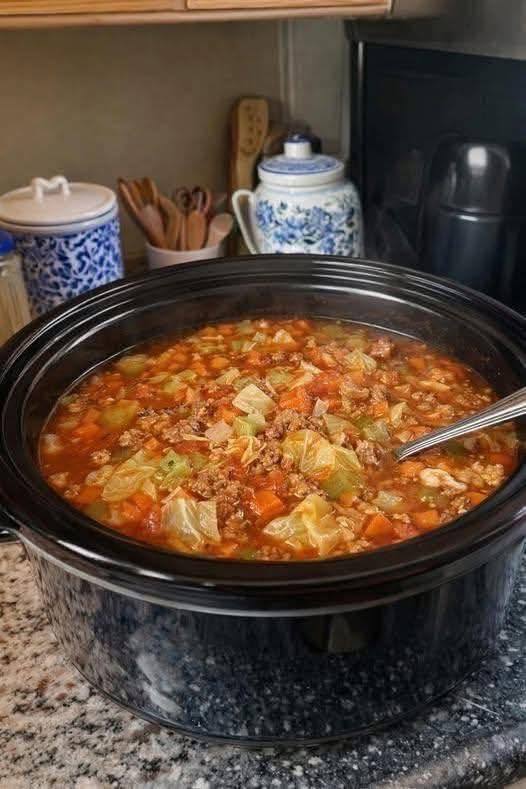
Instructions
- Heat the olive oil in a large skillet over medium-high heat. Add the ground beef and cook, breaking it up with a spoon, until thoroughly browned. Drain off any excess grease.
- Add the chopped onion and minced garlic to the skillet with the cooked ground beef. Sauté for 5-7 minutes, or until the onion is softened and translucent.
- Transfer the browned ground beef, onion, and garlic mixture to your slow cooker insert.
- Add the beef broth, crushed tomatoes, diced tomatoes (with their liquid), chopped cabbage, sliced carrots, and sliced celery to the slow cooker.
- Stir in the dried oregano, dried basil, black pepper, and salt. Add the bay leaf.
- Stir all the ingredients together until well combined. Ensure that the liquid mostly covers the solid ingredients. If not, you can add a little more broth or water.
- Cover the slow cooker and cook on low for 6-8 hours, or on high for 3-4 hours, until the cabbage and other vegetables are very tender.
- About 30 minutes before serving, if using, stir in the cooked small pasta or rinsed cannellini beans. If adding pasta, you may need to add an additional 1/2 cup to 1 cup of hot broth or water to prevent the soup from becoming too thick as the pasta absorbs liquid.
- Remove and discard the bay leaf before serving. Taste and adjust seasonings as needed, adding more salt or pepper if desired.
- Ladle the hot soup into bowls and garnish with fresh chopped parsley, if using.
Cooking Tips and Variations
For the best flavor, always brown your ground meat before adding it to the slow cooker. This step creates a richer, more complex taste and prevents the meat from clumping together in the soup. Make sure all your vegetables are chopped to a relatively uniform size to ensure even cooking; this prevents some vegetables from becoming mushy while others are still firm. Don’t overcrowd your slow cooker; fill it no more than two-thirds full to allow for proper heat circulation and cooking. A splash of apple cider vinegar or lemon juice stirred in at the very end can brighten the soup’s flavors. For an extra layer of flavor, consider adding a teaspoon of smoked paprika or a pinch of red pepper flakes for a subtle kick.
This recipe is wonderfully adaptable. To make it vegetarian, simply omit the ground beef and use vegetable broth. You can add extra hearty vegetables like diced potatoes, sweet potatoes, or bell peppers. For a protein boost in a vegetarian version, stir in a can of rinsed and drained kidney beans, black beans, or lentils along with the other vegetables. For a richer, more indulgent flavor, consider adding 1/2 pound of smoked sausage (like kielbasa), sliced into rounds and browned before adding to the slow cooker. You can also experiment with different types of ground meat, such as ground turkey or chicken. If you enjoy a creamy texture, a swirl of heavy cream or a dollop of sour cream stirred into individual servings can be a delightful addition. For a low-carb option, simply skip the pasta or beans, and perhaps add more non-starchy vegetables like zucchini or spinach towards the end of the cooking process.
Storage and Reheating
Slow cooker cabbage soup is an excellent meal prep option as it stores beautifully and often tastes even better the next day. To store, allow the soup to cool completely to room temperature. Transfer it to airtight containers and refrigerate for up to 3-4 days. For longer storage, this soup freezes exceptionally well. Pour the cooled soup into freezer-safe containers or heavy-duty freezer bags, leaving about an inch of headspace to allow for expansion. It can be frozen for up to 3 months. Thaw frozen soup overnight in the refrigerator before reheating.
To reheat, you can use a microwave or stovetop. For microwave reheating, place a serving in a microwave-safe bowl and heat on high in 1-2 minute intervals, stirring between each, until heated through. On the stovetop, transfer the desired amount of soup to a saucepan and heat over medium-low heat, stirring occasionally, until simmering gently and completely warmed through. If the soup is too thick after refrigeration or freezing, you can add a splash of broth or water to reach your desired consistency during reheating. Avoid boiling the soup vigorously during reheating to preserve the texture of the vegetables.
Frequently Asked Questions
Can I use different types of cabbage?
While green cabbage is traditional and works wonderfully, you can absolutely experiment with other varieties. Napa cabbage will cook down more quickly and have a slightly milder flavor, while savoy cabbage will offer a slightly crinklier texture and a bit more earthiness. Red cabbage can also be used, but be aware that it may tint the broth a purplish hue.
Do I have to brown the ground beef?
Technically, no, but it is highly recommended. Browning the ground beef before adding it to the slow cooker develops a richer flavor through the Maillard reaction and helps to render out excess fat. If you skip this step, the meat will cook in the soup, but it may end up with a less robust flavor and a slightly different texture, potentially clumping together more.
Can I add potatoes to this soup?
Yes, absolutely! Potatoes are a common and delicious addition to cabbage soup. You can add 1-2 medium potatoes, peeled and diced into 1-inch cubes, along with the other vegetables at the beginning of the cooking process. They will soften beautifully and add a hearty, starchy element to the soup. If you’re watching your carbohydrate intake, you might prefer to omit them.
Why is my cabbage soup watery?
If your soup turns out more watery than you prefer, there are a few potential reasons. Cabbage and other vegetables release a lot of water as they cook. Ensure you’re not adding too much extra liquid beyond the specified broth and canned tomatoes. For a thicker soup, you can try reducing the amount of broth slightly, or for a quick fix, you can remove about 1/2 cup of the soup (mostly solids), mash it, and stir it back into the pot. Alternatively, you can mix a tablespoon of cornstarch with a tablespoon of cold water to create a slurry, then stir it into the hot soup during the last 30 minutes of cooking on high, allowing it to thicken.