Instructions
- Prepare the vegetables: Begin by thoroughly washing and peeling both the potatoes and carrots. Once peeled, cut the potatoes into roughly 1-inch cubes and the carrots into similar 1-inch pieces. Ensuring the pieces are uniform in size is crucial for even cooking in the slow cooker.
- Load the slow cooker: Transfer the cut potatoes and carrots into the bottom of your slow cooker insert.
- Add liquid: Pour the vegetable broth (or water) over the vegetables. This liquid is essential for creating steam and preventing the vegetables from drying out during the long cooking process. If using minced garlic, add it now.
- Cook on high or low: Cover the slow cooker with its lid. Cook on high for 3-4 hours, or on low for 6-8 hours. The vegetables are ready when they are fork-tender and easily pierced without resistance. The exact cooking time may vary slightly depending on your slow cooker model and the size of your vegetable pieces.
- Drain excess liquid: Once the vegetables are tender, carefully remove the lid. You may find some residual liquid at the bottom of the slow cooker. For a creamier, less watery mash, you can carefully drain off most of this liquid using a colander or by tilting the slow cooker and holding the vegetables back with a spoon. Leave a small amount of liquid, about 1/4 cup, if you prefer a looser mash.
- Mash the vegetables: Return the cooked vegetables to the slow cooker if you drained them. Add the softened butter, warmed milk or half-and-half, salt, and black pepper to the slow cooker insert with the vegetables.
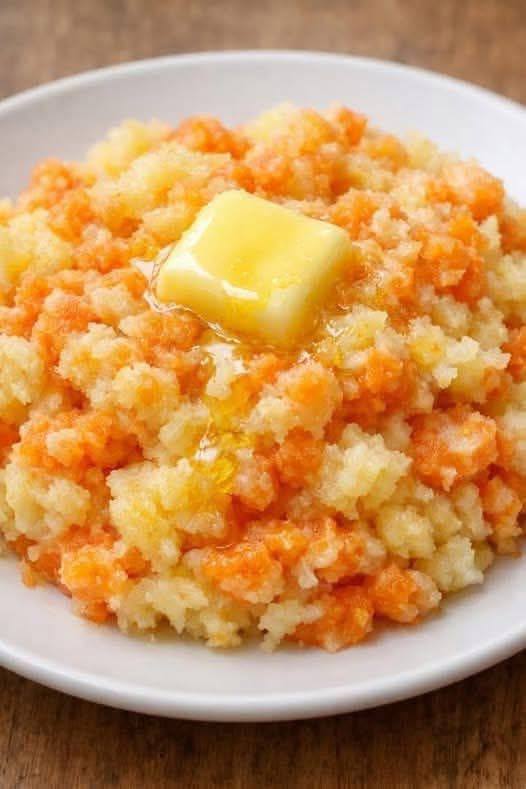
- Achieve desired consistency: Using a potato masher, begin to mash the potatoes and carrots directly in the slow cooker. Mash until you reach your desired consistency – some prefer a completely smooth mash, while others enjoy a few small chunks for texture. For an extra smooth mash, you can use an immersion blender for a minute or two, being careful not to over-blend, which can make the mash gummy.
- Taste and adjust: Taste the mash and adjust the seasoning as needed. You may want to add more salt or pepper to suit your preference. If the mash seems too thick, add a splash more warmed milk or broth until it reaches your desired creaminess.
- Serve: Transfer the Slow Cooker Carrot and Potato Mash to a serving bowl. Garnish with an extra pat of butter on top, if desired, and a sprinkle of fresh chives or parsley for a touch of color and freshness. Serve hot and enjoy!
Cooking Tips and Variations
For the best Slow Cooker Carrot and Potato Mash, always start with fresh, quality ingredients. When preparing your vegetables, ensure that both the potatoes and carrots are cut into roughly equal-sized pieces, ideally 1-inch cubes. This uniformity is key to ensuring they cook evenly and reach tenderness at the same time, preventing some pieces from being undercooked while others are mushy. If you prefer a richer, more decadent mash, consider using heavy cream instead of milk or half-and-half. For an extra layer of flavor, you can sauté a finely minced shallot or a couple of cloves of garlic in a tablespoon of butter before adding them to the slow cooker with the vegetables. This small step can dramatically enhance the aromatic profile of your mash.
Don’t be afraid to experiment with your seasonings. While salt and pepper are essential, a pinch of freshly grated nutmeg can add a wonderfully warm and subtle spice that complements both carrots and potatoes beautifully. A sprig of fresh rosemary or thyme can also be added to the slow cooker during cooking and then removed before mashing for an herbaceous note. For a tangier flavor, stir in a tablespoon of cream cheese or a dollop of sour cream when mashing. If you’re looking for a healthier option, you can substitute olive oil for some or all of the butter, and use a plant-based milk for a dairy-free version. You can also incorporate other root vegetables like parsnips or sweet potatoes for a more complex and nutrient-rich mash. Just be sure to cut them to a similar size as the other vegetables to ensure even cooking.
Achieving the perfect consistency is a matter of personal preference. If you like a rustic, chunky mash, a simple potato masher will do the trick. For a smoother, silkier texture, an immersion blender or a food mill can create a wonderfully creamy result. However, be cautious not to over-mash, especially with an immersion blender, as this can release too much starch and lead to a gummy texture. If your mash seems too thin after mashing, you can let it sit uncovered in the slow cooker on the “warm” setting for an extra 15-30 minutes to allow some of the moisture to evaporate. Conversely, if it’s too thick, simply stir in a little more warmed milk, broth, or even a splash of water until it reaches your desired consistency. Always taste and adjust your seasonings after mashing, as the flavors will concentrate and change slightly. A final pat of butter melted on top or a sprinkle of fresh herbs like chives or parsley right before serving adds a beautiful finishing touch and enhances the presentation.
Storage and Reheating
This Slow Cooker Carrot and Potato Mash is excellent for making ahead and enjoying later. To store leftovers, allow the mash to cool completely to room temperature. Once cooled, transfer it to an airtight container. It can be stored in the refrigerator for up to 3-4 days. For longer storage, you can freeze the mash. Place it in a freezer-safe airtight container or heavy-duty freezer bags, removing as much air as possible to prevent freezer burn. It can be frozen for up to 3 months. Thaw frozen mash overnight in the refrigerator before reheating.
When reheating, it’s important to restore the creamy texture and moisture. For individual portions, the microwave is a quick and convenient option. Place the mash in a microwave-safe dish, add a tablespoon or two of milk or broth, cover loosely, and heat on medium power, stirring every minute or so, until heated through. For larger quantities, reheat on the stovetop over low to medium heat. Transfer the mash to a saucepan, add a splash of milk or broth, and stir frequently until it’s hot and creamy again. Avoid high heat, as this can cause the mash to stick to the bottom of the pan or dry out. You can also reheat it in the oven; place the mash in an oven-safe dish, add a little liquid, cover with foil, and bake at 350°F (175°C) for 20-30 minutes, or until heated through, stirring halfway. Always taste and adjust seasoning after reheating, as flavors can sometimes mellow in the refrigerator or freezer.
Frequently Asked Questions
Can I use different types of potatoes for this recipe?
Yes, while Yukon Golds are recommended for their creamy texture, you can certainly use other potato varieties. Russet potatoes will yield a fluffier, drier mash, so you might need to add a little more liquid. Red potatoes can also be used, but they tend to be waxier and might not produce as smooth a mash. Just ensure they are all cut to a similar size for even cooking.
Do I have to peel the carrots and potatoes?
Peeling the carrots and potatoes is recommended for the smoothest, most uniform mash. However, if you prefer a more rustic texture and want to retain some of the fiber and nutrients found in the skins, you can leave them on. Just be sure to scrub them very well before cutting and cooking.
How can I make this mash vegan?
Making this mash vegan is very simple! Substitute the unsalted butter with a plant-based butter alternative or olive oil. For the milk or half-and-half, use an unsweetened plant-based milk such as almond milk, soy milk, or oat milk. Ensure your vegetable broth is also vegan-friendly. The rest of the ingredients are naturally plant-based.
My mash turned out too watery, what can I do?
If your mash is too watery, it likely means there was too much liquid left in the slow cooker after the vegetables cooked. To fix this, you can return the mash to the slow cooker (uncovered) and turn it to the “warm” setting for 15-30 minutes, stirring occasionally, to allow some of the excess moisture to evaporate. Another trick is to stir in a tablespoon or two of instant potato flakes, which will absorb the extra liquid and thicken the mash without significantly altering the flavor.