Instructions
- Prepare the Pork: Pat the pork roast dry with paper towels. If there’s a thick layer of fat, you can trim some of it, but leaving some will help keep the pork moist. Season all sides of the pork generously with salt, black pepper, and paprika. For an extra layer of flavor and color, you can sear the pork in 1 tablespoon of olive oil in a large skillet over medium-high heat for 2-3 minutes per side until browned. This step is optional but highly recommended.
- Whisk the Sauce: In a medium bowl, whisk together the honey, minced garlic, chicken or vegetable broth, soy sauce, and apple cider vinegar until well combined.
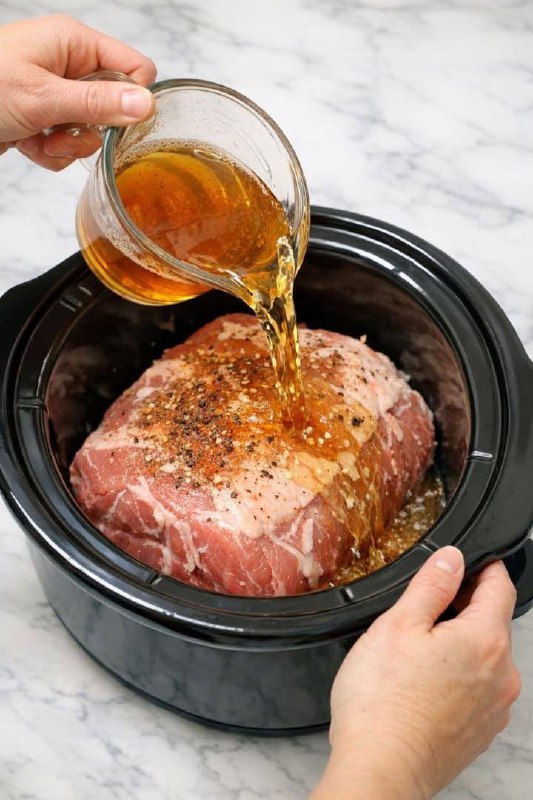
- Assemble in Slow Cooker: Carefully place the seasoned (and seared, if applicable) pork roast into the ceramic insert of your slow cooker.
- Pour Over Sauce: Pour the prepared honey-garlic liquid mixture evenly over the pork roast, ensuring it coats the meat.
- Cook: Cover the slow cooker with its lid. Cook on LOW for 6-8 hours or on HIGH for 3-4 hours, or until the pork is incredibly tender and can be easily shredded with a fork. The cooking time will vary depending on the size and thickness of your roast and your specific slow cooker.
- Shred the Pork: Once cooked, carefully remove the pork roast from the slow cooker and transfer it to a large cutting board or a shallow dish. Using two forks, shred the pork into desired pieces. Discard any excess fat.
- Thicken the Sauce (Optional): If you desire a thicker sauce, you can do so while the pork rests. In a small bowl, whisk together 2 tablespoons of cornstarch with 2 tablespoons of cold water until a smooth slurry forms. Pour the cooking liquid from the slow cooker into a saucepan. Bring to a simmer over medium heat, then gradually whisk in the cornstarch slurry. Cook, stirring constantly, for 1-2 minutes until the sauce thickens to your desired consistency.
- Combine and Serve: Return the shredded pork to the slow cooker with the thickened sauce (or directly back into the slow cooker with the unthickened sauce). Toss to coat the pork thoroughly.
- Garnish: Garnish with fresh parsley or chopped scallions and a sprinkle of sesame seeds, if using. Serve hot.
Cooking Tips and Variations
Achieving the perfect Slow Cooker Honey Garlic Pork Roast is all about understanding your ingredients and slow cooker. Here are some tips and variations to help you make this dish truly your own.
- Choosing the Right Pork Cut: For the most tender, shreddable pork, always opt for a fatty cut like pork shoulder, pork butt, or Boston butt. These cuts have a good amount of connective tissue and marbling which break down beautifully during long, slow cooking, resulting in incredibly moist and flavorful meat. Leaner cuts like pork loin can dry out in the slow cooker and are better suited for quicker cooking methods.
- Searing for Flavor: While optional, searing the pork roast on all sides in a hot skillet before adding it to the slow cooker is a game-changer. This process, known as the Maillard reaction, creates a rich, caramelized crust that adds significant depth of flavor to the finished dish. Don’t skip this step if you have an extra 10 minutes!
- Don’t Overfill Your Slow Cooker: For even cooking, ensure your slow cooker is filled between halfway and two-thirds full. An overfilled slow cooker can lead to uneven cooking, while an underfilled one might cook too quickly.
- Adjusting Sweetness and Saltiness: The honey and soy sauce contribute significantly to the dish’s flavor profile. Feel free to adjust these to your preference. If you prefer it sweeter, add a touch more honey. If you like it less salty, use low-sodium soy sauce or reduce the amount slightly. Taste the sauce after thickening and before serving to ensure it’s perfectly balanced.
- Flavor Boosters:
- Ginger: Add 1 teaspoon of grated fresh ginger to the sauce mixture for an extra layer of aromatic warmth, complementing the garlic beautifully.
- Red Pepper Flakes: For a touch of heat, sprinkle in 1/2 teaspoon of red pepper flakes with the other seasonings.
- Onion: You can add a chopped yellow onion to the bottom of the slow cooker before adding the pork for a deeper savory base.
- Sesame Oil: A drizzle of toasted sesame oil (about 1 teaspoon) stirred into the sauce at the end of cooking adds a wonderful nutty aroma.
- Crispy Edges (Broiling): If you love crispy bits of pork, after shredding, spread the pork on a baking sheet lined with foil. Drizzle with a little extra sauce and broil for 5-7 minutes, watching carefully, until the edges are slightly caramelized and crispy. This is fantastic for sandwiches or tacos.
- Serving Suggestions: This versatile shredded pork can be enjoyed in so many ways:
- Over fluffy white or brown rice.
- Alongside creamy mashed potatoes or cauliflower mash.
- In soft slider buns or crusty rolls for delicious sandwiches.
- As a filling for tacos or lettuce wraps.
- Mixed into ramen or noodle bowls.
- Served with roasted vegetables like broccoli or green beans.
- Cornstarch Slurry Tips: Always mix cornstarch with cold water before adding it to hot liquid to prevent lumps. Whisk it in gradually and allow the sauce to simmer for a couple of minutes to reach its full thickening potential.
- Monitoring Doneness: The pork is done when it shreds easily with two forks. A meat thermometer inserted into the thickest part should read at least 145°F (63°C), but for shredding, it’s usually cooked to a higher temperature around 190-205°F (88-96°C) where the collagen has fully broken down.
Storage and Reheating
This Slow Cooker Honey Garlic Pork Roast is excellent for meal prep and makes delicious leftovers. Proper storage and reheating ensure you can enjoy its savory goodness for days.
- Storage:
- Allow the shredded pork and sauce to cool completely before storing.
- Transfer the pork and any remaining sauce to an airtight container.
- Store in the refrigerator for up to 3-4 days.
- For longer storage, the pork can be frozen. Place the cooled pork and sauce in a freezer-safe bag or container. It will keep well in the freezer for up to 2-3 months. Thaw overnight in the refrigerator before reheating.
- Reheating:
- Microwave: For individual portions, place the pork and sauce in a microwave-safe dish. Cover loosely and heat on medium power for 1-2 minutes, stirring halfway through, until heated through.
- Stovetop: For larger quantities, transfer the pork and sauce to a saucepan or skillet. Heat over medium-low heat, stirring occasionally, until warmed through. If the sauce seems too thick, you can add a tablespoon or two of broth or water to loosen it.
- Oven: If reheating a large batch, you can place the pork and sauce in an oven-safe dish, cover it with foil, and bake at 300°F (150°C) for 15-20 minutes, or until thoroughly heated.
- Tips for Reheating:
- Always ensure the pork is heated to an internal temperature of at least 165°F (74°C) for food safety.
- If the pork seems a little dry after reheating, a splash of broth or water can help restore moisture.
Frequently Asked Questions
What kind of pork roast is best for shredding in the slow cooker?
The best cuts for shredding are those with good marbling and connective tissue, which break down beautifully during slow cooking to create tender, juicy meat. Pork shoulder, pork butt, or Boston butt are all excellent choices for this recipe.
Can I make this recipe ahead of time?
Absolutely! This Slow Cooker Honey Garlic Pork Roast is fantastic for meal prep. You can cook it a day or two in advance and store it in the refrigerator. The flavors often deepen overnight, making it even more delicious when reheated. It also freezes well for longer storage.
How can I make the sauce thicker?
To thicken the sauce, remove the cooked pork from the slow cooker. In a small bowl, whisk together 2 tablespoons of cornstarch with 2 tablespoons of cold water to create a slurry. Pour the cooking liquid from the slow cooker into a saucepan, bring it to a simmer over medium heat, then gradually whisk in the cornstarch slurry. Cook, stirring constantly, for 1-2 minutes until the sauce reaches your desired thickness.
What if I don’t have apple cider vinegar?
If you don’t have apple cider vinegar, you can substitute it with white wine vinegar, rice vinegar, or even fresh lemon juice. The goal is to add a touch of acidity to balance the sweetness of the honey and the richness of the pork, so any of these alternatives will work well.