Introduction
There’s nothing quite like the comforting aroma of a hearty meal simmering away, especially when it requires minimal effort on your part. This Slow Cooker “Most Requested” Hardy Dinner is exactly that – a beloved family favorite that consistently earns its title. Imagine coming home to a warm, satisfying dish that has been slowly developing rich flavors all day long, ready to be dished up with little fuss. This recipe is a true testament to the magic of slow cooking, transforming simple, wholesome ingredients into a deeply satisfying and nourishing meal.
What makes this particular slow cooker dinner so frequently requested? It’s a perfect storm of deliciousness and convenience. The slow cooking process tenderizes every component, infusing vegetables with savory goodness, while the “dump-and-go” preparation means you spend mere minutes getting it ready in the morning. It’s the ideal solution for busy weeknights, meal prepping for the week ahead, or simply when you crave a deeply flavorful, home-cooked meal without the extensive kitchen time. This dish is designed to fill you up, warm your soul, and leave everyone at the table feeling completely content.
At its core, this hardy dinner combines tender, earthy potatoes and sweet, slightly peppery cabbage with a savory broth, creating a robust and comforting flavor profile. While wonderfully satisfying on its own, its simplicity also makes it incredibly versatile, allowing for easy customization with various proteins and seasonings to suit any palate. It’s a meal that truly delivers on its promise of being both easy to make and incredibly delicious, making it a staple in countless homes.
Nutritional Information
Per serving (approximate values):
- Calories: 350
- Protein: 15g
- Carbohydrates: 45g
- Fat: 12g
- Fiber: 8g
- Sodium: 650mg
Ingredients
- 2 lbs Yukon Gold or red potatoes, peeled and cut into 1.5-inch chunks
- 1 medium head of green cabbage (about 2.5 lbs), cored and cut into 1.5-inch wedges
- 1 large yellow onion, roughly chopped
- 4 carrots, peeled and cut into 1-inch pieces
- 3 stalks celery, cut into 1-inch pieces
- 4 cups low-sodium vegetable broth (or chicken broth if adding meat)
- 2 tablespoons olive oil
- 1 tablespoon dried thyme
- 1 teaspoon dried rosemary, crushed
- 1 teaspoon smoked paprika
- 1/2 teaspoon black pepper
- 1/4 teaspoon red pepper flakes (optional, for a touch of heat)
- Salt to taste (start with 1 teaspoon, adjust at the end)
- 1/4 cup fresh parsley, chopped (for garnish)
- Optional: 1.5 lbs beef stew meat, pork shoulder, or smoked sausage, cut into 1.5-inch pieces
Instructions
- If using beef stew meat or pork shoulder, pat the meat dry with paper towels. In a large skillet, heat 1 tablespoon of olive oil over medium-high heat. Brown the meat on all sides in batches, about 2-3 minutes per side. This step is crucial for developing deep flavor, even though it’s optional. If using smoked sausage, you can skip browning.
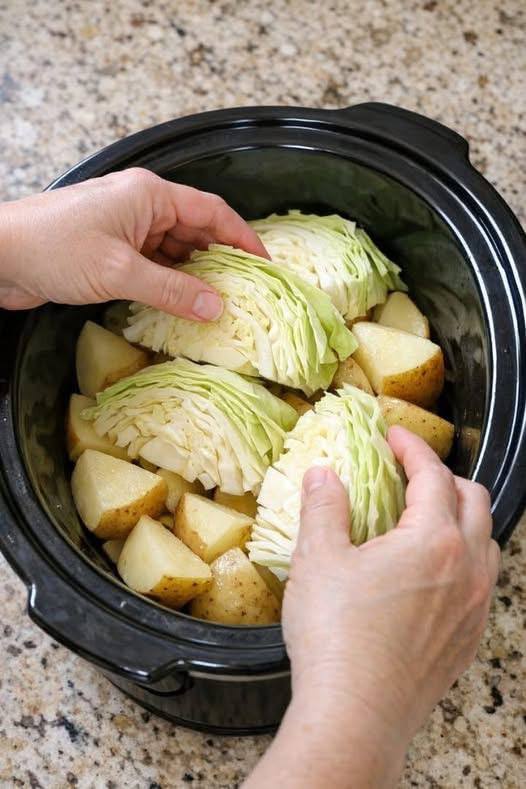
- Place the chopped potatoes, carrots, and celery at the bottom of a 6-quart or larger slow cooker. These denser vegetables take longer to cook, so they benefit from being closer to the heat source and submerged in liquid.
- If using browned meat or smoked sausage, add it on top of the potatoes, carrots, and celery layer.
- Scatter the chopped onion over the meat and vegetables.
- Arrange the cabbage wedges on top of the onion layer. Ensure they fit snugly but aren’t excessively packed.
- In a medium bowl, whisk together the vegetable or chicken broth, remaining 1 tablespoon of olive oil, dried thyme, crushed rosemary, smoked paprika, black pepper, red pepper flakes (if using), and 1 teaspoon of salt.
- Pour the seasoned broth mixture evenly over all the ingredients in the slow cooker. Ensure the liquid covers most of the vegetables, especially the potatoes.
- Cover the slow cooker with its lid.
- Cook on low for 6-8 hours or on high for 3-4 hours, or until the vegetables are fork-tender and any meat added is easily shreddable. Avoid lifting the lid frequently, as this releases heat and significantly prolongs cooking time.
- Once cooked, carefully remove the lid. Taste the broth and vegetables, and adjust seasoning with additional salt and pepper if needed. The flavors will have melded beautifully.
- Garnish each serving with fresh chopped parsley before serving.
Cooking Tips and Variations
To truly master this “most requested” dish, a few key tips and variations can elevate your slow cooker game. First and foremost, resist the urge to peek! Every time you lift the lid of your slow cooker, you lose accumulated heat, which can add 20-30 minutes to your cooking time. Trust the process, and let the slow cooker do its magic. When it comes to ingredients, using fresh, quality vegetables makes a noticeable difference. For the potatoes, waxy varieties like Yukon Golds or red potatoes hold their shape better than starchy russets during long cooking times, ensuring they are tender but not mushy. For the cabbage, choose a firm, vibrant green head.
Seasoning in layers is another secret to deep flavor. Don’t just dump all the spices in at the end. By mixing them with the broth and pouring it over the ingredients, you ensure an even distribution of flavor throughout the dish. If you’re incorporating meat, browning it first, as suggested in the instructions, creates a rich, caramelized crust that adds tremendous depth of flavor to the entire meal. This Maillard reaction is a simple step that yields significant results.
This recipe is wonderfully versatile. For a heartier meal, consider adding different proteins. Cubed beef stew meat or pork shoulder are excellent choices, becoming incredibly tender over hours of slow cooking. For a smoky flavor, sliced smoked sausage or kielbasa can be added directly without browning. If you prefer poultry, boneless, skinless chicken thighs can be added during the last 2-3 hours of cooking on low to prevent them from becoming overcooked and dry. For a vegetarian option, you can increase the amount of potatoes and cabbage, or add a can of drained and rinsed cannellini beans or chickpeas during the last hour of cooking for extra protein and fiber.
Don’t be afraid to experiment with other vegetables too. Root vegetables like parsnips or turnips can be added alongside the carrots and potatoes for a different earthy sweetness. A handful of frozen peas or corn can be stirred in during the last 30 minutes of cooking for a pop of color and freshness. For a richer, creamier broth, a splash of heavy cream or coconut milk can be stirred in just before serving. A tablespoon of apple cider vinegar added at the end can also brighten the flavors and cut through the richness, especially if you’ve used a fatty cut of meat. Finally, consider garnishes beyond parsley; a sprinkle of fresh dill or chives can add another layer of herbaceousness, and a dollop of sour cream or a grating of sharp cheddar cheese can provide a lovely finishing touch.
Storage and Reheating
This Slow Cooker “Most Requested” Hardy Dinner is not only delicious freshly made but also stores and reheats beautifully, making it an excellent candidate for meal prepping. To store leftovers, allow the dish to cool completely to room temperature (this usually takes about 1-2 hours) before transferring it to airtight containers. Prompt cooling is important to prevent bacterial growth. Once cooled, store the sealed containers in the refrigerator for up to 3-4 days. The flavors often deepen overnight, making the leftovers even more delicious.
For longer storage, this dish freezes exceptionally well. Divide the cooled leftovers into freezer-safe containers or heavy-duty freezer bags. If using bags, press out as much air as possible before sealing to prevent freezer burn. Label the containers with the date. The meal can be stored in the freezer for up to 2-3 months. Thaw frozen portions overnight in the refrigerator before reheating.
When it comes to reheating, there are several convenient options. For individual servings, the microwave is your fastest friend. Transfer a portion to a microwave-safe bowl, cover loosely, and heat on high for 2-4 minutes, stirring halfway through, until heated through. If the consistency seems too thick, you can add a splash of broth or water before reheating.
For larger quantities or a more gentle reheat, the stovetop is ideal. Transfer the leftovers to a large pot or Dutch oven over medium-low heat. Stir occasionally, adding a little extra broth or water if needed to prevent sticking and maintain moisture, until the dish is simmering and thoroughly heated. This method helps maintain the texture of the vegetables better than the microwave. Alternatively, you can reheat the entire batch in your slow cooker on the “warm” setting for 1-2 hours, or on low for about an hour, until it’s hot throughout. This is particularly convenient if you’re serving it for a second meal or a small gathering. Always ensure the food is heated to an internal temperature of 165°F (74°C) for food safety.
Frequently Asked Questions
Can I add different types of meat to this recipe?
Absolutely! This recipe is incredibly adaptable to various proteins. Beef stew meat, pork shoulder, smoked sausage (like kielbasa), or even boneless, skinless chicken thighs work wonderfully. If using beef or pork, browning it first will add significant depth of flavor. If using chicken, add it during the last 2-3 hours of cooking on low to prevent it from becoming dry and overcooked.
What if I don’t have all the listed vegetables? Can I substitute?
Yes, you can certainly substitute or add other vegetables. This recipe is very forgiving. Root vegetables like parsnips or turnips can replace some of the potatoes or carrots. Bell peppers, zucchini, or green beans can be added towards the end of the cooking cycle (the last hour or two) to prevent them from becoming too soft. Just ensure you maintain a good balance of overall volume.
My slow cooker meal seems too watery. What did I do wrong?
Slow cookers are very efficient at retaining moisture, so it’s common for dishes to produce a lot of liquid. Often, you need less liquid than you might think. If your meal is too watery, you can remove the lid for the last 30 minutes to an hour of cooking to allow some of the liquid to evaporate. Alternatively, you can remove some of the liquid and thicken it separately with a cornstarch slurry (1 tablespoon cornstarch mixed with 2 tablespoons cold water) then stir it back into the slow cooker for a thicker consistency.
How can I make this dish vegetarian or vegan?
Making this dish vegetarian or vegan is very simple! Just omit any meat and ensure you use a high-quality vegetable broth. To boost the protein content, you can add a can of drained and rinsed cannellini beans, chickpeas, or even lentils during the last hour or two of cooking. You can also increase the quantity of potatoes and cabbage, or add other hearty vegetables like mushrooms or butternut squash, to make it more filling.