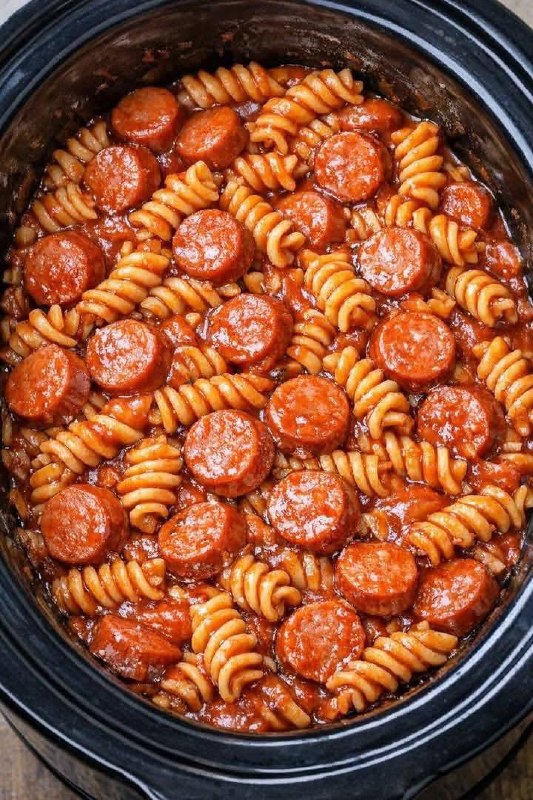
Instructions
- Prepare the Sausage: Heat the olive oil in a large skillet over medium-high heat. Add the Italian sausage pieces and cook, breaking them up with a spoon, until thoroughly browned on all sides. This step is crucial for developing deep flavor. If using pre-cooked smoked sausage, you can skip browning if preferred, but a quick sear will still enhance its taste. Once browned, transfer the sausage to your 6-quart (or larger) slow cooker.
- Sauté Aromatics: In the same skillet (no need to clean it, the leftover bits add flavor), add the chopped onion. Sauté over medium heat for 5-7 minutes, until softened and translucent. Add the minced garlic and cook for another minute until fragrant, being careful not to burn it.
- Combine in Slow Cooker: Transfer the sautéed onion and garlic to the slow cooker with the sausage.
- Add Sauces and Seasonings: Pour in the crushed tomatoes, tomato sauce, and diced tomatoes (undrained). Add the beef or chicken broth, Italian seasoning, salt, black pepper, and red pepper flakes (if using). Stir everything together until well combined.
- Slow Cook: Cover the slow cooker and cook on LOW for 6-8 hours, or on HIGH for 3-4 hours. The goal is for the flavors to meld and the sauce to thicken slightly.
- Add Pasta: About 30-45 minutes before serving (closer to 30 minutes for al dente, 45 for softer pasta), stir the uncooked rotini pasta into the slow cooker. Ensure the pasta is submerged in the sauce as much as possible.
- Finish Cooking: Re-cover the slow cooker and continue to cook on HIGH until the pasta is tender to your liking, stirring occasionally to prevent sticking.
- Stir in Cheese and Serve: Once the pasta is cooked, stir in 1/2 cup of grated Parmesan cheese until melted and smooth. Taste and adjust seasonings if necessary. Ladle the Slow Cooker Sausage & Rotini Pasta into bowls, garnish with fresh chopped basil and additional Parmesan cheese, if desired.
Cooking Tips and Variations
To ensure your Slow Cooker Sausage & Rotini Pasta turns out perfectly every time, here are some invaluable tips and exciting variations to try:
- Preventing Mushy Pasta: This is the most critical tip for slow cooker pasta. Always add the pasta during the last 30-45 minutes of cooking. Adding it too early will result in overcooked, mushy pasta that loses its texture. Different slow cooker models and pasta brands may vary, so keep an eye on it during the final cooking stage.
- Browning the Sausage: While it might seem like an extra step, browning the sausage before adding it to the slow cooker is highly recommended. This process creates a Maillard reaction, developing rich, complex flavors that you simply can’t achieve by just adding raw sausage. Don’t drain all the fat; a little extra fat adds flavor to the sauce.
- Adjusting Sauce Consistency: If your sauce appears too thick after the initial cooking time, you can thin it out by stirring in a little extra beef or chicken broth, or even a splash of water, until it reaches your desired consistency. If it’s too thin, remove the lid for the last hour of cooking to allow some moisture to evaporate, or stir in a tablespoon of cornstarch mixed with a tablespoon of cold water during the last 30 minutes of cooking.
- Spice Level: The type of Italian sausage you choose will significantly impact the spice level. Use mild Italian sausage for a gentler flavor, or hot Italian sausage and extra red pepper flakes for a spicier kick. You can also add a pinch of cayenne pepper if you like it really hot.
- Adding Vegetables: This recipe is incredibly versatile for incorporating more vegetables. Sauté chopped bell peppers (any color), mushrooms, or zucchini along with the onion and garlic, then add them to the slow cooker. A handful of fresh spinach or kale can also be stirred in during the last 15 minutes of cooking until wilted.
- Cheese Varieties: While Parmesan is classic, feel free to experiment with other cheeses. Romano or Pecorino cheese can add a sharper, saltier flavor. A blend of Italian cheeses or even a little mozzarella stirred in at the end can add a creamy dimension.
- Gluten-Free Option: To make this dish gluten-free, simply use your favorite gluten-free rotini pasta. Adjust the cooking time for the pasta as directed on the package, as gluten-free pasta can sometimes cook faster or require different hydration.
- Herb Freshness: While dried Italian seasoning is convenient, a mix of fresh herbs like oregano, thyme, and rosemary can elevate the flavor profile. Add fresh herbs during the last hour of cooking for the best aroma. Always add fresh basil at the very end as a garnish to preserve its vibrant flavor and color.
- Creamy Addition: For an even creamier sauce, stir in 1/4 to 1/2 cup of heavy cream or cream cheese during the last 15 minutes of cooking.
Storage and Reheating
Proper storage and reheating are key to enjoying your Slow Cooker Sausage & Rotini Pasta for days to come.
Once cooled, transfer any leftovers to an airtight container. It will keep well in the refrigerator for up to 3-4 days. For longer storage, this dish freezes beautifully. Place cooled pasta in freezer-safe containers or heavy-duty freezer bags. It can be frozen for up to 2-3 months. Thaw frozen pasta overnight in the refrigerator before reheating.
To reheat, the microwave is your quickest option. Place a single serving in a microwave-safe dish, cover loosely, and heat on high for 2-3 minutes, stirring halfway through, until heated through. For larger portions or to reheat from the refrigerator, you can also use a pot on the stovetop over medium-low heat, stirring frequently. Add a splash of broth or water if the sauce appears too thick or dry during reheating to restore its original consistency. Avoid overheating to prevent the pasta from becoming mushy.
Frequently Asked Questions
Can I use different types of pasta?
Yes, absolutely! While rotini is excellent for catching the sauce, you can substitute it with other short pasta shapes like penne, ziti, cavatappi, or even elbow macaroni. Just be mindful that cooking times may vary slightly depending on the pasta shape and brand, so keep an eye on it during the final cooking stage to prevent overcooking.
Do I have to brown the sausage?
While technically you don’t *have* to brown the sausage, it is highly recommended for the best flavor. Browning creates a delicious crispy exterior and develops deeper, more complex savory notes through the Maillard reaction. If you skip this step, the sausage will still cook through, but the overall flavor of the dish won’t be as rich and robust. If using pre-cooked smoked sausage, browning is less critical but still beneficial for texture and flavor.
My sauce is too thin/thick. How can I fix it?
If your sauce is too thin, try removing the lid from the slow cooker for the last hour of cooking on high to allow some of the liquid to evaporate and the sauce to thicken naturally. Alternatively, you can mix 1 tablespoon of cornstarch with 1 tablespoon of cold water to create a slurry, then stir it into the sauce during the last 30 minutes of cooking. If your sauce is too thick, simply stir in a quarter to half a cup of extra beef or chicken broth, or even water, until it reaches your desired consistency.
Can I make this dish vegetarian?
Yes, you can easily adapt this recipe to be vegetarian. Omit the Italian sausage and instead use a plant-based Italian sausage alternative, or enhance the vegetable content. Sauté extra mushrooms, bell peppers, zucchini, or eggplant with the onion and garlic. You can also add a can of drained and rinsed cannellini or kidney beans along with the tomatoes for added protein and heartiness. Ensure to use vegetable broth instead of beef or chicken broth.