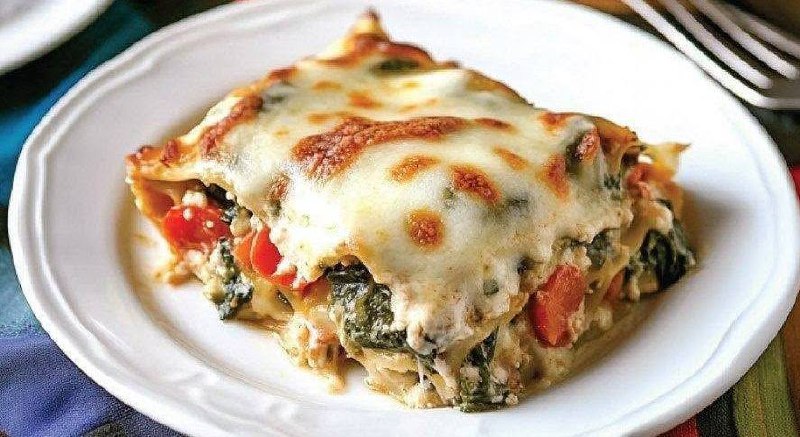
Instructions
- Prepare the Tomato Sauce: Heat olive oil in a large pot or Dutch oven over medium heat. Add chopped onion and cook until softened, about 5-7 minutes. Add minced garlic and cook for another minute until fragrant. Stir in crushed tomatoes, tomato sauce, oregano, basil, and red pepper flakes (if using). Bring to a simmer, then reduce heat to low, cover, and let it cook for at least 30 minutes, stirring occasionally. Season with salt and pepper to taste.
- Prepare the Spinach-Ricotta Filling: While the sauce simmers, ensure your thawed spinach is very well drained. You can press it between paper towels or squeeze it in a clean kitchen towel to remove as much excess water as possible. In a large bowl, combine the drained spinach, ricotta cheese, beaten egg, 1/2 cup Parmesan cheese, fresh parsley, and nutmeg. Mix until well combined. Season with salt and pepper.
- Preheat Oven and Prepare Noodles: Preheat your oven to 375°F (190°C). If using regular lasagna noodles, cook them according to package directions until al dente. Drain well and lay them flat on parchment paper or a clean surface to prevent sticking. If using oven-ready noodles, no pre-cooking is necessary.
- Assemble the Lasagna: Spread a thin layer of tomato sauce (about 1 cup) on the bottom of a 9×13-inch baking dish.
- Arrange 3-4 lasagna noodles over the sauce, slightly overlapping if necessary.
- Spread half of the spinach-ricotta mixture evenly over the noodles.
- Sprinkle about 1.5 cups of shredded mozzarella cheese over the ricotta layer.
- Spoon another 1.5 cups of tomato sauce over the mozzarella.
- Repeat the layers: noodles, remaining spinach-ricotta mixture, 1.5 cups mozzarella, and another 1.5 cups tomato sauce.
- Place a final layer of noodles on top. Cover with the remaining tomato sauce.
- Sprinkle the remaining 1 cup of mozzarella cheese and an extra dusting of Parmesan cheese over the top.
- Bake the Lasagna: Cover the baking dish tightly with aluminum foil (you can spray the underside of the foil with cooking spray to prevent cheese from sticking). Bake for 40 minutes.
- Brown the Cheese: Remove the foil and bake for an additional 15-20 minutes, or until the cheese is melted, bubbly, and lightly browned. If you prefer a darker, crispier top, you can briefly broil for the last 2-3 minutes, watching carefully to prevent burning.
- Rest and Serve: Let the lasagna rest for 10-15 minutes before slicing and serving. This allows the layers to set, making for cleaner cuts.
Cooking Tips and Variations
To prevent your lasagna from becoming watery, the most crucial step is to thoroughly drain your cooked spinach. Squeeze out every last drop of moisture using a clean kitchen towel or paper towels. Additionally, consider draining any excess liquid from your ricotta cheese by placing it in a fine-mesh sieve over a bowl for 15-20 minutes before mixing. For perfectly browned cheese, ensure you’re using a good quality low-moisture mozzarella. After the initial covered baking, remove the foil and let it bake uncovered for the remaining time. If it’s not browning to your liking, a quick stint under the broiler (watching it constantly!) will give you that beautiful golden crust.
For an extra layer of flavor in your ricotta mixture, consider adding a pinch of garlic powder or onion powder. Fresh herbs like basil and oregano can also be finely chopped and mixed in. If you want to add more vegetables, sautéed mushrooms, finely diced zucchini, or bell peppers can be folded into the spinach-ricotta mixture or layered directly into the lasagna. For a richer sauce, a splash of red wine can be added after sautéing the onions and before adding the tomatoes. If you prefer a creamier sauce, a small amount of heavy cream can be stirred into the tomato sauce towards the end of its simmering time.
Storage and Reheating
Leftover Spinach & Ricotta Lasagna can be stored in an airtight container in the refrigerator for up to 3-4 days. To freeze, allow the baked lasagna to cool completely. You can freeze individual portions or the entire dish. Wrap tightly in plastic wrap and then aluminum foil. It can be stored in the freezer for up to 2-3 months. When reheating, thaw frozen lasagna in the refrigerator overnight. To reheat, cover the lasagna with foil and bake in a preheated oven at 350°F (175°C) for 20-30 minutes, or until heated through. For individual portions, you can also microwave them, though the texture might be slightly softer. If you prefer a crispy top, remove the foil for the last few minutes of oven reheating.
Frequently Asked Questions
Can I make this lasagna ahead of time?
Absolutely! Lasagna is an excellent make-ahead meal. You can assemble the entire lasagna, cover it tightly with plastic wrap and then foil, and refrigerate it for up to 24 hours before baking. When ready to bake, add an extra 10-15 minutes to the covered baking time to account for starting from a cold temperature.
What kind of lasagna noodles should I use?
You have options! Oven-ready (no-boil) lasagna noodles are a fantastic time-saver and work wonderfully in this recipe. If you prefer traditional noodles, cook them al dente according to package directions before assembling. Be careful not to overcook them, as they will continue to soften during baking.
How do I prevent the lasagna from falling apart when I cut it?
The key to neat slices is patience! It’s crucial to let the lasagna rest for at least 10-15 minutes after it comes out of the oven. This allows the cheeses and sauces to set, making the layers much more stable and easier to cut cleanly. If you cut it too soon, the filling will likely ooze out.
Can I add meat to this recipe?
While this recipe is specifically for a vegetarian Spinach & Ricotta Lasagna, you can certainly adapt it. Cooked ground beef, Italian sausage, or ground turkey can be browned and drained, then stirred into the tomato sauce or layered directly into the lasagna for a heartier, meat-filled version.