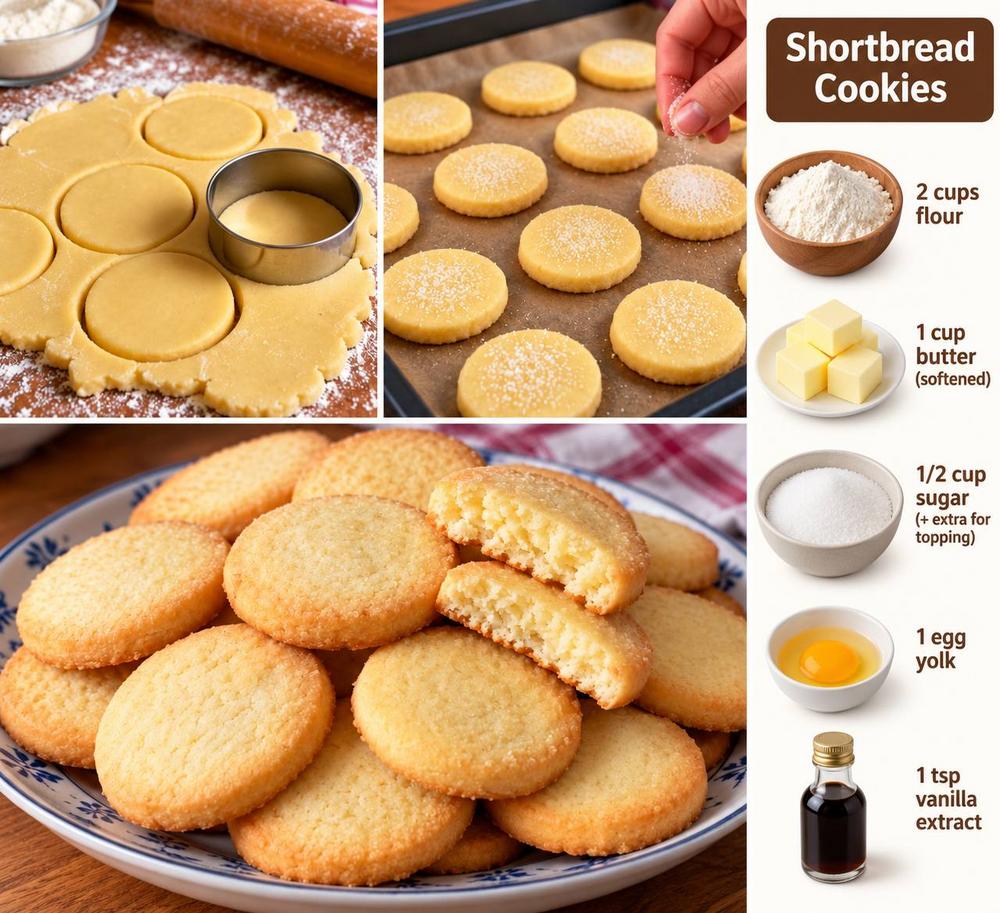
Introduction
There are few treats that evoke such a comforting sense of nostalgia and simple elegance as Classic Buttery Shortbread Cookies. These golden discs of pure deliciousness are a testament to the idea that sometimes, the most profound flavors come from the fewest, highest-quality ingredients. With their signature melt-in-your-mouth texture and rich, buttery aroma, shortbread cookies are more than just a dessert; they’re an experience, a gentle reminder of cozy moments and timeless traditions.
Hailing from the picturesque landscapes of Scotland, shortbread has a rich heritage, dating back centuries. Originally a medieval biscuit bread, it evolved into the beloved cookie we know today, celebrated for its exquisite simplicity. The magic lies in its fundamental trio: butter, sugar, and flour, often enhanced with just a touch of vanilla and an egg yolk for unparalleled richness. This recipe honors that tradition, offering an easy-to-follow guide to creating shortbread that is wonderfully crisp yet tender, profoundly buttery, and utterly irresistible. Whether you’re a seasoned baker or just starting your culinary journey, this classic recipe promises perfect results every time, making it a versatile staple for any occasion, from an afternoon tea to a festive holiday gathering.
What makes our Classic Buttery Shortbread Cookies truly special is their unwavering commitment to tradition and quality. We’ve refined the proportions to ensure that perfect balance of sweetness and butteriness, resulting in a cookie that is robust enough to hold its shape but delicate enough to dissolve beautifully on your tongue. The process is straightforward, emphasizing careful ingredient selection and precise technique, ensuring that each cookie emerges from the oven with that coveted light golden hue and a subtle sugary sparkle. Prepare to fall in love with the pure, unadulterated joy of homemade shortbread – a truly classic treat that never goes out of style.
Nutritional Information
Per serving (approximate values for 1 cookie, assuming 24 cookies per batch):
- Calories: 150
- Protein: 1g
- Carbohydrates: 15g
- Fat: 10g
- Fiber: 0g
- Sodium: 5mg
Ingredients
- 2 cups all-purpose flour
- 1 cup (2 sticks) unsalted butter, softened
- 1/2 cup granulated sugar, plus extra for sprinkling
- 1 large egg yolk
- 1 teaspoon vanilla extract
Instructions
- Begin by preparing your workspace and ingredients. Ensure your unsalted butter is properly softened to room temperature. This is crucial for achieving a smooth, well-combined dough. Line a large baking sheet with parchment paper and set aside.
- In a large mixing bowl, using an electric mixer on medium speed, cream together the softened butter and 1/2 cup granulated sugar. Beat until the mixture is light, fluffy, and pale in color, typically 3-5 minutes. Scrape down the sides of the bowl as needed to ensure everything is thoroughly incorporated.
- Add the egg yolk and vanilla extract to the creamed butter and sugar mixture. Continue to beat on medium speed until well combined, about 1-2 minutes. The mixture should be smooth and fragrant.
- Gradually add the all-purpose flour to the wet ingredients. Start by adding about half of the flour, mixing on low speed until just combined. Then, add the remaining flour, continuing to mix on low speed until the dough just comes together. Be careful not to overmix; overmixing can develop the gluten in the flour, leading to tough shortbread. The dough should be soft and pliable but not sticky.
- Turn the dough out onto a lightly floured surface. Gently gather it into a cohesive ball. Flatten the dough into a disc, wrap it tightly in plastic wrap, and refrigerate for at least 30 minutes. Chilling the dough is a critical step as it helps prevent the cookies from spreading excessively during baking and makes the dough easier to handle and cut.
- Once the dough is adequately chilled, unwrap it and place it on a lightly floured surface or between two sheets of parchment paper. Using a rolling pin, roll the dough out to an even thickness of about 1/4 inch. Aim for consistent thickness across the entire sheet of dough to ensure uniform baking.
- Using a 2-inch round cookie cutter, cut out the shortbread cookies. Carefully transfer the cut cookies to the prepared baking sheet, leaving about 1 inch of space between each cookie. Gather any dough scraps, gently re-roll them, and cut out more cookies until all the dough is used.
- For a classic shortbread appearance, you can gently prick the top of each cookie a few times with the tines of a fork. This not only adds to the traditional aesthetic but can also help prevent puffing during baking.
- Sprinkle the tops of the unbaked cookies generously with additional granulated sugar. This adds a delightful sparkle and a slight crunch to the finished shortbread.
- Preheat your oven to 325°F (160°C).
- Bake the cookies in the preheated oven for 18-22 minutes, or until the edges are lightly golden brown and the centers appear set. Shortbread should not be deeply browned; a pale golden color is ideal to maintain its tender texture.
- Once baked, remove the baking sheet from the oven and let the cookies cool on the sheet for about 5-10 minutes. This allows them to firm up before handling.
- After partial cooling, carefully transfer the shortbread cookies to a wire rack to cool completely. They will become crispier as they cool.
- Serve your Classic Buttery Shortbread Cookies with a cup of tea or coffee, or package them beautifully for a thoughtful gift.
Cooking Tips and Variations
Achieving the perfect shortbread is all about attention to detail and embracing the simplicity of the ingredients. Here are some tips and delightful variations to elevate your baking experience.
Tips for Best Results:
- Butter Quality is Key: Since butter is such a prominent flavor in shortbread, use the best quality unsalted butter you can find. European-style butters often have a higher fat content, which can contribute to a richer flavor and more tender crumb.
- Proper Butter Softening: Don’t microwave your butter to soften it. Let it come to room temperature naturally. It should be soft enough to indent with your finger without melting. Butter that is too warm will make a greasy dough, while butter that is too cold won’t cream properly.
- Don’t Overmix the Flour: Once the flour is added, mix only until the dough just comes together. Overmixing develops gluten, which can make your shortbread tough instead of tender and crumbly.
- Chilling is Non-Negotiable: Do not skip the chilling step! It’s vital for preventing the cookies from spreading too much in the oven and for making the dough easier to handle and cut cleanly. If your kitchen is warm, you might even consider chilling the cut cookies on the baking sheet for another 10-15 minutes before baking.
- Even Thickness: When rolling out the dough, strive for an even 1/4-inch thickness. This ensures that all your cookies bake uniformly, preventing some from being undercooked while others are overbaked.
- Gentle Baking: Shortbread is best baked at a moderate temperature. You’re looking for a light golden edge, not a deep brown. A gentle bake preserves the tender texture and buttery flavor.
- Cooling Patience: Allow the cookies to cool on the baking sheet for a few minutes before transferring them to a wire rack. They are delicate when warm and need time to firm up.
Recipe Variations:
- Citrus Zest: Add 1-2 teaspoons of finely grated lemon, orange, or lime zest to the butter and sugar mixture. The citrus oils infuse the shortbread with a bright, aromatic flavor that complements the butter beautifully.
- Spiced Shortbread: Incorporate 1/2 teaspoon of ground cinnamon, cardamom, or a pinch of nutmeg with the flour for a warm, comforting twist. These are especially lovely for autumn or winter holidays.
- Chocolate Dipped: Once the cookies are completely cooled, melt your favorite chocolate (dark, milk, or white) and dip half of each cookie into the melted chocolate. Place them on parchment paper until the chocolate sets. A sprinkle of sea salt on the chocolate is a delightful addition.
- Nutty Shortbread: Finely chop 1/4 cup of toasted pecans, walnuts, or almonds and gently fold them into the dough along with the flour. This adds a lovely crunch and nutty depth.
- Lavender Shortbread: For an elegant and aromatic variation, add 1-2 teaspoons of culinary lavender buds to the butter and sugar mixture. Ensure the lavender is specifically for culinary use.
- Herbaceous Shortbread: A subtle hint of rosemary or thyme can be surprisingly delicious. Finely chop 1/2 teaspoon of fresh rosemary or thyme and add it with the flour. This pairs wonderfully with citrus zest.
- Demerara Sugar Topping: Instead of granulated sugar, sprinkle the unbaked cookies with demerara sugar for a larger crystal crunch and a slightly caramelized flavor.
Storage and Reheating
Proper storage is essential to maintain the crisp texture and fresh flavor of your Classic Buttery Shortbread Cookies. They are known for their excellent shelf life, making them perfect for preparing in advance or for gifting.
Storage:
- At Room Temperature: Once completely cooled, store shortbread cookies in an airtight container at room temperature. A cookie tin or a sealed plastic container works perfectly. Layer them with parchment paper if you stack them to prevent sticking. Stored this way, shortbread will stay fresh and crisp for up to 1-2 weeks.
- Freezing Dough: You can prepare the dough in advance and freeze it. Wrap the disc of dough tightly in plastic wrap, then place it in a freezer-safe bag. It can be frozen for up to 3 months. Thaw in the refrigerator overnight before rolling and baking.
- Freezing Baked Cookies: Baked and completely cooled shortbread cookies also freeze beautifully. Place them in a single layer on a baking sheet and freeze until solid. Then, transfer the frozen cookies to an airtight freezer-safe container or bag, separating layers with parchment paper. They can be frozen for up to 2-3 months.
Reheating:
Shortbread cookies are typically enjoyed at room temperature, so reheating is generally not necessary. However, if you prefer a warm cookie or if your cookies have softened slightly due to humidity, you can gently crisp them up.
- Oven Method: Preheat your oven to 275°F (135°C). Place the cookies in a single layer on a baking sheet. Heat for 5-7 minutes, or until just warmed through and re-crisped. Be careful not to overbake, as they can burn quickly. Allow them to cool for a few minutes on the baking sheet before serving.
- Toaster Oven Method: For just a few cookies, a toaster oven set to a low temperature (around 250-275°F) for 3-5 minutes can also work well. Watch them closely.
Avoid microwaving shortbread, as it can make them soft or chewy rather than crisp.
Frequently Asked Questions
What is the secret to melt-in-your-mouth shortbread?
The secret lies in a few key factors: using high-quality butter, ensuring your butter is at the correct softened temperature (not melted), not overmixing the dough once the flour is added (to avoid gluten development), and adequately chilling the dough before baking. The high butter-to-flour ratio is also crucial for that signature tender, crumbly texture.
Can I make shortbread without an egg yolk?
While the egg yolk adds richness and a slight binding quality that contributes to the tender crumb, you can omit it. If you do, you might need to add an extra tablespoon or two of softened butter or a tiny splash of milk to help the dough come together, as it might be a bit more crumbly. The texture might be slightly different, but it will still be delicious shortbread.
Why did my shortbread spread too much during baking?
Several factors can cause shortbread to spread. The most common reasons are using butter that is too warm or melted, not chilling the dough sufficiently (or at all) before baking, or baking at an oven temperature that is too high. Ensure your butter is softened, not melted, and always chill your dough for at least 30 minutes, or even longer in a warm environment.
How do I prevent my shortbread from being tough?
The primary cause of tough shortbread is overmixing the dough, especially after the flour has been added. Overmixing develops the gluten in the flour, which leads to a chewy, tough texture instead of a delicate, crumbly one. Mix only until the flour is just incorporated and the dough comes together. Using softened butter also helps incorporate ingredients quickly, reducing the need for extensive mixing.