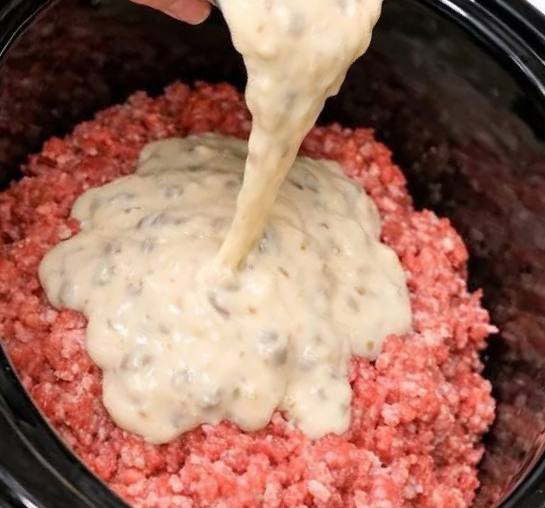
Instructions
- In a large skillet, brown the ground beef over medium-high heat. Break up the beef with a spoon as it cooks. Once fully browned, drain off any excess grease.
- Add the chopped onion to the skillet with the browned ground beef and cook until softened, about 5-7 minutes.
- Stir in the minced garlic and cook for another minute until fragrant. Remove the skillet from the heat.
- In a large bowl, combine the browned ground beef and onion mixture, cream of mushroom soup, cream of chicken soup, undrained diced tomatoes, tomato sauce, milk, Italian seasoning, salt, and black pepper. Mix thoroughly until all ingredients are well combined.
- If using, stir in the sliced fresh mushrooms into the mixture.
- Lightly grease the inside of a 6-quart or larger slow cooker.
- Pour about half of the beef and sauce mixture into the bottom of the slow cooker.
- Sprinkle half of the uncooked elbow macaroni evenly over the beef mixture.
- Sprinkle 1 cup of the shredded sharp cheddar cheese over the macaroni.
- Pour the remaining beef and sauce mixture over the cheese layer.
- Top with the remaining uncooked elbow macaroni.
- Cover the slow cooker and cook on LOW for 3-4 hours or on HIGH for 2-2.5 hours, or until the pasta is tender. The exact cooking time may vary depending on your slow cooker.
- During the last 30 minutes of cooking, stir the casserole gently to ensure the pasta is evenly cooked and coated in sauce.
- After stirring, sprinkle the remaining 1 cup of shredded sharp cheddar cheese over the top of the casserole.
- Cover again and continue to cook for another 15-30 minutes, or until the cheese is melted and bubbly.
- Once cooked, turn off the slow cooker and let the casserole rest for 10-15 minutes before serving. This allows the sauce to thicken slightly.
- Garnish with fresh parsley, if desired, before serving hot.
Cooking Tips and Variations
Achieving the perfect Amish Yumasetti Casserole in your slow cooker is all about a few key tips and knowing how to customize it to your taste. First and foremost, don’t skip browning the ground beef. This crucial step develops a rich, savory base of flavor that you simply can’t achieve by adding raw beef directly to the slow cooker. Make sure to drain off all the excess grease after browning to prevent your casserole from becoming oily. The sautéed onions and garlic also contribute significantly to the depth of flavor, so give them enough time to soften and become fragrant before combining with the other ingredients. When it comes to the pasta, using uncooked macaroni or shells is key for this slow cooker method. The pasta will absorb the flavorful sauce as it cooks, becoming tender and infused with taste. However, slow cookers can vary, so it’s a good idea to check for doneness around the 2.5-hour mark on low or 1.5 hours on high, especially the first time you make it. You want the pasta to be tender but not mushy.
Another important tip is to resist the urge to constantly lift the lid of your slow cooker. Every time you open it, you release heat and extend the cooking time significantly. Try to only open it when you need to stir or add the final cheese layer. For a thicker sauce, if you find your casserole to be a bit too loose at the end, you can create a slurry by mixing 1 tablespoon of cornstarch with 2 tablespoons of cold water. Stir this into the hot casserole during the last 30 minutes of cooking, and it will help to thicken the sauce. Ensure you stir thoroughly to prevent lumps. Lastly, allowing the casserole to rest for 10-15 minutes after cooking, with the lid off or slightly ajar, helps the sauce to set and makes for easier serving.
This Yumasetti Casserole is wonderfully versatile, offering plenty of room for creative variations. If you’re not a fan of ground beef, you can easily substitute it with ground turkey or a combination of ground pork and beef for a different flavor profile. For an extra layer of flavor and texture, consider adding other vegetables. Sautéed bell peppers (red, green, or yellow), shredded carrots, or even frozen peas (added during the last 30 minutes of cooking) would be delightful additions. If you love a bit of heat, a pinch of red pepper flakes stirred into the sauce can provide a gentle kick. You can also experiment with different cheeses. While sharp cheddar is classic, Monterey Jack, Colby, or a blend of Italian cheeses would also melt beautifully and offer a unique taste. For a richer, tangier sauce, try adding a tablespoon or two of Worcestershire sauce or a splash of red wine during the browning stage of the beef. If you prefer a more pronounced tomato flavor, you can increase the amount of tomato sauce by half a can or add a tablespoon of tomato paste. These simple variations ensure that this comforting Amish Yumasetti Casserole can become a personalized family favorite.
Storage and Reheating
Proper storage and reheating are key to enjoying your Amish Yumasetti Casserole long after the initial meal. To store leftovers, allow the casserole to cool completely to room temperature first. This is important to prevent bacterial growth and to maintain the quality of the food. Once cooled, transfer the casserole into an airtight container. It will keep well in the refrigerator for up to 3-4 days. For longer storage, this casserole freezes beautifully. Divide the cooled casserole into individual portions or larger freezer-safe containers. Make sure there’s minimal air space in the container to prevent freezer burn. It can be stored in the freezer for up to 2-3 months. When freezing, you might notice a slight change in the pasta texture upon reheating, as some starches can break down, but the flavor will remain excellent.
When you’re ready to enjoy your leftovers, there are several effective reheating methods. For refrigerated portions, the microwave is often the quickest option. Place a single serving in a microwave-safe dish, cover it loosely with a lid or microwave-safe plastic wrap (leaving a small vent), and heat on high for 2-3 minutes, stirring halfway through, until thoroughly heated. If reheating a larger portion from the refrigerator, the oven is a great choice. Preheat your oven to 350°F (175°C). Transfer the casserole to an oven-safe dish, cover it with aluminum foil to prevent drying out, and bake for 20-30 minutes, or until heated through. You can remove the foil for the last 5-10 minutes if you like a slightly crisper top.
For reheating from frozen, it’s best to thaw the casserole in the refrigerator overnight before reheating, especially if using the microwave or stovetop. If you’re reheating directly from frozen, the oven is the most reliable method. Preheat the oven to 350°F (175°C). Place the frozen casserole (in an oven-safe dish, covered with foil) directly into the oven. It will likely take 45-60 minutes, or even longer for a very large portion, to heat through. Check for internal temperature to ensure it’s piping hot. You can also reheat smaller, thawed portions on the stovetop in a saucepan over medium-low heat, stirring occasionally, until hot. Add a splash of milk or broth if the sauce seems too thick. Regardless of the method, ensure the casserole reaches an internal temperature of 165°F (74°C) for food safety.
Frequently Asked Questions
Can I use a different type of pasta?
Absolutely! While elbow macaroni or medium shells are traditional for this type of casserole, you can certainly experiment with other small to medium-sized pasta shapes. Penne, rotini, or even small ziti would work well. Just ensure they are uncooked before adding them to the slow cooker, as they will cook in the sauce. Keep an eye on the cooking time, as different pasta shapes might cook at slightly different rates.
What if my slow cooker casserole seems too watery?
If your casserole appears too watery at the end of the cooking time, there are a couple of solutions. One common trick is to remove the lid for the last 30-60 minutes of cooking, which allows some of the moisture to evaporate. Alternatively, you can create a cornstarch slurry: whisk together 1 tablespoon of cornstarch with 2 tablespoons of cold water until smooth. Stir this slurry into the hot casserole, cover, and cook for another 15-30 minutes on high or low until the sauce thickens. Avoid using flour for thickening directly in the slow cooker, as it can sometimes result in a raw flour taste if not cooked down properly.
Can I make this casserole ahead of time?
Yes, you can certainly do some prep work in advance. You can brown the ground beef and onions a day or two before, cool them completely, and store them in an airtight container in the refrigerator. You can also mix all the sauce ingredients ahead of time and keep them refrigerated. However, it’s best to add the uncooked pasta just before you start the slow cooking process on the day you plan to serve it. Adding the pasta too early can cause it to absorb too much liquid and become mushy before cooking even begins.
Is it possible to make this casserole vegetarian?
While this specific recipe is meat-based, you could adapt it to be vegetarian. Instead of ground beef, you could use a plant-based ground meat substitute, or a combination of lentils and finely chopped mushrooms. Ensure you brown the vegetarian substitutes and sauté the vegetables as you would the meat. You would also need to substitute the cream of chicken soup with an additional can of cream of mushroom soup or a vegetarian cream of celery soup. The cooking times for the pasta should remain similar, but you might need to adjust liquid slightly depending on the moisture content of your vegetarian protein.