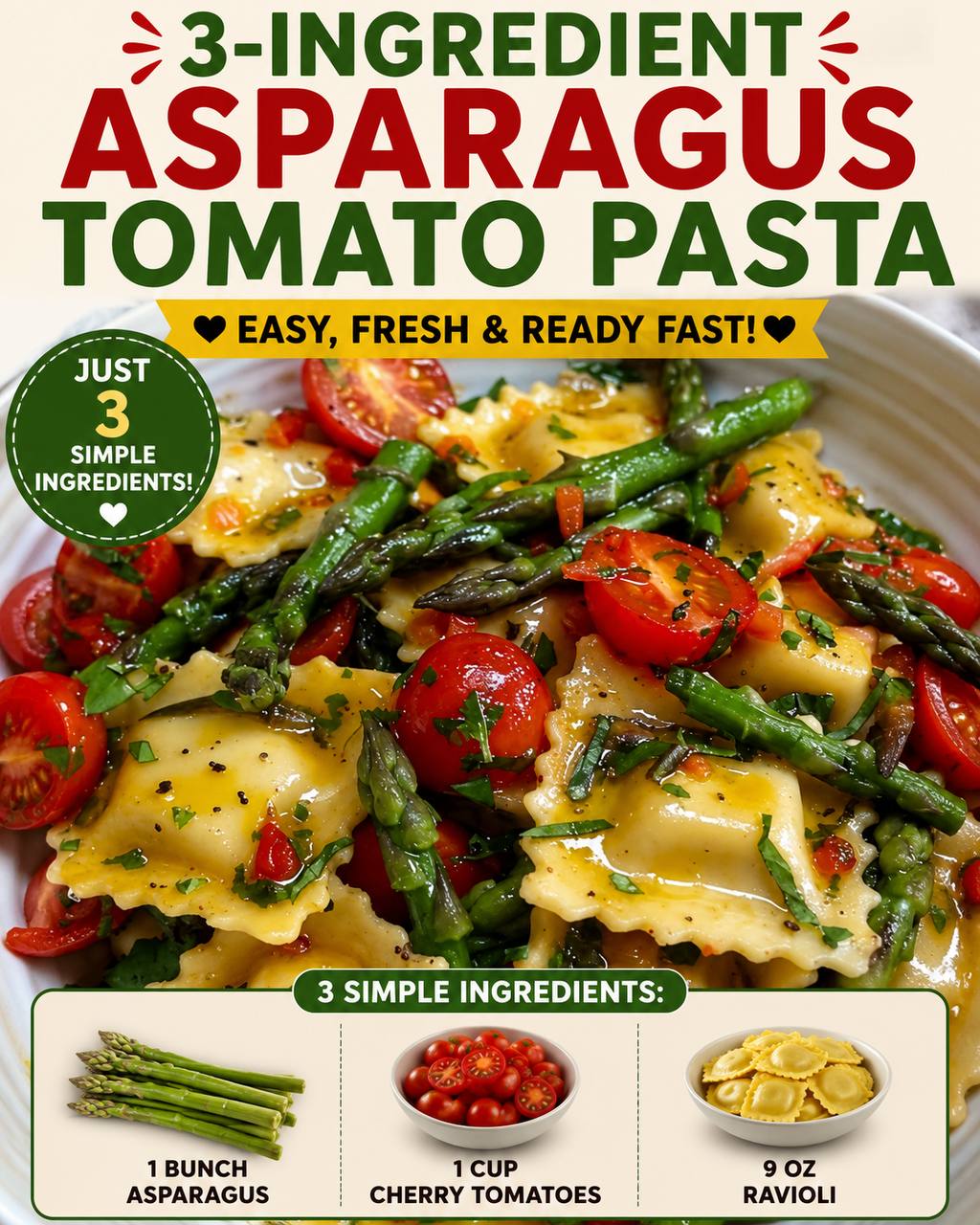
Instructions
- Bring a large pot of generously salted water to a rolling boil.
- While the water heats, prepare your vegetables. Wash the asparagus thoroughly and snap off the woody ends (they will naturally break where the tender part begins). Cut the remaining asparagus into 1-inch pieces. Wash the cherry tomatoes and halve them.
- Once the water is boiling, add the ravioli to the pot. Cook according to package directions, usually 3-5 minutes for fresh ravioli or 5-7 minutes for frozen, until al dente. While the ravioli cooks, proceed to the next step.
- In a large skillet or frying pan, heat 2 tablespoons of olive oil over medium heat.
- Add the chopped asparagus to the hot skillet. Sauté for 3-5 minutes, stirring occasionally, until the asparagus is tender-crisp and bright green. You want it cooked through but still with a slight bite.
- Add the halved cherry tomatoes to the skillet with the asparagus. Cook for another 3-4 minutes, stirring gently, until the tomatoes begin to soften and burst, releasing their juices. Season generously with salt and freshly ground black pepper.
- Before draining the ravioli, reserve about 1/2 cup of the starchy pasta water. This will be used to create a light sauce and help emulsify the dish.
- Drain the cooked ravioli and immediately add it to the skillet with the asparagus and tomatoes.
- Pour about 1/4 cup of the reserved pasta water into the skillet. Toss everything gently to combine, allowing the pasta water and vegetable juices to create a light, glossy sauce that coats the ravioli and vegetables. If the sauce seems too thick, add a little more pasta water, a tablespoon at a time, until it reaches your desired consistency.
- Taste and adjust seasoning as needed. Add more salt or pepper if desired.
- Serve immediately, garnished with fresh chopped parsley or basil and a sprinkle of red pepper flakes, if using. A final drizzle of good quality olive oil can also enhance the flavors.
Cooking Tips and Variations
To truly elevate this simple dish, start with the freshest, highest-quality ingredients you can find. Since there are only three main components, their individual flavors really shine through. Look for crisp, bright green asparagus and firm, juicy cherry tomatoes. When cooking the asparagus, aim for tender-crisp; you want it cooked but still with a slight bite, not mushy. Overcooked asparagus loses its vibrant color and pleasant texture. Similarly, cook the ravioli just until al dente according to package directions. Fresh ravioli cooks very quickly, so keep a close eye on it to prevent it from becoming waterlogged or falling apart. The reserved pasta water is a secret weapon here; it contains starch that helps to bind the sauce and create a silky texture, so don’t skip this step!
While this recipe is fantastic as is, it’s also a wonderful canvas for customization. For a different texture or flavor profile, consider swapping the cheese ravioli for other pre-filled pasta like spinach and ricotta tortellini or even small stuffed shells. If you’re out of cherry tomatoes, grape tomatoes work just as well, or you can dice a larger ripe tomato. To introduce more vegetables, though it won’t strictly be a 3-ingredient dish anymore, try adding fresh spinach that wilts into the hot pasta, or thinly sliced bell peppers for extra crunch and sweetness. For an extra boost of flavor, sauté minced garlic and finely diced shallots in the olive oil before adding the asparagus. Fresh herbs like basil, oregano, or chives can add a delightful aromatic touch when sprinkled over the finished dish. A squeeze of fresh lemon juice or a sprinkle of lemon zest at the end can brighten all the flavors. For a cheesy finish, a generous grating of Parmesan or Pecorino Romano cheese is always welcome. If you enjoy a bit of heat, red pepper flakes can be added to the skillet with the tomatoes or sprinkled on top. A splash of dry white wine or vegetable broth can also be added to the skillet with the tomatoes to deglaze the pan and create a more complex sauce.
Storage and Reheating
This 3-Ingredient Asparagus Tomato Pasta is best enjoyed fresh, right after it’s made, when the asparagus is perfectly tender-crisp and the ravioli is al dente. However, if you find yourself with leftovers, they can be stored in an airtight container in the refrigerator for up to 2-3 days. The texture of the asparagus might soften slightly, and the ravioli might become a bit less firm upon reheating, but the flavors will still be delicious.
To reheat, the best method is to gently warm the pasta in a skillet over medium-low heat. You may want to add a splash of water or vegetable broth (about 1-2 tablespoons per serving) to help rehydrate the sauce and prevent the pasta from sticking or drying out. Stir occasionally until heated through. You can also reheat individual portions in the microwave. Place the pasta in a microwave-safe dish, add a tablespoon of water or broth, cover loosely, and microwave on medium power in 30-60 second intervals, stirring in between, until hot. Avoid overheating, as this can make the ravioli rubbery and the asparagus mushy. A fresh sprinkle of herbs or a drizzle of olive oil after reheating can help revive the dish’s freshness.
Frequently Asked Questions
What kind of ravioli should I use?
While cheese ravioli is a classic choice and works wonderfully in this recipe, feel free to use any pre-filled ravioli you prefer. Spinach and ricotta, mushroom, or even a meat-filled ravioli would be delicious variations. Fresh ravioli (found in the refrigerated section) cooks faster and often has a more delicate texture than frozen.
Can I use canned tomatoes instead of fresh cherry tomatoes?
While fresh cherry tomatoes are highly recommended for their burst of sweetness and vibrant texture, you can substitute with a small can (14.5 ounces) of diced tomatoes, drained, if absolutely necessary. However, the fresh tomatoes contribute significantly to the dish’s “fresh” appeal and overall flavor profile, so they are the preferred choice.
How can I make this dish more filling or add protein?
To make this dish more substantial, you can easily add a source of protein. Grilled or pan-seared chicken breast, shrimp, or even crumbled Italian sausage (cooked separately) would be excellent additions. For a vegetarian protein boost, consider adding canned chickpeas or white beans, rinsed and drained, to the skillet with the tomatoes, or serving with a side of crusty bread and a sprinkle of Parmesan cheese.