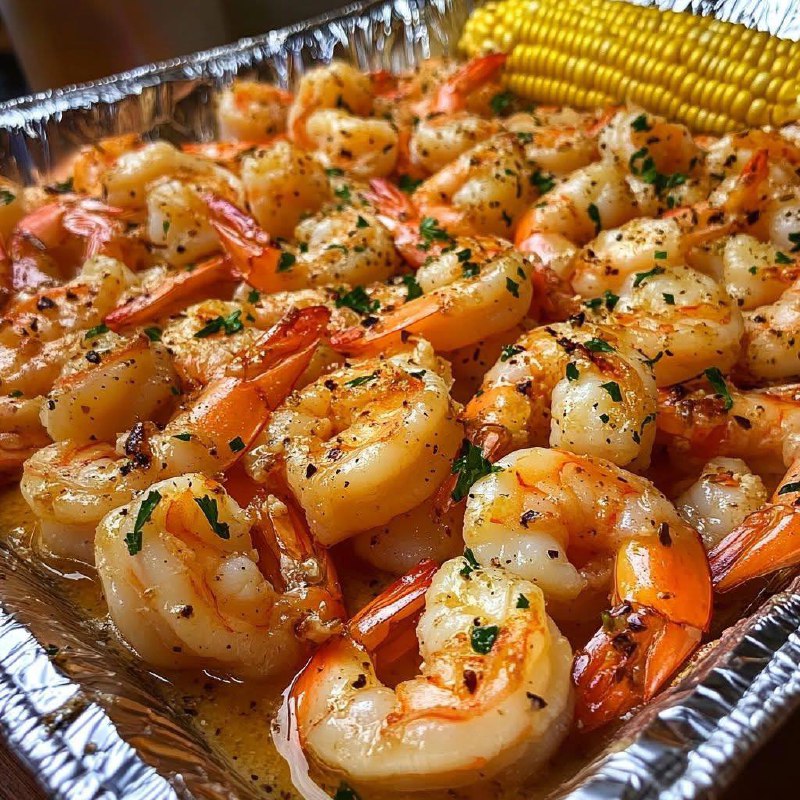
Introduction
Get ready to ignite your taste buds with a dish that brings the vibrant, spicy spirit of Louisiana right into your kitchen: Baked Cajun Shrimp! This recipe is a true weeknight wonder, delivering an explosion of flavor with minimal effort and even less cleanup. Imagine plump, succulent shrimp coated in a rich, aromatic blend of Cajun spices, baked to perfection in a buttery sauce, and ready to devour in under 20 minutes. It’s the kind of dish that makes you feel like you’ve spent hours in the kitchen, when in reality, it’s delightfully simple.
Cajun cuisine is celebrated for its bold flavors, often featuring a symphony of paprika, cayenne pepper, garlic, and onion, all coming together in a harmonious, spicy dance. Our Baked Cajun Shrimp captures this essence beautifully. By baking the shrimp, we achieve a tender, juicy texture without the fuss of frying, and the foil pan ensures that every drop of that incredible seasoned butter is captured, creating a luscious sauce perfect for soaking up with crusty bread or spooning over rice. Whether you’re looking for a quick and impressive appetizer for guests, a speedy main course for a busy evening, or a flavorful addition to your seafood rotation, this recipe is guaranteed to become a new favorite.
What makes this dish truly special is its versatility and ease. The spice level is entirely customizable, allowing you to dial up the heat for an authentic kick or keep it mild for a more family-friendly meal. The quick cooking time means you can have a gourmet-tasting meal on the table faster than ordering takeout, and the use of a simple foil pan means cleanup is an absolute breeze. So, grab your apron, gather your ingredients, and prepare to be amazed by the irresistible aroma and incredible taste of our Baked Cajun Shrimp.
Nutritional Information
Per serving (approximate values):
- Calories: 280
- Protein: 25g
- Carbohydrates: 5g
- Fat: 18g
- Fiber: 1g
- Sodium: 750mg
Ingredients
- 1.5 lbs large shrimp, peeled and deveined, tails on or off
- 6 tablespoons unsalted butter, melted
- 2 tablespoons olive oil
- 2 tablespoons Cajun seasoning (store-bought or homemade)
- 1 teaspoon garlic powder
- 1/2 teaspoon onion powder
- 1/4 teaspoon cayenne pepper (optional, for extra heat)
- 1/4 cup fresh parsley, chopped, for garnish
- 1 lemon, cut into wedges, for serving
- Salt and freshly ground black pepper to taste
Instructions
- Preheat your oven to 400°F (200°C). Line a large baking sheet with aluminum foil, then place a disposable aluminum foil pan (approximately 9×13 inches) inside the baking sheet. This makes for easy cleanup and ensures even cooking.
- Pat the shrimp thoroughly dry with paper towels. This step is crucial for ensuring the seasoning adheres well and the shrimp cook properly without becoming watery.
- In a large mixing bowl, combine the melted butter and olive oil.
- Add the Cajun seasoning, garlic powder, onion powder, and cayenne pepper (if using) to the butter and oil mixture. Whisk well to combine, ensuring all the spices are fully incorporated.
- Add the dried shrimp to the bowl with the seasoned butter mixture. Toss gently but thoroughly until all the shrimp are evenly coated. Season with a pinch of salt and black pepper if desired, keeping in mind that most Cajun seasonings already contain salt.
- Arrange the seasoned shrimp in a single layer in the prepared foil pan. Try to avoid overcrowding the pan, as this can steam the shrimp instead of baking them evenly. If necessary, use two foil pans.
- Bake for 8-12 minutes, or until the shrimp are pink, opaque, and cooked through. Shrimp cook very quickly, so keep a close eye on them to prevent overcooking, which can make them rubbery. The exact cooking time will depend on the size of your shrimp and your oven.
- Once baked, carefully remove the pan from the oven. The shrimp will be glistening in a flavorful butter sauce.
- Garnish generously with fresh chopped parsley.
- Serve immediately with lemon wedges on the side for squeezing over the shrimp.
Cooking Tips and Variations
For the most delicious Baked Cajun Shrimp, paying attention to a few key details and being open to variations can elevate your dish even further. First and foremost, do not overcook the shrimp. Shrimp go from perfectly tender to rubbery in a matter of seconds, so watch them closely. They are done when they turn pink and opaque throughout. A good rule of thumb is to remove them from the oven as soon as the last piece loses its translucency.
When it comes to selecting shrimp, fresh is always best, but high-quality frozen shrimp work wonderfully too. Just be sure to thaw them completely in the refrigerator overnight or under cold running water, then pat them very dry before seasoning. The size of the shrimp matters for cooking time; larger shrimp (like jumbo or colossal) will take slightly longer than medium or large shrimp. For the best presentation and ease of eating, we recommend peeled and deveined shrimp, and whether you leave the tails on or off is entirely up to personal preference. Tails on can add a nice visual appeal and provide a “handle” for eating, while tails off make them easier to mix into other dishes.
To customize the spice level, adjust the amount of cayenne pepper. For a milder flavor, omit the cayenne entirely. For a medium kick, use 1/4 teaspoon, and for those who love serious heat, you can increase it to 1/2 teaspoon or more. If you’re using a store-bought Cajun seasoning, taste it first to gauge its inherent spice level. You can also boost the flavor with additional aromatics. Consider adding 1-2 teaspoons of minced fresh garlic to the butter mixture for an extra garlicky punch, or a pinch of smoked paprika for a deeper, smoky undertone. A splash of white wine (about 1/4 cup) added to the butter mixture can also add a nice acidity and depth of flavor.
Serving suggestions are endless. These Baked Cajun Shrimp are fantastic on their own as an appetizer, perhaps with some crusty bread for dipping into the incredible butter sauce. For a more substantial meal, serve them over a bed of fluffy white rice, creamy grits, or even pasta like linguine or fettuccine. They also pair wonderfully with classic Southern sides such as corn on the cob (as seen in the image), collard greens, or a simple side salad. Don’t forget that squeeze of fresh lemon juice just before serving; it brightens all the flavors and adds a zesty finish.
Storage and Reheating
Cooked Baked Cajun Shrimp are best enjoyed fresh from the oven, as their texture and flavor are at their peak. However, if you find yourself with leftovers, they can be stored safely and reheated, though the texture may be slightly different.
To store, allow the cooked shrimp to cool completely to room temperature within two hours of cooking. Transfer the shrimp and any remaining butter sauce to an airtight container. Refrigerate promptly for up to 2-3 days. Storing them with the sauce helps to keep them from drying out.
When reheating, it’s crucial to do so gently to prevent the shrimp from becoming tough and rubbery. The best method is to reheat them on the stovetop. Place the shrimp and any sauce in a skillet over medium-low heat. Stir gently and heat just until warmed through, usually 3-5 minutes. Avoid high heat, which can quickly overcook them. You can also reheat them in the oven: place the shrimp in an oven-safe dish with a tablespoon or two of water or chicken broth, cover loosely with foil, and bake at 275°F (135°C) for 10-15 minutes, or until heated through. Microwaving is generally not recommended for shrimp, as it tends to make them rubbery and chewy very quickly.
Leftover Baked Cajun Shrimp can also be repurposed into other delicious dishes. They make a fantastic addition to salads, wraps, or even a quick shrimp and grits breakfast. Just be mindful of the reheating process to maintain their best possible texture.
Frequently Asked Questions
Can I use pre-cooked shrimp for this recipe?
While you technically can use pre-cooked shrimp, we highly recommend using raw shrimp for this recipe. Pre-cooked shrimp will become tough and rubbery if baked again, as they are already fully cooked. Using raw shrimp ensures a tender, juicy texture and allows the flavors of the seasoning and butter to truly infuse into the shrimp during the baking process.
What if I don’t have a disposable foil pan?
No problem! You can absolutely bake this dish in a regular oven-safe baking dish, such as a glass or ceramic casserole dish. Just be sure to line it with aluminum foil for easier cleanup. The foil pan is primarily for convenience, making cleanup a breeze, but it’s not essential for the cooking process itself.
How can I make this recipe dairy-free?
To make this Baked Cajun Shrimp dairy-free, simply substitute the unsalted butter with a dairy-free butter alternative or use a total of 6 tablespoons of olive oil instead of the butter and olive oil combination. The flavor will still be delicious, although the richness from real butter does add a unique depth.
Can I marinate the shrimp ahead of time?
While you can season the shrimp a little ahead of time, we don’t recommend marinating them for an extended period, especially in a butter-based sauce. The acidity in some Cajun seasonings, combined with the butter, can start to “cook” the shrimp if left too long, affecting their texture. It’s best to toss the shrimp with the seasoning and butter just before baking, or at most, 15-30 minutes before, to achieve the perfect texture and flavor.