Instructions
- Prepare Your Workspace and Ingredients: Preheat your oven to 425°F (220°C). Line a baking sheet with parchment paper. Place your cold butter cubes back in the refrigerator while you prepare the dry ingredients. Ensure your buttermilk is also very cold.
- Combine Dry Ingredients: In a large mixing bowl, whisk together the all-purpose flour, baking powder, baking soda, granulated sugar, and fine sea salt until well combined. This ensures even distribution of the leavening agents and seasoning.
- Cut in the Cold Butter: Remove the cold butter cubes from the refrigerator. Add them to the dry ingredients. Using a pastry blender, two knives, or your fingertips, cut the butter into the flour mixture. Work quickly to prevent the butter from warming up too much. You want pea-sized pieces of butter throughout the mixture, with some slightly larger, almond-sized pieces. These larger pieces are crucial for creating those coveted flaky layers.
- Add Cold Buttermilk: Make a well in the center of the flour and butter mixture. Pour in the 1 cup of cold buttermilk. Using a fork or a rubber spatula, gently stir the mixture until it just comes together into a shaggy dough. Be careful not to overmix; overworking the dough will develop gluten, leading to tough biscuits. It’s okay if there are still some dry spots of flour; it will hydrate as you work the dough.
- Turn Out and Gently Knead: Lightly flour a clean work surface. Turn the shaggy dough out onto the floured surface. Gently pat the dough into a rough rectangle. Fold the dough in half, then pat it down again. Repeat this folding and patting process 3-4 more times. This gentle handling and folding helps create layers without developing too much gluten. The dough should come together and be less sticky after a few folds.
- Shape the Dough: Pat the dough into a rectangle about ¾ to 1 inch thick. Avoid rolling with a rolling pin if possible, as pressing down too hard can inhibit flakiness. If you must use a rolling pin, use very light pressure.
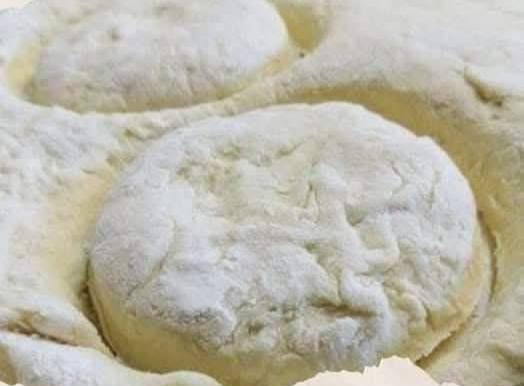
- Cut the Biscuits: Using a 2 to 2.5-inch round biscuit cutter (or a sharp knife for square biscuits), cut out the biscuits. Dip the cutter in flour between each cut to prevent sticking. Press straight down firmly without twisting the cutter. Twisting seals the edges of the biscuit, preventing it from rising properly. Gather the scraps, gently press them together (avoiding excessive re-kneading), pat them out, and cut any remaining biscuits. You should get about 8-10 biscuits.
- Arrange on Baking Sheet: Place the cut biscuits on the prepared baking sheet. For softer sides, place them close together, almost touching. For crispier sides, space them about 1 inch apart.
- Brush with Buttermilk (Optional): For a golden-brown top, you can lightly brush the tops of the biscuits with a tablespoon or two of extra buttermilk.
- Bake: Transfer the baking sheet to the preheated oven. Bake for 12-18 minutes, or until the biscuits are beautifully golden brown on top and bottom, and well-risen. The baking time can vary depending on your oven and the size of your biscuits.
- Cool and Serve: Once baked, remove the biscuits from the oven. Let them cool on the baking sheet for a few minutes before transferring them to a wire rack. Serve warm, ideally within minutes of coming out of the oven, with your favorite toppings.
Cooking Tips and Variations
To achieve the ultimate flaky butter biscuits, the golden rule is to keep everything as cold as possible. This means your butter, your buttermilk, and even your hands if you’re sensitive to warmth. Cold butter creates pockets of steam as it melts in the oven, which is what gives biscuits their incredible layers. If your kitchen is warm, you can even chill your flour for 15-20 minutes before starting. When cutting in the butter, resist the urge to overmix; you want visible pieces of butter, not a smooth dough. Think of it as creating tiny butter pockets that will puff up in the heat.
Another crucial tip is to handle the dough as little as possible. Overworking the dough develops gluten, which leads to tough, dense biscuits instead of light, airy ones. When you fold the dough, do so gently, and when cutting, press straight down with your biscuit cutter without twisting. Twisting can seal the edges, preventing the biscuit from rising to its full potential. For an extra touch of richness and shine, brush the tops of the unbaked biscuits with a little melted butter or extra buttermilk before they go into the oven. This encourages a beautiful golden crust.
For variations, the possibilities are endless. To make Cheddar Biscuits, fold in 1 cup of shredded sharp cheddar cheese along with a pinch of cayenne pepper after adding the buttermilk. For Herb Biscuits, add 1-2 tablespoons of finely chopped fresh herbs like chives, rosemary, or thyme to the dry ingredients. Garlic & Parsley Biscuits are fantastic with 1-2 minced garlic cloves and 2 tablespoons of fresh chopped parsley. For a slightly sweeter take, you can increase the sugar to 2 tablespoons and add a teaspoon of vanilla extract to the buttermilk, perfect for serving with fruit jams. You can also experiment with different flours; a small percentage of whole wheat flour can add a nutty depth, though it might reduce some of the flakiness. Always ensure your leavening agents (baking powder and baking soda) are fresh for the best rise.
Storage and Reheating
Freshly baked butter biscuits are truly at their peak when enjoyed warm from the oven. However, if you have leftovers, proper storage can help maintain their quality for a short period. Once completely cooled, store the biscuits in an airtight container at room temperature for up to 2-3 days. To prevent them from becoming soggy, you can place a paper towel at the bottom of the container to absorb any excess moisture. Avoid refrigerating baked biscuits, as the cold air tends to dry them out and make them crumbly.
For longer storage, butter biscuits freeze exceptionally well. Once they are fully cooled, place them in a single layer on a baking sheet and flash-freeze them for about an hour. This prevents them from sticking together. Then, transfer the frozen biscuits to a freezer-safe bag or airtight container. They can be stored in the freezer for up to 2-3 months. When you’re ready to enjoy them, you can reheat them directly from frozen.
Reheating biscuits properly is key to bringing back their tender texture. The best method for reheating baked biscuits is in the oven. Preheat your oven to 300-325°F (150-160°C). Place the biscuits directly on a baking sheet (or wrap them loosely in foil if you prefer a softer crust). Heat for 8-10 minutes if they are at room temperature, or 15-20 minutes if reheating from frozen, until they are warmed through. The microwave can be used in a pinch, but it often results in a softer, chewier texture rather than a crisp exterior. If using a microwave, heat in 15-20 second increments until warm, being careful not to overheat.
Frequently Asked Questions
Why are my biscuits tough and not flaky?
Tough biscuits are almost always a result of overworking the dough. When you knead or mix biscuit dough too much, you develop the gluten in the flour, which leads to a chewy, dense texture instead of a tender, flaky one. The key is to handle the dough as little as possible, just enough to bring it together. Also, ensure your butter is very cold; warm butter melts into the flour too quickly, reducing flakiness.
Can I make these biscuits ahead of time?
Yes, you can prepare the biscuit dough ahead of time. Once you’ve cut out the biscuits, you can place them on a parchment-lined baking sheet and refrigerate them for up to 24 hours before baking. You can also freeze the unbaked biscuits: flash-freeze them on a baking sheet, then transfer to a freezer-safe bag. Bake from frozen, adding a few extra minutes to the baking time, typically 18-25 minutes, or until golden brown.
What can I use if I don’t have buttermilk?
If you don’t have buttermilk on hand, you can easily make a substitute. For every 1 cup of buttermilk needed, pour 1 tablespoon of white vinegar or lemon juice into a liquid measuring cup. Then, fill the rest of the cup with regular milk (any fat percentage will work) until it reaches the 1-cup mark. Stir gently and let it sit for 5-10 minutes until it looks slightly curdled. This “soured” milk will react with the baking soda similarly to real buttermilk, providing the necessary leavening and tenderness.