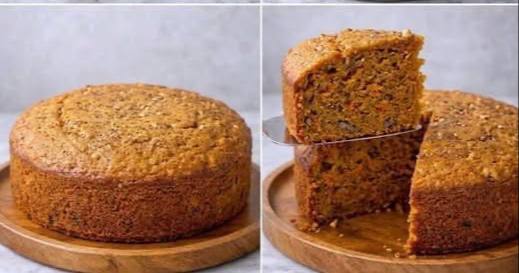
Instructions
- Preheat your oven to 350°F (175°C). Grease and flour a 9×13 inch baking pan, or two 9-inch round cake pans. If using round pans, line the bottoms with parchment paper as well.
- In a large bowl, whisk together the dry ingredients: flour, baking soda, salt, cinnamon, nutmeg, and ginger (if using). Make sure there are no lumps and the spices are evenly distributed. Set aside.
- In a separate, even larger bowl, whisk together the wet ingredients: granulated sugar, brown sugar, eggs, vegetable oil, and unsweetened applesauce until well combined and smooth.
- Gradually add the dry ingredients to the wet ingredients, mixing on low speed with an electric mixer or by hand with a spatula until just combined. Be careful not to overmix the batter; overmixing can lead to a tough cake. A few streaks of flour are acceptable.
- Fold in the finely grated carrots, chopped toasted nuts, and raisins (if using) into the batter. Mix gently until they are evenly distributed throughout the batter.
- Pour the batter evenly into your prepared baking pan(s). If using two round pans, divide the batter equally between them.
- Bake for 30-35 minutes for round pans, or 40-50 minutes for a 9×13 inch pan, or until a wooden skewer or toothpick inserted into the center of the cake comes out clean. The top should be golden brown and spring back when lightly touched.
- Once baked, remove the cake(s) from the oven and let them cool in the pan(s) on a wire rack for 10-15 minutes. This allows the cake to firm up before being removed.
- After 10-15 minutes, invert the cake(s) onto the wire rack to cool completely. If using parchment paper, gently peel it off. Ensure the cake is entirely cool before frosting, as warm cake will melt the frosting.
- While the cake cools, prepare the cream cheese frosting: In a medium bowl, beat the softened cream cheese and softened butter together with an electric mixer until light and fluffy, about 2-3 minutes.
- Gradually add the sifted powdered sugar, one cup at a time, mixing on low speed until combined, then increasing to medium-high until smooth and creamy.
- Beat in the vanilla extract. If the frosting is too thick, add milk or heavy cream one tablespoon at a time until it reaches your desired consistency.
- Once the cake is completely cool, spread the cream cheese frosting evenly over the top and sides of the cake. You can smooth it out or create decorative swirls.
- For an extra touch, you can sprinkle some additional chopped nuts over the top of the frosting.
- Slice and serve this delicious carrot cake. Enjoy!
Cooking Tips and Variations
For the absolute best carrot cake, always use freshly grated carrots. Pre-shredded carrots from the grocery store tend to be drier and coarser, which can affect the cake’s moisture and texture. Fine grating ensures they blend seamlessly into the batter. Don’t overmix the batter once the wet and dry ingredients are combined; mix only until just incorporated. Overmixing develops the gluten in the flour, leading to a tough, dense cake rather than the desired moist and tender crumb. Toasting your nuts (pecans or walnuts) before adding them to the batter enhances their flavor significantly. Spread them on a baking sheet and toast in a 350°F (175°C) oven for 5-7 minutes, or until fragrant. Let them cool before chopping and adding to the batter.
When it comes to spices, feel free to adjust the amounts to your personal preference. If you love a stronger spice kick, you can increase the cinnamon or add a pinch of allspice or cloves. For a variation with an extra layer of flavor, consider adding a small amount of crushed pineapple (well-drained) to the batter along with the carrots. This adds more moisture and a subtle tangy sweetness. You can also experiment with different frostings; while cream cheese is classic, a simple vanilla buttercream or even a brown butter frosting can be delicious alternatives. For a healthier twist, you can reduce the sugar slightly, especially if your carrots are very sweet, though be mindful that sugar also contributes to moisture and structure. Finally, for an adult-friendly version, a tablespoon or two of rum or bourbon can be added to the batter or frosting for a subtle boozy kick.
Storage and Reheating
Carrot cake, especially with cream cheese frosting, should always be stored in an airtight container in the refrigerator. This prevents the frosting from spoiling and helps keep the cake moist. It will stay fresh for up to 5-7 days when properly stored. If you prefer to enjoy your cake at room temperature, simply remove a slice from the refrigerator about 30-60 minutes before serving to allow it to come to room temperature, which often enhances its flavor and softens the frosting to an ideal consistency. Reheating is generally not recommended for carrot cake as it can dry out the cake and alter the frosting’s texture. It is best enjoyed at room temperature or chilled.
For longer storage, carrot cake freezes beautifully, both unfrosted and frosted. If freezing unfrosted, wrap the cooled cake layers tightly in plastic wrap, then in aluminum foil. It can be frozen for up to 2-3 months. Thaw overnight in the refrigerator before frosting. If freezing frosted cake, first place the cake (uncovered) in the freezer for about an hour until the frosting is firm. Then, wrap the entire cake tightly in plastic wrap, followed by aluminum foil. This prevents the frosting from sticking to the wrap. Thaw overnight in the refrigerator before unwrapping and serving. Freezing individual slices is also a great option for portion control; wrap each slice individually and store in an airtight container or freezer bag.
Frequently Asked Questions
Why is my carrot cake dry?
A dry carrot cake is usually a result of overbaking or not enough moisture in the batter. Ensure you’re measuring your ingredients accurately, especially the oil and applesauce. Use freshly grated carrots, as pre-shredded ones can be dry. Also, check your oven temperature with an oven thermometer to ensure it’s accurate, and start checking for doneness a few minutes before the recipe suggests. The toothpick should come out clean, but not bone-dry with no crumbs at all.
Can I make this cake gluten-free?
Yes, you can! Substitute the all-purpose flour with a 1:1 gluten-free all-purpose flour blend that contains xanthan gum. The baking time might vary slightly, so keep an eye on it. The texture might be a little different, but it should still be a delicious and moist cake.
What can I use if I don’t have applesauce?
If you don’t have applesauce, you can substitute it with an equal amount of mashed ripe banana or even plain yogurt (full-fat for best results). You can also simply use an additional 1/2 cup of vegetable oil, but the applesauce helps to keep the cake moist while reducing the overall fat content slightly.
Can I add pineapple to this recipe?
Absolutely! Drained crushed pineapple is a common and delicious addition to carrot cake. For this recipe, add about 1/2 to 1 cup of well-drained crushed pineapple along with the carrots and nuts. Make sure it’s very well drained to avoid adding too much moisture to the batter, which could make the cake too dense or not bake properly.