Instructions
- In a large mixing bowl, combine the flour, yeast, and salt. Whisk them together thoroughly to ensure the yeast and salt are evenly distributed throughout the flour.
- Pour the warm water into the dry ingredients. Using a wooden spoon or a sturdy spatula, mix until all the flour is incorporated and a shaggy, sticky dough forms. Do not overmix; a few lumps are fine. The dough will be quite wet and sticky, which is exactly what you want for a no-knead bread.
- Cover the bowl tightly with plastic wrap or a clean kitchen towel. Place the bowl in a warm spot in your kitchen and let it rise for 12-18 hours. The longer the rise, the more flavor your bread will develop. The dough should at least double in size, become bubbly, and look very airy.
- Once the first rise is complete, gently scrape the dough out onto a lightly floured surface. Dust your hands with flour and gently fold the edges of the dough towards the center a few times, forming a loose ball. Avoid pressing out all the air; handle the dough as little as possible.
- Generously flour a piece of parchment paper (about 12×12 inches). Carefully transfer the dough ball onto the floured parchment paper. Loosely cover the dough with plastic wrap or a kitchen towel and let it rest for another 30-60 minutes while your oven preheats. This is the second rise, or proofing.
- About 30 minutes before the second rise is complete, place a 6-quart Dutch oven (or a heavy oven-safe pot with a lid) into your cold oven. Preheat the oven to 450°F (230°C) with the Dutch oven inside. Heating the pot ensures a crispy crust.
- Once the oven and Dutch oven are preheated and the dough has proofed, carefully remove the hot Dutch oven from the oven. Using the parchment paper as a sling, carefully lift the dough and lower it into the hot Dutch oven.
- If desired, use a sharp knife or a bread lame to make a shallow slash (about ½ inch deep) across the top of the dough. This helps the bread expand evenly and creates a beautiful crust.
- Cover the Dutch oven with its lid and place it back into the hot oven. Bake for 30 minutes with the lid on.
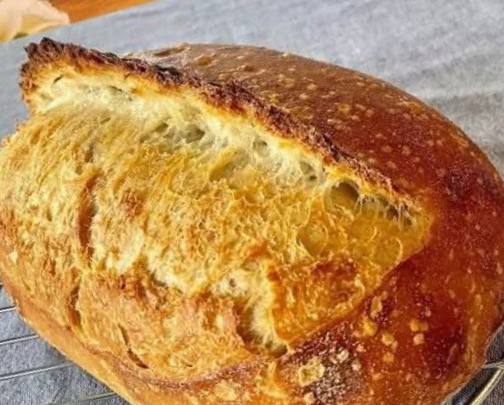
- After 30 minutes, carefully remove the lid from the Dutch oven. Reduce the oven temperature to 400°F (200°C) and continue baking for another 15-20 minutes, or until the crust is deeply golden brown and sounds hollow when tapped on the bottom.
- Carefully remove the bread from the Dutch oven using the parchment paper handles and transfer it to a wire rack to cool completely before slicing. This is crucial for the texture; slicing it too soon can result in a gummy interior.
Cooking Tips and Variations
For the best results with this “Cheapest Bread Recipe,” always measure your ingredients accurately, especially the flour. While some recipes rely on volume measurements, using a kitchen scale for flour (360g) will ensure consistency and prevent your dough from being too stiff or too wet. The hydration of this dough is key to its airy texture, so precision helps. Also, ensure your yeast is active. If your yeast is old or has been stored improperly, it might not activate, leading to a flat loaf. You can test it by mixing a small amount with warm water and a pinch of sugar; it should foam within 5-10 minutes.
To achieve that coveted super-crusty exterior, using a Dutch oven is highly recommended as it traps steam around the dough, mimicking a professional bakery oven. If you don’t have a Dutch oven, you can try baking the bread on a preheated baking stone or heavy baking sheet, and placing a pan of hot water on the bottom rack of your oven during the first part of baking to create steam. This won’t be quite as effective as a Dutch oven but will still improve the crust significantly.
Don’t be afraid to experiment with variations once you’ve mastered the basic recipe. For a more complex flavor, you can substitute a portion of the all-purpose flour (up to 1 cup) with whole wheat flour or bread flour. Add-ins like a handful of dried herbs (rosemary, thyme, oregano), 1/4 cup of seeds (sesame, poppy, sunflower), or even a few cloves of minced garlic can transform the bread. Just gently fold them into the dough during the initial mixing stage. For a slightly sweeter, richer loaf, you could add 1-2 tablespoons of sugar or honey to the water before mixing with the dry ingredients, though this will slightly increase the cost.
Proper cooling is often overlooked but critical for homemade bread. Resist the urge to slice into your warm, fragrant loaf immediately. Cooling on a wire rack allows steam to escape and the internal structure to set, preventing a gummy texture. If you slice it too soon, the starches haven’t fully gelled, and your beautiful airy crumb will be dense and sticky. Patience truly pays off here.
Finally, the long fermentation time (12-18 hours) is what develops the incredible flavor and texture of this no-knead bread. Don’t rush it. The dough should be noticeably bubbly and expanded. If your kitchen is particularly cold, it might take closer to 18 hours. If it’s very warm, it might be ready in 12. Trust your eyes and the dough’s appearance over the clock alone.
Storage and Reheating
Once your homemade bread has cooled completely, store it properly to maintain its freshness. The best way to store this crusty loaf is at room temperature, ideally in a paper bag to allow air circulation and prevent the crust from softening too much. You can also wrap it loosely in a clean kitchen towel. Avoid storing it in an airtight plastic bag or container for the first day, as this will trap moisture and make the crust soft and chewy. Stored this way, it will stay fresh and delicious for 2-3 days.
If you need to store it for longer, or if you live in a humid climate, you can place the bread in a plastic bag or airtight container after the first day, but be aware the crust will lose some of its crispness. For longer-term storage, slicing the cooled bread and freezing the slices in a freezer-safe bag or container is an excellent option. This allows you to pull out individual slices as needed, and they will stay fresh for up to 2-3 months.
To reheat day-old bread and revive its crust, you have a few options. If the bread is whole or in large pieces, preheat your oven to 350°F (175°C). Lightly mist the bread with water (this helps create steam and crisp up the crust) and bake for 5-10 minutes, or until the crust is crunchy and the interior is warmed through. For individual slices, a toaster or toaster oven works wonderfully. Simply toast until golden and warm. Frozen slices can be toasted directly from the freezer, though they might take a little longer. Avoid microwaving bread to reheat, as it tends to make it soft, chewy, and quickly stale.
Frequently Asked Questions
Can I use instant yeast instead of active dry yeast?
Yes, you can absolutely use instant yeast. If using instant yeast, you can mix it directly with the dry ingredients without activating it in water first. The quantity usually remains the same (1 ½ teaspoons), but some bakers might reduce it slightly to 1 ¼ teaspoons as instant yeast is generally more potent. The rise times should be similar, but instant yeast can sometimes work a little faster.
Why is my dough so sticky and wet? Is that normal?
Yes, a very sticky and wet dough is completely normal and desirable for this no-knead bread recipe! The high hydration (more water relative to flour) is what contributes to the open, airy crumb structure and the crispy crust. Resist the urge to add more flour during the initial mixing or the first rise, as this will make your bread dense. A liberal dusting of flour on your work surface and hands during shaping is sufficient to manage the stickiness.
My bread didn’t rise much. What went wrong?
There are a few common reasons why bread might not rise. The most likely culprit is inactive yeast. Ensure your yeast is fresh and has been stored correctly. Another factor could be the water temperature; water that is too hot will kill the yeast, and water that is too cold will not activate it properly. Aim for warm water, around 105-115°F (40-46°C). Finally, ensure your dough is in a warm spot for its long rise; a cold environment can significantly slow down or halt fermentation.
Do I really need a Dutch oven for this recipe?
While a Dutch oven is highly recommended for achieving the best crust and overall texture, it is not strictly essential. The Dutch oven traps steam, creating a moist environment that allows the crust to expand and crisp beautifully. If you don’t have one, you can bake the bread on a preheated baking stone or a heavy baking sheet. To create some steam, place a metal pan filled with hot water on the bottom rack of your oven during the first 15-20 minutes of baking. The results might not be as dramatic as with a Dutch oven, but you’ll still get a delicious homemade loaf.