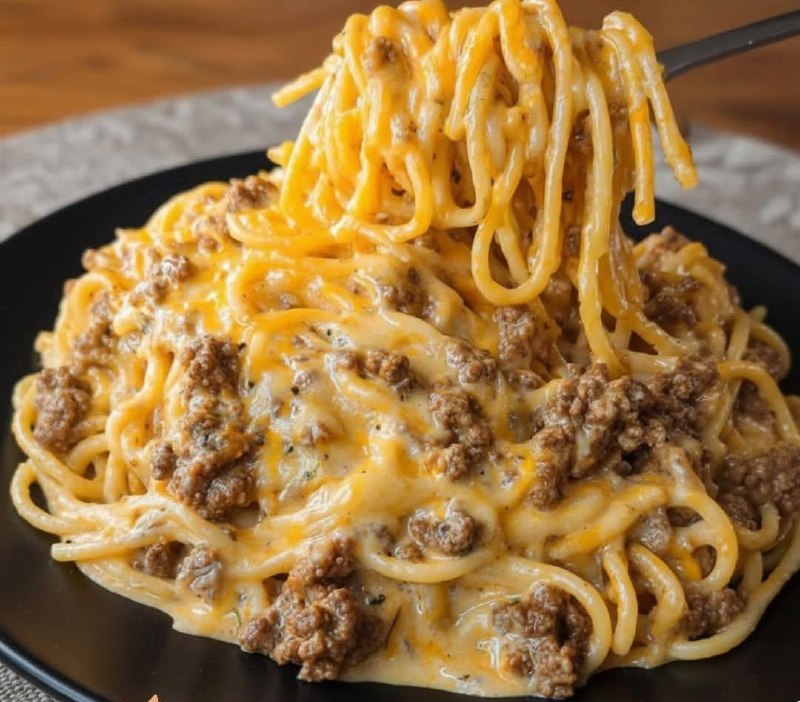
Instructions
- Bring a large pot of salted water to a rolling boil. Add the spaghetti and cook according to package directions until al dente. Drain well and set aside.
- While the pasta is cooking, heat the olive oil in a large skillet or Dutch oven over medium-high heat. Add the ground beef and cook, breaking it up with a spoon, until thoroughly browned, about 6-8 minutes.
- Drain any excess grease from the beef.
- Add the chopped onion to the skillet with the browned beef and cook until softened, about 5 minutes, stirring occasionally.
- Stir in the minced garlic and cook for another 1 minute until fragrant.
- Pour in the crushed tomatoes, tomato sauce, and beef broth. Stir in the Italian seasoning, dried basil, and red pepper flakes (if using).
- Bring the sauce to a gentle simmer, then reduce the heat to low, cover, and let it simmer for at least 15-20 minutes to allow the flavors to meld. Season with salt and black pepper to taste.
- Once the sauce has simmered, add the cooked and drained spaghetti directly into the skillet with the beef sauce. Toss gently to coat the pasta evenly with the sauce.
- Sprinkle about half of the shredded cheddar cheese and half of the mozzarella cheese over the spaghetti and sauce. Stir gently until the cheese starts to melt and incorporate into the dish.
- Remove the skillet from the heat. Sprinkle the remaining cheddar and mozzarella cheese evenly over the top of the spaghetti mixture.
- Cover the skillet with a lid or aluminum foil and let it sit for 5-7 minutes, or until the cheese is completely melted and bubbly. The residual heat will melt the cheese perfectly.
- Garnish with fresh chopped parsley, if desired, and serve hot.
Cooking Tips and Variations
For the best Cheesy Beef Spaghetti experience, consider these tips and variations. To achieve a perfectly rich and flavorful beef sauce, ensure you brown the ground beef thoroughly until no pink remains, then drain off all excess fat. This step is crucial for preventing a greasy sauce and allowing the true flavors of the meat and spices to shine through. Don’t rush this process; patience here pays off in a more robust and appealing final dish. When adding the onions and garlic, sauté them until they are softened and fragrant, but be careful not to burn the garlic, as this can impart a bitter taste to your sauce. A gentle sizzle is all you need to release their aromatic essence.
When it comes to the pasta, cooking it al dente is key. This means it should be firm to the bite, not mushy. Remember, the pasta will continue to cook slightly when tossed with the hot sauce and cheese, so undercooking it by a minute or two from the package directions is often ideal. Before draining the pasta, reserve about a cup of the starchy pasta water. This liquid is a secret weapon; if your sauce seems too thick after adding the pasta, a splash or two of this reserved water can help loosen it up and create a silkier consistency, allowing the sauce to cling beautifully to every strand of spaghetti. The starch in the water also helps emulsify the sauce, making it richer and more cohesive.
For the cheese, while sharp cheddar and mozzarella are fantastic choices for their flavor and melt, feel free to experiment. A blend that includes Colby Jack, Monterey Jack, or even a touch of smoked gouda could add an interesting twist. Freshly grated cheese melts much more smoothly than pre-shredded varieties, which often contain anti-caking agents. If you have the time, grating your own cheese will yield a noticeably creamier and more luxurious cheese pull. To ensure an ultra-smooth cheese melt at the end, make sure the skillet is still warm when you add the final layer of cheese, then cover it tightly. The trapped steam will create a perfectly gooey, melted top layer without overcooking the pasta.
To elevate the flavor profile of your beef sauce, consider adding a bay leaf during the simmering process, removing it before serving. A pinch of sugar can also help balance the acidity of the tomatoes, especially if you find your sauce tastes a little too sharp. For those who enjoy a bit of heat, increase the amount of red pepper flakes or add a dash of cayenne pepper. If you’re looking to sneak in some extra vegetables, finely diced bell peppers (red or green work well), shredded carrots, or even mushrooms can be sautéed with the onion and beef. They will add nutrients, texture, and a subtle sweetness without overpowering the main flavors.
Serving this Cheesy Beef Spaghetti with a fresh, crisp green salad tossed in a vinaigrette provides a nice contrast to the richness of the pasta. Garlic bread or crusty Italian bread is also an absolute must for soaking up every last bit of that delicious sauce. For a fun presentation, you can bake the entire dish in an oven-safe skillet or transfer it to a baking dish and bake at 375°F (190°C) for 10-15 minutes after adding the cheese, until golden and bubbly. This method creates a slightly crispier, caramelized cheese crust on top, adding another layer of texture and flavor that is simply irresistible.
Storage and Reheating
Proper storage and reheating are essential to enjoy your Cheesy Beef Spaghetti leftovers while maintaining their deliciousness. To store, first allow the spaghetti to cool down completely to room temperature. This is crucial to prevent bacterial growth and to avoid condensation that can make the pasta soggy. Once cooled, transfer the spaghetti into an airtight container. You can store it as one large portion or divide it into individual servings for easy meal prep throughout the week. Properly stored, Cheesy Beef Spaghetti will keep fresh in the refrigerator for up to 3-4 days.
For longer storage, Cheesy Beef Spaghetti can be frozen. Place the cooled spaghetti in freezer-safe airtight containers or heavy-duty freezer bags. If using bags, try to remove as much air as possible before sealing to prevent freezer burn. It’s often best to freeze individual portions so you can thaw and reheat only what you need. Frozen Cheesy Beef Spaghetti will maintain its quality for up to 2-3 months. When you’re ready to enjoy it, thaw the frozen spaghetti overnight in the refrigerator before reheating.
When reheating, there are a few methods that work well. The microwave is the quickest option for individual servings. Place the spaghetti in a microwave-safe dish, cover it loosely to retain moisture, and microwave on medium power for 2-3 minutes, stirring halfway through, until heated through. If the pasta seems a bit dry, you can add a tablespoon or two of water or beef broth before reheating to help rehydrate the sauce and pasta.
For larger portions or a more even reheat, the stovetop method is excellent. Transfer the spaghetti to a large skillet or pot over medium-low heat. Add a splash of water or beef broth (about 1/4 to 1/2 cup for a full skillet) to prevent sticking and help loosen the sauce. Stir occasionally, breaking up any clumps, until the spaghetti is heated through and the sauce is bubbling gently. This usually takes about 10-15 minutes. The stovetop method is particularly good for restoring the texture of the sauce.
If you prefer a baked approach, especially if your spaghetti has a nice cheesy top layer, you can reheat it in the oven. Preheat your oven to 350°F (175°C). Place the spaghetti in an oven-safe dish, adding a little liquid if it seems dry. Cover the dish with aluminum foil to prevent it from drying out, and bake for 20-25 minutes, or until heated thoroughly. For a crispy cheese topping, you can remove the foil for the last 5 minutes of baking. Whichever method you choose, always ensure the spaghetti is heated completely and evenly before serving. A quick stir after reheating will help redistribute the flavors and moisture.
Frequently Asked Questions
Can I make Cheesy Beef Spaghetti ahead of time?
Yes, absolutely! Cheesy Beef Spaghetti is a fantastic make-ahead meal. You can prepare the beef sauce completely and store it in an airtight container in the refrigerator for up to 3-4 days. Cook the spaghetti separately and store it in a different container. When you’re ready to serve, simply reheat the sauce, add the cooked spaghetti, and then proceed with the cheese melting step. Alternatively, you can assemble the entire dish (sauce, pasta, and cheese mixed in) and refrigerate it. When reheating, add a splash of water or broth to loosen it up. For best results, add the final top layer of cheese just before the final heating and melting.
What kind of spaghetti should I use?
While traditional spaghetti is the classic choice, you can use any long pasta shape you prefer! Linguine, fettuccine, or even bucatini would work wonderfully. If you’re looking for a slightly different texture, short pastas like penne or rigatoni can also be used, making it more of a baked pasta casserole. Just ensure you cook your chosen pasta al dente according to the package instructions, as it will continue to cook slightly when mixed with the hot sauce.
How can I make this dish healthier?
There are several ways to make Cheesy Beef Spaghetti a bit healthier without sacrificing flavor. Use extra lean ground beef or substitute it with ground turkey or chicken. Increase the amount of vegetables by finely dicing and sautéing bell peppers, carrots, or zucchini along with the onion and garlic in the sauce. You can also use whole wheat spaghetti for added fiber. Reduce the amount of cheese slightly, or opt for lower-fat cheese varieties. Serving it with a large side salad will also help balance the meal and add more fresh vegetables.
My sauce seems too thin/thick. How can I fix it?
If your sauce is too thin, let it simmer uncovered for a bit longer, allowing some of the liquid to evaporate and the sauce to thicken naturally. For a quicker fix, you can mix a tablespoon of cornstarch with an equal amount of cold water to create a slurry, then stir it into the simmering sauce and cook for another minute or two until it thickens. If your sauce is too thick, simply stir in a little beef broth, water, or even some of the reserved pasta cooking water, a tablespoon at a time, until it reaches your desired consistency. Remember, the pasta will also absorb some liquid from the sauce, so it’s good for the sauce to be a little looser initially.