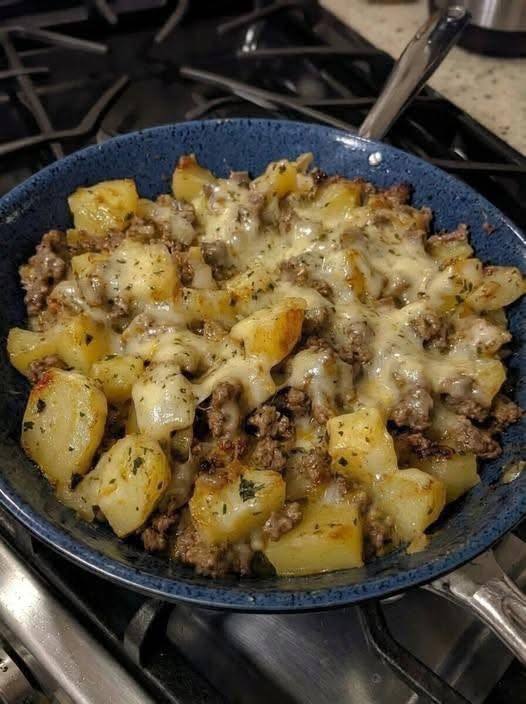
Instructions
- Heat the olive oil in a large, oven-safe skillet over medium-high heat.
- Add the ground beef to the skillet and cook, breaking it apart with a spoon, until it is fully browned and no pink remains. Drain any excess grease from the skillet.
- Add the chopped onion to the skillet with the ground beef and cook for 3-5 minutes, or until the onion softens and becomes translucent.
- Stir in the minced garlic, smoked paprika, dried oregano, black pepper, and salt. Cook for another minute, stirring constantly, until fragrant.
- Add the diced potatoes to the skillet, stirring to combine them with the beef and seasonings.
- Pour in the beef broth and water. Bring the mixture to a simmer.
- Reduce the heat to medium-low, cover the skillet, and let it simmer for 15-20 minutes, or until the potatoes are fork-tender. Stir occasionally to prevent sticking and ensure even cooking. If the liquid evaporates too quickly, add a little more water or broth.
- Once the potatoes are tender, remove the lid. If there’s still a lot of liquid, increase the heat slightly and cook uncovered for a few minutes to allow some of it to evaporate, stirring gently.
- Evenly sprinkle the shredded cheddar cheese and Monterey Jack cheese over the top of the beef and potato mixture.
- Cover the skillet again (or place it under a broiler for 2-3 minutes, watching carefully) and cook for 3-5 minutes, or until the cheese is completely melted and bubbly.
- Remove the skillet from the heat. Garnish with fresh chopped parsley before serving.
- Serve hot directly from the skillet and enjoy!
Cooking Tips and Variations
For the best results with your Cheesy Ground Beef & Potatoes Skillet, consider these tips. Firstly, always brown your ground beef thoroughly. This step is crucial for developing deep, savory flavors that will permeate the entire dish. Don’t rush it; a good sear makes all the difference. After browning, make sure to drain off any excess fat. This prevents the dish from becoming greasy and allows the other flavors to shine. When it comes to potatoes, consistency is key. Dice your potatoes into roughly 1/2-inch cubes so they cook evenly and at the same rate as the other ingredients. If some pieces are larger than others, you might end up with some crunchy bits while others are perfectly tender. For an extra layer of flavor, consider adding a bay leaf to the skillet along with the beef broth, removing it before serving.
To prevent sticking, especially if you’re using a non-stick skillet that’s seen better days or a cast iron skillet that isn’t perfectly seasoned, make sure to stir the mixture periodically while the potatoes are simmering. This helps distribute the heat and prevents the potatoes from sticking to the bottom. If the liquid seems to be evaporating too quickly and the potatoes aren’t yet tender, don’t hesitate to add a splash more beef broth or water to keep things moist. The goal is fork-tender potatoes, not dry ones. For an even richer flavor profile, you can swap out some of the beef broth for a dry red wine, letting it reduce slightly before adding the water and potatoes. This adds a sophisticated depth that’s surprisingly easy to achieve.
The beauty of this skillet meal lies in its versatility. You can easily adapt it to suit your preferences or what you have on hand. For a different protein, try using ground turkey or ground chicken instead of beef. If using leaner meats, you might want to add a bit more olive oil or a pat of butter to ensure moisture and flavor. Vegetarians can easily adapt this by swapping the ground beef for plant-based crumbles and using vegetable broth. The core seasonings and potato method remain the same, making it a flexible meal for diverse dietary needs.
Experiment with different cheese combinations to find your favorite. While cheddar and Monterey Jack offer a classic, melty goodness, feel free to try a spicy pepper jack for a kick, a smoky gouda for depth, or even a creamy mozzarella for extra stretchiness. A blend of cheeses often provides the best balance of flavor and texture. Don’t be afraid to add more vegetables! Diced bell peppers (any color), sliced mushrooms, or even a handful of spinach stirred in during the last few minutes of cooking would be delicious and add extra nutrients. You can also elevate the seasoning by adding a pinch of chili powder, a dash of Worcestershire sauce, or a spoonful of tomato paste along with the ground beef to deepen the umami flavor. For a slightly different texture, you can par-boil the diced potatoes for 5-7 minutes before adding them to the skillet; this can help them cook faster and ensure a very tender result.
To add a touch of freshness and brightness, consider stirring in a handful of frozen peas or corn during the last 5 minutes of cooking. These vegetables add a pop of color and a subtle sweetness that complements the savory beef and potatoes. If you’re a fan of herbs, fresh thyme or rosemary can be added along with the dried oregano for an aromatic boost. Just remember to use less fresh herb than dried, as their flavor is more potent. Finally, for those who love a bit of heat, a pinch of red pepper flakes added with the other spices can provide a pleasant warmth without being overpowering. This Cheesy Ground Beef & Potatoes Skillet is truly a canvas for your culinary creativity; feel free to make it your own!
Storage and Reheating
Storing your Cheesy Ground Beef & Potatoes Skillet leftovers correctly ensures they remain delicious for future meals. Once the skillet has cooled to room temperature, transfer any remaining portions into an airtight container. Make sure the container is sealed well to prevent air exposure, which can dry out the food and affect its flavor. Properly stored, the skillet will keep well in the refrigerator for up to 3-4 days. While this dish can be frozen, the texture of the potatoes might change slightly upon thawing, becoming a bit softer. If you choose to freeze it, place individual portions in freezer-safe containers or bags and they can last for up to 2-3 months. Thaw frozen portions in the refrigerator overnight before reheating.
Reheating this skillet is straightforward. For best results, especially if you want to maintain some crispness on the potatoes, reheating in a skillet on the stovetop is ideal. Place the desired portion in a non-stick skillet over medium-low heat. Add a tablespoon or two of water or beef broth to help create some steam and prevent drying. Cover the skillet and heat for 5-10 minutes, stirring occasionally, until thoroughly heated through. If you prefer, you can also reheat it in the oven. Transfer the leftovers to an oven-safe dish, cover with foil, and bake at 300°F (150°C) for 15-20 minutes, or until hot. For a quick reheat, the microwave works too. Place a portion in a microwave-safe dish, cover loosely, and heat on high for 2-3 minutes, stirring halfway through, until piping hot. Be mindful that microwave reheating can sometimes make the cheese a bit oilier and the potatoes softer than other methods.
Frequently Asked Questions
Can I use a different type of potato?
Yes, absolutely! While Yukon Gold or Russet potatoes are recommended for their creamy or fluffy texture, you can certainly experiment with other varieties. Red potatoes or new potatoes work well too, though they tend to hold their shape more and have a slightly waxier texture. Just ensure you dice them to a consistent size for even cooking.
How can I make this dish spicier?
There are several ways to add a kick to your skillet! You can include a pinch of red pepper flakes along with the other spices, or add a diced jalapeño (seeds removed for less heat, or left in for more) when you sauté the onions. Using pepper jack cheese instead of or in addition to cheddar will also provide a pleasant spicy note.
Can I prepare this dish ahead of time?
While this dish is best enjoyed fresh, you can do some prep work ahead of time. You can chop your onion and mince your garlic, and even dice your potatoes and store them in cold water in the refrigerator overnight (drain well before cooking). The ground beef can also be browned and drained a day in advance. Assembling and cooking the full skillet just before serving will give you the best texture, especially for the potatoes and melted cheese.
What if my potatoes aren’t getting tender?
If your potatoes are still firm after the recommended simmering time, there could be a few reasons. Ensure your skillet is covered tightly to trap steam, which helps cook the potatoes. Also, check that your heat isn’t too high, causing the liquid to evaporate too quickly before the potatoes are cooked. If needed, add a little more beef broth or water, cover again, and continue simmering until they are fork-tender. Dicing them into smaller, more uniform pieces also significantly helps with cooking time.