Instructions
- Preheat your oven to 375°F (190°C). Lightly grease a 9×13 inch baking dish.
- Heat the olive oil in a large skillet or Dutch oven over medium-high heat. Add the ground beef and chopped onion. Cook, breaking up the beef with a spoon, until the beef is browned and the onion is softened, about 8-10 minutes.
- Drain any excess fat from the skillet. Add the minced garlic, ½ teaspoon salt, ¼ teaspoon black pepper, Italian seasoning, and paprika to the beef mixture. Cook for another 1-2 minutes until fragrant.
- Sprinkle the flour over the beef mixture and stir well to coat. Cook for 1 minute, stirring constantly, to cook out the raw flour taste.
- Gradually whisk in the beef broth and milk, stirring constantly to prevent lumps. Bring the mixture to a simmer, stirring occasionally, until the sauce thickens, about 3-5 minutes. Remove from heat.
- In a large bowl, toss the thinly sliced potatoes with the remaining ½ teaspoon salt and ¼ teaspoon black pepper.
- Spread half of the seasoned potato slices evenly in the bottom of the prepared baking dish.
- Pour half of the beef and sauce mixture over the potato layer, spreading it evenly.
- Sprinkle 1 ½ cups of the shredded cheddar cheese over the beef layer.
- Arrange the remaining potato slices over the cheese layer.
- Pour the remaining beef and sauce mixture over the second potato layer.
- Top with the remaining 1 ½ cups of shredded cheddar cheese and the ½ cup grated Parmesan cheese.
- Cover the baking dish tightly with aluminum foil.
- Bake for 45 minutes.
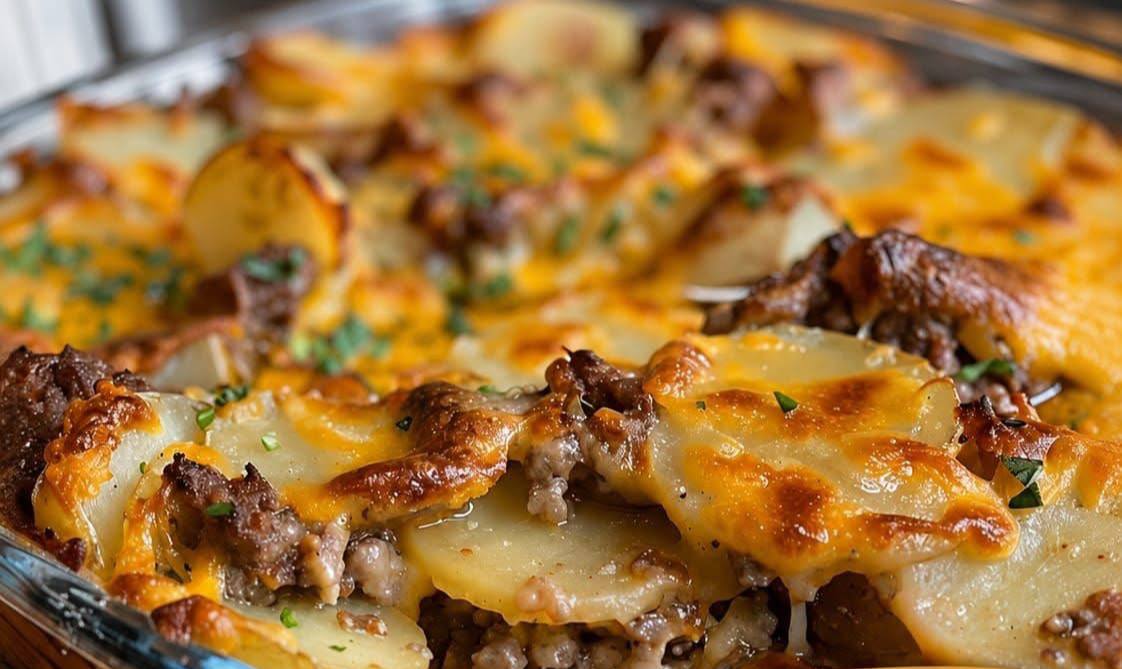
- Remove the foil and continue to bake for another 20-30 minutes, or until the potatoes are tender when pierced with a fork and the cheese is bubbly and golden brown.
- Let the casserole rest for 10-15 minutes before serving. This allows the casserole to set, making it easier to serve and preventing it from falling apart.
- Garnish with fresh chopped parsley, if desired, before serving.
Cooking Tips and Variations
Achieving the perfect Cheesy Hamburger Potato Casserole is all about a few key techniques and knowing how to adapt the recipe to your taste. For starters, the potatoes are the backbone of this dish, so their preparation is crucial. Thinly slicing the potatoes, ideally to about ⅛-inch thick, ensures they cook evenly and become tender without any hard, undercooked spots. A mandoline slicer can be a huge time-saver here, giving you uniform slices. If you don’t have one, a sharp knife and a steady hand will do the trick. To further guarantee tenderness, some cooks like to parboil their potato slices for 5-7 minutes before assembling the casserole. This extra step is optional but can be beneficial if you’re worried about the potatoes not cooking through, especially if your slices are a bit thicker.
When it comes to the ground beef, always drain off any excess fat after browning. This prevents the casserole from becoming greasy and ensures the sauce has the right consistency. For an extra layer of flavor, consider using a high-quality, lean ground beef. Don’t skimp on seasoning the beef mixture; the Italian seasoning, paprika, salt, and pepper are essential for building a robust flavor profile. Some variations include adding a dash of Worcestershire sauce for umami depth or a pinch of red pepper flakes for a subtle kick. You can also swap out half of the ground beef for ground sausage (mild or spicy) for a different twist.
The cheese is, of course, a star player. While sharp cheddar provides that classic, tangy, gooey goodness, feel free to experiment with other varieties. A mix of cheddar and Monterey Jack will yield an even creamier texture. For a sharper, nuttier flavor, incorporate some Gruyère or a blend of Italian cheeses. Always shred your own cheese from a block if possible, as pre-shredded cheeses often contain anti-caking agents that can prevent them from melting as smoothly. If you’re looking to add more vegetables, finely diced carrots, celery, or bell peppers can be sautéed with the onion and ground beef. Frozen peas or corn can be stirred into the beef mixture before layering. For a richer, creamier sauce, you can substitute half of the milk with heavy cream.
To ensure uniform cooking and prevent sticking, make sure to grease your baking dish thoroughly. Covering the casserole with foil for the initial baking period is vital; it traps steam, allowing the potatoes to cook through without the top browning too quickly. Removing the foil for the last portion of baking then allows the cheese to melt into a beautiful, golden-brown crust. If you notice the cheese browning too quickly during this uncovered stage, you can loosely tent it with foil again. Always let the casserole rest for 10-15 minutes after baking. This crucial step allows the internal temperatures to equalize and the casserole to set, making for cleaner, more intact servings.
Storage and Reheating
One of the many advantages of a casserole is how well it stores and reheats, making it an excellent option for meal prep or enjoying leftovers. Once your Cheesy Hamburger Potato Casserole has cooled completely to room temperature, you should store it promptly to maintain its freshness and safety. For best results, transfer any leftover casserole to an airtight container. You can also leave it in the original baking dish, provided you cover it tightly with plastic wrap and then aluminum foil to create a good seal. Stored properly in the refrigerator, the casserole will remain fresh and delicious for 3 to 4 days.
If you’ve made a large batch or want to prepare ahead, this casserole also freezes beautifully. To freeze, allow the casserole to cool completely. You can freeze individual portions in freezer-safe containers for convenient grab-and-go meals, or freeze the entire casserole in its baking dish (if it’s freezer-safe). If freezing in the dish, wrap it tightly with several layers of plastic wrap, followed by a layer of aluminum foil. Label with the date. Frozen, Cheesy Hamburger Potato Casserole can last for up to 2-3 months. When you’re ready to enjoy, thaw overnight in the refrigerator before reheating.
Reheating the casserole is straightforward. For refrigerated leftovers, the microwave is your quickest option for individual servings. Place a portion on a microwave-safe plate, cover it loosely, and heat on high for 2-4 minutes, or until heated through, stirring halfway if possible. For larger portions or to reheat the entire casserole, the oven is the best method as it helps maintain the casserole’s texture and prevents it from drying out. Preheat your oven to 300-325°F (150-160°C). Place the casserole in an oven-safe dish, cover it loosely with aluminum foil, and bake for 20-30 minutes, or until heated through. If reheating from frozen, it’s best to thaw it in the refrigerator first. Then, cover and bake at 350°F (175°C) for 45-60 minutes, or until thoroughly heated, removing the foil for the last 10-15 minutes if you want the cheese to crisp up again. Always ensure the internal temperature reaches 165°F (74°C) for food safety.
Frequently Asked Questions
What kind of potatoes work best for this casserole?
Yukon Gold potatoes are highly recommended for this casserole because their waxy texture holds up well during baking, and they become wonderfully tender and creamy without turning mushy. Russet potatoes can also be used, but they tend to be starchier and might break down more easily. If using Russets, ensure they are sliced uniformly thin.
Can I prepare this casserole ahead of time?
Absolutely! This casserole is an excellent make-ahead meal. You can assemble the entire casserole, cover it tightly with plastic wrap and aluminum foil, and refrigerate it for up to 24 hours before baking. When ready to bake, you might need to add an extra 10-15 minutes to the baking time to account for starting with a cold dish.
How can I make this casserole spicier?
To add a kick to your Cheesy Hamburger Potato Casserole, you have a few options. You can add a pinch or two of red pepper flakes to the ground beef mixture along with the other seasonings. Another great way is to incorporate a diced jalapeño (or two, depending on your preferred spice level) when sautéing the onions and garlic. For an extra cheesy kick, swap out some of the cheddar for Pepper Jack cheese.
What are some good side dishes to serve with this casserole?
Since this casserole is quite hearty and rich, it pairs wonderfully with lighter, fresh side dishes. A simple green salad with a vinaigrette dressing provides a refreshing contrast. Steamed or roasted green beans, broccoli, or asparagus are also excellent choices to add some vibrant vegetables. A crusty loaf of bread or garlic bread can be nice for soaking up any extra sauce, though the casserole is quite filling on its own.