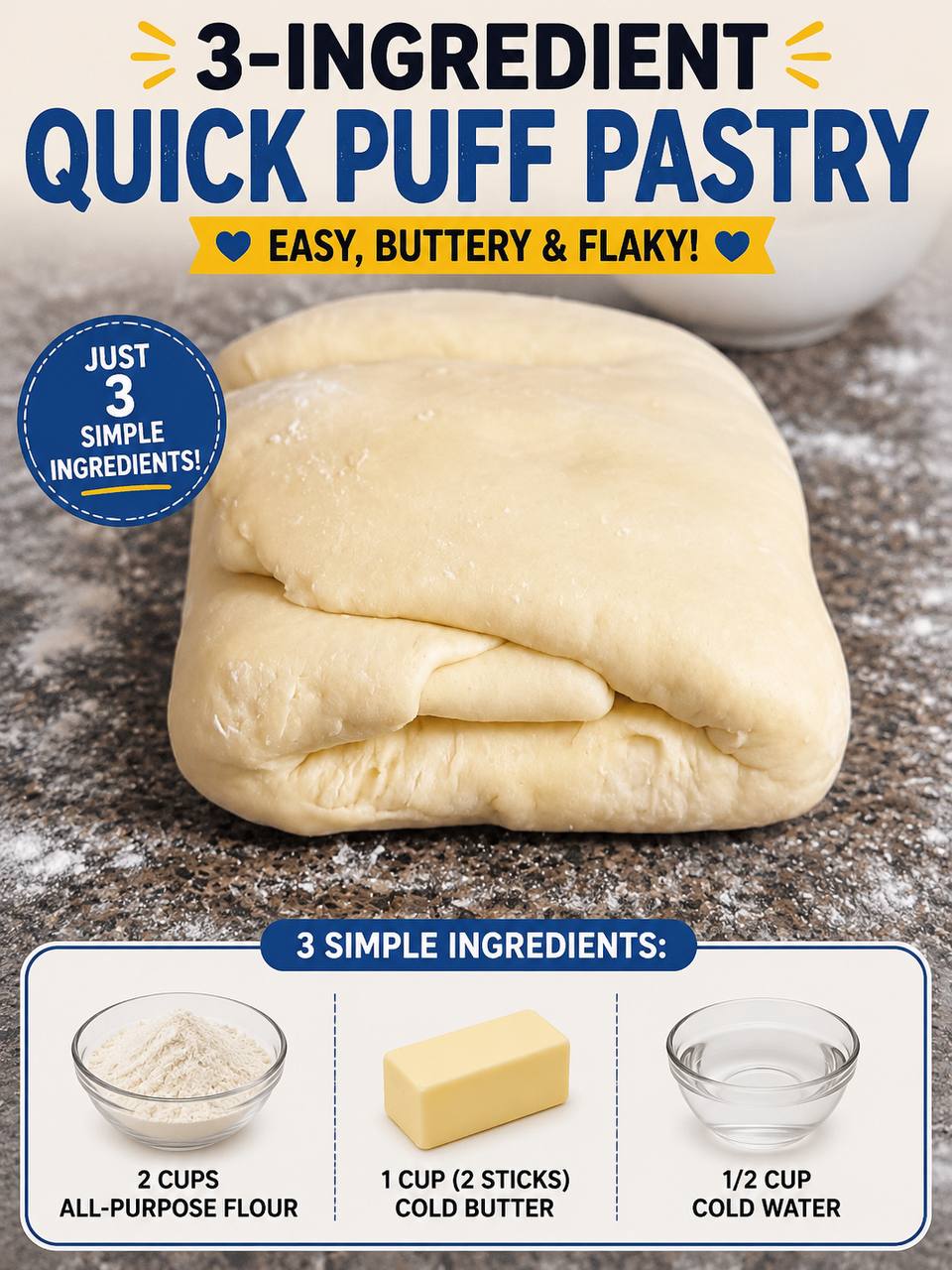
Instructions
- Prepare Your Ingredients: Ensure your butter is very cold, ideally straight from the refrigerator or even briefly placed in the freezer for 10-15 minutes. Cut the butter into small cubes, about 1/2 to 3/4 inch in size. Measure out your ice water; it’s helpful to have a few ice cubes in the water to keep it super cold.
- Combine Flour and Butter: In a large mixing bowl, combine the all-purpose flour and the optional salt. Add the cold, cubed butter to the flour.
- Incorporate the Butter: Using a pastry blender, your fingertips, or a food processor (pulse just a few times), cut the butter into the flour until the mixture resembles coarse meal with some pea-sized and even some larger, flattened butter pieces remaining. It’s crucial not to overmix; you want visible pieces of butter.
- Add Ice Water: Gradually add the 1/2 cup of ice water, a tablespoon at a time, mixing gently with a fork or your hands until the dough just comes together. The dough should be shaggy and moist enough to hold together when squeezed, but not sticky. If it’s too dry, add the additional 1-2 tablespoons of ice water, one teaspoon at a time, until it reaches the right consistency.
- Form the Dough: Turn the shaggy dough out onto a lightly floured surface. Gently press and gather it into a rough rectangle. Do not knead it. Wrap the dough tightly in plastic wrap and refrigerate for at least 30 minutes, or up to 1 hour. This resting period allows the gluten to relax and the butter to firm up.
- First Turn (Fold): Lightly flour your work surface and the top of your chilled dough. Roll the dough into a rectangle, approximately 1/4 inch thick (about 10×15 inches). Try to keep the edges as straight as possible.
- Fold the Dough (Book Fold): Imagine dividing the rectangle into three equal sections lengthwise. Fold one-third of the dough over the middle section, then fold the remaining third over that, like folding a letter. This completes one “turn.”
- Chill Again: Rotate the dough 90 degrees (so the folded edge is now on your left or right). Wrap it tightly in plastic wrap and refrigerate for another 30 minutes. This chilling step is vital to keep the butter cold and prevent it from melting into the dough.
- Second Turn: Repeat steps 6 and 7. Lightly flour your surface and dough, roll it out into a 1/4-inch thick rectangle, perform the book fold, rotate 90 degrees, wrap, and refrigerate for 30 minutes.
- Third Turn (Optional, but Recommended): For even flakier pastry, repeat steps 6 and 7 one more time. After the third turn, wrap the dough and chill it for at least 30 minutes, or until you’re ready to use it. The dough can be stored in the refrigerator for up to 2-3 days or frozen for longer.
- Ready to Use: Once chilled after the final turn, your quick puff pastry is ready to be rolled out to your desired thickness and cut for your chosen recipe. Remember to work quickly to keep the dough cold.
Cooking Tips and Variations
The success of quick puff pastry hinges on a few crucial details. Maintaining cold temperatures is paramount. Use ice-cold butter, and if your kitchen is warm, consider chilling your flour and even your mixing bowl beforehand. If at any point the butter starts to soften or ooze out while you’re rolling, immediately stop, wrap the dough, and return it to the refrigerator for 15-20 minutes until firm again. Don’t be afraid to flour your work surface and rolling pin lightly to prevent sticking, but avoid adding excessive flour, as this can make the dough tough. When rolling, apply even pressure and try to keep your rectangle as consistent as possible; this ensures even layers. If you notice any small tears in the dough, you can gently patch them with a piece of dough or just fold them in. For an extra touch of flavor, you can add a pinch of sugar (about 1 teaspoon) to the flour mixture if you plan to use the pastry predominantly for sweet applications. For a richer, more golden color, you can brush the surface of your pastry with an egg wash (one egg beaten with a tablespoon of water or milk) before baking. Experiment with different types of flour; while all-purpose is standard, a pastry flour can yield a slightly more tender result, though it’s not necessary. Remember, the key to flakiness is steam, so a hot oven (usually 400°F-425°F / 200°C-220°C) is essential for puff pastry to rise dramatically.
Storage and Reheating
Proper storage of your homemade quick puff pastry is essential to maintain its quality and flakiness. Once you’ve completed all the turns and the final chilling, wrap the dough tightly in several layers of plastic wrap. This prevents it from drying out and absorbing odors from the refrigerator. You can store the wrapped dough in the refrigerator for up to 2-3 days. When you’re ready to use it, simply remove it from the fridge about 10-15 minutes before rolling to allow it to soften just enough to be pliable, but still very cold. If you plan to store it for longer, quick puff pastry freezes beautifully. Wrap the chilled dough tightly in plastic wrap, then place it in a freezer-safe bag or an airtight container. It will keep well in the freezer for up to 1-2 months. To thaw, transfer the frozen dough to the refrigerator overnight. Avoid thawing at room temperature, as this can cause the butter to melt and separate from the dough, compromising the layers. Once thawed, use it as you would fresh dough. Leftover baked puff pastry items, such as turnovers or tarts, are best enjoyed fresh for optimal flakiness. However, they can be stored in an airtight container at room temperature for a day or two, or refrigerated for up to 3-4 days. To reheat, place them on a baking sheet in a preheated oven at 350°F (175°C) for 5-10 minutes, or until warmed through and re-crisped. Microwaving is generally not recommended for reheating puff pastry, as it tends to make it soft and chewy rather than flaky.
Frequently Asked Questions
What is the difference between rough puff and traditional puff pastry?
Traditional puff pastry involves meticulously encasing a block of butter within dough and then performing numerous precise folds (usually 6 to 8 “turns”) to create hundreds of ultra-thin, distinct layers of butter and dough. Rough puff, on the other hand, involves cutting cold butter directly into the flour, leaving larger pieces of butter visible. It then undergoes fewer folds (typically 3 to 4 “turns”). The larger butter pieces in rough puff create bigger pockets of steam, resulting in a more rustic, craggy, and equally delicious flakiness, but with significantly less effort and time involved.
Can I make this dough in a food processor?
Yes, you can use a food processor for the initial step of incorporating the butter into the flour. Add the flour and cold, cubed butter to the food processor and pulse a few times (about 5-8 pulses) until the butter is cut into pea-sized and larger pieces. Be careful not to over-process, as you still want visible chunks of butter. Then, transfer the mixture to a bowl and add the ice water by hand, or pulse briefly with the water until the dough just comes together into a shaggy mass. The subsequent rolling and folding steps must be done by hand.
My butter is melting while I’m rolling the dough. What should I do?
This is a common issue, especially in warm kitchens. If you notice the butter starting to soften, ooze out, or become too sticky to handle, stop immediately. Gently wrap the dough tightly in plastic wrap and return it to the refrigerator for at least 15-20 minutes, or until the butter has firmed up again. It’s crucial to keep the dough and butter cold throughout the process to ensure distinct layers and maximum flakiness. Don’t rush the chilling steps; they are vital for success.
Why is it important to use cold ingredients and chill the dough?
Using cold ingredients, especially butter and water, and chilling the dough between turns is the most critical factor for successful puff pastry. Cold butter remains solid and creates distinct layers within the dough during rolling and folding. When the pastry bakes, the water in these butter layers turns to steam, which forces the dough layers apart, creating that characteristic puff and flakiness. If the butter melts into the dough, you’ll end up with a tough, cookie-like crust rather than a light, airy, and flaky pastry.