Instructions
Making the Chocolate Fudge Cake Layers:
- Preheat your oven to 350°F (175°C). Grease and flour three 8-inch round cake pans, or line the bottoms with parchment paper and grease the sides.
- In a large bowl, whisk together the all-purpose flour, sifted cocoa powder, baking soda, baking powder, and salt. Set aside.
- In the bowl of a stand mixer fitted with the paddle attachment (or using a hand mixer), cream together the softened butter and granulated sugar on medium-high speed until light and fluffy, about 3-5 minutes.
- Add the eggs one at a time, beating well after each addition until fully incorporated. Scrape down the sides of the bowl as needed.
- In a separate small bowl, whisk together the buttermilk, cooled strong brewed coffee, and vanilla extract.
- With the mixer on low speed, gradually add about one-third of the dry ingredients to the butter mixture, mixing until just combined.
- Pour in half of the wet ingredients (buttermilk mixture) and mix until just incorporated.
- Continue alternating, adding another third of the dry ingredients, then the remaining wet ingredients, and finally the last third of the dry ingredients. Mix on low speed until just combined and no streaks of flour remain. Be careful not to overmix.
- Divide the batter evenly among the three prepared cake pans.
- Bake for 25-30 minutes, or until a wooden skewer inserted into the center of a cake comes out with only a few moist crumbs attached.
- Remove the cakes from the oven and let them cool in the pans on a wire rack for 10-15 minutes.
- Carefully invert the cakes onto the wire rack to cool completely before frosting. This is crucial for preventing the frosting from melting.
Making the Decadent Fudge Frosting:
- In the bowl of a stand mixer fitted with the paddle attachment (or using a hand mixer), beat the softened butter on medium speed until creamy, about 2 minutes.
- Gradually add the sifted cocoa powder, mixing on low speed until fully incorporated and no dry spots remain.
- With the mixer on low speed, gradually add the sifted powdered sugar, alternating with small additions of heavy cream. Start with about one-third of the sugar, then a splash of cream, and continue until all the sugar and cream are added.
- Once all ingredients are added, increase the mixer speed to medium-high and beat for 3-5 minutes until the frosting is light, fluffy, and smooth.
- Add the vanilla extract and salt, and beat again for 30 seconds.
- Finally, pour in the melted and slightly cooled semi-sweet or dark chocolate. Beat on medium speed for another 1-2 minutes until the chocolate is fully incorporated and the frosting is beautifully rich and glossy.
- If the frosting seems too thick, add a tiny bit more heavy cream, one teaspoon at a time. If it’s too thin, add a bit more sifted powdered sugar.
Assembling the Cake:
- Once the cake layers are completely cooled, place one cake layer on your serving plate or cake stand.
- Spread about 1 cup of the fudge frosting evenly over the top of the first layer.
- Carefully place the second cake layer on top, pressing down gently.
- Spread another 1 cup of frosting evenly over the second layer.
- Place the final cake layer on top.
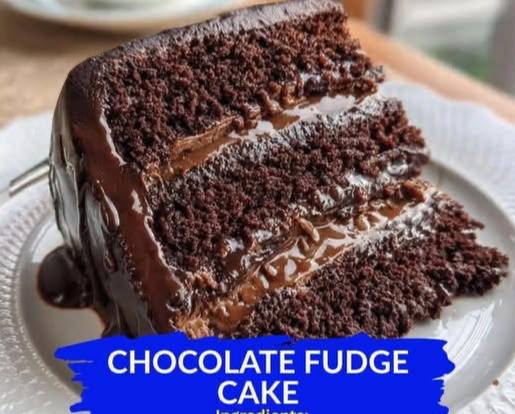
- Use the remaining frosting to cover the top and sides of the entire cake, smoothing it out with an offset spatula or bench scraper.
- For a decorative touch, you can create swirls or peaks with your spatula, or pipe additional frosting using a pastry bag and decorative tip.
- Optionally, garnish with chocolate shavings, sprinkles, or fresh berries.
- Allow the cake to set for at least 30 minutes at room temperature or in the refrigerator before slicing and serving.
Cooking Tips and Variations
To achieve the best results with your Chocolate Fudge Cake, remember these essential tips. First, always use high-quality ingredients, especially when it comes to cocoa powder and chocolate. The better the quality, the richer and more complex your cake’s flavor will be. Dutch-processed cocoa powder will give you a darker color and a mellower chocolate flavor, while natural unsweetened cocoa powder will provide a sharper, more intense chocolate taste. Second, ensure all your cold ingredients, like butter, eggs, and buttermilk, are at room temperature. This allows them to emulsify properly, creating a smoother batter and a more uniform, tender crumb. Cold ingredients can cause the batter to curdle and result in a denser cake. Don’t overmix the batter once the dry ingredients are added; mix only until just combined to avoid developing too much gluten, which can lead to a tough cake. Overmixing is one of the most common baking mistakes. Finally, and perhaps most importantly, do not overbake the cake layers. An overbaked cake will be dry. Start checking for doneness at the lower end of the baking time range. A wooden skewer or toothpick inserted into the center should come out with moist crumbs, not wet batter, but also not completely clean and dry.
For variations, consider adding a hint of espresso powder (about 1-2 teaspoons) to the dry ingredients for an even deeper chocolate flavor, as coffee enhances chocolate beautifully without making the cake taste like coffee. You could also fold in a cup of mini chocolate chips into the batter for an extra burst of chocolate in every bite. For the frosting, experiment with different types of melted chocolate – dark chocolate for a more intense flavor, or milk chocolate for a sweeter, creamier profile. A touch of a liqueur like Kahlúa, Grand Marnier, or even a good quality rum can be added to the frosting for an adult twist (about 1-2 tablespoons, adjusting heavy cream slightly). For a textural contrast, sprinkle chopped toasted nuts like pecans or walnuts between the layers or on top of the finished cake. You could also add a layer of raspberry jam between the cake layers for a classic chocolate-raspberry pairing. Another fun idea is to make mini cupcakes or a bundt cake using the same recipe; just adjust baking times accordingly.
Storage and Reheating
This Chocolate Fudge Cake is best enjoyed at room temperature, as the flavors and textures are most pronounced. To store any leftover cake, place it in an airtight cake carrier or cover it tightly with plastic wrap. It will keep well at room temperature for up to 2-3 days. If your kitchen is particularly warm, or if you want to extend its freshness, you can store the cake in the refrigerator for up to 5-7 days. When storing in the refrigerator, make sure it’s well-covered to prevent it from drying out or absorbing odors from other foods. Before serving a refrigerated cake, allow it to sit at room temperature for at least 1-2 hours to let the cake and frosting soften and come to their optimal texture and flavor.
For longer storage, you can freeze individual slices or the entire cake. To freeze slices, wrap each slice tightly in plastic wrap, then again in aluminum foil. Place them in a freezer-safe container or bag. For a whole cake, first chill it uncovered in the refrigerator for about 30 minutes to firm up the frosting. Then, wrap the entire cake tightly in several layers of plastic wrap, followed by a layer of aluminum foil. Frozen cake will last for up to 2-3 months. To thaw, transfer the wrapped cake or slices to the refrigerator overnight, then let it come to room temperature for a few hours before serving. Reheating is generally not recommended for frosted cakes, as it can alter the texture of both the cake and the frosting. This cake is designed to be enjoyed at room temperature after proper thawing.
Frequently Asked Questions
Why did my cake turn out dry?
The most common reason for a dry cake is overbaking. Ovens can vary, so always start checking for doneness at the minimum recommended baking time. A toothpick or skewer inserted into the center should come out with a few moist crumbs, not completely clean. Another factor could be inaccurate measuring of flour; too much flour can lead to a dry cake. Ensure you’re spooning flour into your measuring cup and then leveling it off, rather than scooping directly from the bag, which compacts the flour.
Can I make this cake ahead of time?
Absolutely! The cake layers can be baked 1-2 days in advance. Once completely cooled, wrap each layer tightly in plastic wrap and store at room temperature. You can even freeze the layers for up to a month; just wrap them well in plastic wrap and then foil. Thaw them in the refrigerator overnight before frosting. The frosting can also be made a day in advance and stored in an airtight container in the refrigerator. Before using, let it come to room temperature and then re-whip it for a few minutes until smooth and fluffy again.
What kind of cocoa powder should I use?
You can use either natural unsweetened cocoa powder or Dutch-processed cocoa powder for this recipe, though they will yield slightly different results. Natural cocoa powder is acidic and reacts with baking soda to create lift, resulting in a lighter-colored cake with a sharp, fruity chocolate flavor. Dutch-processed cocoa powder is treated to be less acidic, producing a darker, milder, and more mellow chocolate flavor. Since this recipe uses both baking soda and baking powder, either will work, but for a truly dark and rich fudge cake, Dutch-processed is often preferred for its color and depth of flavor.
My frosting seems too thin/thick. What should I do?
If your frosting is too thin, it likely needs more powdered sugar. Add sifted powdered sugar, one tablespoon at a time, beating well after each addition until it reaches your desired consistency. If your frosting is too thick, it likely needs more liquid. Add heavy cream (or milk, if you don’t have cream), one teaspoon at a time, beating well after each addition until it’s smooth and spreadable. Temperature can also affect consistency; if it’s very warm, the frosting might be softer, and chilling it for 15-30 minutes can help.